Complete Guide to Nagasawa Castle (Toyokawa City, Aichi Prefecture) | A Thorough Explanation of the History of the Eighteen Matsudaira Clan and Current Remains
What is Nagasawa Castle?
Nagasawa Castle (Nagasawa-jo) is a hill castle located in Kojō, Nagasawa-chō, Toyokawa City, Aichi Prefecture. It is also known as Sakuraga-jō or Nagasawa Kojō. It was one of the important bases for the development of the Matsudaira clan in Mikawa Province and is known as the headquarters of the Nagasawa Matsudaira clan, one of the eighteen Matsudaira families.
Currently, most of the castle site has been replaced by Nagasawa Elementary School, Nagasawa Nursery School, National Route 1, and the Kojō housing complex, making it difficult to imagine its former appearance. However, valuable remains such as well remains and parts of the moat still exist. Located on a hill overlooking the Tōkaidō road, this castle, which was a transportation hub throughout history, possesses extremely high historical value.
History of Nagasawa Castle
Construction History and Matsudaira Nobumitsu’s Strategy
There are various theories regarding the construction year of Nagasawa Castle, but it is said to be either 1458 (Choroku 2) or during the Kansho era (1460-1465). This region was under the control of the Sekiguchi clan, a branch of the Imagawa family, from the early Muromachi period.
Matsudaira Nobumitsu, whose base was Iwatsu Castle, launched a surprise attack on Nagasawa Castle, defended by Nagasawa Shiro, and seized it in his efforts to expand his power in Mikawa Province. This strategic military action became a crucial turning point in the Matsudaira clan’s expansion of influence within Mikawa Province.
Establishment of Matsudaira Chikanori and the Nagasawa Matsudaira Clan
After seizing the castle, Matsudaira Nobumitsu stationed his eleventh son, Chikanori, in this area. Chikanori made Nagasawa Castle his residence and adopted the name Nagasawa Matsudaira, establishing an independent lineage as one of the eighteen Matsudaira families. A stone pillar erected almost in the center of the castle bears the inscription, “Matsudaira Nobumitsu’s son, Chikanori, built this castle and moved here, and his descendants resided here for several generations, known as the Nagasawa Matsudaira,” thus preserving this history.
The Nagasawa Matsudaira clan traces its ancestry to Chikanori, and his descendants resided in this castle for several generations, governing the region. The Nagasawa Matsudaira clan played a crucial role in the expansion of the Matsudaira family’s influence in Mikawa Province.
Position within the Eighteen Matsudaira Clan
The Eighteen Matsudaira clans are a collective term for families that developed as branch families of the Matsudaira clan. The Nagasawa Matsudaira clan was one of the relatively early branches established among them, contributing to the expansion of the Matsudaira clan’s influence in eastern Mikawa Province.
Like the other Eighteen Matsudaira families, the Nagasawa Matsudaira clan functioned as an important family supporting the main Anjo Matsudaira clan (later the Tokugawa clan). Throughout the Sengoku period, these Matsudaira clans cooperated with each other to survive conflicts with powerful daimyo such as the Imagawa and Oda clans.
Nagasawa Castle in the Sengoku Period
During the Sengoku period, Nagasawa Castle functioned as an important military base in Mikawa Province. Its location overlooking the Tokaido road gave it significant military and economic value.
When the Imagawa clan’s influence extended to Mikawa, the Matsudaira clan was forced to submit to the Imagawa. The Nagasawa Matsudaira clan was also affected and sought to survive within the context of their relationship with the Imagawa. Later, when Matsudaira Motoyasu (later Tokugawa Ieyasu) declared independence from the Imagawa clan, the Nagasawa Matsudaira clan followed suit and were incorporated into the Tokugawa clan’s vassal group.
The Castle’s Demise and Abandonment
While there are no clear records of when Nagasawa Castle was abandoned, it is believed to have lost its military function sometime between the end of the Sengoku period and the beginning of the Edo period. When Tokugawa Ieyasu unified Japan and established the Edo Shogunate, many medieval castles became unnecessary and were abandoned. Nagasawa Castle was no exception, its role coming to an end with the arrival of a peaceful era.
Structure and Layout of Nagasawa Castle
Location and Topographical Characteristics
Nagasawa Castle was built as a hill castle, situated on a high ground overlooking the surrounding plains. This location was militarily advantageous, making it a strategically important location for monitoring and controlling the Tokaido road. Located in an area with many streams in the upper reaches of the Otowa River, the place name “Nagasawa” (長沢) derives from these topographical features.
Even today, National Route 1, railways, and expressways run through the castle site, maintaining its status as a vital transportation hub throughout history. This fact explains why Matsudaira Nobumitsu valued this location and stationed Chikamori there.
Castle Scale and Structure
While the detailed layout of Nagasawa Castle is not fully understood due to ongoing residential development, it is believed to have possessed the basic structure of a medieval hill castle.
The castle grounds centered around a hill called “Old Castle,” located north of the current Nagasawa Elementary School, across the national highway. It is presumed that multiple baileys were arranged around the main enclosure, and that defenses were reinforced with moats and earthworks.
Defensive Structures
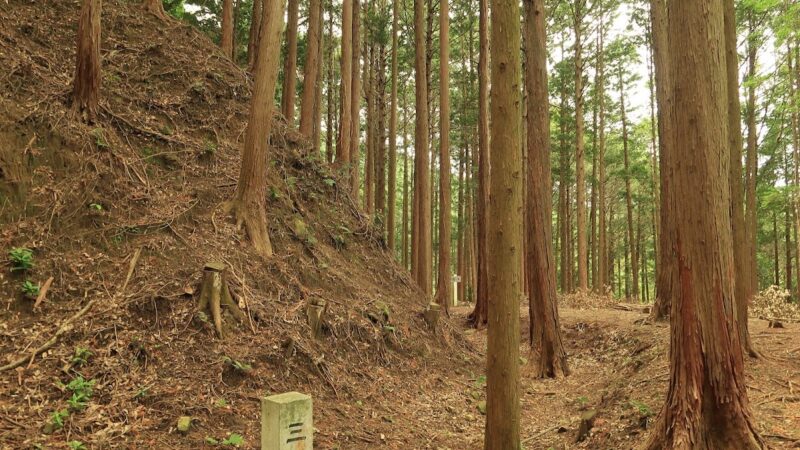
Moats and earthworks were the main defensive structures of Nagasawa Castle. Parts of the moats still remain today, allowing us to imagine the defensive structure of the time. These remains are valuable historical documents illustrating a typical defensive system of a medieval castle.
The remains of a well are also an important historical feature. Securing water within the castle was essential in the case of a siege, and the presence of a well indicates that Nagasawa Castle was a military facility designed with actual combat in mind.
Current Highlights of Nagasawa Castle Ruins
Castle Site Monument and Information Board
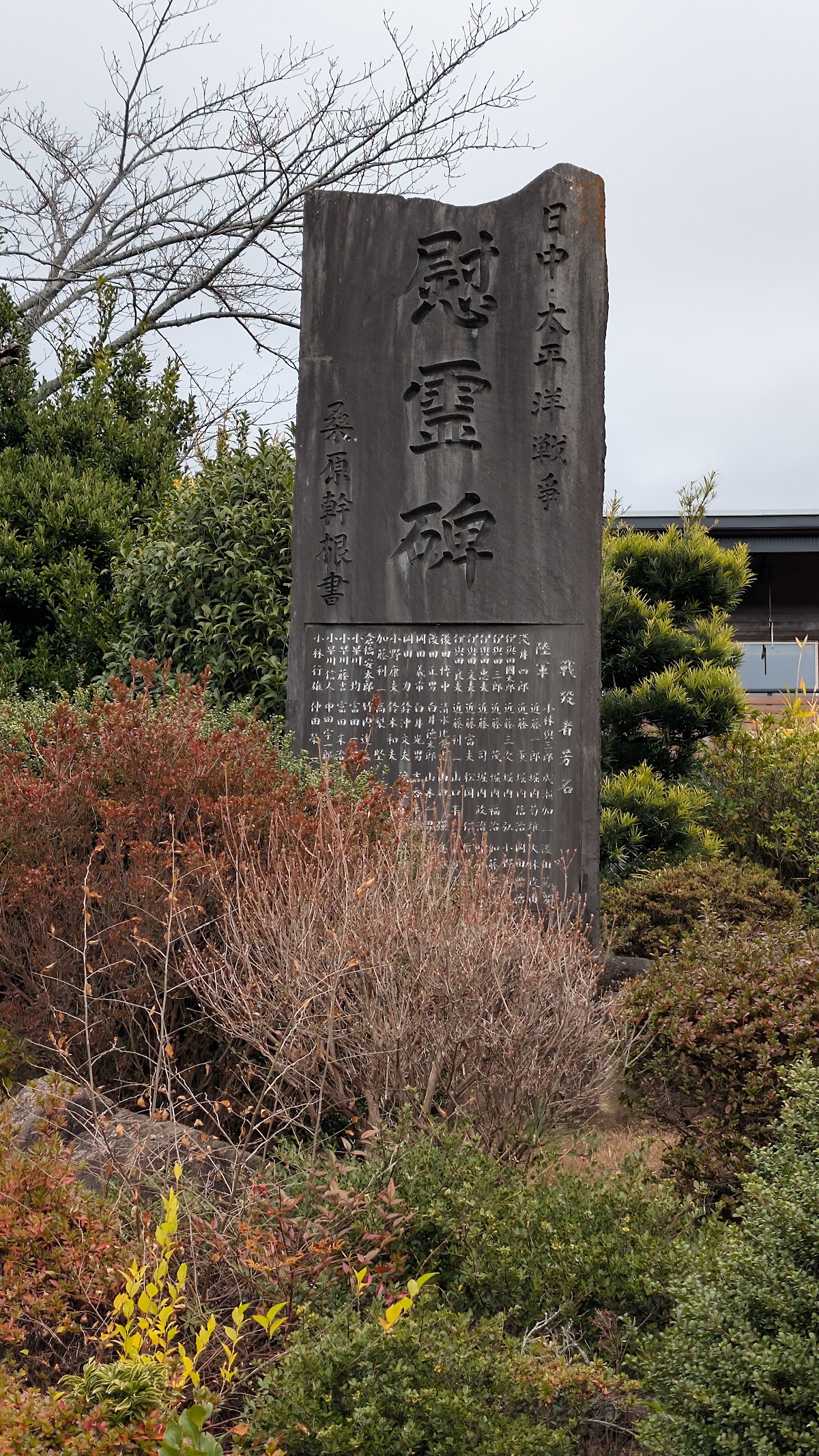
One of the main highlights when visiting Nagasawa Castle Ruins is the castle site monument erected on a hill. This stone monument is located almost in the center of the castle and is inscribed with the words, “Matsudaira Nobumitsu’s son, Chikanori, built this and moved here, and his descendants lived here for several generations, becoming known as Nagasawa Matsudaira.”
An information board is also installed, where you can learn about the history of Nagasawa Castle and the Nagasawa Matsudaira clan. It can be accessed from the road on the south side, and you can reach the hilltop by climbing the stairs.
Well Remains
One of the most important remains of Nagasawa Castle is the well remains. This well functioned as a water source within the castle and was an important facility that supported daily life and military activities at the time. It is still preserved today and is a valuable remains that visitors can see directly.
The structure and depth of the well are important resources for understanding the actual state of water use in medieval castles. This is a must-see point for castle researchers and history enthusiasts.
Remains of the Moat
Parts of the moat still remain today. Because the castle grounds are divided by National Route 1, it’s difficult to grasp the overall layout of the castle in its heyday. However, the remaining moat remains offer insights into the defensive system of the time.
The scale and shape of the moat are important clues to the defensive capabilities of Nagasawa Castle. It is believed that, in combination with the earthworks, it formed an effective defensive line.
Kannon Hall and Temple
A Kannon Hall and temple remain around the castle site, allowing visitors to experience the history of the region’s faith alongside the castle’s history. These religious facilities continued to function as centers of the local community even after the castle was abandoned.
There are places around the Kannon Hall that evoke the atmosphere of the past, making it a spot worth visiting when exploring the castle site.
Kojō Housing Complex and Surrounding Environment
Currently, much of the castle site has been developed into a residential area known as Kojō Housing Complex. However, the fact that the name “Kojō” (meaning “old castle”) remains indicates that this area was historically significant.
Nagasawa Elementary School and Nagasawa Nursery School are also built within the castle grounds, utilizing the former castle space as modern educational and childcare facilities. This shift in land use is also an interesting aspect of history.
Access and Visiting Guide to Nagasawa Castle
Access by Public Transportation
The nearest station to Nagasawa Castle is Meitetsu Nagoya Main Line’s “Meiden Nagasawa Station.” The castle site is approximately a 5-6 minute walk from the station. From the station, head towards National Route 1 and follow the signs to reach the hilltop where the castle site monument is located.
Access from Nagoya is also good; you can reach Meiden Nagasawa Station from Meitetsu Nagoya Station relatively quickly using express or semi-express trains.
Access by Car
If you are traveling by car, it is convenient to use National Route 1. It is approximately 10 minutes from the Otowa-Gamagori Interchange on the Tomei Expressway.
However, since the area around the castle ruins is a residential area, there is no dedicated parking lot. Please be considerate of the neighbors when visiting. Using public transportation is recommended.
Precautions During Visits
Since Nagasawa Castle Ruins are located within a residential area, please observe the following points when visiting:
- Respect for Residents’ Privacy: Please refrain from taking photographs or speaking loudly within the residential area.
- No Trespassing on Private Property: Some of the ruins may be located on private property. Please do not enter without permission.
- Take Your Trash Home: For environmental protection, please be sure to take your trash home with you.
- Ensure Your Safety: National Route 1 has heavy traffic, so please exercise caution when crossing the road.
Estimated Visiting Time
A visit to Nagasawa Castle Ruins takes approximately 30 minutes to 1 hour if you want to see the castle monument, well remains, and moat remnants. If you want to stroll around and fully appreciate the history, it’s best to allocate 1 hour or more.
Photography and detailed observation may require more time. We recommend planning your visit with ample time.
Nearby Tourist Attractions and Related Historical Sites
Matsudaira Clan Related Historical Sites in Toyokawa City
When visiting Nagasawa Castle, visiting other Matsudaira clan related historical sites in Toyokawa City will allow you to gain a deeper understanding of the history of the Mikawa Matsudaira clan.
The area around Toyokawa City is dotted with important historical sites, including Matsudaira-go (Toyota City), the birthplace of the Matsudaira clan, and the Iwatsu Castle Ruins (Okazaki City), the base of Matsudaira Nobumitsu. Planning a historical exploration route combining these sites would be interesting.
Toyokawa Inari Shrine
Toyokawa Inari Shrine, a representative tourist spot in Toyokawa City, is located about 15 minutes by car from the Nagasawa Castle ruins. It is a renowned temple, counted as one of Japan’s three great Inari shrines, and attracts many visitors throughout the year.
Visiting Toyokawa Inari Shrine in conjunction with a visit to the Nagasawa Castle ruins allows you to enjoy both historical exploration and sightseeing.
Post Towns on the Tokaido Road
Because Nagasawa Castle overlooked the Tokaido Road, many historical sites related to the Tokaido remain in the surrounding area. Visiting spots that evoke the Edo period highway culture will allow you to experience the historical layers of this region.
Goyu Pine Avenue
The Goyu Pine Avenue, designated as a national natural monument, is located relatively close to the Nagasawa Castle ruins. Approximately 300 pine trees are planted along a 600-meter section connecting the Tokaido post towns of Goyu-juku and Akasaka-juku.
This valuable landscape, which conveys the atmosphere of an Edo-period highway, is ideal for inclusion in a historical walking tour.
Historical Significance of Nagasawa Castle
Symbol of the Expansion of the Mikawa Matsudaira Clan
Nagasawa Castle is a castle that symbolizes the process by which the Matsudaira clan expanded their power within Mikawa Province. Matsudaira Nobumitsu’s securing of Nagasawa, a strategically important location, and the placement of his son, Chikamori, demonstrates the Matsudaira clan’s systematic strategy for territorial expansion.
Through the branch family system of eighteen Matsudaira families, the Matsudaira clan built an extensive network within Mikawa Province. The Nagasawa Matsudaira clan played a crucial role in this network, supporting the main branch, the Anjo Matsudaira clan (later the Tokugawa clan).
Value as a Transportation Hub
The fact that Nagasawa Castle was built overlooking the Tokaido Road speaks to its strategic value. The Tokaido Road has been an important transportation route since ancient times, and controlling the movement of people and goods had great economic and military significance.
The fact that National Route 1, railways, and expressways still pass through this area today demonstrates its historical importance as a transportation hub. It’s a prime example of how geographical conditions can shape history.
Relationship with Tokugawa Ieyasu
The Nagasawa Matsudaira clan was incorporated into the Tokugawa clan’s vassal group after Matsudaira Motoyasu (Tokugawa Ieyasu) gained independence from the Imagawa clan. The support of the Matsudaira family, including the eighteen Matsudaira branches, was indispensable in the Tokugawa’s process of unifying Japan.
The history of Nagasawa Castle and its lord, the Nagasawa Matsudaira clan, is also the story of a family that supported the Tokugawa’s success. Viewing Nagasawa Castle from this perspective deepens our understanding within a broader historical context.
Research and Preservation Activities of Nagasawa Castle
Position in Castle Research
Nagasawa Castle holds an important position in the study of castles in medieval Mikawa Province. It is an essential historical site for understanding the Matsudaira clan’s expansion of power, and many researchers have conducted investigations there.
Although much of the remains have been lost, the remaining well sites and parts of the moats are valuable research materials. Further excavations and documentary research are expected to reveal more detailed information about the castle’s structure and history.
Local Preservation Efforts
Toyokawa City recognizes the historical value of the Nagasawa Castle ruins and is working to preserve and utilize the site through measures such as the installation of castle monuments and explanatory signs. Even amidst ongoing residential development, the efforts to preserve important remains and pass them on to future generations are commendable.
The cooperation of local residents is also essential for the preservation of historical sites. In the area where the Nagasawa Castle ruins are located, there is a growing awareness of the value of the site as a historical heritage and the need to protect it.
Future Challenges and Prospects
The following are future challenges in the preservation and utilization of the Nagasawa Castle ruins:
- Promotion of Detailed Investigation and Research: Detailed investigations of the remaining remains and the excavation of documentary materials are necessary to clarify the overall picture of the castle.
- Appropriate Preservation of Historical Remains: Measures are needed to appropriately preserve the remains of wells and moats and prevent deterioration.
- Utilization as a Tourism Resource: It is necessary to consider strategies to utilize the historical value as a tourism resource and connect it to regional development.
- Educational Use: Utilizing the Nagasawa Castle ruins as teaching material for local history education can deepen understanding of and affection for the local area.
Significance of Visiting Nagasawa Castle
Experiencing Historical Romance
Visiting the Nagasawa Castle ruins allows you to reflect on Mikawa Province during the Sengoku period. The historical fact that Matsudaira Nobumitsu strategically secured this land and stationed his son, Chikamori, evokes a sense of historical romance even for those of us living today.
Although the remains are limited, standing in front of the castle monument and observing the surrounding topography will allow you to truly understand why this place was important.
Learning Local History
Learning the history of Nagasawa Castle leads to an understanding of the history of Toyokawa City and the Mikawa region. You can learn about the origins of how the Matsudaira clan, a samurai family rooted in the region, expanded their power and ultimately unified Japan as the Tokugawa clan.
Learning local history deepens understanding of and affection for the land, and contributes to the formation of regional identity.
As Part of Castle Research
For castle enthusiasts and researchers, Nagasawa Castle is an important site for understanding medieval castles in Mikawa Province. By comparatively studying the castles of the eighteen Matsudaira families, it is possible to clarify the characteristics of the Matsudaira clan’s castle construction techniques and defensive philosophies.
Nagasawa Castle ruins are also valuable as a place to cultivate observational skills that allow you to glean a great deal of information from limited remains.
Summary
Nagasawa Castle, located in Toyokawa City, Aichi Prefecture, is a castle of significant historical value as the residence of the Nagasawa Matsudaira clan, one of the eighteen Matsudaira families. Nagasawa Castle was built by Matsudaira Nobumitsu’s son, Chikamori, and served as the base of the Nagasawa Matsudaira clan for several generations.
Although the area is now largely residential, making it difficult to fully imagine its former appearance, valuable remains such as the remains of a well and parts of the moat still exist. A castle site monument and explanatory signs have also been installed, allowing visitors to learn about the history of this area.
Located at a strategic transportation hub overlooking the Tokaido road, Nagasawa Castle is a symbolic fortress demonstrating the strategic importance of the Mikawa Matsudaira clan in expanding their power. Its convenient access, within walking distance of Meitetsu Meiden Nagasawa Station, makes it a historical site well worth visiting for anyone interested in the history of Mikawa.
By visiting the Nagasawa Castle ruins, one can experience the history of Mikawa Province during the Sengoku period, the historical flow from the Matsudaira clan to the Tokugawa clan, and the layered historical complexity of the region. Although the remains are limited, the traces of history are undeniably etched there.