Complete Guide to Iga Ueno Castle | The Charm of the High Stone Walls Built by Master Castle Builder Todo Takatora and the White Phoenix Castle
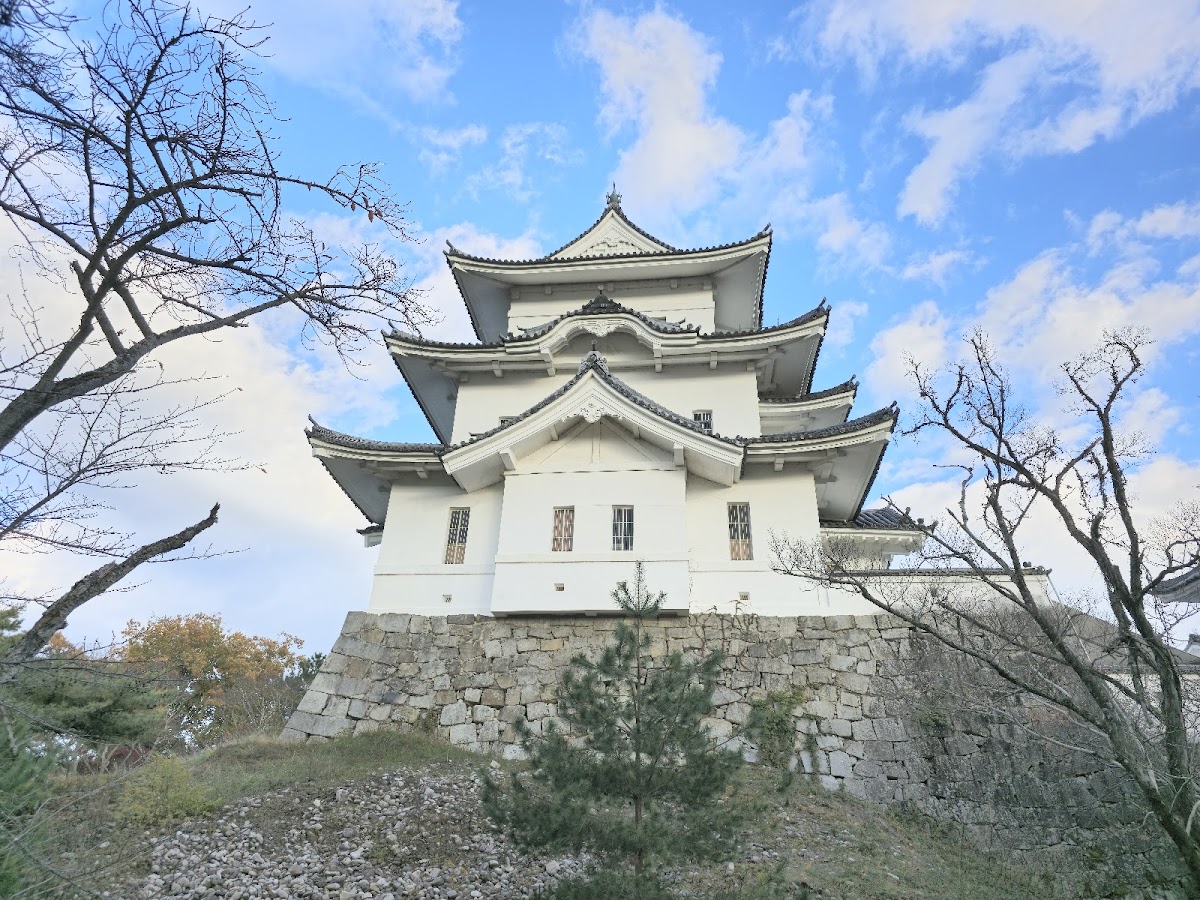
Located in Iga City, Mie Prefecture, Iga Ueno Castle is a magnificent castle boasting some of the highest stone walls in Japan, built by Todo Takatora, renowned as a “master castle builder.” Its beautiful white three-story keep has earned it the affectionate nickname “White Phoenix Castle.” Built on a hill overlooking the Iga Basin, this castle is a valuable historical site that conveys the turbulent history from the Sengoku period to the Edo period, and was designated a national historic site in 1967.
This article comprehensively introduces everything you need to know before visiting Iga Ueno Castle, from its historical background and highlights to access information.
History of Iga Ueno Castle
Construction by Tsutsui Sadatsugu (1585)
The history of Iga Ueno Castle begins in 1585 (Tensho 13), when it was built by Tsutsui Sadatsugu, a retainer of Toyotomi Hideyoshi. At that time, there was a large temple called Heirakuji on this site, but it became a base for the Iga forces during Oda Nobunaga’s Tensho Iga Rebellion and was burned down after the Iga forces’ defeat.
Tsutsui Sadatsugu made the top of the hill the main keep and constructed a three-story castle tower to the east. According to Kikuoka Jogen’s “Isui Ungo,” the castle town was developed mainly on the northern side (present-day Oda-cho), which had been developed since ancient times. This castle was positioned as an important defensive base, about a day’s journey from Osaka Castle via the Kizu River, and records indicate that the three-story castle tower stood on a castle base measuring 12 ken long and 7 ken wide.
Major Renovations by Todo Takatora (After 1608)
In June 1608 (Keicho 13), Tsutsui Sadatsugu was dismissed from his position, and Todo Takatora, a man highly trusted by Tokugawa Ieyasu, took over as the lord of Iga Province. Ieyasu ordered Takatora to undertake a large-scale renovation of Iga Ueno Castle as a defense against Osaka Castle in the western provinces.
Todo Takatora was known as a “master castle builder,” having constructed numerous famous castles such as Imabari Castle, Tsu Castle, and Zeze Castle. At Iga Ueno Castle, he changed the castle’s orientation from east-facing to west-facing, strengthening its defenses against the Toyotomi forces. Particularly noteworthy is the construction of the towering stone walls, reaching approximately 30 meters in height. These walls remain among the tallest in Japan today and are the greatest highlight of Iga Ueno Castle.
Takatora had planned a five-story castle tower, but a storm that struck the area in 1612 caused the tower, which was still under construction, to collapse. Afterward, Tokugawa Ieyasu’s victory in the Siege of Osaka from 1614 to 1615 meant the castle’s role as a defense against the Toyotomi clan ended, and construction was halted, leaving the tower unfinished.
From the Edo Period to the Present
The castle tower from the time of Tsutsui Sadatsugu is estimated to have collapsed around 1633. Afterward, Iga Ueno Castle served as a branch castle of the Tsu Domain, with members of the Todo clan serving as castle lords until the Meiji era. A stone monument inscribed with “Tsutsui Castle Tower Site” now stands where the tower once stood.
After the Meiji Restoration, while many castles were demolished, the stone walls and inner moat of Iga Ueno Castle miraculously survived. Then, in 1935, Katsumi Kawasaki, a local member of parliament, invested his personal fortune to construct a three-story wooden replica castle tower. This tower is designated as an Iga City Tangible Cultural Property (March 18, 1985) and remains a beloved symbol of Iga Ueno for citizens and tourists alike.
Highlights of Iga Ueno Castle
One of Japan’s Tallest Stone Walls
The greatest highlight of Iga Ueno Castle is undoubtedly the tall stone wall built by Todo Takatora. The stone wall, rising from the inner moat, reaches a height of 29.7 meters and a length of 368 meters, making it one of the tallest in Japan, second only to Osaka Castle and Edo Castle.
Looking up from below, you will be breathless at its overwhelming height. The stone wall is constructed using a technique called “uchikomi-hagi,” which creates a stronger structure by leaving no gaps between the stones. This towering stone wall is frequently used as a filming location for movies and dramas, and has become an indispensable landmark for filming period dramas.
You can look down from the top of the wall, but its height is enough to make your legs tremble. It’s easy to understand why climbing this wall and entering the castle was virtually impossible in the past. It conveys the high level of Takatora’s castle-building skills and how important Tokugawa Ieyasu considered it as a defense against Osaka Castle.
The Castle Tower, also known as Hakuhō Castle
The current castle tower is a three-story wooden building constructed in 1935 by Mr. Katsumi Kawasaki. Its beautiful white exterior has earned it the elegant nickname “Hakuhō Castle.” Although it is a replica, it possesses the dignified style unique to wooden architecture and strongly retains the atmosphere of the Sengoku period.
The interior of the castle tower consists of three floors, and each floor displays weapons, armor, and items related to the Tōdō family. Of particular note is the black lacquered helmet of Todo Takatora, a rare opportunity to see a relic of a master castle builder up close.
The ceiling of the top floor is adorned with 46 shikishi (square art boards) by renowned painters and calligraphers, including Yokoyama Taikan. These shikishi were donated when the castle tower was constructed in the early Showa period and are works of high cultural value. From the top floor, you can enjoy a panoramic view of the Iga Basin and the castle town below. On a clear day, you can see the distant mountains, and it’s impossible not to feel a sense of historical romance imagining the former lords of the castle gazing upon this same view.
Tsutsui Castle Tower Site
In a corner of the main enclosure stands a stone monument marking the “Tsutsui Castle Tower Site,” indicating the location of the first castle tower built by Tsutsui Sadatsugu. The remains of this tower, which is believed to have collapsed around 1633, are an important point that tells the story of the multi-layered history of Iga Ueno Castle.
Visiting the site of the former castle keep, located in a different place from the current keep, allows you to truly experience the castle’s transformation. It provides clues to understanding how the castle’s orientation and structure changed between the time of Tsutsui Sadatsugu and the time of Todo Takatora.
Inner Moat and Castle Grounds
The inner moat of Iga Ueno Castle, along with the high stone walls, is a valuable historical structure that conveys its original appearance. The combination of the water-filled moat and stone walls evokes a sense of functional beauty as a defensive structure. Especially in spring, when cherry blossoms bloom, the reflection of the cherry blossoms on the moat’s surface, the stone walls, and the keep creates a magnificent landscape.
The entire castle grounds are in the style of a flatland castle, built on the hills on the northern side of the Iga Basin. In the small Iga Basin, a 9-ri square surrounded by mountains, this castle functioned as a strategic stronghold. Strolling through the castle grounds, you can feel the skillful calculations of Takatora’s layout everywhere.
Exhibits Related to the Todo Family
The castle tower houses numerous exhibits of weapons, armor, and swords passed down through the Todo family. These are valuable artifacts that tell the history of the Todo family, who ruled the Tsu Domain throughout the Edo period. In particular, the weapons from the Sengoku period to the early Edo period are important historical documents for understanding the lifestyle and fighting styles of samurai at that time.
Among the exhibits are items believed to have been actually used by Todo Takatora, allowing visitors to gain insight into the character of Takatora, who was known as a master castle builder.
Basic Information about Iga Ueno Castle
Location and Access
Address: 106 Ueno Marunouchi, Iga City, Mie Prefecture 518-0873
Phone Number: 0595-21-3148
Access Method:
- Train: Approximately 8 minutes on foot from Ueno-shi Station on the Iga Railway
- Car: Approximately 5 minutes from Ueno IC on the Meihan Expressway, approximately 10 minutes from Nakase IC
- Parking: Paid parking available nearby (e.g., Ueno Park parking lot)
Opening Hours and Closing Days
Opening Hours: 9:00 AM – 5:00 PM (Last entry at 4:45 PM)
Closing Days: December 29th – 31st
Admission Fees
Individual Fees:
- Adults (High school students and older): 600 yen
- Children (Elementary and junior high school students): 300 yen
Group Rate (30 or more people):
- Adults: 500 yen
- Children: 250 yen
Management and Operation
Iga Ueno Castle is managed and operated by the Iga Cultural and Industrial Association, a public interest incorporated foundation. The castle ruins are designated as a national historic site and scenic spot (designated December 27, 1967), and the castle tower is protected as an Iga City tangible cultural property (designated March 18, 1985).
Tourist Attractions Around Iga Ueno Castle
Ninja Museum (Iga-ryu Ninja Museum)
Located very close to Iga Ueno Castle, the Ninja Museum is a facility where you can experience the history and culture of Iga-ryu ninjas. In the ninja house, you can see demonstrations of hidden doors and mechanisms, and the ninja show is also popular. Iga is known as a ninja village, along with Koga, and visiting the castle and the museum together will give you a deeper understanding of Iga’s history.
Ueno Park
Iga Ueno Castle is located within Ueno Park. The park also houses the Haiseiden (Haiku Master Hall) and the Basho Memorial Museum, allowing visitors to experience the culture of Iga, the birthplace of Matsuo Basho. In spring, it’s a popular spot for cherry blossom viewing, and in autumn, it becomes a beautiful place for strolling amidst the vibrant autumn foliage.
Danjiri Hall
This facility displays danjiri floats and masks used in the traditional Ueno Tenjin Festival of Iga Ueno. You can experience the charm of this festival, registered as a UNESCO Intangible Cultural Heritage, year-round.
Iga no Sato Mokumoku Handmade Farm
This experiential agricultural park, located on the outskirts of Iga City, offers activities such as sausage making and bread making. It’s a popular spot for families and recommended for a visit during Iga sightseeing.
How to Enjoy Iga Ueno Castle
Visiting During Cherry Blossom Season
Iga Ueno Castle is one of the most famous cherry blossom viewing spots in Mie Prefecture. In spring, approximately 600 cherry trees bloom within the castle grounds and Ueno Park, creating a magnificent contrast between the white castle tower and the blossoms. The castle is also illuminated at night, allowing visitors to enjoy the magical sight of cherry blossoms after dark. Since the castle gets very crowded with tourists during cherry blossom season, it’s recommended to visit earlier in the day.
Photo Spots
Iga Ueno Castle offers numerous excellent photo opportunities. From angles looking up at the high stone walls from below, to compositions combining the castle tower with cherry blossoms or autumn leaves, and the views from the top floor, the castle offers a variety of expressions depending on the season and time of day. Photography in the soft morning light and during the magic hour at dusk are particularly special.
Historical Walking Course
A stroll through the townscape, which retains the atmosphere of a castle town, centered around Iga Ueno Castle, is also highly recommended. The area is dotted with samurai residences, temples and shrines, and old merchant houses, allowing you to stroll through and experience the atmosphere of the Edo period. The Iga Ueno Tourism Association provides walking maps, making it easy to efficiently visit the sights.
Events and Festivals
Iga Ueno Castle hosts various events throughout the year. The spring cherry blossom festival and the autumn Ueno Tenjin Festival create a special atmosphere. It’s also sometimes used as a filming location for historical dramas, so if you’re lucky, you might even stumble upon a film set.
The latest event information can be found on the official website, announcements, and blog, so it’s recommended to check before your visit.
The Charm and Value of Iga Ueno Castle
The Techniques of Todo Takatora, a Master Castle Builder
Iga Ueno Castle is highly regarded as a castle that embodies the pinnacle of Todo Takatora’s castle-building techniques. Takatora was involved in the construction and renovation of over 20 castles throughout his life, demonstrating exceptional skill, particularly in stonework techniques. The towering stone walls of Iga Ueno Castle can be considered a pinnacle of technical skill.
Takatora not merely built high stone walls, but meticulously designed them, calculating every element including drainage, ground stability, and defensive effectiveness. The fact that the walls remain intact for over 400 years proves the precision of his engineering.
The Narrative of an Unfinished Castle
Iga Ueno Castle has a unique narrative as an “unfinished castle.” The five-story keep planned by Todo Takatora collapsed in a storm, and construction was halted without reconstruction after the fall of the Toyotomi clan in the Siege of Osaka. Had it been completed, it would have been one of Japan’s largest castles.
This history of an “unfinished castle” stimulates the imagination of visitors. Standing on the site of the Tsutsui keep, reflecting on the keep that once stood here, and imagining the five-story keep planned by Takatora—this historical romance is part of Iga Ueno Castle’s charm.
Importance as a Cultural Property
Iga Ueno Castle is highly valued as a cultural property, with its castle ruins designated as a national historic site and its keep designated as an Iga City tangible cultural property. The fact that the stone walls from the early Edo period remain almost completely intact is extremely valuable for castle research.
Furthermore, the wooden keep, built in 1935, also has historical value as a pre-war replica keep. Unlike the post-war concrete reconstruction keeps, this keep, built using traditional wooden construction techniques, can be considered a modern cultural heritage in itself.
Points to Note and Advice for Visitors
Clothing and Items to Bring
The stairs inside the keep are steep, and there are steps due to the traditional wooden construction. We recommend wearing comfortable shoes. Also, there are areas on top of the high stone walls without railings, so extra caution is needed, especially if you are visiting with small children.
It can get hot inside the keep in the summer, so it’s a good idea to bring drinks. It gets cold in the winter, so don’t forget to take precautions against the cold.
Estimated Time Required
If you only plan to visit the castle keep, it will take about 30 minutes to an hour. However, if you want to carefully examine the high stone walls and stroll around the castle grounds, you should allow 1.5 to 2 hours. Including nearby attractions such as the Ninja Museum and the Basho Memorial Museum, it’s ideal to allocate about half a day for sightseeing.
Peak Seasons
The castle gets crowded during cherry blossom season (late March to early April), Golden Week, and the autumn sightseeing season. Especially on weekends and holidays, the parking lot can be full, so consider using public transportation. Weekdays and early mornings are relatively less crowded, allowing for a more relaxed visit.
Checking the Latest Information
The latest information on events and temporary closures can be found on the official website. The Iga Ueno Tourism Association website also has comprehensive information on surrounding attractions, so we recommend checking it before your visit.
Summary
Iga Ueno Castle is a magnificent castle boasting some of the highest stone walls in Japan, built by the master castle builder Todo Takatora, and a beautiful keep known as the Hakuho Castle. From its initial construction by Tsutsui Sadatsugu, to Takatora’s major renovations, the story of the unfinished five-story keep, and its reconstruction in the Showa era, this castle has a multi-layered history that deeply impresses visitors.
The impressive stone walls, approximately 30 meters high, are awe-inspiring and showcase the pinnacle of castle-building technology. There are also plenty of other attractions, including the view from the keep, exhibits related to the Todo family, and calligraphic works by artists such as Yokoyama Taikan. Visitors can also enjoy the beauty of the four seasons, from cherry blossoms in spring to autumn foliage.
When you visit the Iga region, be sure to stop by Iga Ueno Castle. Through this castle, you can deeply experience the history and culture of Iga, also known as the home of ninjas. This magnificent castle, standing proudly in Ueno Marunouchi, Iga City, Mie Prefecture, promises a special experience to all visitors, not just history buffs.