Complete Guide to the History and Highlights of Haga Castle | A Thorough Explanation of the Medieval Castle Ruins in Inashiki City, Ibaraki Prefecture
Haga Castle, located in Haga, Inashiki City, Ibaraki Prefecture, is a valuable historical site that preserves the typical structure of a medieval castle in Hitachi Province. Built on the tip of a peninsula-shaped plateau overlooking the alluvial plains of the Onogawa River basin, this castle played an important role in the sphere of influence of the Toki clan, whose base was Edosaki Castle. Currently, it is the grounds of Haga Shrine, and the remains such as earthworks and moats are well preserved.
History of Haga Castle and the Usuda Clan
Origins of the Usuda Clan and the Construction of Haga Castle
The Usuda clan, who were the lords of Haga Castle, are said to be a branch of the Shigeno clan, a prominent family of Shinano Province. The Shigeno clan was a clan based in Chiisagata District, Shinano Province, and is a prestigious family known as the ancestors of the Sanada and Unno clans. The Usuda clan originally served as retainers of Uesugi Norisada, the Kanto Kanrei (governor of the Kanto region), but later moved to Hitachi Province and became important retainers of the Toki clan, lords of Edosaki Castle.
While there are no clear records regarding the castle’s construction date, it is believed to have functioned as the Usuda clan’s residence during the mid-Sengoku period. The Usuda clan traditionally used the title “Kageyuzaemon-no-jo” and ruled the Haga region. Since the crest remaining at Haga Shrine is a tomoe (comma-shaped) crest, it is presumed that the Usuda clan’s family crest was also a tomoe.
Relationship between the Toki Clan and Edosaki Castle
Understanding Haga Castle is crucial to understanding its relationship with its lord, the Toki clan, and Edosaki Castle. The Toki clan was a prestigious family known as the shugo daimyo (provincial governor) of Mino Province, and during the Sengoku period, they moved to Hitachi Province and established Edosaki Castle as their base. Edosaki Castle is a flatland castle located in the center of Inashiki City, and the Toki clan controlled this entire region.
Haga Castle was located approximately 5 kilometers northwest of Edosaki Castle and played an important role as a subsidiary castle monitoring the Onogawa River basin. The Usuda clan, as senior retainers of the Toki clan, were entrusted with the defense and governance of this region. It is believed that the Usuda clan held considerable influence within the Toki clan’s retainers.
The Battle of Odawara in 1590 and the Castle’s Demolition
The history of Haga Castle came to an end with the Battle of Odawara in 1590, led by Toyotomi Hideyoshi. With the downfall of the Hojo clan in this battle, many daimyo in Hitachi Province who had close ties to the Hojo clan were also dispossessed of their territories. The Toki clan, lords of Edosaki Castle, were no exception, losing their lands and falling into decline.
Haga Castle, which witnessed the Battle of Odawara during the time of its seventh lord, Usuda Saemon-no-jo, ended its role with the decline of its lord, the Toki clan, and was subsequently abandoned. Later, Haga Shrine was built on the castle site, and it remains a center of local faith to this day. Even after more than 400 years since the castle’s abandonment, the castle remains are remarkably well-preserved, a testament to its careful protection as a shrine.
Layout and Structure of Haga Castle
Location Utilizing a Peninsula-Shaped Plateau
The most distinctive feature of Haga Castle lies in its cleverly utilized topography. The castle is built on the tip of a peninsula-shaped plateau jutting out into the alluvial plains of the Ono River basin. The plateau is more than 10 meters higher than the surrounding lowlands, making it a natural stronghold surrounded on three sides by steep cliffs.
The eastern and southern sides of the plateau face low-lying wetlands called “yatsu” formed by tributaries of the Ono River, and the northern side is also separated by a deep valley. Access to the castle is only possible from the western side, where the plateau continues, and defensive structures are concentrated in this direction. This type of terrain is a classic example of how medieval castles were built making maximum use of the natural landscape.
Two Enclosures, East and West
The main part of Haga Castle consists of two enclosures, east and west, connected by an earthen bridge. The western enclosure is thought to be the main enclosure, and the shrine building of Haga Shrine now stands there. The eastern enclosure is presumed to have functioned as a secondary enclosure, and two temples, Toyo-ji and Toko-ji, are located there.
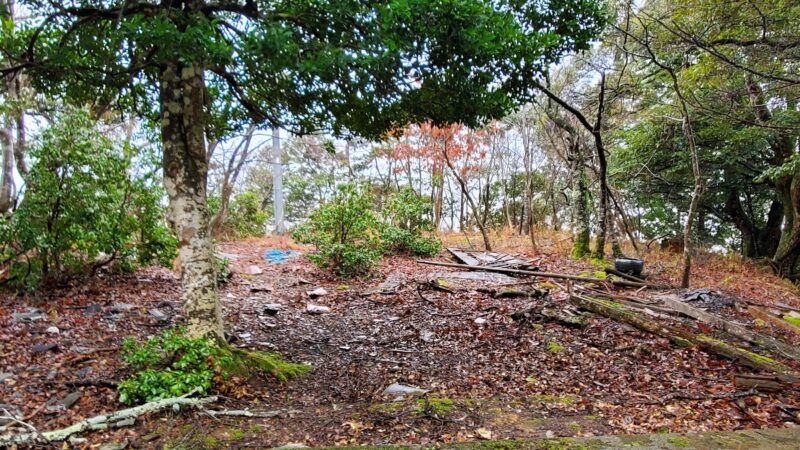
The western enclosure (main enclosure) measures approximately 60 meters east-west and 40 meters north-south, with a clear earthen embankment facing the eastern moat. This embankment is over 2 meters high and about 4 meters wide, and remains well-preserved. The interior of the enclosure is leveled, and it is thought that buildings such as residences and warehouses once stood there.
The eastern enclosure is slightly smaller than the western enclosure, and only parts of the earthen embankment remain. A deep moat separates the two enclosures, and an earthen bridge spans its base, connecting the two enclosures. This earthen bridge was an important route within the castle and was designed to be destroyed in times of conflict to enhance its defensive capabilities.
Remains of Earthworks, Moats, and Steep Embankments
The most noteworthy remains of Haga Castle are the well-preserved earthworks and moats. As mentioned earlier, a clear earthwork was constructed on the east side of the western enclosure, the main keep, facing the moat and serving as a defensive wall. This earthwork was carefully constructed using the rammed earth method, demonstrating the high level of civil engineering technology of medieval castles.
The moat separating the two enclosures measures approximately 10 meters wide and 5 meters deep, and was dug vertically into the plateau. The bottom of the moat is not flat, but rather has a V-shaped profile, becoming slightly deeper in the center. This moat not only separated the enclosures but also functioned as an important defensive structure to prevent enemy intrusion.
The edges of the plateau are surrounded by steep, artificially carved slopes known as “kirigishi.” By further altering natural cliffs to a near-vertical angle, climbing them becomes extremely difficult. The kirigishi on the south and east sides are particularly distinct, reaching heights of 7-8 meters in some sections. These remains indicate that Haga Castle was not merely a residence, but a full-fledged military facility designed for combat.
Outer Enclosure and Defensive Line
Outside the two main enclosures, there are areas believed to be part of the outer enclosure. To the west of the plateau, that is, in the direction of land continuity, intermittent earthen ramparts have been identified, which are presumed to have formed the outer defensive line.
Currently, the path leading to Haga Shrine is highly likely to have been the castle’s main entrance, and traces of earthen ramparts and moats can be seen on both sides. There is a depression resembling a moat along the path, thought to be the remains of a dry moat from the past. Thus, it is clear that the access routes to the castle were also heavily fortified.
While the exact boundaries of the outer fortifications are unclear, including the area where the temple is located, the castle grounds are estimated to have extended approximately 200 meters east-west and 150 meters north-south. This size is standard for a castle of a local lord and is thought to reflect the power of the Usuda clan.
Current Status of Haga Shrine and Castle Ruins
History of Haga Shrine
Currently, Haga Shrine stands on the site of the main enclosure of Haga Castle. The exact founding date of Haga Shrine is uncertain, but it has been worshipped as the local tutelary deity since ancient times. It is not uncommon for shrines to be built on castle ruins after a castle is abandoned, and Haga Castle is no exception.
The shrine’s crest is a tomoe (comma-shaped swirl), suggesting a connection to the Usuda clan, the castle’s lords. The tomoe crest was widely used by samurai families and was particularly associated with water deity worship. While historical records are scarce and many details about the deities enshrined at Haga Shrine remain unclear, it is certain that it has been carefully preserved by the local residents.
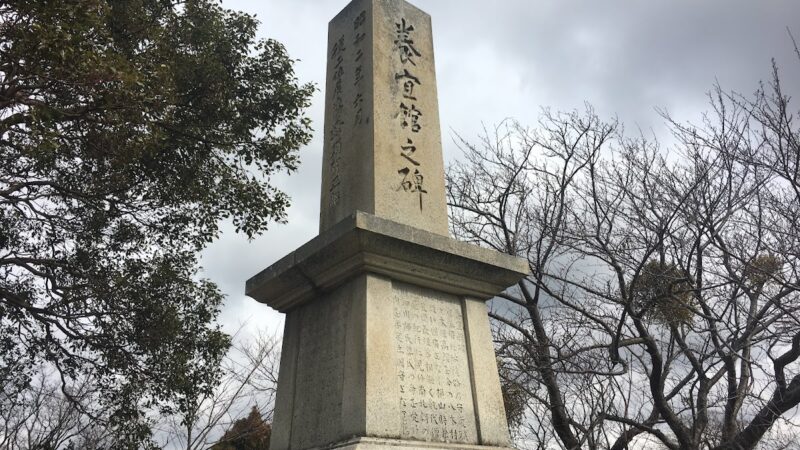
Although the shrine building is relatively new, old stone lanterns and monuments remain on the grounds, giving a sense of its long history. A grand festival is held every autumn, serving as a gathering place for local people.
Toyo-ji and Toko-ji Temples
Two temples, Toyo-ji and Toko-ji, are located in the eastern enclosure of Haga Castle. While there are no clear records of their founding, it is believed they were built after the castle was abandoned.
In medieval castles, temples were sometimes established within the castle grounds; these are called “castle temples.” During the Sengoku period (Warring States period), temples were not merely religious facilities but also functioned as defensive strongholds and refuges during wartime. It is unclear whether Toyo-ji and Toko-ji existed during the castle’s active period, but the construction of the temples on the castle site resulted in the preservation of the remains without destruction. Currently, both temples are maintained, albeit on a small scale, and present a tranquil atmosphere. The remains of earthworks and cliffs can be observed from within the temple grounds.
Preservation of the Remains
The remains of Haga Castle are remarkably well-preserved for a medieval castle. Major defensive structures, such as the earthworks of the main enclosure, the moat separating the two enclosures, the earthen bridge, and the cliffs, remain almost completely intact. This is because the castle site became the grounds of a shrine and temple, thus avoiding large-scale development.
However, due to natural weathering and overgrown vegetation, some remains are unclear. In particular, the outer enclosure includes areas that are now farmland and residential areas, making it difficult to completely restore its original appearance. Nevertheless, the remains of the main parts remain clearly visible, making it a valuable example for understanding the structure of medieval castles.
Although not designated as a cultural property by Ibaraki Prefecture or Inashiki City, it is recognized as a local historical heritage site, and information boards have been installed. It is a historical site where appropriate preservation and utilization are desired in the future.
Access and Visiting Guide to Haga Castle
Location and Transportation
Haga Castle is located in Haga, Inashiki City, Ibaraki Prefecture. Access by public transport is somewhat inconvenient, and visiting by private car is recommended.
Access by Car:
- Approximately 15 minutes from the Ken-O Expressway “Inashiki IC”
- Accessible via National Route 125 and a prefectural road
- Easy to find if you aim for Haga Shrine
- Several parking spaces available in front of the shrine
Access by Public Transport:
- Approximately 40 minutes by bus from JR Joban Line “Tsuchiura Station,” then approximately 15 minutes on foot from the nearest bus stop
- Taxi available from JR Narita Line “Shimosa-Kanzaki Station”
Searching for “Haga Shrine” on a car navigation system or map app will pinpoint the exact location. The address is “Haga, Inashiki City, Ibaraki Prefecture,” and the postal code is 300-0621.
Points to Note and Estimated Time Required for Visiting
You should allow approximately 20-30 minutes for a visit to Haga Castle. The castle ruins are relatively compact, allowing you to see the main remains in a short amount of time.
Recommended Visiting Route:
- Enter from the approach to Haga Shrine and experience the atmosphere of the former main road.
- Observe the earthworks in the main enclosure (western enclosure).
- Check the moat and earthen bridge.
- Move to the eastern enclosure and visit Toyo-ji Temple and Toko-ji Temple.
- Observe the cliffs (on the southern and eastern edges of the plateau).
Important Notes for Visitors:
- Remember that this is the grounds of a shrine and temple, and observe quietly.
- Earthworks and cliffs can be slippery, so watch your step.
- Visits in spring or autumn are recommended due to the overgrown vegetation in summer.
- Insect repellent and long-sleeved shirts and long pants are advisable.
- Avoid visiting during or after rain, as footing will be poor.
There is no special entrance fee or time limit for visiting the castle ruins, but it is considered good manners to visit during the shrine’s visiting hours (daytime).
Related Historical Sites in the Surrounding Area
Visiting the related historical sites in the surrounding area after visiting Haga Castle will allow you to gain a deeper understanding of the region’s history.
Edosaki Castle Ruins:
The base of the Toki clan, the lords of Haga Castle. Currently located in the center of Inashiki city, some remains such as earthworks still exist. It’s about a 10-minute drive from Haga Castle.
Awa Castle Ruins:
Also located in Inashiki city, this is a medieval castle. It is thought to be one of the Toki clan’s branch castles.
Ryugasaki Castle Ruins:
A castle related to the Toki clan located in Ryugasaki city. While somewhat far, it’s important for understanding the sphere of influence of the Hitachi Toki clan.
By visiting these castle ruins, you can experience firsthand the Toki clan’s system of control and castle network in Hitachi Province during the Sengoku period.
Historical Value and Research of Haga Castle
Characteristics of Medieval Castles in Hitachi Province
Haga Castle possesses the typical characteristics of a medieval castle in Hitachi Province (present-day Ibaraki Prefecture). Due to its geographical location at the eastern edge of the Kanto Plain, many castles in Hitachi Province utilize plateaus.
The Inashiki region, in particular, exhibits a complex topography of plateaus surrounded by waterways such as Lake Kasumigaura and the Ono River. Numerous examples of castles built on the tips of such peninsula-like plateaus have been confirmed. Haga Castle is one of the prime examples, characterized by its layout that maximizes the use of the natural terrain.
Its structure, combining basic defensive facilities such as earthworks, moats, and steep slopes, is typical of medieval castles that did not utilize stone walls. In the Kanto region, until the end of the Sengoku period, castles using stone walls were rare; earthworks, made by piling up and compacting earth, were the main defensive facilities. The remains of Haga Castle are a valuable example demonstrating the technological level of medieval castles in the Kanto region.
The Toki Clan’s Castle Network
Understanding Haga Castle is crucial to understanding the Toki clan’s castle network, centered around Edosaki Castle. The Toki clan was a prestigious family known as the shugo daimyo (provincial governor) of Mino Province. During the Sengoku period (Warring States period), they were driven out by Saito Dosan and moved to Hitachi Province, establishing Edosaki as their base.
The Toki clan controlled their territory by placing multiple branch castles around Edosaki Castle. Haga Castle was one of these important branch castles, responsible for the defense of the Onogawa River basin and monitoring transportation routes. Other known branch castles of the Toki clan include Awa Castle and Kimiga Castle, and these castles organically cooperated to form the Toki clan’s sphere of influence.
Such a castle network was an indispensable system for Sengoku daimyo to govern their territories. Studying Haga Castle not only as a standalone castle but also as part of this network allows for a deeper understanding.
Expectations for Future Preservation and Utilization
Haga Castle is currently an undesignated historical site, but its historical value should be highly appreciated. The well-preserved remains of Haga Castle are invaluable resources for the study of medieval castles and local history.
In recent years, interest in medieval castles has been growing nationwide, with castle enthusiasts and history buffs visiting castle sites throughout the country. Haga Castle is also registered on castle information websites such as “Kojodan,” and its recognition is gradually increasing. While visitors praise the excellent state of preservation of the remains, they point out the lack of information boards and explanatory signs.
Further efforts by Inashiki City and local residents for preservation and utilization are expected. Specifically, this could include creating detailed layout maps based on surveys, installing explanatory signs, improving viewing paths, and regular grass cutting. Furthermore, developing tourist routes in conjunction with surrounding Toki clan-related castles, such as Edosaki Castle, could contribute to regional revitalization.
Things to Know Before Visiting Haga Castle
How to View and Enjoy Medieval Castles
When visiting medieval castles like Haga Castle, keeping a few points in mind will make your visit more fulfilling.
Reading the Topography:
First, observe the terrain on which the castle is built. In the case of Haga Castle, its most distinctive feature is its location on the tip of a peninsula-shaped plateau. Walking around the castle and observing the elevation differences of the plateau and the surrounding lowlands will help you understand why this location was chosen.
Identifying the Remains:
Being able to identify remains such as earthworks, moats, and steep slopes will make visiting the castle much more interesting. Earthworks are artificially raised earthen walls, moats are ditches dug into ridges or plateaus, and steep slopes are artificially carved steep slopes. Try observing these with these features in mind.
Thinking from a Defensive Perspective:
Since castles are military facilities, understanding them from the perspective of “where will the enemy attack from?” and “how will we defend?” will deepen your understanding. At Haga Castle, you will notice that the defensive facilities are concentrated on the western side, which is connected to the plateau.
Photography Tips
When you visit Haga Castle, be sure to enjoy taking photographs. Photographs are valuable resources, both as records and as memories.
Recommended Photography Spots:
- Main Enclosure Earthwork: The earthwork facing the eastern moat is the most clearly visible structure at Haga Castle.
- Moat and Earthen Bridge: The combination of the moat separating the two enclosures and the earthen bridge crossing it is a must-see.
- Cutting Edge: Photographs taken from the edge of the plateau, looking down, can emphasize the height of the cutting edge.
- Haga Shrine: The shrine building in the main enclosure symbolizes the current state of the castle ruins.
Photography Precautions:
When taking photographs on the grounds of shrines and temples, please be considerate so as not to disturb worshippers. Also, please be careful not to trespass on private property.
Related Books and Information Sources
For those who want to learn more about Haga Castle, we introduce some helpful books and information sources.
Books:
- *Medieval Castles of Ibaraki Prefecture* (Ibaraki Prefectural Board of Education): Comprehensively introduces medieval castles in the prefecture.
- *Comprehensive Survey of Japanese Castles, Volume 3: Ibaraki, Tochigi, and Gunma* (Shin Jinbutsu Oraisha): Includes an entry on Haga Castle.
- *History of Inashiki City*: Describes the local history in detail.
Websites:
- Kojodan (kojodan.jp): Abundant visitor photos and information.
- Castle Wanderings: Detailed visit reports and photos.
- Yogo-kun’s Homepage: Useful for its castle layout map.
Checking these materials in advance will make your visit to the site more meaningful.
Summary: The Charm of Haga Castle and the Significance of Visiting It
Haga Castle is a medieval castle standing on a quiet plateau in Inashiki City, Ibaraki Prefecture. While it lacks a magnificent keep or stone walls, its basic defensive structures such as earthworks, moats, and cliffs remain well-preserved, making it a valuable historical site where you can truly experience what medieval castles were like.
This castle, ruled by the Usuda clan who migrated from Shinano Province and served as important retainers of the Toki clan, was built on a strategic location overlooking the Onogawa River basin. Until its abandonment during the Battle of Odawara in 1590, it functioned as a base for the defense and governance of the region. Currently, it occupies the grounds of Haga Shrine, quietly preserving its history while being protected by the local community.
For castle enthusiasts and history buffs, Haga Castle can be considered a “hidden gem.” While it doesn’t attract many visitors yet, this allows for a quiet and peaceful observation of its remains. Be sure to include Haga Castle in your tour of medieval castles in Ibaraki Prefecture. Standing atop the plateau, imagining the views seen by the former lords, and reflecting on medieval history will surely be an unforgettable experience.
Haga Castle is an ideal “teaching material” for learning about the Sengoku period history of Hitachi Province, the rise and fall of the Toki clan, and the structure of medieval castles. Though not flashy, Haga Castle exudes a palpable sense of historical weight. It could be said that our mission as modern people is to rediscover its value and pass it on to future generations.