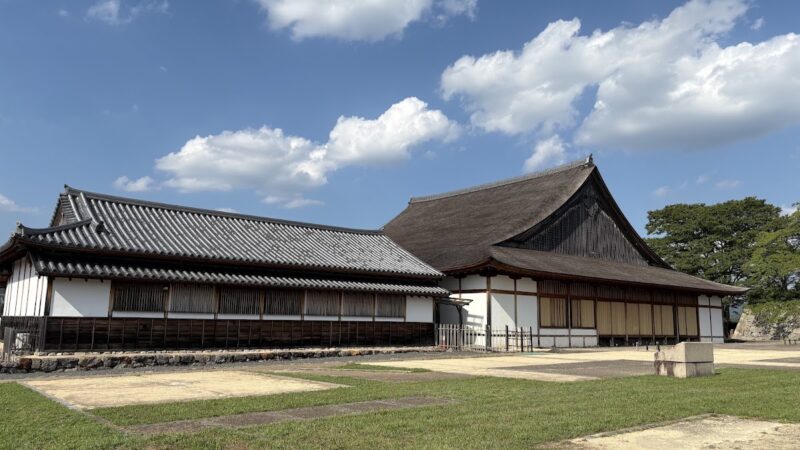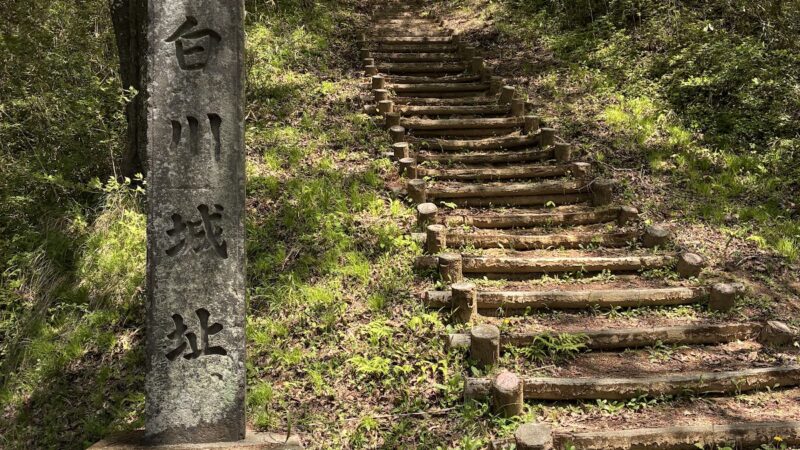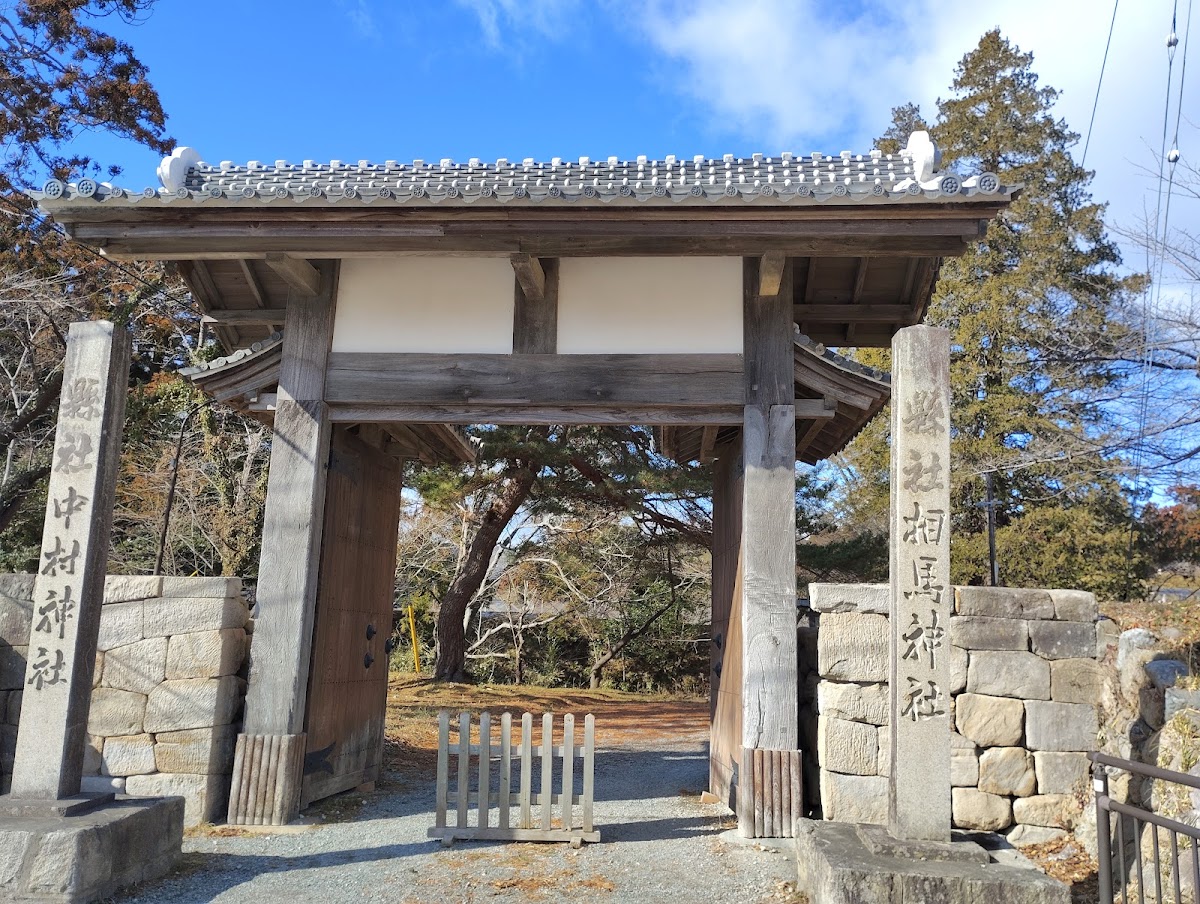
Complete Guide to Soma Nakamura Castle | Thorough Explanation of History, Structure, Highlights, and Tourist Information
Located in the heart of Soma City, Fukushima Prefecture, Soma Nakamura Castle, also known as “Baryo Castle,” is a historic castle. In 1611, Soma Toshitane moved there from Odaka Castle, and for approximately 260 years until the early Meiji period, it served as the residence of successive generations of the Soma clan and the center of their administration. Currently, it is maintained as Baryo Park and is a popular tourist spot, designated as a prefectural historical site, attracting many history enthusiasts and tourists.
What is Soma Nakamura Castle?
Soma Nakamura Castle is a hilltop castle located in Nakamura and Nishiyama, Soma City, Fukushima Prefecture. It is called “Nakamura Castle” because it was built in Nakamura, Uda District, Mutsu Province, but to distinguish it from other castles with the same name, the names “Soma Nakamura Castle” or “Mutsu Nakamura Castle” are used.
The castle was built on the eastern edge of a natural hill called Tenjin-yama, boasting a size of approximately 600 meters east-west and 650 meters north-south. As the headquarters of the Soma clan in the Hamadori region, it was an important base where the Nakamura Domain’s administrative offices were located throughout the Edo period.
History of Soma Nakamura Castle
From Ancient Times to the Early Middle Ages
There are various theories regarding the origin of Soma Nakamura Castle, but the oldest tradition states that it was built around 800 AD, in the early Heian period, by Sakanoue no Tamuramaro to pacify Oshu. However, this tradition lacks historical evidence and is considered to have strong legendary elements.
A reliable record indicates that the Nakamura clan, who ruled this area from the Nanboku-cho period to the early Sengoku period, had a residence here. The residence built by Nakamura Tomotaka is considered the beginning, and the Nakamura clan used this site as their castle for generations.
The Era of the Soma Clan
At the start of the Sengoku period (Warring States period), the Soma clan gained control of this region. The Soma clan was a branch of the Chiba clan, descendants of the Soma clan who entered Mutsu Province, Namekata District (present-day Minamisoma City, Fukushima Prefecture) during the Kamakura period. Initially, the Soma clan’s base was Odaka Castle (present-day Odaka Ward, Minamisoma City).
Throughout the Sengoku period, the Soma clan engaged in fierce conflicts with the Date clan. The struggle for territory intensified particularly during the time of Date Masamune. The Soma clan’s territories were secured by Toyotomi Hideyoshi’s pacification of Oshu, allowing them to survive as a Sengoku daimyo (feudal lord).
Renovation to a Modern Castle and the Establishment of the Nakamura Domain
In 1611 (Keicho 16), Soma Toshitane moved his base from Odaka Castle and extensively renovated Nakamura Castle into a modern castle. With the construction of this castle, Soma Nakamura Castle became the new residence of the Soma clan and would function as the center of the domain’s administration for the next 260 years.
During the Edo period, the Soma clan ruled the Nakamura Domain, a 60,000-koku domain, as an outside daimyo (feudal lord). The castle had a strong structure, with the main keep at its center, surrounded by the second and third baileys, the Okada Manor, and other enclosures, and enclosed by moats and dry moats. Furthermore, the main keep housed the Myoken Bailey, dedicated to Myoken Bodhisattva, the Soma clan’s guardian deity, serving as a spiritual pillar for the clan.
Construction and Destruction of the Keep
Nakamura Castle originally had a three-story keep. However, in 1667 (Kanbun 7), the keep was destroyed by lightning. Afterward, the keep was never rebuilt, and the castle continued to exist without a keep until the end of the Edo period.
Even after the castle keep burned down, the castle’s defensive and administrative functions were maintained, and the Soma clan continued to rule as feudal lords until the Meiji Restoration.
From the End of the Edo Period to the Meiji Era
In 1868 (Keio 4), when the Boshin War broke out, the Nakamura Domain initially joined the Ouetsu Reppan Alliance. However, seeing the course of the war, they switched sides to the new government, and were subsequently attacked by the allied forces. The castle became the scene of fierce fighting and was temporarily in danger of falling, but ultimately, with the support of the new government forces, it was successfully defended.
After the Meiji Restoration, the Nakamura Domain was abolished due to the abolition of the feudal domains and the establishment of prefectures, and the castle was also abandoned in the early Meiji period. Many of the castle’s structures were demolished, but remnants such as stone walls, earthworks, and moats remain to this day.
Structure of Soma Nakamura Castle
Layout and Enclosure Arrangement
Soma Nakamura Castle is a flatland castle that skillfully utilizes the hilly area known as Tenjin-yama. The entire castle complex measured approximately 600 meters east-west and 650 meters north-south, making it one of the largest castles in the Hamadori region.
The main keep (Honmaru), the central part of the castle, was located at the highest elevation, surrounded by the second and third baileys (Ninokuruwa and Sanokuruwa), forming a terraced layout. To the north of the Honmaru was the Myoken Kuruwa, where the Myoken Shrine (present-day Soma Nakamura Shrine), dedicated to Myoken Bodhisattva, the guardian deity of the Soma clan, was located.
Structure of the Honmaru
The Honmaru, as the central part of the castle, housed the lord’s residence and administrative offices. A three-story keep once stood there, but as mentioned earlier, it was destroyed by fire in 1667 (Kanbun 7) and was never rebuilt.
High stone walls surrounded the Honmaru, strengthening its defenses. Even today, remnants of these original stone walls remain in good condition around the Honmaru, conveying the imposing presence of this early modern castle.
Myoken Kuruwa and Soma Nakamura Shrine
The Myoken Kuruwa was an important space that served as the center of faith for the Soma clan. The Soma clan revered Myoken Bodhisattva as their guardian deity for generations, and established a Myoken shrine within the castle grounds as a spiritual pillar.
Currently, Soma Nakamura Shrine stands on this site, and it is a sacred place where the departure ceremony for the Soma Nomaoi festival, held every July, takes place. The Soma Nomaoi is a traditional event designated as a National Important Intangible Folk Cultural Property, and is a valuable festival that conveys the samurai culture of the Soma clan to the present day.
Ninomaru and Sannomaru
Outside the main keep (Honmaru), the Ninomaru and Sannomaru were located. The Ninomaru housed the residences of senior retainers and important facilities of the domain, while the Sannomaru contained the residences of lower-ranking samurai and merchant areas.
These enclosures were demarcated by moats and dry moats, designed to prevent enemy intrusion. Some moats and earthworks remain today, allowing us to understand the defensive system of the time. ### Okada-kan
Within a corner of the castle grounds was a facility called Okada-kan. It is believed to have been used as an important branch office of the domain or as a residence for specific officials.
Otemon Gate and Castle Gates
The Otemon Gate, the formal entrance to the castle, was an important structure demonstrating the castle’s prestige. Although the building itself is now gone, the stone walls and earthworks of the Otemon Gate site remain, allowing us to imagine its former scale.
The castle had multiple gates, each managed under a strict security system.
Stone Walls and Earthworks
Stone walls and earthworks were the key to the defense of Soma Nakamura Castle. Stone walls built using techniques such as cut-stone and fitted-stone construction still exist, mainly around the main keep, making them valuable remains for understanding early Edo period stonework techniques.
Earthworks also remain in various parts of the castle, with particularly high earthworks forming defensive lines at the boundaries of the baileys.
Moat Arrangement
As part of the castle’s defensive system, water moats and dry moats were skillfully arranged. A distinctive feature is the moat arrangement, which utilized the natural elevation differences of the hilly terrain.
Some of the moats still hold water today, preserving their original appearance. The moat between the main keep and the second keep is particularly large, attesting to the castle’s high defensive strength.
Current Soma Nakamura Castle Ruins (Maryo Park)
Preservation as a Prefectural Designated Historic Site
The Soma Nakamura Castle Ruins are protected as a designated historic site of Fukushima Prefecture and have been developed as Maryo Park. The castle remains are well-preserved within the park, and visitors can actually see the stone walls, earthworks, and moats.
Main Highlights
Main Keep Site
Currently developed as a plaza, visitors can experience the location where the keep and palace once stood. From the main keep, one can enjoy a panoramic view of Soma city, understanding that the castle was built in a location overlooking the city.
Stone Walls
Early Edo period stone walls remain in excellent condition, mainly around the main keep. By observing the construction methods and the types of stones used, you can learn about the castle building techniques of the time.
Earthworks
Earthworks remaining throughout the castle grounds are important remnants indicating the castle’s defensive lines. Especially at the boundaries of the baileys, high earthworks remain clearly visible.
Moat
A deep moat remains between the main keep and the second bailey, and part of it is still filled with water. The scale of the moat gives a real sense of the castle’s strong defenses.
Soma Nakamura Shrine
Soma Nakamura Shrine, located on the site of the Myoken bailey, is a shrine that still attracts worshippers as it enshrines the guardian deity of the Soma clan. It is a sacred site where the departure ceremony for the Soma Nomaoi festival is held, and is cherished by the local people.
Main Gate Site
Although the main gate building is gone, the location and size of the gate can be determined from the stone walls and earthworks. Information boards are also installed to help you understand the site better.
As a Cherry Blossom Spot
Maryo Park is also known as a cherry blossom spot, with approximately 400 Somei Yoshino cherry trees blooming in the spring. The contrast between the castle ruins and the cherry blossoms is beautiful, and the park is bustling with many cherry blossom viewers.
Relationship with the Soma Nomaoi Festival
Soma Nakamura Castle has a deep connection to the Soma Nomaoi Festival, a nationally designated Important Intangible Folk Cultural Property. The Soma Nomaoi Festival is a traditional event held every July, and is said to originate from a story in which the Soma clan claimed descent from Taira no Masakado, and Masakado released wild horses in Shimosa Province, using them as a model for enemy soldiers for military training.
On the first day of the festival, a departure ceremony is held at Soma Nakamura Shrine, where mounted warriors clad in armor depart from the castle ruins. This scene evokes the past when the Soma clan’s warriors departed from the castle, creating a moment that evokes a sense of historical romance.
The Soma Nomaoi festival is held over three days, featuring magnificent events such as armored horse racing and a sacred flag competition. Visiting the Soma Nakamura Castle ruins during this festival allows for a deeper immersion into the samurai culture of the Soma clan.
Access and Tourist Information
Location
Nakamura Kitamachi, Soma City, Fukushima Prefecture
Access Methods
Access by Train
Approximately 15 minutes on foot from Soma Station on the JR Joban Line. The path from the station to the castle ruins is mostly flat, allowing you to enjoy the townscape as you walk.
Access by Car
Approximately 10 minutes from the Soma Interchange on the Joban Expressway. A parking lot is available at Baryo Park and is free to use.
Visiting Information
Opening Hours
Baryo Park is always open and can be visited freely.
Admission Fee
Free
Estimated Time Required
If you want to explore thoroughly, allow about 1 to 1.5 hours. We recommend carefully observing the remains such as the stone walls and moats, and enjoying the view from the main keep.
Points to Note When Visiting
- The castle ruins utilize the natural terrain, so there are slopes and steps in some areas. We recommend wearing comfortable shoes.
- Please avoid climbing on the stone walls or entering restricted areas.
- Crowds are expected during the spring cherry blossom season and the Soma Nomaoi festival.
Nearby Tourist Attractions
Soma City Historical Materials Museum
Exhibits materials related to the history of the Soma clan and the Nakamura domain, allowing for a deeper understanding of the castle’s history.
Soma Koyo Park Golf Course
A recreational facility near the castle ruins, enjoyable for families.
Matsukawaura
A scenic spot located on the coast of Soma City, where you can also enjoy seafood.
Cultural Value of Soma Nakamura Castle
Soma Nakamura Castle, designated as a Fukushima Prefecture Historic Site, possesses high cultural value in the following respects:
Historical Value
The Soma clan’s castle served as their residence for 260 years, functioning as the political, economic, and cultural center of the Hamadori region. Its historical significance is immense. The Soma clan’s history, intertwined with the turning points of Japanese history from the Sengoku period to the Edo period and the Meiji Restoration, occupies an important position in regional history research.
Archaeological Value
As a well-preserved example of an early Edo period castle structure, it is archaeologically valuable. In particular, the construction of the stone walls and the layout of the castle grounds provide important information for studying the castle-building techniques of the time.
Cultural Value
As a castle site closely linked to the intangible cultural heritage of the Soma Nomaoi festival, it forms a cultural landscape where tangible and intangible cultural heritage are integrated. This is a unique value not found in other castle sites.
Recovery from the Great East Japan Earthquake
Soma City also suffered significant damage in the Great East Japan Earthquake of 2011. The Soma Nakamura Castle ruins also suffered damage, including the collapse of some of the stone walls, but restoration work has been carried out, and it has now been restored to its pre-earthquake state.
The Soma Nomaoi festival was also held on a smaller scale in the year of the earthquake, but it has expanded in scale since the following year and continues as a symbol of recovery. The castle ruins and the festival have become symbols of hope and pride for the local people in their recovery.
Summary
Soma Nakamura Castle is a representative castle of the Hamadori region of Fukushima Prefecture, bearing the marks of 260 years of history for the Soma clan. From its construction in 1611 (Keicho 16) until its abandonment in the early Meiji period, it continued to function as the center of the domain’s administration.
Currently, it is maintained as Baryo Park, where visitors can see the remains such as stone walls, earthworks, and moats. The stone walls around the main keep are particularly impressive, allowing visitors to appreciate the castle-building techniques of the early Edo period. Furthermore, the Myoken Kuruwa, where the Soma Nakamura Shrine is located, still plays an important role as the departure point for the Soma Nomaoi festival.
Known as a famous cherry blossom viewing spot, it is bustling with many flower viewers in the spring. Visiting during the Soma Nomaoi festival allows you to witness the magnificent sight of mounted warriors in armor marching out, giving you a glimpse into the samurai culture of the Soma clan.
Its convenient location, within walking distance of JR Soma Station, is another attractive feature, making it a must-visit historical spot when visiting Fukushima Prefecture. Why not take a stroll through the castle ruins and reflect on the history and culture of the Soma clan?