Complete Guide to Shibechari Chashi | A Thorough Explanation of the Historic Chashi Site that Was the Stage of Shakushain’s Rebellion
What is Shibechari Chashi?
Shibechari Chashi is a historical fort site built by the Ainu people, located in Shizunai, Shinhidaka-cho, Hidaka-gun, Hokkaido. This site, which was the central stage of the “Shakushain’s Rebellion” in 1669 (Kanbun 9), is known as the place where Shakushain (Samushaya), the chief of the Hidaka Ainu, remained until the end.
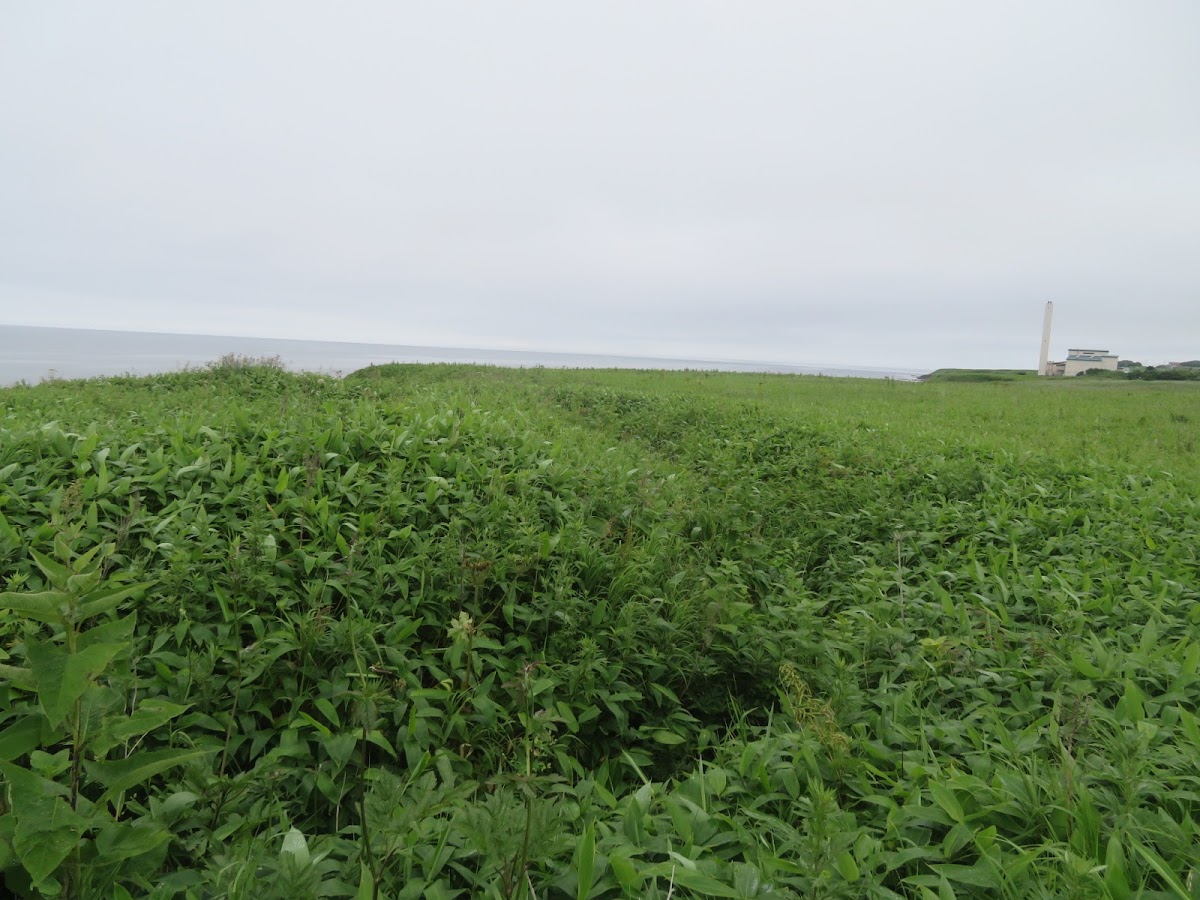
Built on the tip of a plateau on the left bank of the Shizunai River, at an altitude of 83 meters (a difference in elevation of 77 meters from the alluvial plain), this chashi has a structure called a “hilltop type” and boasts an excellent location overlooking the Pacific Ocean and the Hidaka Mountains from the cliff overlooking the Shizunai River. Currently, it is maintained as “Makaku Park” and was designated as part of the national historic site “Shibechari River Basin Chashi Sites and Appetsu Chashi Site” on December 2, 1997.
Meaning and Role of Chashi
Chashi is an Ainu word meaning “fence” or “fortress.” It functioned as a defensive structure and a place of worship built by the Ainu people, constructed on hills or cliffs with good views facing the sea or rivers, by digging one to several trenches (moats). Chashi are extremely important archaeological sites for studying Ainu culture, and the existence of over 500 chashi sites has been confirmed throughout Hokkaido.
Shibechari Chashi holds special value as an archaeological site related to the largest battle in the history of the Hokkaido Ainu, with a clear function as a military base.
Shakushain’s Rebellion and its Historical Background
About Shakushain
Shakushain (c. 1606 – November 16, 1669) was a chieftain and headman of the Hidaka Ainu based in Shibechari (present-day Shizunai, Shinhidaka Town) during the early Edo period. In the Ainu language, he is called Saksaynu or Samkusaynu.
At that time, several powerful Ainu groups existed in the Hidaka region, and two chieftains, Shakushain, based in Shibechari, and Kamokutain, based in Hae (present-day Hidaka Town), competed for influence.
The Beginning of the Rebellion
In 1669 (Kanbun 9), Shakushain’s Rebellion broke out. The background to this rebellion was the accumulation of discontent among the Ainu people against the Matsumae Domain’s unfair trade practices and exploitative policies. The Matsumae Domain monopolized trade with the Ainu, forcing them into bartering under extremely unfavorable conditions.
The direct trigger was a conflict between the Shibechari group led by Shakushain and the Hae group led by Kamokutain. After Kamokutain was killed, his son Onibishi attacked Shakushain, but was killed in return. This incident prompted Shakushain to decide to revolt against the Matsumae Domain’s oppression, and he called upon Ainu groups throughout Hokkaido to form a large coalition army.
Course of the War
In June 1669, the Ainu coalition army led by Shakushain attacked Matsumae Domain trading posts and Japanese settlements in various parts of southern Hokkaido. This uprising quickly expanded, developing into a large-scale battle involving all of Hokkaido. Initially, the Matsumae Domain struggled against the Ainu offensive.
The Matsumae Domain requested reinforcements from the shogunate and, with support from the Hirosaki Domain and others, launched a counterattack. Gaining a superior advantage with firearms and other weapons, the Matsumae forces gradually pushed back the Ainu army.
A Tragic Ending
In October of the same year, as the battle situation turned unfavorable for Shakushain, the Matsumae Domain offered a peace treaty. Shakushain accepted and headed towards the Matsumae Domain’s camp with a few of his subordinates. However, this was a trap. The Matsumae Domain invited Shakushain and his men to a banquet, where they murdered them while they were intoxicated.
Without their leader, the Ainu army lost their will to fight, and Shibechari Chashi was burned down by the Matsumae Domain. After this battle, the Matsumae Domain further strengthened its control over the Ainu, severely undermining the Ainu people’s independence.
The Battle of Shakushain is remembered as the largest armed resistance in the history of the Ainu people of Hokkaido, and is still recounted today as a heroic act fought for the dignity and freedom of the Ainu people.
Structure and Remains of Shibechari Chashi
Characteristics of Hilltop Chashi
Shibechari Chashi is a type of chashi called a “hilltop chashi.” This type of chashi is built utilizing the tip of a plateau or hill, and is characterized by a structure where three sides are protected by natural cliffs, and only one side, which is connected to the land, is separated by a trench (moat). This location allowed for a high level of defense with minimal effort.
Making the most of its topography on the cliffs of the Shizunai River, Shibechari Chashi became a natural fortress that was difficult for attackers to approach.
Existing Remains
The main remains currently exposed above ground are as follows:
Trees: Defensive ditches separating the landward side of the chashi. Artificially dug trenches served as a crucial defensive line to prevent enemy incursions. Clear traces of these trenches can be seen at Shibechari Chashi.
Kuruwa: A flat space enclosed by trenches. It is believed that Ainu people lived here and that it functioned as a base during battles.
These remains are valuable evidence that conveys the Ainu’s fortification techniques and defensive strategies from the early Edo period.
Stunning Views
The view from Shibechari Chashi is breathtaking. You can look down on the town of Shizunai, the horizon of the Pacific Ocean, and the majestic Hidaka Mountains in the background. This location suggests that it was important not only for military surveillance but also for its spiritual and symbolic significance.
On a clear day, you can see as far as Cape Erimo, allowing you to contemplate what Shakushain saw and thought from this place.
Mauta Park and Shakushain Memorial Facility
Development of Mauta Park
The Shibechari Chashi site is now developed as “Mauta Park.” Managed as an urban park by Shinhidaka Town, it aims to preserve historical heritage and serve as a place for tourism and education.
Walking paths are maintained within the park, making access to the Chashi site easy. From spring to autumn, visitors can enjoy historical walks amidst the lush natural environment.
Shakushain Statue
The symbol of Mauta Park is the colossal statue of Shakushain, approximately 16 meters tall. Erected in 1970 (Showa 45), this statue, depicting Shakushain gazing out at the Pacific Ocean with a bow in his hand, conveys the pride and spirit of resistance of the Ainu people.
A monument commemorating Shakushain’s achievements and life is also located in front of the statue. Many visitors reflect on the history and culture of the Ainu people in front of this statue. ### Shakushain Memorial Museum
The Shakushain Memorial Museum is located within Makku Park. This free-admission facility displays detailed materials related to Shakushain’s battles, as well as weapons and everyday objects from the period.
The museum offers a multifaceted understanding of this historical event through maps, timelines, and reproductions of ancient documents illustrating the course of the battles. It’s a must-visit facility when visiting Shibechari Chashi.
Ainu Museum
Adjacent to the Shakushain Memorial Museum is the Ainu Museum. This museum also offers free admission and provides a comprehensive overview of Ainu culture.
A wealth of authentic artifacts, including traditional clothing, ceremonial tools, hunting equipment, and everyday items, are on display, allowing for a deep understanding of the Ainu people’s spiritual culture and wisdom of coexisting with nature. The beauty of Ainu patterns and the high level of wood carving skill are particularly impressive.
Ainu Cultural Hub Space Concept
In Shinhidaka Town, a plan is underway to develop the area around Makku Park as the “Shinhidaka Town Ainu Cultural Hub Space.” The concept envisions a center for the preservation, transmission, and dissemination of Ainu culture, with the Shibechari Chashi site as its core.
This initiative holds significant importance in re-recognizing the value of Ainu culture and passing it on to future generations.
Shibechari River Basin Chashi Sites
Overview of the Nationally Designated Historic Site
Shibechari Chashi is not designated as a standalone site, but as part of the “Shibechari River Basin Chashi Sites and Appetsu Chashi Sites,” a nationally designated historic site. This historic site consists of five chashi belonging to Shinhidaka Town and one chashi belonging to Hidaka Town.
Shinhidaka Town Chashi Sites:
- Shibechari Chashi Site
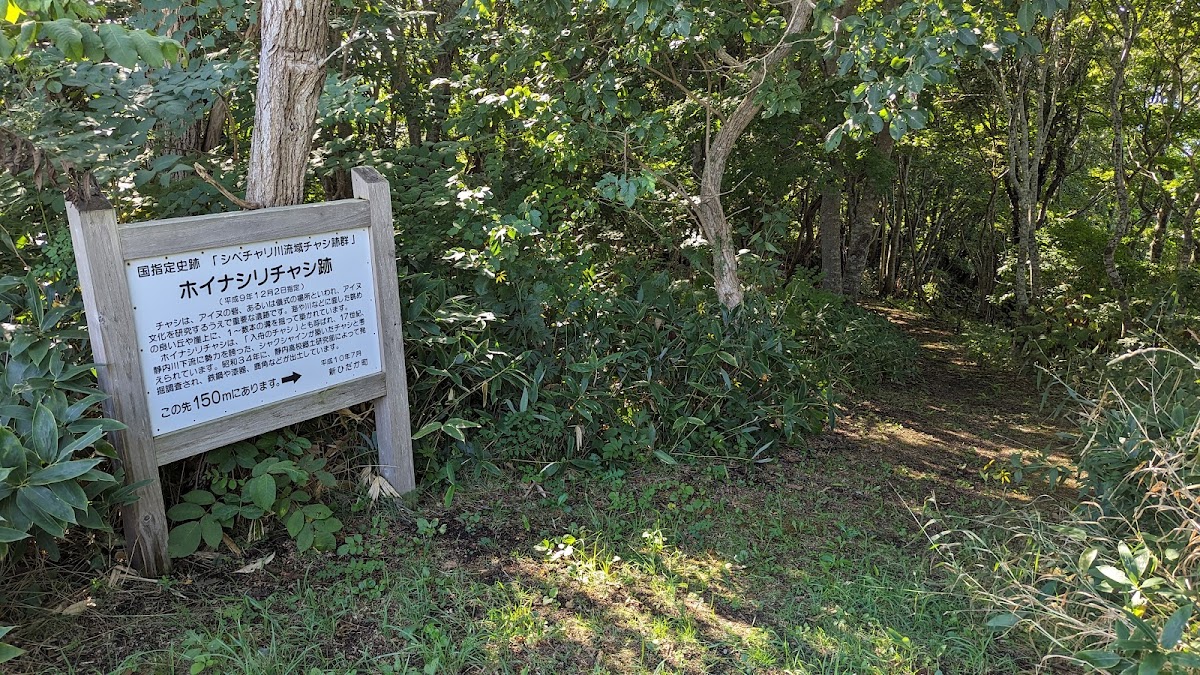
- Hoinashirichashi Site
- Menachashi Site
- Ochirishi Chashi Site
- Ruiopirachashi Site
Hidaka Town Chashi Sites:
- Appetsu Chashi Site
These chashi sites are all thought to be related to Shakushain’s rebellion and are presumed to correspond to the “mansion,” “residence,” “castle,” “fortified residence,” and “fortress” mentioned in the records of the shogunate, Matsumae Domain, and Hirosaki Domain.
Characteristics of Each Chashi
Hoinashirichashi Site is located on a hill on the right bank of the Shizunai River, in a location that seems to be paired with Shibechari Chashi. It has been suggested that it may have been a base for Kamokutain.
Menachashi Site and Ochirishi Chashi Site are located in the upper reaches of the Shizunai River and are thought to have functioned as inland defensive bases.
The Ruiopirachashi Ruins are located near the coast and may have served as a base for surveillance and trade from sea routes.
The Appetsuchashi Ruins are located upstream of the Atsubetsu River in Hidaka Town and were one of the important strategic points during Shakushain’s Rebellion.
These Chashi ruins hold high historical value as they demonstrate the Ainu’s strategic defensive network during Shakushain’s Rebellion.
Access and Visiting Information
Location
〒056-0144 Shizunai Makku, Shinhidaka-cho, Hidaka-gun, Hokkaido
Access by Car
From Sapporo: Take the Hokkaido Expressway, exit at Tomakomai East IC, and head east on National Route 235 for approximately 2 hours. Follow the signs for Makku Park from the Shinhidaka town center.
From Obihiro: Approximately 2 hours and 30 minutes via National Route 236 and National Route 235.
Makku Park has a free parking lot, making it easily accessible by car.
Access by Public Transportation
Since the JR Hidaka Main Line was discontinued in 2021, access by public transportation is currently somewhat inconvenient. Because it’s a distance from the nearest bus stop, renting a car is recommended.
Visiting Hours and Fees
Makku Park, where the Shibechari Chashi ruins are located, is open year-round. Admission is free.
The Shakushain Memorial Museum and the Ainu Museum also offer free admission, but opening hours are generally 9:00 AM to 5:00 PM (shorter in winter). Closed on Mondays (or the following day if Monday is a public holiday) and during the New Year holidays. It is recommended to check the latest information on the Shinhidaka Town official website before visiting.
Estimated Visiting Time
Including a stroll through the Chashi ruins, viewing the Shakushain statue, and visiting the memorial and museums, approximately 1 hour 30 minutes to 2 hours is recommended. Those who wish to immerse themselves in history should allocate more time.
Points to Note When Visiting
- The Chashi ruins are a historical site, and the protection of the remains is important. Please refrain from entering areas other than the designated walking paths.
- As it is located on a cliff, please be very careful of your footing. It becomes especially slippery during rainy weather and snowmelt.
- Take insect repellent in summer and warm clothing in winter.
- Please take all your trash with you and cooperate in the preservation of the natural environment.
Nearby Tourist Attractions
Nijukken-dori Cherry Blossom Avenue
The Nijukken-dori Cherry Blossom Avenue is a representative tourist attraction of Shinhidaka Town. Known as Japan’s longest cherry blossom avenue, with approximately 3,000 cherry trees planted along a straight stretch of about 7 kilometers, it has been selected as one of “Japan’s 100 Best Roads,” one of “Japan’s 100 Best Cherry Blossom Viewing Spots,” and a “Hokkaido Heritage Site.”
During the blooming season from early to mid-May, the cherry blossom tunnel creates a breathtaking spectacle. These are spots you should definitely visit in conjunction with your visit to Shibechari Chashi.
Shizunai Onsen
If you want to relax and unwind after sightseeing, Shizunai Onsen is highly recommended. It has day-use bathing facilities and is popular with locals.
Shinhidaka Town Museum
This is a comprehensive museum exhibiting materials related to the natural history, archaeology, history, and folklore of Shinhidaka Town. The exhibits on Ainu culture are also extensive, allowing you to further deepen your understanding of Shibechari Chashi.
Hometown of Racehorses
Shinhidaka Town is also known as one of Japan’s leading thoroughbred horse breeding areas. Ranch tours are offered, allowing you to see the elegant horses up close.
Historical Significance of Shibechari Chashi
Importance in Ainu History
Shibechari Chashi holds more significance than just an archaeological site. It is a witness to history, a testament to the Ainu people rising up to protect their dignity and rights, and a symbol of pride as an indigenous people. Although Shakushain’s War ended in defeat, the Ainu people’s spirit of resistance demonstrated in this battle had a profound impact on later generations. It can be considered the origin of the modern Ainu rights restoration movement.
Place in Japanese History
In Edo-period Japan, relations with neighboring ethnic groups were a crucial political issue. Shakushain’s War marked a turning point in the Matsumae Domain’s control over the northern regions and significantly influenced subsequent policies toward Ezo (Hokkaido).
Furthermore, this battle serves as an important case study for considering the problems of colonialism, as it illustrates the tragic consequences of exploitative trade policies by the Japanese.
Contemporary Significance
In 2019, the “Act on the Promotion of Measures to Realize a Society Where the Pride of the Ainu People is Respected (Ainu Policy Promotion Act)” was enacted, legally recognizing the Ainu as the indigenous people of Japan.
Shibechari Chashi plays an important educational role in reaffirming the value of Ainu culture and realizing a multicultural society. Visiting this site offers a valuable opportunity to learn about Japan’s diverse history and culture.
Summary
Shibechari Chashi is an important historical site indispensable to understanding Hokkaido’s history. This place, the stage for the historic Shakushain’s Rebellion of 1669, conveys the pride and spirit of resistance of the Ainu people.
Standing on the cliff overlooking the Shizunai River, and gazing at the Pacific Ocean and the Hidaka Mountains, visitors can reflect on the historical drama that unfolded here more than 350 years ago. Combined with learning at the Shakushain Memorial Museum and the Ainu Museum, you will be able to truly appreciate the depth and richness of Ainu culture.
When visiting Shinhidaka Town, be sure to visit Shibechari Chashi. There, you will find living history that you cannot learn from textbooks, and it will raise many questions for us living in the modern age. It will be an opportunity to deeply reflect on Japan’s diverse history and culture amidst beautiful natural scenery.