Shiraoi Sendai Domain Jinya Ruins: A Thorough Explanation of the History and Highlights of Northern Defense in the Late Edo Period
Located in Shiraoi-cho, Shiraoi-gun, Hokkaido, the Shiraoi Sendai Domain Jinya Ruins are an important historical site that conveys the history of northern defense faced by Japan in the late Edo period. Built during the Ansei era, this jinya played a central role in the Sendai Domain’s defense of Ezo (present-day Hokkaido), and is now maintained as a historical park covering approximately 66,000 square meters. This article provides a detailed explanation of this historical heritage.
Historical Background of the Shiraoi Sendai Domain Jinya Ruins
Ezo Defense and the Role of the Sendai Domain
In the mid-19th century, with the approach of foreign ships, including Russians, the Edo Shogunate urgently needed to defend Ezo (present-day Hokkaido). In April 1855 (Ansei 2), the Shogunate ordered the Sendai Domain to guard eastern Ezo. The area assigned to the Sendai Domain was a vast region along the Pacific coast, encompassing Shiraoi, Cape Erimo, and extending to Kunashiri and Etorofu Islands. This represented approximately two-thirds of the entire eastern Ezo region, making it an extremely important responsibility for the Sendai Domain.
Reasons for Shiraoi’s Selection
Initially, the shogunate considered Yufutsu (present-day Tomakomai City) as the location for the base. However, in 1856, Sendai Domain samurai, including Miyoshi Kanemitsu, who conducted a site survey, determined that Yufutsu was geographically unsuitable. They identified Shiraoi as the most optimal base and applied to the shogunate for a change of location.
There were several reasons for Shiraoi’s selection. Firstly, the Shiraoi River provided abundant water resources, making it easy to secure drinking water and water for daily life. Secondly, the surrounding forest resources were abundant, allowing for the local procurement of construction materials for the base. Thirdly, the Ainu people lived there, providing an environment where cooperation could be obtained in food procurement and information gathering. Fourthly, the location offered excellent access to the coastline, providing efficient security operations.
Construction and Scale of the Jinya (Fortified Residence)
In 1856 (Ansei 3), the Sendai Domain began construction of its main fortified residence in Shiraoi. The residence occupied approximately 66,000 square meters of land and was a robust structure surrounded by earthen ramparts and moats. Six gates were established within the grounds, strictly restricting public access.
Within the residence, facilities such as samurai residences, armory, food storage, and stables were systematically arranged. The buildings were primarily wooden, incorporating the architectural style of the Sendai Domain while also being designed to withstand Hokkaido’s harsh climate. Between 150 and 200 samurai were stationed there at all times, taking turns on security duties.
The Reality of the Sendai Domain’s Northern Guard
Network of Sub-Fortified Residences
Centered around the main fortified residence in Shiraoi, the Sendai Domain established sub-fortified residences in various locations to cover its vast defensive area. The main outposts were located in Hiroo, Akkeshi, Nemuro, Kunashiri Island, and Etorofu Island, each functioning as a regional security base. These outposts maintained contact with the original outpost in Shiraoi, establishing a system for information sharing and mutual support.
Life of the Samurai
The samurai dispatched to Shiraoi were forced to live in harsh conditions in Ezo (Hokkaido), far from their hometown of Sendai. Winters in Hokkaido are far colder than in Sendai, with heavy snowfall, and the samurai struggled to cope with the cold. Food was mainly transported by ship from Sendai, but supplies were sometimes cut off during periods of rough seas.
Therefore, the samurai learned hunting and fishing techniques from the local Ainu people and made efforts to procure food locally. They also worked to create a self-sufficient system, such as attempting to cultivate vegetables. Their term of service was usually two to three years, after which they were replaced by substitute personnel. Some samurai were assigned to the post with their families, and a small community of samurai families formed around the encampment.
Interaction with the Ainu People
The Shiraoi region had long been inhabited by the Ainu people, and the Sendai Domain strived to build good relations with them. The samurai learned the Ainu language and communicated with them. Furthermore, mutual trust deepened through trade, and the domain gained geographical information and meteorological knowledge from the Ainu people.
On the other hand, the encroachment of the Japanese also encroached upon the Ainu people’s living space, leading to cultural friction. However, a relatively peaceful coexistence was maintained in Shiraoi, which formed the foundation for the smooth security activities of the Sendai Domain.
The End of the Encampment and Preservation as a Historical Site
End of Security Duties
In 1867 (Keio 3), the political system changed dramatically with the restoration of imperial rule by the Edo Shogunate. In 1868, the following year, with the establishment of the Meiji government, the governance policy for Ezo (Hokkaido) also changed. In 1868, the Sendai Domain was ordered to withdraw from Shiraoi, ending its 12-year security duty.
The samurai returned to Sendai, and many of the buildings of the encampment were dismantled or left to decay. However, the basic structures such as earthworks and moats remained, preserving their traces as a topographical feature.
The Road to Historic Site Designation
After the Meiji Restoration, the Shiraoi Sendai Domain encampment site was largely forgotten, but in the early Showa period, local historians began investigations. After the war, as research into the history of the late Edo period in Hokkaido progressed, the historical value of this encampment site began to be re-evaluated.
In 1966, the Shiraoi Sendai Domain encampment site was designated a national historic site. This is the largest jinya (fortified residence) site in Hokkaido and has been recognized as a valuable legacy that tells the history of northern defense during the late Edo period. After its designation as a historical site, Shiraoi Town began preservation and development work, proceeding with archaeological excavations and developing it as a historical park.
Information on the Sendai Domain Shiraoi Former Jinya Museum
Museum Overview
The Sendai Domain Shiraoi Former Jinya Museum opened in 1984 as a guidance facility for the historical site. This museum introduces the history of the Shiraoi Former Jinya and the realities of northern defense by the Sendai Domain, with a wealth of historical materials. Approximately 300 valuable items are on display, allowing visitors to learn in detail about a part of the history of Ezo (Hokkaido) during the late Edo period.
Exhibits and Highlights
The museum’s exhibits are divided into several themes.
Maps and Historical Documents of the Jinya (Fortified Residence)
Detailed maps showing the layout of the Jinya at the time are on display, allowing for a visual understanding of the building arrangements and the structure of the earthworks and moats. Official documents created by the Sendai Domain and diaries of samurai are also on display, allowing visitors to directly read records from that period.
Weapons and Equipment
Swords, spears, firearms, and other weapons used by the samurai are on display. These are items actually used in Shiraoi or donated by the Sendai Domain. Armor and horse tack are also exhibited, providing a concrete understanding of the equipment used by samurai at the time.
Daily Life Items
Tableware, cooking utensils, and clothing that tell the story of the samurai’s daily lives are on display. These are valuable materials that allow us to imagine what life was like in a harsh environment.
Materials on Exchange with the Ainu People
Items used in trade with the Ainu people and materials showing cultural exchange are also on display. These are important evidence that convey the history of coexistence between the Japanese and the Ainu people.
Reconstruction Model
A reconstruction model of the entire encampment is on display, allowing visitors to understand its appearance in three dimensions. It helps in visually understanding the building’s layout and scale.
Points to Note During Your Visit
A visit to the museum typically takes 30 minutes to an hour. The exhibits are organized chronologically, allowing visitors to understand the process from the circumstances under which the Sendai Domain was ordered to guard Ezo (Hokkaido), to the construction of the encampment, daily life, and finally, the withdrawal.
Each exhibit corner has detailed explanatory panels that carefully explain the historical background and the significance of the materials. In addition, special exhibitions are held regularly, providing opportunities for in-depth learning on specific themes.
Visitor Information
Opening Hours
9:30 AM – 5:00 PM (Last entry at 4:30 PM)
Closed Days
- Mondays (or the following day if Monday is a public holiday)
- New Year’s Holidays (December 29th – January 3rd)
Admission Fees
- General: 300 yen
- Elementary and Junior High School Students: 150 yen
- Group Rates (20 or more people): General 240 yen, Elementary and Junior High School Students 120 yen
- Free admission for those with a disability certificate
Access
- Approximately 30 minutes on foot or 5 minutes by car from JR Shiraoi Station
- Approximately 10 minutes by car from Shiraoi IC on the Hokkaido Expressway
- Free parking available (30 regular cars, 3 large buses)
Address
681-4 Jinyacho, Shiraoi-cho, Shiraoi-gun, Hokkaido
Inquiries Phone: 0144-85-2666
For group visits, we recommend contacting us in advance. For school trips and group tours, we can arrange a guided tour by a professional guide (advance reservation required).
Highlights of the Historical Park
Remains of the Jinya Site
The historical park adjacent to the museum preserves the remains of the Jinya site in excellent condition.
Earthworks and Moat
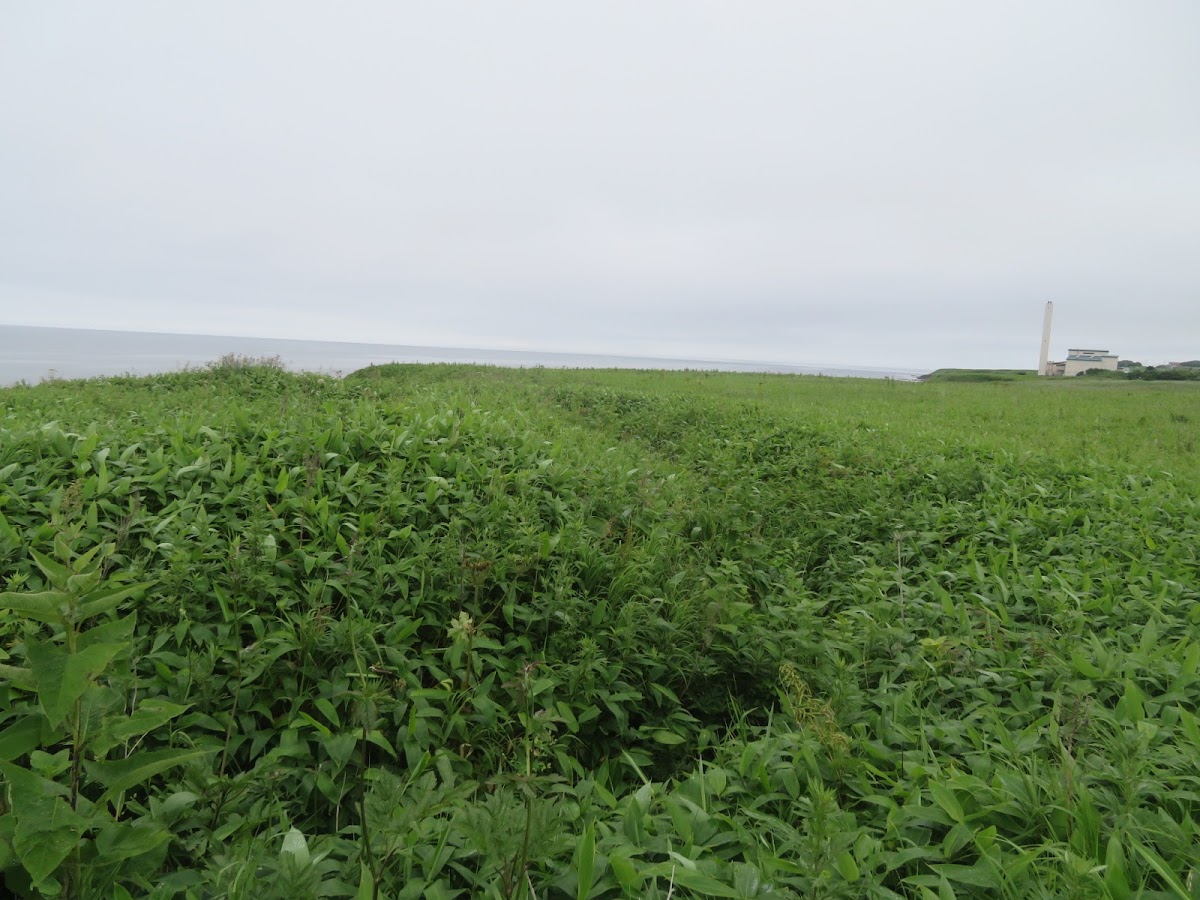
The earthworks and moat surrounding the Jinya site remain clearly visible. The height of the earthworks varies depending on the location, but the highest point is approximately 3 meters, allowing you to appreciate its function as a defensive structure. The moat is approximately 5-6 meters wide and 2 meters deep. These have been restored to a form close to their original appearance after archaeological excavations and restoration work.
Gate Sites
The Jinya site had six gates, and their locations are marked, allowing you to see where the entrances to the site were. Explanatory signs are installed at the main gate sites, allowing visitors to learn about the role and structure of each gate.
Building Sites
Partially restored and displayed are the foundations of buildings revealed through archaeological excavations. Visitors can see the actual layout of the samurai residences, offices, and armory, gaining an understanding of the functional arrangement of the encampment at the time.
Walking Course
A well-maintained walking path runs through the historical park, allowing visitors to explore the entire encampment site. The walk takes approximately 30 to 40 minutes. Explanatory signs are placed at key points along the path, allowing visitors to learn about history at their own pace.
From spring to autumn, visitors can enjoy the park’s rich natural environment. It’s a popular spot for cherry blossom viewing during the cherry blossom season and is beloved by locals. While walking may be difficult in winter due to snow, the historical site amidst a snowy landscape also has its own charm.
Educational Value of the Shiraoi Sendai Domain Encampment Site
Collaboration with School Education
The Shiraoi Sendai Domain Encampment Site is an important learning resource in history education in Hokkaido. In Shiraoi Town, elementary and junior high schools provide opportunities for students to visit the former Jinya (fortified residence) site as part of their social studies classes to learn about local history. Many schools from within and outside Hokkaido also visit the site on educational trips, attracting a large number of students throughout the year.
The museum offers educational programs, providing explanations tailored to each grade level and learning objective. Learning while viewing actual artifacts deepens students’ understanding of history in a way that textbooks alone cannot.
As a Local Cultural Resource
For Shiraoi Town, the former Jinya site is an important cultural resource and a key element in forming the town’s identity. The town develops various cultural projects utilizing this historical site.
Every year, events such as the Jinya Festival are held, featuring historical processions recreating the attire of samurai from that era and performances of traditional arts. These events increase local residents’ interest in history and serve as a platform for the transmission of culture across generations.
Activities of the Sendai Domain Shiraoi Former Jinya Museum Friends Association
The Sendai Domain Shiraoi Former Jinya Museum Friends Association has been organized to support the museum’s activities and to preserve and promote local history and culture. The Friends of the Site Association holds regular study sessions and lectures, providing a forum for interaction and learning among members.
We also conduct cleaning activities at historical sites and volunteer guided tours at the museum, developing community-based cultural preservation activities. Membership in the Friends of the Site Association is open at any time, and we welcome anyone interested in history.
Collaboration with other tourist spots in Shiraoi Town
Synergistic effects with Upopoy (National Ainu Museum and Park)
Upopoy (National Ainu Museum and Park), which opened in Shiraoi Town in 2020, is a national center for the revival and development of Ainu culture. The Shiraoi Sendai Domain Jinya Ruins and Upopoy complement each other, as they are facilities that convey the history of Shiraoi from different eras and perspectives.
At the Jinya Ruins, you can learn about the history of Hokkaido during the late Edo period from the perspective of the Japanese, while at Upopoy, you can learn about history and culture from the perspective of the Ainu people. Visiting both facilities allows for a more multifaceted and deeper understanding of history. In Shiraoi Town, a tourist route connecting both facilities is being developed, allowing for efficient sightseeing.
Nature and Hot Springs of Shiraoi
Shiraoi Town is blessed with a rich natural environment. In addition to visiting the Jinya ruins, you can enjoy bathing in Shiraoi Onsen (hot springs) and savoring local seafood dishes. Kojohama, in particular, is known as a hot spring resort, and its open-air baths overlooking the Pacific Ocean are popular.
Furthermore, there are numerous spots to enjoy nature, such as Lake Kuttara and the Shiraoi River, allowing you to create a fulfilling travel plan combining historical exploration and nature experiences.
Best Season and Points to Note
Recommended Time of Year
While the Shiraoi Sendai Domain Jinya Ruins can be visited year-round, each season offers its own unique charm.
Spring (April-June)
During the cherry blossom season (late April-early May), the historical park is adorned with flowers, offering a beautiful landscape. The weather is mild, making it ideal for strolling.
Summer (July-August)
You can enjoy a pleasant stroll through the lush green park. However, even in Hokkaido, temperatures can rise in summer, so be sure to stay hydrated.
Autumn (September-November)
During the autumn foliage season (mid-to-late October), the colorful trees adorn the historical site, making it ideal for photography. The weather is stable, making it a suitable season for sightseeing.
Winter (December-March)
Some walking paths may be impassable due to snow. However, the museum remains open as usual, and you can visit inside. Reflecting on history in the quiet of winter is also a unique experience.
Notes for Visitors
- Although the historical park is well-maintained, there are some uneven terrains, so we recommend wearing comfortable shoes.
- Insect repellent is useful during the summer.
- If visiting in winter, please take adequate precautions against the cold. – Smoking and littering are prohibited within the historical site.
- When bringing pets, please keep them on a leash and be considerate of other visitors.
Towards the Future of the Shiraoi Sendai Domain Jinya Site
Efforts for Preservation and Utilization
Shiraoi Town is continuously working to balance the appropriate preservation and utilization of the historical site. New discoveries from regular excavation surveys are reflected in the exhibits, and efforts are being made to always provide visitors with the latest research findings.
Furthermore, the introduction of new exhibition methods utilizing digital technology is being considered, and plans are underway to provide a more immersive historical experience, such as recreating the Jinya site using VR and AR.
International Perspective Evaluation
In recent years, the Shiraoi Sendai Domain Jinya Site has attracted attention from an international perspective. As an example of the history of international relations and regional defense in 19th-century East Asia, it has garnered interest from researchers overseas.
In the future, the plan is to strengthen multilingual support, including English and Chinese, to create exhibits that are easily understood by visitors from overseas. It is also expected to play a role as a hub for disseminating Hokkaido’s history from a global perspective.
Summary
The Shiraoi Sendai Domain Jinya Ruins are a valuable historical site that conveys the history of Japan’s northern defense during the turbulent Bakumatsu period. The role played by the samurai of the Sendai Domain in distant Ezo (Hokkaido), their interactions with the Ainu people, and the history of their 12 years of security activities offer many insights for us living today.
At the Sendai Domain Shiraoi Former Jinya Museum, you can learn about the conditions of the time concretely through abundant actual materials and detailed explanations. Furthermore, the remains such as earthworks and moats remaining in the historical park give you a real sense of being on the site of history.
When visiting Shiraoi Town, be sure to visit this historical heritage site and reflect on the lives of the people who lived in Hokkaido during the Bakumatsu period. Visiting it in conjunction with Upopoy will allow you to understand Shiraoi’s history and culture from a more multifaceted perspective.
The Shiraoi Sendai Domain Jinya Ruins are a valuable place of learning and discovery for history buffs, families, and students alike. I wholeheartedly recommend it as a destination for anyone traveling to Hokkaido to gain a deeper understanding of its history.