Katsuyama Castle Ruins: A Thorough Explanation of Hokkaido’s Largest Medieval Mountain Castle and the History of the Takeda and Kakizaki Clans
What is Katsuyama Castle?
Katsuyama Castle is the site of a medieval mountain castle located in Kaminokuni Town, Hiyama District, Hokkaido. Built in the late 15th century by Takeda Nobuhiro, the ancestor of the later Matsumae clan, it functioned as a major political, military, and northern trade base for the Takeda and Kakizaki clans on the Sea of Japan side until around the end of the 16th century. On April 12, 1977, it was designated a national historic site as one of the “Kaminokuni Castle Ruins,” and subsequent archaeological excavations have revealed it to be an extremely important site for understanding the history of medieval Hokkaido.
The Katsuyama Castle Ruins boast one of the largest scales among medieval castles in Hokkaido, and the quality and quantity of excavated artifacts are unparalleled. Excavations have unearthed over 100,000 artifacts, revealing invaluable information about the lifestyle, trade practices, and relationships with the Ainu people that could not be obtained from written historical sources alone.
History of Katsuyama Castle
Construction by Takeda Nobuhiro
Katsuyama Castle was built in the late 15th century by Takeda Nobuhiro. Takeda Nobuhiro is believed to have been from Wakasa Province (present-day Fukui Prefecture). While there are various theories, he is said to have distinguished himself in the Battle of Koshamain in 1456, and solidified his power base in Ezo (Hokkaido) by becoming the son-in-law of Kakizaki Suehige.
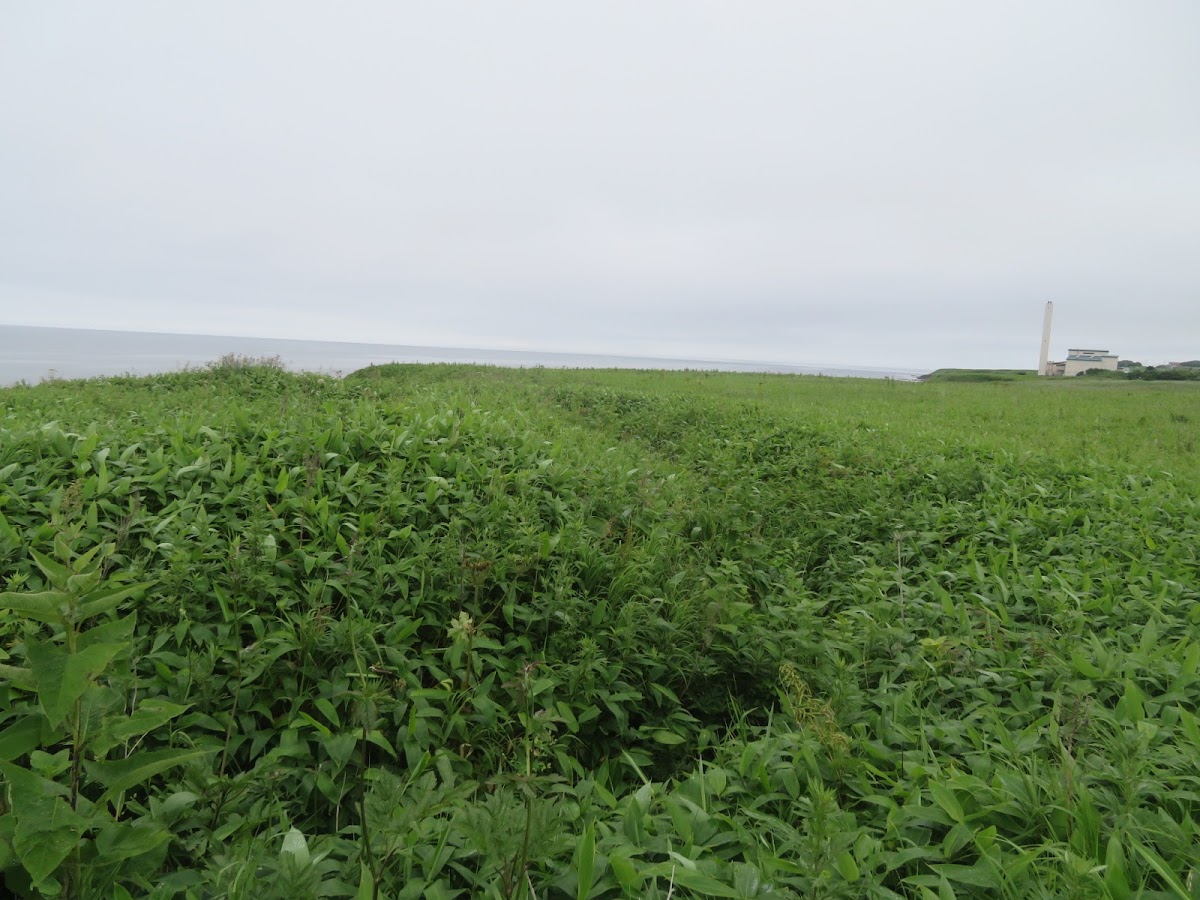
Initially, Nobuhiro was based at Suzaki Castle in Kaminokuni, but seeking a more defensible location, he built a new castle in Katsuyama. Katsuyama Castle was situated on a hill approximately 100 meters above sea level, overlooking the Sea of Japan, and was a natural stronghold protected by a steep cliff at its rear. This geographical advantage was suitable not only for military defense but also for monitoring maritime traffic and managing trading ships.
As the Kakizaki Clan’s Base
After the death of Takeda Nobuhiro, his son Mitsuhiro inherited the family headship and adopted the name Kakizaki. Katsuyama Castle continued to function as the base during the time of Kakizaki Mitsuhiro and became the center of the Kakizaki clan’s expansion. In 1514, Mitsuhiro moved his base to Tokuyama Castle (Odachi) in Matsumae, but Katsuyama Castle remained an important secondary castle, continuing to play a key role as a base on the Sea of Japan side.
The Kakizaki clan used Katsuyama Castle as their base to manage trade with the Ainu people, accumulating wealth through transit trade, exchanging goods from Honshu for products from Ezo (such as kelp, salmon, and furs). Archaeological excavations have revealed that many retainers and merchants resided at the castle, forming a kind of castle town-like settlement.
The Decline and Abandonment of Katsuyama Castle
In the latter half of the 16th century, the center of power of the Kakizaki clan (later the Matsumae clan) completely shifted to the Matsumae area, and the importance of Katsuyama Castle gradually declined. During the Tensho era (1573-1592), the Kakizaki clan received official recognition from Toyotomi Hideyoshi for their rule over Ezo (Hokkaido), and their system of rule was established. In this process, Katsuyama Castle gradually fell into disuse and is believed to have been abandoned between the late 16th and early 17th centuries.
After its abandonment, Katsuyama Castle was largely forgotten, but local legends persisted as “the castle mountain,” and serious academic investigations began in the Showa era.
Structure and Scale of the Katsuyama Castle Site
Layout and Defensive Facilities
Katsuyama Castle is a mountain castle spread across a vast area, approximately 500 meters north-south and 300 meters east-west. The castle site is broadly composed of three areas: the main enclosure, the residence area, and the burial area.
The main enclosure was located at the highest point of the castle grounds and was defended by dry moats and earthen ramparts. It is believed that the lord’s residence and other important facilities were located here. The residential area spread across the northern slope of the main enclosure, with numerous flat areas (kuruma) arranged in a stepped pattern. Archaeological excavations have confirmed that these flat areas were where the residences of retainers and merchants, as well as warehouses, stood.
The castle’s defensive structures included dry moats, earthen ramparts, and palisades. The dry moat protecting the main enclosure, in particular, reached a depth of several meters, forming a strong defensive line to prevent enemy intrusion. Furthermore, it is presumed that watchtowers and observation posts were positioned around the castle, monitoring the Sea of Japan and the surrounding area.
Building Remains and Living Spaces
Archaeological excavations have confirmed the remains of numerous buildings within the castle grounds. The buildings were primarily post-and-beam structures, and their size and structure have been reconstructed based on the arrangement of post holes. The largest building is a large structure with a length (long side) exceeding 10 meters, and is thought to have been used as the lord’s residence and administrative office.
In the residential area, the remains of pit dwellings have also been discovered, suggesting the possibility that they were the residences of lower-ranking retainers and servants. Furthermore, the remains of a blacksmith’s workshop and warehouses have been confirmed, indicating that a self-sufficient lifestyle was maintained within the castle grounds.
Discovery of the Burial Area
One of the most important discoveries at the Katsuyama Castle site is the burial area adjacent to the castle. Approximately 350 graves were discovered here, from which the remains of about 190 people were unearthed. This is the largest cemetery site in medieval Hokkaido and provides valuable information for understanding the lives and views on life and death of the people at that time.
In the cemetery, graves containing swords, believed to belong to the samurai class, as well as graves of commoners and even graves with burial methods believed to belong to the Ainu people have been discovered, indicating that Katsuyama Castle was a place where diverse people coexisted. Analysis of human remains has yielded information on the height, nutritional status, and diseases of the people of that time, scientifically elucidating the realities of medieval life.
Life at Katsuyama Castle as Seen from Excavated Artifacts
Trade Ceramics and the Reality of Trade
Over 100,000 artifacts have been unearthed from the Katsuyama Castle site, exhibiting remarkable diversity. Of particular note are the trade ceramics brought from overseas, including celadon and white porcelain from China and Thai pottery from Southeast Asia. These ceramics indicate that Katsuyama Castle was integrated into a wide-area trade network.
A wealth of domestically produced pottery has also been unearthed, including products from kilns throughout Honshu, such as Seto, Mino, Echizen, and Suzu ware. These indicate active trade relations with Honshu and support the idea that Katsuyama Castle was an important hub for northern trade.
Weapons, Armor, and Military Aspects
Numerous weapons and armor have been unearthed, indicating that Katsuyama Castle was a military base. In addition to weapons such as swords, spearheads, and arrowheads, armor parts and horse tack have also been discovered.
Of particular note are the artifacts related to firearms. The discovery of what appear to be matchlock gun bullets and powder containers suggests that firearms were likely used at Katsuyama Castle in the late 16th century. This indicates that the Kakizaki clan was modernizing their military capabilities by introducing the latest weapons of the time.
Daily Life Tools and Everyday Life
A wealth of artifacts related to daily life have also been unearthed. Cooking utensils include pots, kettles, and mortars, as well as iron knives and fire tongs. Many bowls and plates used for meals have also been found, suggesting that high-ranking samurai used high-quality ceramics, while ordinary people used simpler earthenware.
Furthermore, numerous fragments of lacquerware have been unearthed, confirming that lacquered products such as bowls and trays were used daily. It is believed that both lacquerware transported from Honshu and locally produced items were present.
Beliefs and Spiritual Culture
Religious artifacts are also noteworthy. Prayer beads, copper coins (six-mon coins), and fragments of Buddhist statues have been unearthed, indicating that the inhabitants of the site practiced Buddhism. The six-mon coins found in the cemetery, in particular, suggest that the custom of praying for the repose of the dead was practiced even in Hokkaido.
In addition, inkstones and inscribed pottery have been discovered, confirming the existence of a literate and educated class within the site. This suggests that Katsuyama Castle was not merely a military base, but an urban settlement with a certain level of cultural sophistication.
History and Results of Excavation
Commencement of Investigation and Designation as a National Historic Site
Academic investigations of the Katsuyama Castle site began in the 1950s. In 1957, a preliminary survey was conducted by the Hokkaido Board of Education, recognizing the importance of the site. Subsequently, on April 12, 1977, it was designated a national historic site as part of the “Kaminokuni Manor Site,” opening the way for full-scale preservation and utilization.
After the historic site designation, continuous excavation surveys were conducted, primarily by the Kaminokuni Town Board of Education. A large-scale excavation conducted over 15 years, from 1979 to 1994, revealed the overall layout of the manor site and unearthed numerous valuable artifacts.
Investigation of the Burial Area and Human Remains Research
In surveys conducted in the Heisei era, a comprehensive excavation of the burial area was carried out, confirming approximately 350 tombs. The unearthed human remains underwent detailed analysis at research institutions such as Hokkaido University, scientifically clarifying the living conditions of people in the medieval period.
Analysis of human remains has yielded information on the average height of the people at the time (approximately 158 cm for men and 148 cm for women), nutritional status, diseases (such as tooth decay and arthritis), and age at death. DNA analysis has also been attempted, and research is progressing on the genetic relationship between the Ainu people and the Japanese people.
Preservation and Development Project
In parallel with the excavation, a preservation and development project for the site was also carried out. In 1995, the “Katsuyama Castle Site Guidance Facility” opened, and the exhibition of excavated artifacts and a reconstructed model of Katsuyama Castle began. This guidance facility has become an important base for deepening understanding of the site.
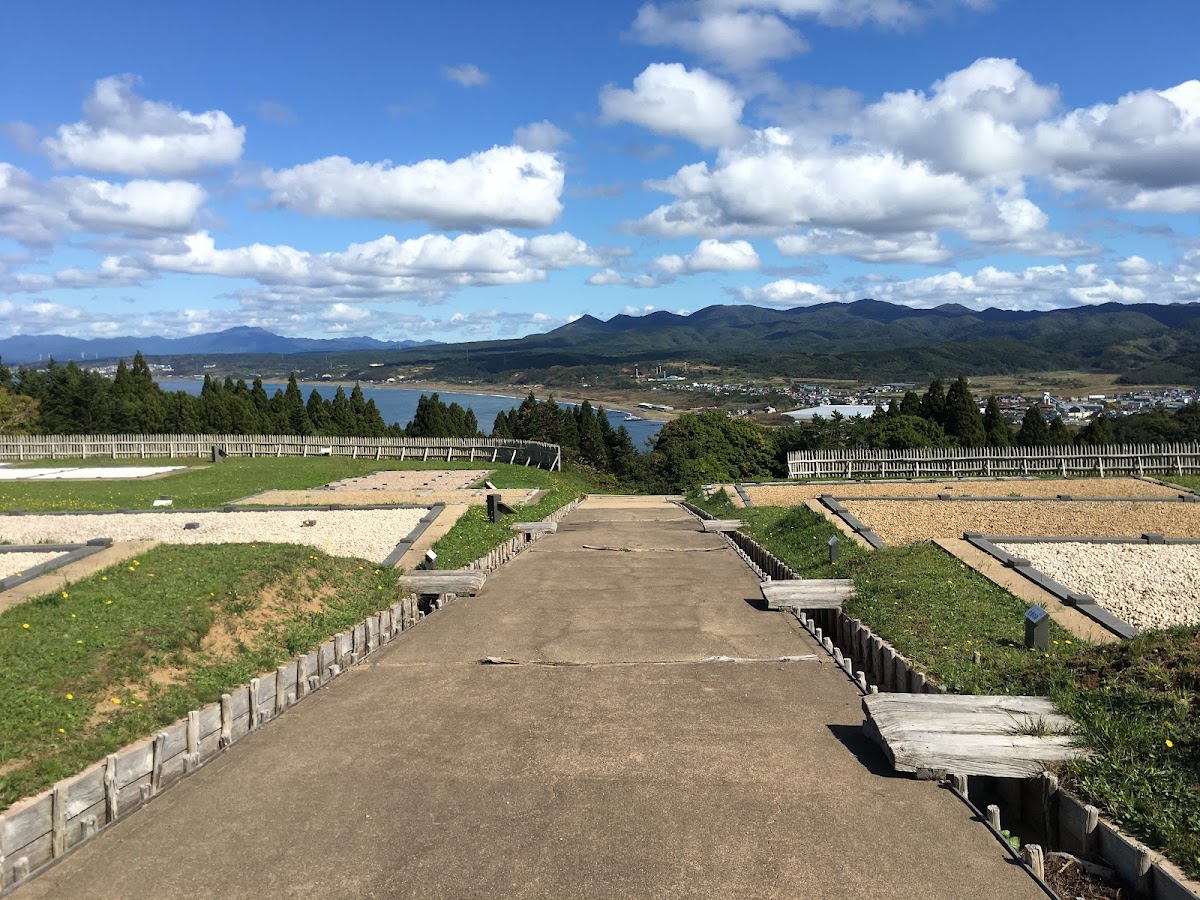
At the site, major remains are marked and explanatory signs have been installed, allowing visitors to experience the atmosphere of a medieval mountain castle. Furthermore, markers indicating the positions of pillars have been erected at some building sites, allowing for a visual understanding of the original building layout.
Katsuyama-kan Site Guidance Facility
Facility Overview
The Katsuyama-kan Site Guidance Facility is an exhibition and explanatory facility that opened in 1995. The facility is built overlooking the Katsuyama-kan site, and its design allows for panoramic views of the entire ruins through large glass windows.
In the center of the facility, a 1/200 scale replica of the Katsuyama-kan site is displayed. This model was precisely constructed based on the results of archaeological excavations, allowing for a three-dimensional understanding of the overall structure and building layout of the site. The facility is designed to provide a greater sense of realism by allowing visitors to compare the actual ruins with the model through the glass at the front.
Exhibition Contents
The guidance facility displays representative artifacts excavated from the Katsuyama-kan site. Through a variety of artifacts, including trade ceramics, weapons and armor, daily life tools, and personal ornaments, visitors can learn about the life and culture of medieval Hokkaido.
Of particular note is the exhibition of human remains and burial goods excavated from the cemetery. You can learn about the burial customs and views on life and death of the time through actual artifacts. The video exhibit also clearly explains the history of Katsuyama Castle and the excavation process.
Visitor Information
The guidance facility is positioned as a starting point for visiting the Katsuyama Castle ruins. Gaining background knowledge at the facility before visiting the actual ruins will lead to a deeper understanding. The facility also offers guided tours by volunteer guides (prior confirmation required), allowing you to tour the site while listening to explanations from guides with specialized knowledge.
Kaminokuni Castle Ruins and Katsuyama Castle
Composition of the Kaminokuni Castle Ruins
Katsuyama Castle is one of three castle ruins designated as a national historic site as the “Kaminokuni Castle Ruins.” The Kaminokuni Castle Ruins consist of three sites: Katsuyama Castle, Suzaki Castle, and Hanazawa Castle, all medieval mountain castles built between the 15th and 16th centuries.
Suzaki Castle was the first castle established by Takeda Nobuhiro and is located on a hill near the town of Kaminokuni. The Hanazawa Castle ruins are located north of the Suzaki Castle and are believed to have been the residence of a family of the Kakizaki clan. These three castles functioned as centers of control for the Kaminokuni region, working in coordination with each other.
The Position of Katsuyama Castle
Of the three castles, Katsuyama Castle was the largest and was used for the longest period. Furthermore, the quality and quantity of excavated artifacts far surpass those of the other two castles, indicating that it was the most important castle as the Kakizaki clan’s headquarters.
The relocation of the headquarters from Suzaki Castle to Katsuyama Castle symbolized the expansion of the Kakizaki clan’s power and the establishment of their governing system. Katsuyama Castle had a more defensible location and a larger living space, allowing it to accommodate the growing number of retainers and merchants.
Katsuyama Castle and the Ainu People
Contact Between the Wajin and the Ainu
Katsuyama Castle was the front line of contact and interaction between the Wajin (immigrants from Honshu) and the Ainu people. In Hokkaido during the 15th and 16th centuries, the Ainu people frequently resisted the expansion of the Japanese influence, and relations between the two groups were not always peaceful.
The Battle of Koshamain (1457) is a prime example. Takeda Nobuhiro, who suppressed the Ainu uprising in this battle, established his position in Ezo (Hokkaido) through this achievement. Katsuyama Castle functioned as a military base for the Japanese forces amidst this tense relationship.
Trade and Coexistence
On the other hand, Katsuyama Castle also maintained economic relations with the Ainu people as a trading post. Trade involving the exchange of products such as furs, salmon, and kelp brought by the Ainu for rice, iron products, and lacquerware brought by the Japanese was mutually beneficial.
The discovery of human remains buried using Ainu burial methods in the Katsuyama Castle cemetery suggests the possibility that Ainu people also resided within the castle grounds. It has been suggested that this may have been a multi-ethnic settlement where Japanese and Ainu people coexisted, providing an important clue for understanding ethnic relations in medieval Hokkaido.
Guide to Visiting the Katsuyama Castle Ruins
Access
To access the Katsuyama Castle Ruins by public transport, the nearest station is Kaminokuni Station on the JR Esashi Line (now defunct, replaced by buses). It’s about a 10-minute drive or a 40-minute walk from the station. From Hakodate city, it’s about a 1 hour 30-minute drive.
If traveling by car, take National Route 228 to Prefectural Route 5 and follow the signs. Free parking is available at the Katsuyama Castle Ruins Guidance Facility.
Points to Note During Your Visit
We recommend starting your visit to the Katsuyama Castle Ruins at the guidance facility. It’s effective to gain background knowledge by viewing the exhibits at the facility before exploring the actual ruins on foot.
Within the ruins, you can visit the main enclosure, residence area, and burial area in that order. The visit, including a tour of the guidance facility, takes approximately 1 hour 30 minutes to 2 hours. Since the ruins are located on a hillside, comfortable walking shoes are recommended.
From the ruins, you can enjoy a spectacular view of the Sea of Japan, and on a clear day, you can even see as far as Okushiri Island. Imagining the people of the Middle Ages gazing upon this same view evokes a sense of historical romance.
Important Notes for Visitors
The Katsuyama-kan Ruins are a nationally designated historical site, and its preservation is crucial. Please avoid entering areas outside the designated viewing paths and refrain from touching the remains or artifacts. Furthermore, the use of fire and the collection of plants and animals within the ruins are prohibited.
During winter (December to March), access to the ruins may be restricted due to snow. The guidance facility may also be closed during winter, so it is recommended to check with the Kaminokuni Town Board of Education before visiting.
Historical Significance of the Katsuyama Castle Site
Position in Medieval Hokkaido History
The Katsuyama Castle site is one of the most important archaeological sites for understanding the history of medieval Hokkaido. In medieval Hokkaido, where written historical sources are limited, the value of the Katsuyama Castle site, which provides abundant archaeological evidence, is immeasurable.
In particular, the remains and artifacts eloquently tell concrete information that cannot be obtained from written documents alone, such as the process of the Japanese people’s expansion into Hokkaido, their relationship with the Ainu people, and the realities of northern trade. Research on the Katsuyama Castle site contributes not only to the history of Hokkaido but also to a deeper understanding of medieval Japanese history as a whole.
Origins of the Matsumae Clan
The Katsuyama Castle site is also important for understanding the origins of the Matsumae Domain, which ruled Ezo (Hokkaido) during the Edo period. The Katsuyama Castle site concretely shows how Takeda Nobuhiro, the ancestor of the Matsumae clan, and the Kakizaki clan established their control over Hokkaido.
The Matsumae clan, as the sole daimyo family in Ezo (present-day Hokkaido) throughout the Edo period, monopolized trade with the Ainu people and was responsible for guarding the northern regions. The foundation of their power was laid during the time of the Katsuyama Castle.
Archaeological Value
From an archaeological perspective, the Katsuyama Castle site holds extremely high value. The more than 100,000 excavated artifacts are a valuable collection of materials for studying the material culture of the 15th and 16th centuries. In particular, the collection of trade ceramics is of great significance for studying the history of maritime exchange in East Asia.
Furthermore, the human remains excavated from the cemetery have greatly contributed to the physical anthropological study of medieval Japanese people. Research using the latest technologies, such as DNA analysis, is also underway, and further new insights are expected in the future.
Preservation and Utilization of the Katsuyama Castle Site
Preservation and Management Plan
The Katsuyama Castle site, a nationally designated historic site, is strictly preserved and managed in accordance with the Cultural Properties Protection Law. In Kaminokuni Town, the “Kaminokuni Manor Site Preservation and Management Plan” has been formulated to ensure the appropriate preservation and utilization of the site.
In preserving the site, the weathering of the remains and the management of vegetation are important issues. Regular mowing and tree management are carried out to prevent damage to the remains. Furthermore, efforts are being made to preserve the site while keeping it open to the public, such as maintaining viewing paths and drainage facilities.
Educational Use
The Katsuyama Manor Site is utilized as an important resource for local history education. Local elementary and junior high schools incorporate visits to the Katsuyama Manor Site into social studies classes, providing students with an opportunity to learn about local history.
In addition, archaeology experience classes for children are sometimes held during summer vacation, fostering interest in history and archaeology through simulated excavation experiences and pottery restoration work.
Utilization as a Tourism Resource
The Katsuyama Manor Site is also an important tourism resource for Kaminokuni Town. The town is focusing on promoting historical tourism centered around the Katsuyama-kan ruins, and is developing tourist routes that combine the site with other historical sites and cultural properties.
Every autumn, the “Katsuyama-kan Festival” is held, featuring a medieval warrior procession and traditional performing arts, attracting many tourists. Through such events, awareness of the Katsuyama-kan ruins and regional development are being promoted.
Future Challenges and Prospects
Excavation of Unexplored Areas
The Katsuyama-kan ruins are a vast archaeological site, and previous excavations have only investigated a portion of the entire area. There is a possibility that important remains and artifacts that have not yet been discovered lie dormant in the unexplored areas. It is hoped that continued investigations will further clarify the overall picture of Katsuyama-kan.
Deepening Research
The analysis of excavated artifacts is still ongoing. In particular, analysis using the latest scientific technology has the potential to yield new insights. For example, identifying the origin of ceramics, analyzing the components of metal products, and DNA analysis of human remains are important research topics for the future.
Furthermore, comparative research with other archaeological sites from the same period as Katsuyama Castle is also important. By comparing it with medieval castles and fortifications on Honshu, as well as Ainu cultural sites, the characteristics and historical positioning of Katsuyama Castle can be clarified more clearly.
International Dissemination
Disseminating the value of the Katsuyama Castle site internationally is another future challenge. It is necessary to clarify the role Katsuyama Castle played in the history of exchange in the East Asian maritime region during the medieval period and to position it within a global historical context.
It is hoped that the Katsuyama Castle site will be promoted to the world through multilingual information dissemination and the holding of international symposiums. In the future, efforts toward World Heritage registration may also be considered.
Summary
The Katsuyama Castle site is a medieval mountain castle built by Takeda Nobuhiro in the late 15th century and functioning as a base for the Takeda and Kakizaki clans until the end of the 16th century. It is preserved as a nationally designated historic site, and continuous archaeological excavations have shed light on the history of medieval Hokkaido.
The more than 100,000 excavated artifacts and approximately 350 burial mounds provide invaluable information that concretely illustrates the life, trade, and ethnic relations of the time. The Katsuyama Castle site is an essential archaeological site for understanding the history of the Japanese expansion into Hokkaido, their relationship with the Ainu people, and the realities of northern trade, and it occupies an important position in the study of Japanese medieval history.
Currently, the Katsuyama Castle site is properly preserved and managed, and is open to the public. Along with the exhibits at the guidance facility, anyone can experience medieval history. When visiting Hokkaido, be sure to visit the Katsuyama Castle site and experience the romance of 500-year-old history.