Complete Guide to the History and Highlights of Nakanouchi Castle (Kawasaki Town, Miyagi Prefecture) | Visiting the Ruins of the Isago Clan’s Castle
Table of Contents
- Overview of Nakanouchi Castle
- History of Nakanouchi Castle
- About the Isago Clan
- Castle Structure and Remains
- Highlights and Castle Notes
- Access and Visiting Guide
- Surrounding Tourist Information
- Summary
Overview of Nakanouchi Castle
Nakanouchi Castle is the site of a medieval mountain castle located in Kawasaki Town, Shibata District, Miyagi Prefecture. It was built as the residence of the Isago clan, a powerful local lord who served the Date clan, and was used from the Sengoku period to the early Edo period.
Basic Information
- Location: Kawasaki-cho, Shibata-gun, Miyagi Prefecture
- Year of Construction: Tensho 3 (1575)
- Builder: Tsunehisa Sunakin (8th head of the family)
- Castle Structure: Mountain castle
- Year of Abandonment: Early Edo period (early 1600s)
- Remains: Earthworks, dry moats, bailey remains
- Designated Cultural Property: None (currently undesignated)
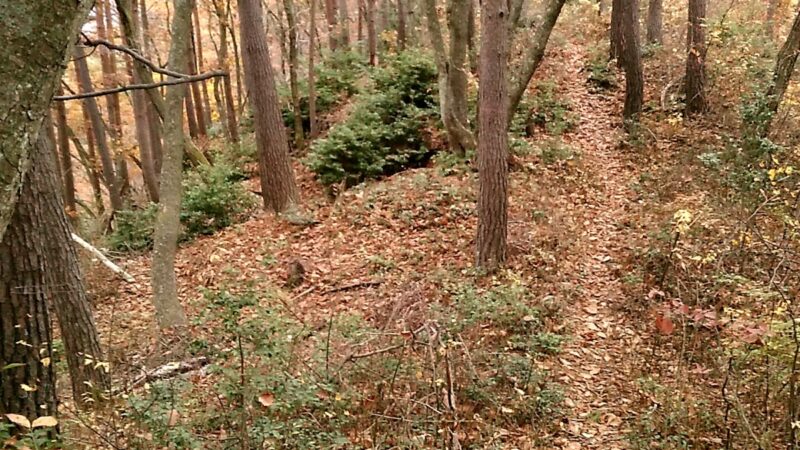
Currently, the castle site retains earthworks, dry moats, and other remains in good condition, making it a valuable historical site for understanding the structure of mountain castles during the Sengoku period.
History of Nakanouchi Castle
Background of Construction
Nakanouchi Castle was built in Tensho 3 (1575), a period when the Date clan was expanding its power in the Tohoku region. The Isago clan originally had Isago Castle as their base, but the 8th head of the clan, Isago Tsunehisa, built a new castle in this location for strategic reasons.
The reasons for the relocation from Isago Castle to Nakanouchi Castle are thought to be as follows:
- Strong transportation hub: Relocation to a location with better transportation access
- Improved defensive capabilities: Construction of defensive facilities utilizing the terrain
- Efficient management of the territory: Strengthening its function as the center of governance within the territory
- Relationship with the Date clan: A change in their position within the Date clan’s sphere of influence
The Isago Clan Era
After Isago Tsunehisa built Nakanouchi Castle, the Isago clan ruled the region from this castle for approximately 30 years. During this period, the Isago clan participated in various battles as important retainers of the Date clan, contributing to the expansion of the Date clan’s power.
After Toyotomi Hideyoshi’s siege of Odawara in 1590, the arrangement of daimyo in the Tohoku region changed dramatically, but the Sunakin clan survived alongside the Date clan and continued to maintain their position as important retainers.
Relocation to Kawasaki Castle and Abandonment of Nakanouchi Castle
In the early Edo period, the 11th head of the family, Sunakin Sanetsune, received the honor of being recognized as a member of the Date clan. At this time, Sanetsune built a new castle, Kawasaki Castle, and moved his residence from Nakanouchi Castle.
The background to this relocation was:
- Edo Shogunate’s One Castle Per Province Decree: The consolidation and reorganization of castles progressed in each domain.
- Transition to an Era of Peace: The transition from mountain castles to hill castles and flatland castles progressed nationwide.
- Improved Political Status: The need for a castle befitting the status of the Date clan.
Thus, Nakanouchi Castle was abandoned and its role came to an end. After the castle was abandoned, the buildings were demolished, and the castle site became farmland and forest. However, the basic structures such as earthworks and dry moats remained as part of the topography.
About the Isago Clan
Origins and Genealogy of the Isago Clan
The Isago clan were medieval local lords based in Mutsu Province (present-day southern Miyagi Prefecture to northern Fukushima Prefecture). The unusual surname “Isago” is thought to be related to gold mining in the region, but the details are unclear.
The Isago clan served the Date clan for generations and played a crucial role in the Date clan’s growth as a Sengoku daimyo. In particular:
- Military Aspects: Participated in major battles of the Date clan
- Domestic Affairs: Handled practical matters of governing their territory
- Diplomatic Aspects: Acted as negotiators with neighboring forces
They were active in many areas.
Tsunehisa Sunakin (8th Head of the Family)
Tsunehisa Sunakin, who built Nakanouchi Castle, is a representative figure of the Sunakin clan during the Sengoku period. The year 1575 (Tensho 3) was when Terumune Date was the head of the family, and the future “One-Eyed Dragon,” Masamune Date, was just born.
Tsunehisa strengthened the Sunakin clan’s power base by building a new castle, ensuring its succession to the next generation.
Sanetsune Sunakin (11th Head of the Family)
Sanetsune Sunakin, the 11th head of the family, received the honor of being recognized as a member of the Date clan in the early Edo period. This was a recognition of the Sunakin clan’s long-standing loyal service to the Date clan.
Sanetsune built Kawasaki Castle, establishing the clan’s status as a vassal of a modern daimyo. During this period, while many local lords of the Sengoku period declined, the Sunakin clan succeeded in surviving as important retainers of the Date clan.
Castle Structure and Remains
Castle Location and Layout
Nakanouchi Castle is a mountain castle that skillfully utilizes the topography of a hilly area. Although not particularly high in elevation, it was built in a location that offered a panoramic view of the surrounding area, making it an excellent location for both defense and surveillance.
The basic structure of the castle consists of:
- Main Enclosure (Honmaru): The central enclosure of the castle
- Second Enclosure: An enclosure supporting the main enclosure
- Belt Enclosure: A long, narrow enclosure surrounding the main enclosure
- Moat: A defensive structure cutting off the ridge
- Earthwork: An earthen wall surrounding the enclosure
- Dry Moat: A moat that does not hold water
These elements, combined, allowed the castle to function as a mountain castle during the Sengoku period.
Existing Remains
At the Nakanouchi Castle ruins, the following remains can be observed:
Earthworks
Clear earthworks remain around the enclosures. While the height varies depending on the location, earthworks of approximately 1-2 meters are well-preserved. These earthworks served to prevent enemy intrusion and also concealed the interior of the enclosures.
Dry Moats
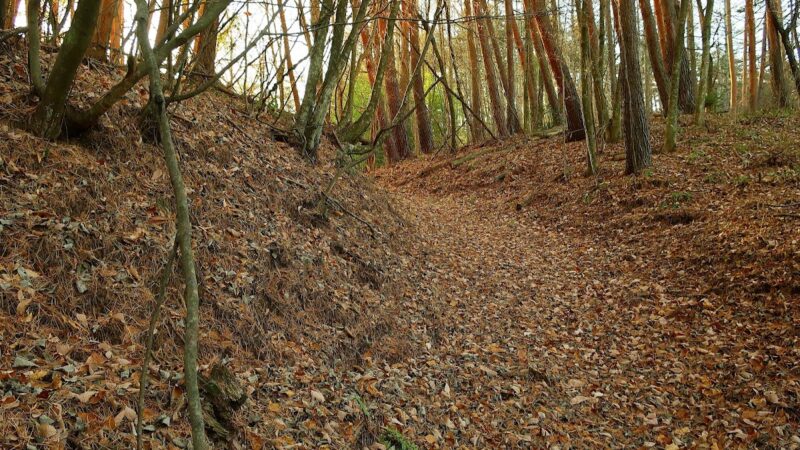
Dry moats, a crucial element of the castle’s defense, can be found in multiple locations. The moat separating the main enclosure and the second enclosure is particularly deep, indicating a high level of defensive awareness at the time. Dry moats not only hindered enemy advances but also served as a source of soil for constructing earthworks.
Enclosure Remains
The topography suggests that multiple enclosures were arranged in a stepped pattern. The main enclosure is a relatively flat space, suggesting that buildings such as residences and warehouses were constructed here.
Structure near the Main Entrance
Near the main entrance to the castle, the Ote-guchi (main gate), features ingenuity designed to repel enemies attacking from the west are evident. The structure of the entrance (koguchi) and the arrangement of the surrounding earthworks suggest a design that prioritized defense.
Castle Size
Nakanouchi Castle is a standard-sized mountain castle for a local lord’s residence during the Sengoku period. While smaller than large-scale early modern castles, it was large enough to serve as a regional stronghold.
The main enclosure is estimated to have measured approximately 50 meters east-west and 40 meters north-south, and likely contained facilities such as a residence, warehouses, and wells. The entire castle, including multiple enclosures, is estimated to have covered several thousand square meters.
Highlights and Castle Notes
Highlights for Visitors
When visiting Nakanouchi Castle Ruins, paying attention to the following points will allow you to more deeply appreciate the castle’s history:
1. Preservation of the Earthworks
Despite more than 400 years having passed since the castle’s abandonment, the earthworks remain in excellent condition. This indicates that no large-scale development took place after the castle’s closure, making it a valuable site where you can observe the remains of the Sengoku period (Warring States period) as they were.
2. Layout Utilizing the Topography
You can experience firsthand how the castle’s design skillfully utilized the natural terrain. By walking around the site, you can understand how the ridges and valleys were used for defense.
3. Views
From the main enclosure, you can overlook the surrounding area, giving you a real sense of how this castle functioned as a base for surveillance and defense. On a clear day, you can see far into the distance, and perhaps the castle lords of the Sengoku period gazed upon the same view.
4. The Impressiveness of the Moats
The main moats, in particular, are dug deep, giving a powerful sense of their defensive capabilities. Descending to the bottom of the moat reveals its depth and steepness.
Points to Note During Your Visit
- Watch Your Step: As this is a mountain castle, there are areas with unstable footing. Wear comfortable shoes.
- Season: The remains are easier to observe in winter than in summer when vegetation is dense.
- Insect Repellent: As this is a mountainous area, insect repellent is recommended.
- Weather: The ground can become slippery in rainy weather, so choose a sunny day for your visit.
Access and Visiting Guide
Location
Address: Kawasaki-cho, Shibata-gun, Miyagi Prefecture
Access by Public Transportation
Visiting Nakanouchi Castle Ruins by Public Transportation:
- JR Tohoku Main Line: The nearest stations are “Funaoka Station” or “Ogawara Station”
- Bus: Take a bus from the station towards Kawasaki-cho
- Walking: Access on foot from the bus stop (details need to be confirmed on-site)
*Public transportation is limited, so it is recommended to check the timetable in advance.
Access by Car
Access by car is the most convenient:
- Tohoku Expressway: Via national highway from Murata IC or Shiroishi IC
- Travel Time: Approximately 1 hour from central Sendai
- Parking: Parking spaces may be available near the castle ruins, but prior confirmation is recommended.
Visiting Time
- Short Visit: 30 minutes to 1 hour
- Detailed Visit: 1 to 2 hours
- Including Photography: Approximately 2 hours
Admission Fee
The castle ruins are generally free to visit. However, there may be restrictions on entry to private property, so please follow local signs.
Visiting Hours
There are no specific restrictions, but as it is a mountain castle, visiting during daylight hours is recommended.
Nearby Tourist Information
Kawasaki Castle Ruins
The ruins of Kawasaki Castle, built by Sanetsune Sagane after relocating from Nakanouchi Castle, are also located within Kawasaki Town. Visiting Nakanouchi Castle in conjunction with this site will allow you to gain a deeper understanding of the history of the Sagane clan.
Historical Facilities in Kawasaki Town
Kawasaki Town has numerous facilities and historical sites that introduce the local history. The town’s historical museum and other facilities may have exhibits related to the Sagane clan and Nakanouchi Castle.
Surrounding Castle Ruins
Many other medieval castle ruins remain in southern Miyagi Prefecture:
- Shiraishi Castle: The residence of the Katakura clan, a senior retainer of the Date clan (with a reconstructed keep)
- Murata Castle: A medieval castle ruin located in Murata Town
- Ogawara Castle: A castle ruin located in Ogawara Town
By visiting these castle ruins, you can systematically understand the history of this region from the Sengoku period to the Edo period.
Natural Landscape
Kawasaki Town is a region rich in nature, located at the foot of the Zao mountain range. In addition to visiting the castle ruins, you can also enjoy the following natural spots:
- Aone Onsen: A historic hot spring resort
- Kamabusa Lake: A scenic spot centered around a dam lake
- Michinoku Mori no Kohan Park: The only national park in the Tohoku region
Summary
Nakanouchi Castle was a mountain castle that played an important role as the residence of the Sakin clan, who served the Date clan from the Sengoku period to the early Edo period. Built in 1575 by Sakin Tsunehisa, it functioned as the Sakin clan’s base for approximately 30 years.
Even today, remnants such as earthworks and dry moats remain in good condition, making it a valuable historical site for understanding the structure of mountain castles from the Sengoku period. Even more than 400 years after its abandonment, the Nakanouchi Castle ruins, which retain traces of their former glory, are a place worth visiting for history enthusiasts.
When visiting southern Miyagi Prefecture, be sure to stop by the Nakanouchi Castle ruins and experience the lives of the local lords of the Sengoku period and the landscapes they saw. Walking along the earthworks and gazing at the dry moats, you’ll feel the breath of history in a way you can’t learn from textbooks.
Nakanouchi Castle is filled with many historical stories, including the rise and fall of the local powerful family, the Sunakin clan, their relationship with the Date clan, and the changes in castle architecture during the transition from the Sengoku period to the Edo period. This small mountain castle undoubtedly holds important clues to understanding the Sengoku history of the Tohoku region.