A Complete Guide to the History and Highlights of Kariya Castle | A Famous Castle in Mikawa Associated with Tokugawa Ieyasu
What is Kariya Castle?
Kariya Castle (Kariya-jō) was a Japanese castle located in Kariya, Hekikai District, Mikawa Province (present-day Kariya City, Aichi Prefecture). While the official spelling is “Kariya-jō,” after Kariya City was incorporated in April 1950, it came to be written as “Kariya-jō.” Both spellings are used today, but historically, “Kariya” is the correct spelling.
Built in 1533 by Mizuno Tadamasa, Kariya Castle is known as the castle where Oda-no-kata, the mother of Tokugawa Ieyasu, was born and raised. Mizuno Tadamasa was Ieyasu’s maternal grandfather, and this castle was an important base with deep ties to the Tokugawa family.
Currently, the site of Kariya Castle has been developed into Kamejō Park, a popular recreational area for citizens. The remains of the main keep and parts of the earthworks still exist, conveying the appearance of the castle to this day.
History of Kariya Castle
Construction History and the Mizuno Clan Era
Kariya Castle was built in 1533 (Tenbun 2) by Mizuno Tadamasa on the banks of Kanegakoji. Mizuno Tadamasa had previously resided at Ogakie Castle, but due to its increasing size, he decided to build a new castle in this strategically superior location. It is believed that the initial Kariya Castle was merely a fort built to prepare for war.
Mizuno Tadamasa’s daughter, Oda-no-kata, married Matsudaira Hirotada of Okazaki Castle and gave birth to the future Tokugawa Ieyasu. However, after Tadamasa’s death, his son, Mizuno Nobumoto, left the Imagawa clan and sided with the Oda clan, resulting in Oda-no-kata’s divorce from Matsudaira Hirotada. This political decision illustrates the complex power dynamics of the Sengoku period.
Mizuno Nobumoto expanded his power from Kariya Castle, but was later killed on the orders of Oda Nobunaga. Afterward, the castle temporarily came under the control of the Oda clan.
Changes in Lords during the Edo Period
In 1600 (Keicho 5), after the Battle of Sekigahara, Mizuno Katsunari became the first lord of Kariya Domain. From this point onward, Kariya Castle experienced a history of frequent changes in its lords.
Throughout the Edo period, the following nine families and 22 lords ruled Kariya Castle:
- Mizuno clan (branch family) – A lineage beginning with Mizuno Katsunari
- Matsudaira clan (Fukamizu) – Fukamizu Matsudaira family
- Matsudaira clan (Hisamatsu) – Hisamatsu Matsudaira family
- Inagaki clan – Fudai daimyo (hereditary vassal)
- Abe clan – Fudai daimyo (hereditary vassal)
- Honda clan – Fudai daimyo (hereditary vassal)
- Miura clan – Fudai daimyo (hereditary vassal)
- Doi clan – Entered the domain in 1747
The Doi clan, in particular, ruled Kariya for nine generations after entering the domain in 1747, maintaining their position as lords until the Meiji Restoration. This period of stable rule allowed the castle town of Kariya to develop.
According to a castle map from the Shotoku period (1711-1716), Kariya Castle during the Edo period was a flatland castle with the main keep at its center, surrounded by the second and third baileys and a moat. Comparing this with a castle map from Genroku 15 (1702) provides a detailed understanding of the castle’s structure at that time.
Changes After the Meiji Restoration
After the Meiji Restoration, Kariya Castle was abandoned due to the abolition of the feudal domains and the establishment of prefectures. Many of the castle’s structures were demolished, and the stone walls gradually disappeared.
In 1936 (Showa 11), parts of the main keep and second bailey were renovated and opened to the public as Kamejo Park. This transformation into a park reborn the Kariya Castle site as a local recreational area. However, with the construction of baseball fields and residential areas around the park, little of the original topography or stone walls remains visible.
Currently, Kariya City is re-recognizing the historical value of Kariya Castle and is focusing on the preservation and utilization of the castle ruins. The Kariya City History Museum exhibits materials and castle maps related to Kariya Castle, and visitors can see the former appearance of the castle and castle town through CG-reconstructed images.
Structure and Layout of Kariya Castle
Basic Structure of the Castle
Kariya Castle was built as a flatland castle, with a concentric layout where the main keep (Honmaru) was at the center, surrounded by the second and third baileys (Ninmaru and Sannomaru). The castle was surrounded by a moat, a topographical feature that gave rise to its alternative name, “Kamejo” (Turtle Castle).
According to castle maps from the Shotoku period, detailed dimensions are recorded for various parts of the castle, allowing us to accurately understand the scale of the castle at that time. The Honmaru was located in the center of the castle, where the lord’s residence and administrative buildings were located.
Honmaru and Earthworks
A stone monument marking the site of the Honmaru stands within the current Kamejo Park. A portion of the earthen rampart remains on the west side of the main keep, allowing us to imagine the castle’s former defensive structures. This rampart is a valuable historical relic that conveys the appearance of the Edo period.
Cherry trees are planted on the site of the main keep, and in spring, many citizens visit it as a popular spot for cherry blossom viewing. The combination of the castle ruins and cherry blossoms creates a beautiful landscape that evokes the atmosphere of a Japanese castle.
Second Bailey and Outer Bailey
The second bailey was positioned surrounding the main keep and housed the residences of retainers and an armory. Most of the current Kamejo Park corresponds to the area of this second bailey.
The castle map also indicates the existence of an outer bailey, showing that a long, narrow defensive enclosure was built between the main keep and the second bailey. This outer bailey was an important defensive structure to prevent enemy intrusion.
Water Moat and Middle Moat
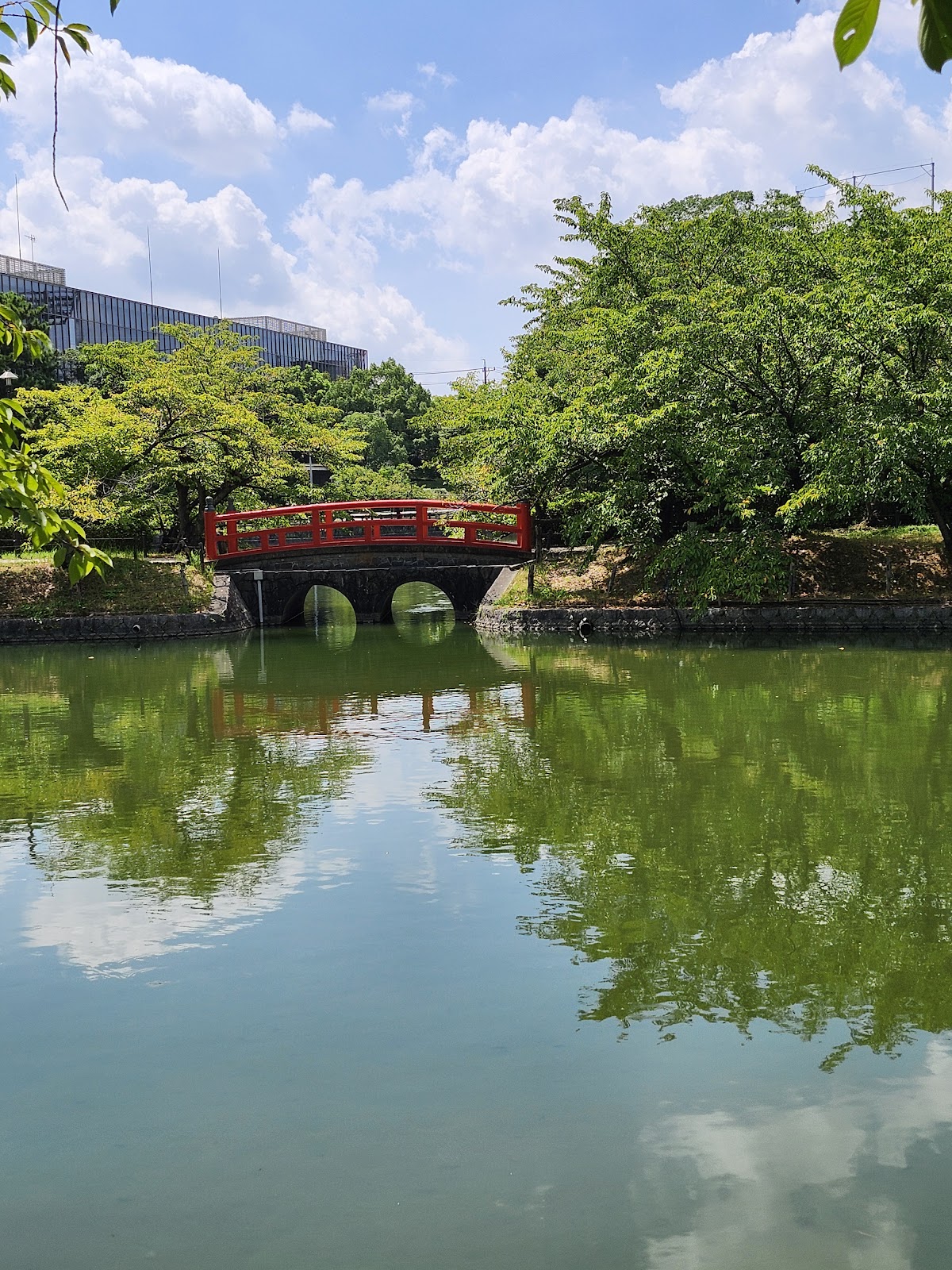
One of the major features of Kariya Castle was the water moat surrounding the castle. The moat, called the middle moat, served to separate the second and third baileys. Even today, remnants of the former moat can be seen around Kijo Park.
The moat is believed to have served not only a defensive function but also facilitated water transport within the castle town. For Kariya Castle, located in the plains of the Mikawa region, the moat was an important defensive structure and also played a vital role in securing water for daily life.
Structure of the Castle Town
The castle town of Kariya Castle was systematically laid out around the castle. Samurai residences were located around the castle, while the merchant districts were situated outside of that, with merchant houses lining the main roads.
Castle maps from the Shotoku to Genroku periods show detailed layouts of the castle town, providing insight into its appearance at the time. At the Kariya City History Museum, CG images created based on these maps allow visitors to view a three-dimensional representation of Kariya Castle and its castle town during the Edo period.
Highlights of Kariya Castle
Kijo Park
The Kariya Castle ruins are now maintained as Kijo Park. Within the park, you can find scattered monuments marking the site of the main keep, remnants of earthworks, and a monument marking the site of the second bailey, allowing you to imagine the former appearance of the castle.
The park is a popular spot for citizens to enjoy nature throughout the seasons, and is especially bustling with cherry blossom viewers in spring. The area around the earthworks on the west side of the main keep offers a beautiful landscape where cherry blossoms and castle ruins harmonize.
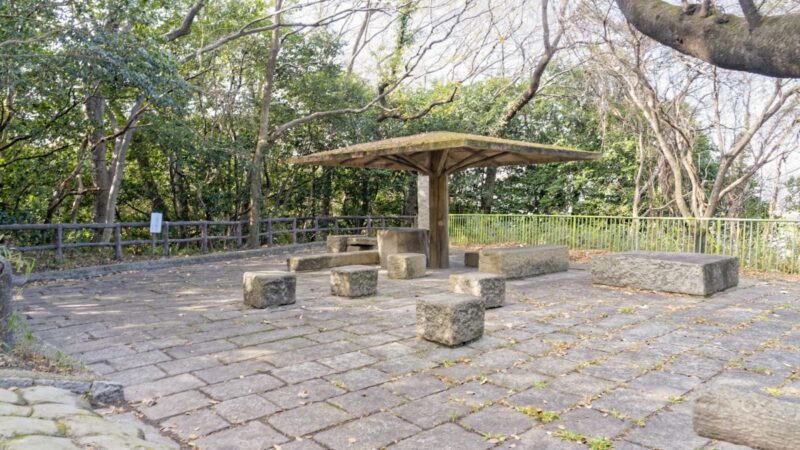
Walking paths are maintained within the park, allowing you to reflect on the castle’s history while strolling. Benches are also provided, allowing you to relax and enjoy the castle ruins.
Kariya City History Museum
The Kariya City History Museum, located adjacent to Kamejo Park, is an essential facility for learning about the history of Kariya Castle. The museum displays castle maps from the Shotoku and Genroku periods, allowing you to learn about the detailed structure of Kariya Castle during the Edo period.
Of particular note is the CG video created based on the castle maps. This video uses a castle map from the Shotoku era (1715-1724), which includes dimensions of various locations, as well as a castle map from the 15th year of the Genroku era (1702-1732), to create a three-dimensional reconstruction of Kariya Castle and its surrounding town. It allows viewers to visually understand what the castle looked like in the past and how the castle town developed.
The museum also displays materials related to the Mizuno clan and successive feudal lords, exhibits about Lady Oda, and folk materials that convey the life of the castle town. It’s a facility you should definitely visit when visiting Kariya Castle.
Main Enclosure Site Monument and Earthworks
At the site of the main enclosure within Kamejo Park, there is a stone monument inscribed with “Kariya Castle Main Enclosure Site.” This monument is an important landmark indicating that the central part of the castle was located here.
To the west of the main enclosure, a portion of the Edo period earthworks is preserved. These earthworks are one of the few remaining structures of Kariya Castle and are a valuable place to see the castle’s defensive facilities in action. The height and shape of the earthworks allow you to imagine the scale and structure of the castle.
Remains of the Second Bailey and Surrounding Structures
A stone monument has been erected at the site of the Second Bailey, indicating that the residences and facilities of retainers once stood here. The Second Bailey was extensive, and most of the current Kamejo Park corresponds to this area.
Walking through the park, one can feel the slight undulations of the terrain. These are remnants of the castle’s baileys, conveying the structure of the castle to the present day.
Maps of Kariya Castle in Sanshu Province
The “Maps of Kariya Castle in Sanshu Province” and “Maps of Kariya Castle in Sanshu Province,” housed in the Kariya City Historical Museum, are the most important documents for understanding the structure of Kariya Castle. These maps contain detailed information, including the dimensions of each part of the castle, the layout of buildings, and the width of the moats.
The maps from the Shotoku period (1711-1716) are particularly detailed and serve as fundamental material for research into the restoration of the castle. By comparing them with the map from Genroku 15 (1702), we can also learn about the changes in the castle over time.
Kariya Castle and Lady Oda
The Life of Lady Oda
Lady Oda (Dentsuin) was born at Kariya Castle as the daughter of Mizuno Tadamasa. Around 1541, she married Matsudaira Hirotada, the lord of Okazaki Castle, and gave birth to Takechiyo (later Tokugawa Ieyasu) in 1542.
After her father Mizuno Tadamasa’s death, her brother Mizuno Nobumoto left the Imagawa clan and sided with the Oda clan. Therefore, Matsudaira Hirotada, who was under the influence of the Imagawa clan, was forced to divorce Lady Oda. Lady Oda returned to Kariya Castle and later remarried Hisamatsu Toshikatsu.
Lady Oda lived a long life even after her son Ieyasu became the ruler of Japan, dying in 1602 at the age of 75. She is remembered in history as Ieyasu’s mother and as an important figure connecting the Mizuno and Tokugawa clans.
Relationship with Tokugawa Ieyasu
For Tokugawa Ieyasu, Kariya Castle was his mother’s birthplace and his maternal grandfather’s castle. Having spent his childhood there as a hostage, the Mizuno clan on his mother’s side may have held complex feelings for Ieyasu.
However, after Ieyasu became the ruler of Japan, the Mizuno clan was highly valued as important retainers of the Tokugawa family. Kariya Castle was also considered important as a castle associated with the Tokugawa family, and throughout the Edo period, it was ruled by hereditary daimyo.
The historical background of being the castle where Ieyasu’s mother was born and raised is an important factor that enhances the value of Kariya Castle.
Access Information
Access by Train
The nearest station to Kariya Castle Ruins (Kamejo Park) is Kariya Station on the JR Tokaido Main Line or Meitetsu Mikawa Line.
- From JR Kariya Station: Approximately 15 minutes on foot from the South Exit
- From Meitetsu Kariya Station: Approximately 15 minutes on foot from the South Exit
From the station to the park, head south along the road that runs through the center of Kariya City. There are signs, so you shouldn’t get lost even if it’s your first time visiting.
Access by Car
If you are visiting by car, the following routes are convenient:
- From Toyoake IC on the Isewangan Expressway: Approximately 20 minutes
- From National Route 1: Towards Kariya city center
- From National Route 23: Towards Kariya city center
Kijo Park has its own parking lot. However, it can get full during peak seasons such as cherry blossom season, so using public transportation is also recommended.
Access to Kariya City History Museum
The Kariya City History Museum is adjacent to Kijo Park. When visiting the park, we highly recommend visiting the museum as well.
- Opening Hours: 9:00 AM – 5:00 PM (Last entry at 4:30 PM)
- Closed Days: Mondays (or the following day if Monday is a public holiday), New Year holidays
- Admission Fee: 210 yen for adults, free for junior high school students and younger (special exhibitions have separate fees)
Nearby Tourist Attractions
Historical Spots in Kariya City
There are many other historical spots scattered around Kariya Castle:
- Chiryu Shrine: An ancient shrine located in Chiryu City, next to Kariya City
- Ogakie Castle Ruins: The site of the castle where Mizuno Tadamasa resided before building Kariya Castle
- Kariya City Museum of Art: A museum located near Kamejo Park
Other Castles in the Mikawa Region
Many other castle ruins remain in the Mikawa region:
- Okazaki Castle: The castle where Tokugawa Ieyasu was born
- Nishio Castle: An important base in Mikawa
- Yoshida Castle: Castles located in present-day Toyohashi City
Visiting these castles allows for a deeper understanding of the history of the Mikawa region from the Sengoku period to the Edo period.
Kariya Castle: Present and Future
Preservation and Utilization Efforts
Kariya City is actively working on the preservation and utilization of the Kariya Castle ruins. They are developing Kijo Park and enhancing the exhibits at the Kariya City History Museum, continuing their efforts to convey the castle’s history to citizens and tourists.
The CG-based reconstruction of the castle is an excellent initiative that allows for a visual understanding of the lost castle’s appearance. Further exhibits utilizing new technologies are expected in the future.
A Castle Ruins Beloved by Citizens
The Kariya Castle ruins not only possess historical value but also play an important role as a place of relaxation for citizens. Many citizens visit Kijo Park daily to enjoy walks, jogging, and cherry blossom viewing.
With its harmonious blend of historical heritage and daily life, the Kariya Castle ruins will continue to be carefully protected as a symbol of the region.
Potential as a Tourist Resource
As a castle associated with Tokugawa Ieyasu and the base of the Mizuno clan, Kariya Castle has increased in value as a tourist resource. Visitor numbers tend to rise, especially when the Sengoku period is featured in historical dramas.
Kariya City plans to continue promoting the appeal of Kariya Castle and develop it as a hub for historical tourism.
Summary
Kariya Castle was built in 1533 by Mizuno Tadamasa and holds an important place in Japanese history as the birthplace and upbringing of Tokugawa Ieyasu’s mother, Oda-no-kata. During the Edo period, 22 lords from 9 families ruled the castle, and it functioned as an important base in the Mikawa region.
Currently, it is maintained as Kamejo Park, and remnants such as the stone monument at the site of the main keep and earthworks remain. At the adjacent Kariya City History Museum, visitors can learn about the former appearance of the castle and castle town through castle maps, documents, and CG images.
When you visit Kariya City in Aichi Prefecture, be sure to stop by the Kariya Castle Ruins and experience the atmosphere of a place associated with Mikawa’s history and Tokugawa Ieyasu. It’s a place where you can enjoy the beauty of each season: cherry blossoms in spring, lush greenery in summer, vibrant autumn leaves, and the tranquility of winter.