
Complete guide to the history and highlights of Uda Matsuyama Castle
Is this Uta Matsuyama Castle?
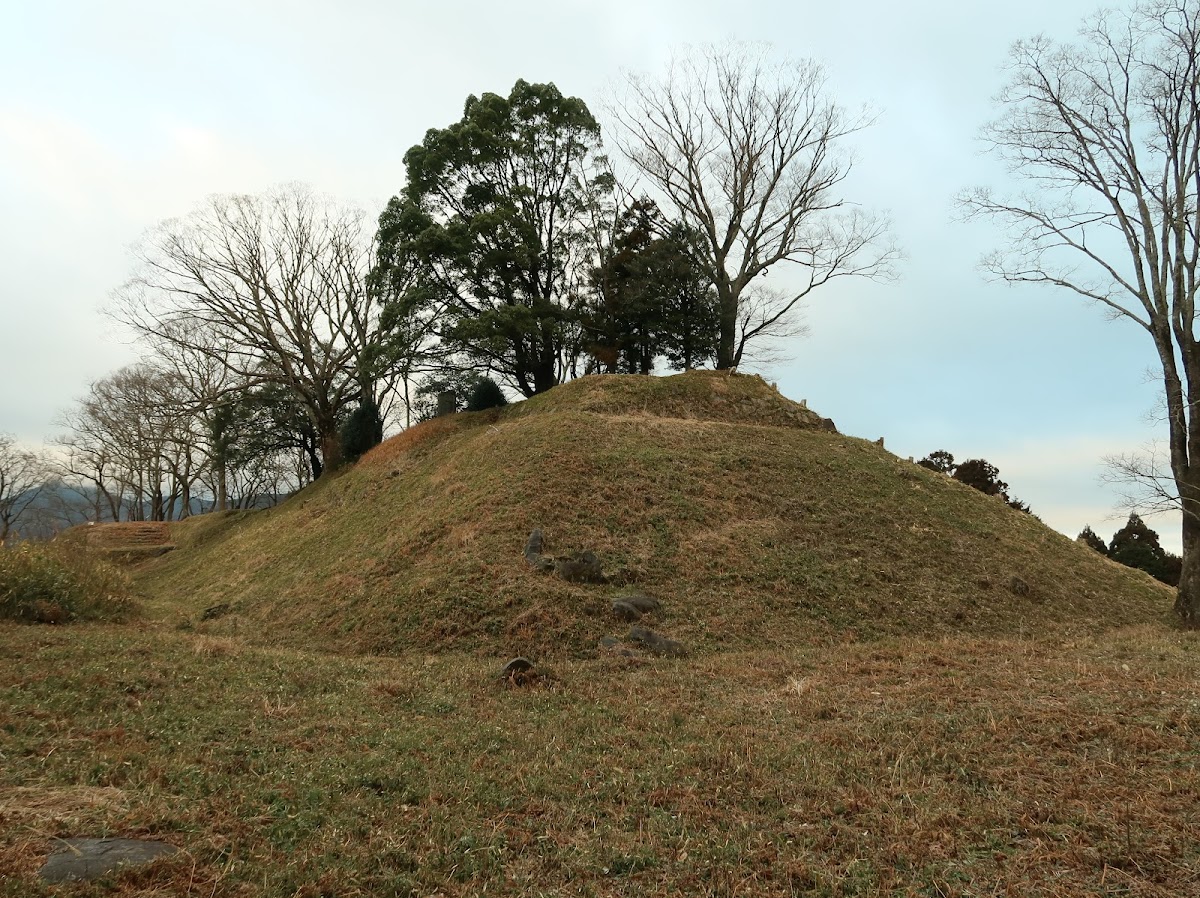
Uta Matsuyama Castle is located in Ota-cho, Uda City, Nara, and is located on the mountain top of the old castle in the US at 473 Uta-matsuyama Castle. In 2006, the castle was designated as a national historical castle site, which was selected as one of the “Japan’s 100 Castles” series, and is one of the most famous high-class historical castle sites.
A large number of rare monuments have been preserved in the castle, and the clear ground has been exhibited since the medieval period to the early modern period. A bird’s-eye view of the Uda Basin from the ruins of the castle fort, which reached its ancient military position.
The name of the castle is comprehensive Akiyama Castle, Akiyama Castle and Kagami Castle. The name of the castle fort has changed, and the owner of the castle has changed.
Historical background of Uda Matsuyama Castle
Nanboku Town era: Built by the Akiyama clan
The history of Uta Matsuyama Castle dates back to the 14th century, during the Nanboku-cho period. Built by the Akiyama clan, the Akiyama clan was one of the three Uda generals, and was founded by three powerful local families in Uda County, Yamato Province. The leaders of the “Uda Three Generals” are the Akiyama clan, the Yoshino clan, the Wasawa clan, and others who occupy important positions in the area.
The Akiyama clan belonged to the Unan Dynasty, and since then the castle has been established in Konoyama and other parts of the Uda area have been established. The first fort is a typical medieval Xishan castle, mainly consisting of clever use of natural topography and defense construction.
Age of war: Change of the Japanese retainer of the Kakuda family
The era of war has arrived, and the Uda area has also entered the country’s nationwide wave. In 1585, Hideyoshi, a younger vassal, Hideyoshi, a vassal, entered Yamatokoriyama Castle, and Uda Matsuyama Castle became the residence of the feudal lord, the first rank of the vassal family.
During this period, the castle was undergoing extensive reconstruction, and the castle was transformed into a modern castle. The castle was rebuilt, the castle tower was removed, and the castle town was completely opened. This is a change from the medieval Yamashiro Mukai troupe to the modern castle fortress.
Castle lord
At the time of the restoration of the Japanese retainers, he became the lord of Uda Matsuyama Castle. The Ito clan, Mitsayasu Kato, Masayoshi Hada, and the lord of Uda Matsuyama Castle, each of whom was responsible for the construction of their own castle pond, presented their work to Ritsu Kazuji. The main form of the castle town was formed during the Kato Mitsuyasu period.
The owner of the Kanbara no Tateyo Fukushima clan
In 1600, after the Conquest of Kanbara, Takaharu Fukushima, a descendant of Tokugawa Ieyasu, was appointed lord of the castle and received a stipend of 38,000 koku. Written by Yu Dongju, the Fujima clan in the original battle. The work was done by Uda Matsuyama Castle, the lord of the castle, and others walked through the castle pond and surrounding castles.
During the reign of the Zaifukushima clan, the castle and pond defense construction was completed, and the castle town was also occupied. Uda Matsuyama City’s current castle title station foundation is the current formative structure.
Osaka’s Fukushima clan’s fiefdom
In 1615, during the Summer Battle of Osaka, there was an important encounter between the Fukushima clan. Ryuji Fukushima’s oldest son, Ryuji Fukushima, was suspected of being sent to Osaka Castle, and the Fukushima clan was subsequently removed from the area.
The history of Uda Matsuyama Castle was destroyed, and it was completed for about 230 years. After the castle was built, the castle town was built, and the castle town continued to be built as a defensive residence.
Edo era and after: Uta Matsuyama production Aya town
After the arrival of Joike, the Uda-Matsuyama district was established in the Uda-Matsuyama area, where the descendants of Nobuyoshi and the descendants of Nobuyoshi Ayata were located, and the town of Aya-cho was built here. Exhibition of the castle town’s industrial and commercial center, a prosperous castle town of the Chengdu medical industry.
The Uda-Matsuyama district is now a designated important preservation site for historic townhouses from the Edo era to the Meiji era, and is also designated as an important preservation site for buildings from the Meiji era.
The structure of Uta Matsuyama Castle
Clothing organization structure
Uda Matsuyama Castle is one of the castles of Tashiroyama Castle, built on a mountain like an ancient castle, and has a castle pond (kuruwa). Matsuyama Castle consists of several main grounds, including the main castle (main castle), Ninomaru (second castle), Wasannomaru (third castle), and the clever use of land in the mountains, mountains, mountains and valleys.
The length of the castle pond in the north and south is 500 meters, the distance in the east and the west is 300 meters, and the distance of the mountain castle in Guangyu is as large as the model. Each site is divided into two parts: the stone wall and the earthworks; the entrance gate (small end) is installed and the defense work is carried out.
Honmaru Forever
The main enclosure is the highest point on Mt. Ugolden (formerly Shiroyama), with a distance of about 50 meters from east to west and a distance from north to south of 30 meters. Archaeological excavations revealed that the main castle tower was still in existence, and pieces of Japanese tiles were excavated from the ground.
Part of the stone mound of the castle tower remains, and the present appearance of Uda Matsuyama Castle looks like a modern castle fort. The main Maru has a bird’s-eye view of the Uda Basin, and is well-positioned as a fort.
Features of Seishin
Uda Matsuyama Castle’s stone citadel was put on hold and was built during the reign of the Japanese government, and was a special expedition in the early modern period. The construction of the “Nozuzuki” (coarsely made stone) technique for the construction of castle walls, which can be seen through the castle walls, and the use of natural stone materials is recommended.
The stone burial mound around the main gate is extremely well preserved, and the height of the partial burial mound is over 3 meters. We took a look at the construction method, the stone materials used for the castle, the date of construction of the fortress, the construction process, and the construction process.
Castle Gate
The main gate (small entrance), the main gate (main entrance), and the rear gate (corner entrance) are preserved in the greatest purity. The main castle gate has a small entrance with the famous “Suzume-mon-ato” (Suzume-mon-ato), among which you can see a solid stone wall for defense.
This is a straight line with a small opening, but it has an arc shape, preventing the enemy from entering. This is typical defensive construction for a fort in the early modern period.
围墙YO护城川
The main castle (honmaru) is surrounded by a number of surrounding walls, and some of the castle walls (Nyojinmaru, Sanmaru, etc.). Each moat has a built-up castle moat (standing moat), which increases its defensive ability as it progresses.
The reason is that it is a typical military conquest of mountain fortresses in the medieval period. This is a small distance from the beginning of the medieval period to the early modern period.
Archaeological excavation results
Archaeological excavation during the Heisei era
Since the 2000s, continuous archaeological excavation has been carried out at the Uda Matsuyama Castle ruins. This report shows the construction of the fort, the history of the castle, and the construction materials used there.
A wide variety of cultural artifacts have been excavated from the excavation, including foundation stone fragments, stone tombs, tile fragments, and ceramic and Japanese metal products. That’s the only thing that can be achieved, and the appearance of a piece of gilded tiles is an important one, and it has been proven to be an exalted position as a fortress at the time of government.
Castle tower’s legacy
The most important result of this investigation was the confirmation that the tower existed. The arrangement method of the tile pieces and base stones excavated in the main burial mound is expressed, and it is possible that there is one troupe and three layers of the castle tower.
There are many examples of castle towers built on mountain forts, and the construction of castle towers at Uda Matsuyama Castle is an important example of the early modern castle fortification period.
Castle town station
Outside of the castle fort, the castle town’s training center is still in progress. Due to the changes in the city and the town, the structure of the commercial chain and the actual distribution of the area are clearly shown, and the pattern of joint exhibition between the castle and the castle town is also clear and bright.
Uda Matsuyama Castle Ryoten
Traffic route
The former Uda Matsuyama Castle Aritajo route, the most commonly used is the route leading to Kasuga Shrine. However, due to the current situation or other factors, the connection may be closed, and this work must be done beforehand.
In addition to this, there is an alternative route to the station, and a route that leads to the “town center rotary research center” in Ota. This is a short path to the first line, which takes approximately 15 to 20 minutes to reach the castle fort.
Visit Stone Wall He Castle Gate
Empress of the castle, the main gate of the main gate of the Sekifunkai. This is a small stone burial mound built using the Nozu ink method, which is a rare example of the construction techniques used over 400 years ago. The castle gate was drilled, and the exquisite defense work was completed.
View of the castle tower
Climb the castle tower and enjoy the spectacular scenery of the Uda Basin. Haruharu’s Hikori, a distant view of the castle town of old days, from the townscape of Uda Matsuyama to the surrounding mountains. This is an important strategic location for people to watch and see.
Natural scenery throughout the four seasons
Uta Matsuyama Castle ruins, all seasons, and the beauty of nature. The spring flowers bloom, the early summer green leaves bloom, and the autumn leaves bloom at the fortress site. Of course, during the autumn season, the stone wall and the five-colored patterns were mixed with each other, and the beauty was not won, and the number of visitors was attractive.
Uda Matsuyama Castle Town Charm
Important Protection District
Since then, the Uda Matsuyama area has been designated as an important conservation area for construction groups in Uda Matsuyama Castle Town. The area has been preserved, and the historical scenery of the Meiji period townhouses and living areas are now on display.
Characteristics of the castle town
Early modern Uda Matsuyama Castle and the area between the Uda River and the Uda River area were the foundation of Uda Matsuyama Castle’s construction station. It is a typical castle town special expedition with straight roads, well-organized rectangular terrain, and a compact structure.
History of Einba
Named after Uda Matsuyama’s departure from the Edo period. Merchants gather together here, buy materials around the mountains, pick up materials, and criticize the materials on the merchant’s street. From time to time, the construction of the ancient library is still standing, and the book is as prosperous as it was in the past.
History construction
The castle town is full of historical buildings, including the Matsuyama West Gate (the main gate of Daeda High School), and the residence of the old Japanese merchants and merchants. This small construction is a rare cultural legacy, and the history and culture of the castle town has changed to present.
Transportation and visitor information
Public transportation
The most recent train station is “Haibara Station” on the Kintetsu Osaka Line. From the Haibara station, it takes about 15 minutes to reach the bus stop in Nara, and it takes about 15 minutes to get to the “Ota” station (Daichi Station), and then it takes about 10 minutes to get to the castle town entrance.
Yuyu Bashi Banji Co., Ltd., pre-construction timetable. That’s because it’s a different day, and the next meeting is less, so this work has to be detailed.
Self-indulgence
From Hari IC on the Nagohan Expressway, take National Highway No. 369 and arrive within about 20 minutes. Located in Michi-no-Eki Ouda, the parking lot is located at the starting point of the castle town where the castle is located.
As a result, the vehicle will be used as a vehicle guidance system, and the general director will set up the destination as `Daita City'' or `Uda City Government Daita Area Event”.
Viewing time and precautions
The fortress site is open to the public, free of charge. However, when you are on the mountain at the fortress in Yuyu, the total demand for climbing is 30 minutes, and the clothing worn by the construction is optional.Japanese sandals.
The climbing route was in good condition, but the road surface was wet and slippery after the rain, so I walked carefully. In addition, summer construction equipment and mosquito protection, winter construction clothing and insulation.
Zhoujian Travel Scenic Spots
After visiting the ruins of the castle fort, we recommend the following sights:
- Daozhi Daejeon: Local specialty delicacies.
- Uda City Museum of History and Culture “Uchino Museum”: Exhibition of Uda’s history and industry.
- Songshan area streetscape: Manwalking building building cluster.
- Also military tree flower tree: In spring, it is a magnificent tree flower tree with 300 years of historical history (approximately 10 minutes by car).
Youda Matsuyama Castle Sokan story
The truth about the Fukushima clan being exposed
In 1615, the Fukushima clan was stripped of its property due to the castle pond being written down. The government’s official law is that the castle pond is for conquests, but it is also a part of the Tokugawa Shogunate’s policy to control the feudal lords.
When Takashi Fukushima was young at the time, a man was appointed, and this was the result of his own actions as a vassal. There is no doubt that the castle was destroyed, and the castle was destroyed in its final stages.
The lineage of the superior and long-time commander
One of the most important points in Yamato Province was the control system of Uda and Matsuyama castles by the vassals and long-time commanders. Hidechoro was appointed as the lord of the castle when he was defeated, and he was also able to take control of the castle’s pond and strategy.
Even after the passing of the immediate envoy and the emperor, Uda Matsuyama Castle was still under the spotlight. After the war of Kanbara, the Yotokugawa clan’s alliance with the Fukushima domain was established and the fort was established.
Local translation
Various types of Uda Matsuyama Castle are currently available in local style. The belief in God who protects the city fort in China is the story of the secret passage in the city, and the history of the city’s fort has increased in folklore.
National history, history and culture
History of history
Uda Matsuyama Castle Site was designated as a national historical monument on July 28, 2006. This is a rare example of the existence of the castle, from the medieval period to the early modern stage.
The designated area shall be cleared and the fort site, comprehensive stone burial mound, outer fort and castle river, etc. shall be protected. Since being designated as a self-insurant, Uda City has been the first head of the city to protect its products.
Selected “Japan’s 100 Famous Castles”
In 2017, Uda Matsuyama Castle was selected as one of Japan’s 100 Greatest Castles by Japan Castle Association. This article has been published in the history of Uda Matsuyama Castle and has been published in the Japanese academic world and has been approved nationwide.
The commemorative award of “Japan’s 100 Famous Castles (续)” was awarded to Uda City Tourist Information Center (Daita Road Station), which attracted many visitors who loved the castle.
Academic school
Uda Matsuyama Castle has the following causes:
- Existence in the transition from the medieval period to the early modern period: The elements of the medieval mountain fortress and the early modern fortress coexisted here.
- Existence of a castle tower in a mountain castle: An example of a castle tower built in a mountain castle.
- **Results of the development of castle fort policies under the government of the US and its vassals.
- The castle town and the castle town are integrated and protected: This is an example of the protection of the castle town and the castle town.
Protection and utilization work
Opening items in Uda City
After the designation was completed, Uda City established the basic protection plan, and the plan was to continue to operate. Improving the entrance road to the fort, installing information plates and repairing dangerous areas, creating a safer viewing environment for visitors.
Archaeological excavation progress
At the same time, archaeological excavation work and maintenance are underway. A detailed study of the new world’s history, and a clearer understanding of the manipulative appearance of Uda Matsuyama Castle.
Community collaboration
It is very important to utilize the protection of Uta Matsuyama Castle through cooperation among local residents. The local volunteer group is open and active, and the city’s fortress site is being used for joint efforts to protect and protect the community.
Use for travel resources
The Uta Matsuyama Castle ruins are open to the public, and the tourist attractions are integrated with the castle town scenery and natural scenery of the surrounding area. At the same time, it is also an important historical and cultural educational place.
Conclusion
Uda Matsuyama Castle is Ichiza Yamashiro, from the Nanboku Town era to the early Edo era, the center of the Uda district, and has been in existence for about 250 years. Uda Matsuyama Castle arrived at the first stage of history, the time of the beginning of the Akiyama clan, the extensive translation of the successor clan, the second arrival of the Fukushima clan, and the final expansion.
Nowadays, the construction of Uda Matsuyama Castle is one of Japan’s 100 most famous castles in the history of Japan. If you are a visitor, you may be able to visit a rare place, and understand that the construction of a castle fort from the Middle Ages to the early modern period. The stone tombs, castle gates and castle towers are perfectly preserved, and the castle fort construction techniques were exhibited at the time.
In addition, the Uda Matsuyama area, where the castle town was originally built, has been designated as an “Important Architectural Preservation Site” and has been reserved as a cityscape from the Edo period. Explore the castle town, which is the appearance of a local castle town during the Edo period.
Uda Matsuyama Castle is not suitable for people who love history, but also for people who like the scenery of the castle town while walking around the city. The history of Nara’s intellectual history and the history of the world’s intellectual world, what happened in the past?