The Complete Picture of the Ouchi Clan Residence: The History and Highlights of the Provincial Governor’s Residence, a Center of Politics and Culture in Western Japan
What is the Ouchi Clan Residence?
The Ouchi Clan Residence (Ōuchi-shi Yakata) was a medieval castle located in Ōtono-Ōji, Yamaguchi City, Yamaguchi Prefecture. As the residence (shugo-kan) of the Ōuchi clan, a daimyo family based in Suō and Nagato Provinces, it flourished for approximately 200 years as the center of powerful politics, economy, and culture in western Japan. Currently, it is designated as a national historic site as the “Ōuchi Clan Ruins, including the Ryōunji Temple Ruins,” and is also selected as one of the Continued Top 100 Japanese Castles.
Ryūfukuji Temple now stands on the site of the residence, and along with the remains that evoke the atmosphere of the past, it is an important historical heritage site that conveys the prosperity of Ōuchi culture to the present day.
The History of the Ouchi Clan and its Relocation to Yamaguchi
The Origins and Genealogy of the Ouchi Clan
The Ouchi clan is a prestigious family with a tradition of being descendants of Prince Rinsho Taishi of Baekje. It is believed that they moved their base to present-day Ouchi, Yamaguchi City, during the late Heian period, and this place name became the origin of the clan name.
Relocation of the Headquarters to Yamaguchi by Ouchi Hiroyoshi
In the late 14th century, around 1360 (Shohei 15), Ouchi Hiroyoshi moved his residence from Ouchi-Mibori to this location. Hiroyoshi focused on the topography of Yamaguchi, a basin surrounded by mountains similar to Kyoto, and established it as his base of operations. This decision would later lead to the prosperity of Yamaguchi and the flourishing of Ouchi culture.
Yamaguchi as the Kyoto of the West
Ouchi Hiroyoshi implemented urban planning modeled after the city of Kyoto, developing a grid-like street layout. The successive heads of the Ouchi clan conducted their political affairs from this residence, and from the Muromachi period to the Sengoku period, Yamaguchi developed into a cultural city known as the “Kyoto of the West.” fostering the development of their own unique Ouchi culture.
Structure and Scale of the Ouchi Clan Residence
Basic Structure of the Residence
Recent archaeological excavations have revealed that the Ouchi clan residence was constructed between the late 14th and early 15th centuries. The residence was based on a rectangular layout, surrounded by earthen ramparts and a moat, a typical form of a medieval shugo (provincial governor) residence.
The residence grounds expanded over time, and it is known that the size of the residence increased as the Ouchi clan’s power grew. At its peak, it occupied a vast area of approximately 180 meters east-west and 220 meters north-south.
Layout of Major Facilities
The residence included the main hall (the lord’s living quarters), buildings for conducting official affairs, a reception hall for guests, and a garden. The garden, in particular, symbolized the Ouchi clan’s cultural sophistication, and it is believed to have been a pond garden incorporating Kyoto garden styles.
Defensive Facilities
While primarily a residence, it also possessed defensive structures such as earthworks and moats. Multiple gates, including the west gate, controlled access to the grounds. The earthworks reached several meters in height in some places, indicating that it was designed not merely as a residence, but also as a defensive stronghold in times of emergency.
Remains Discovered Through Archaeological Excavation
Building Remains and Foundation Stones
The archaeological excavation has confirmed the remains of multiple buildings. The foundation stone remains indicate the existence of a large-scale structure, and the locations of important facilities such as the main hall and reception hall are being identified. The excavated roof tiles and ceramics suggest the high status of the building and the economic power of the Ouchi clan.
Garden Remains
The remains of a pond garden have been discovered at the site of the mansion. Stone materials used for stone-lined ditches and pond revetments have been found, revealing that a full-fledged garden incorporating Kyoto gardening techniques was constructed. This garden was an important space for the lord to entertain guests and represented the pinnacle of Ouchi culture.
Remains of Earthworks and Moats
Parts of the earthworks and moats that surrounded the mansion still remain. Excavations have revealed the structure of the earthworks and the scale of the moats in detail, gradually unraveling the mansion’s defensive system. The earthworks around the west gate, in particular, are relatively well-preserved, providing important clues to estimating its original size.
Excavated Artifacts
The excavations have unearthed a wide variety of ceramics, including Chinese celadon and white porcelain, Korean ceramics, and domestic Bizen and Seto ware. These are valuable items acquired by the Ouchi clan through trade with China and Korea, providing evidence of the Ouchi clan’s international trading network. Furthermore, gold-leafed roof tiles and decorative metal fittings have been unearthed, demonstrating the mansion’s opulence.
Historical Changes of the Ouchi Clan Mansion
The Mansion at its Peak
During the 15th and early 16th centuries, the peak of the Ouchi clan’s power, the mansion reached its most magnificent period. During the reigns of the 29th head of the family, Ouchi Masahiro, the 30th head, Ouchi Yoshioki, and the 31st head, Ouchi Yoshitaka, many court nobles and cultural figures from Kyoto visited Yamaguchi, and cultural events such as linked verse gatherings, tea ceremonies, and Noh performances were frequently held at the mansion.
The Visit of Francis Xavier
In 1550, the Jesuit missionary Francis Xavier visited this mansion to see Ouchi Yoshitaka. Xavier received permission from Ouchi Yoshitaka to spread Christianity and began his missionary work in Yamaguchi. This event is an important episode demonstrating that the Ouchi clan mansion was also a place of international exchange.
The Fall of the Ouchi Clan and the End of the Residence
In 1555 (Kōji 1), Ōuchi Yoshitaka committed suicide due to a rebellion by his vassal, Sue Harukata. In 1557 (Kōji 3), Sue Harukata was defeated by Mōri Motonari, leading to the downfall of the Ouchi clan. Afterward, the residence came under the control of the Mōri clan, but as the Mōri clan moved their base to Hiroshima, the residence lost its function.
Ryūfuku-ji Temple and the Site of the Ouchi Clan Residence
Founding of Ryūfuku-ji Temple
In 1564 (Eiroku 7), after the fall of the Ouchi clan, Ryūfuku-ji Temple was built on the site of the residence to commemorate Mōri Takamoto. Ryūfuku-ji Temple is a Rinzai Zen temple that flourished under the patronage of the Mōri clan. The current main hall was rebuilt during the Edo period, but it stands on the remains of the Ouchi clan residence.
Current Grounds of Ryufuku-ji Temple
Within the grounds of Ryufuku-ji Temple, parts of the earthworks and stone-lined ditches from the Ouchi clan’s residence era are preserved. Remains of a garden allowing also exist behind the main hall, visitors to imagine the temple’s former appearance. Near the temple’s main gate is believed to be the location of the Ouchi clan’s west gate, and an explanatory sign is still in place.
Preservation and Development as a National Historic Site
History of Historic Site Designation
Due to the historical importance of the Ouchi clan and the excellent state of preservation of the remains, the Ouchi clan residence site has been designated a national historic site as “Ouchi Clan Ruins, with Ryoun-ji Temple Ruins.” Ryoun-ji Temple was the Ouchi clan’s ancestral temple and is preserved together with the residence site.
Wooden Restoration and Development Project
In order to widely convey the historical value of the Ouchi clan residence, Yamaguchi City is promoting the preservation and utilization of the remains. Based on the results of archaeological excavations, a plan to restore part of the building in wood in the future is also being considered. Furthermore, the installation of explanatory signs and information boards, and the establishment of viewing paths, are being carried out to create an environment where visitors can experience history firsthand.
Continuation of Archaeological Excavations
Archaeological excavations are still being conducted, and new remains and artifacts are being discovered. These findings are being made public as they progress, and the overall picture of the Ouchi clan residence is becoming clearer. As the investigations progress, it is expected that the scale, structure, and daily life of the residence will be further clarified.
Highlights of the Ouchi Clan Residence
Existing Earthworks
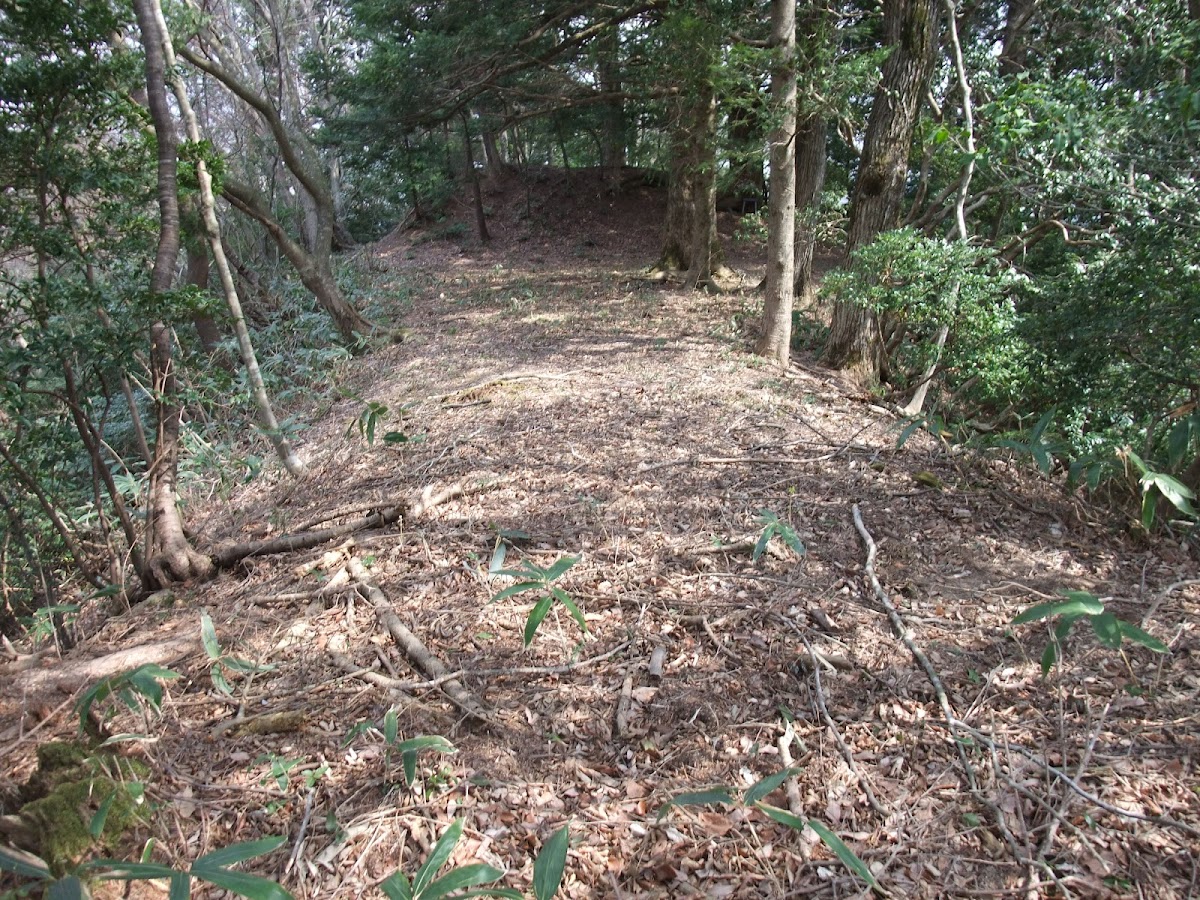
Parts of the earthworks from the Ouchi clan residence era remain within the grounds and surrounding area of Ryufuku-ji Temple. These earthworks, approximately 2-3 meters high, are valuable remains that allow us to appreciate the scale of the defensive facilities at that time. The western earthwork, in particular, is relatively well-preserved, allowing us to imagine its appearance in its heyday.
Garden Remains
Some of the garden remains confirmed during the excavations are preserved and on display. The remains of stone-lined ditches and ponds reveal how the Ouchi clan transplanted Kyoto’s garden culture to Yamaguchi. Gardens were a crucial element symbolizing the refinement of Ouchi culture.
Ryufuku-ji Temple Main Hall and Exhibits
The main hall of Ryufuku-ji Temple displays some of the materials and excavated artifacts related to the Ouchi clan. Several explanatory panels about the Ouchi clan’s residence are also installed on the temple grounds, visitors to learn about the history and allowing structure of the residence.
Surrounding Ouchi Clan Related Historical Sites
Near the Ouchi clan’s residence site, numerous historical sites related to the Ouchi clan are scattered. Visiting sites such as the Ryoun-ji Temple ruins, the Koryu-ji Temple ruins (the Ouchi clan’s family temple), and the tomb of Ouchi Yoshitaka will provide a deeper understanding of the Ouchi clan’s history. Furthermore, the Yamaguchi City Historical and Folk Museum features detailed exhibits on the Ouchi clan, making a visit in conjunction with a visit to the residence site highly recommended.
Access and Visiting Information
Location
The Ouchi Clan Residence Site (Ryūfuku-ji Temple) is located in Ōtono-Ōji, Yamaguchi City, Yamaguchi Prefecture. It’s approximately a 20-minute walk from Yamaguchi Station on the JR Yamaguchi Line, or a 5-minute walk from the “Prefectural Office” bus stop.
Parking
Ryūfuku-ji Temple has a free parking lot for visitors. However, space is limited, so please consider using nearby public parking lots during busy periods.
Visiting Precautions
Ryūfuku-ji Temple is an active temple, so please observe proper visiting etiquette. While the temple grounds are generally open to visitors, prior confirmation may be required for viewing the interior of the main hall. Also, please refrain from entering areas currently under archaeological excavation.
Ouchi Culture and the Role of the Ouchi Clan Residence
The Residence as a Cultural Salon
The Ouchi Clan Residence was not merely a political center, but also functioned as a cultural salon. Court nobles, cultural figures, and Zen monks invited from Kyoto stayed at the residence, where linked verse gatherings, tea ceremonies, and academic pursuits took place. This cultural exchange contributed to Yamaguchi’s development as a cultural city second only to Kyoto.
The Origins of Ouchi Lacquerware and Ouchi Dolls
The craft techniques encouraged by the Ouchi clan are connected to present-day Yamaguchi’s traditional crafts. Ouchi lacquerware and Ouchi dolls inherit the craft traditions that began during the Ouchi clan’s era. These crafts were produced at the residence and used as gifts.
A Hub of International Exchange
The Ouchi residence also functioned as a hub for trade between Japan and the Ming Dynasty, as well as trade with Korea. Envoys from China and Korea visited the residence, engaging in diplomatic negotiations and cultural exchange. As symbolized by Xavier’s visit, the residence was also a place of international exchange.
The Influence of the Ouchi Clan Residence on Later Generations
Influence on the Urban Development of Yamaguchi
The urban planning implemented by Ouchi Hiroyoshi, modeled after Kyoto, forms the basis of the current street layout of Yamaguchi City. The grid-like street pattern and the arrangement of temples and shrines convey the urban planning of the Ouchi clan era.
Value as a Cultural Heritage Site
The Ouchi Clan Residence site is an extremely important archaeological site for understanding the reality of the residences of medieval shugo daimyo (provincial governors). The structure of the residence and the excavated artifacts revealed by archaeological excavations are valuable resources for studying the politics, economy, and culture of the Muromachi period.
Utilization as a Tourism Resource
Currently, the Ouchi Clan Residence site is positioned as an important tourist resource in Yamaguchi City. As part of the Ouchi Cultural Town Development project, a tourist route has been developed that includes the residence site and other Ouchi clan-related historical sites, attracting many history enthusiasts and tourists.
Juppotei Ishinkan and Surrounding Facilities
Overview of Juppotei Ishinkan
Near the site of the Ouchi Clan Residence is the Juppotei Ishinkan, which tells the history of Yamaguchi during the late Edo and Meiji Restoration periods. Juppotei was a gathering place for patriots of the late Edo period, and at the Ishinkan, you can learn about Yamaguchi’s history during that time through historical documents and exhibits. the Edo period in a continuous manner.
Surrounding Cultural Facilities
The Yamaguchi City Historical and Folk Museum has a permanent, detailed exhibition on the Ouchi clan, making it ideal for learning before or after visiting the residence site. The Yamaguchi Prefectural Museum of Art also houses artworks related to the Ouchi clan, allowing you to appreciate the aesthetic aspects of Ouchi culture.
Summary
The Ouchi Clan Residence site is the remains of a shugo (provincial governor) residence that flourished as the political, economic, and cultural center of western Japan from the Muromachi period to the Sengoku period. For approximately 200 years, since Ouchi Hiroyoshi moved his base to Yamaguchi, successive heads of the Ouchi clan conducted their political affairs from this residence, supporting the prosperity of Yamaguchi, which was known as the “Kyoto of the West.”
Although it is now the grounds of Ryufuku-ji Temple, remains such as earthworks and garden remnants remain, and it is protected as a national historic site. Continuous archaeological excavations are gradually revealing the structure of the residence and the daily life of the Ouchi clan, making it an important site in the study of medieval shugo daimyo residences.
By visiting the Ouchi clan residence site, you can experience the splendor of the Ouchi clan, which prospered through trade with the Ming Dynasty and developed its own unique Ouchi culture while incorporating Kyoto culture, as well as the history of Yamaguchi, an international city visited by Francis Xavier. When you visit Yamaguchi City, be sure to visit this historical site and experience a part of the cultural prosperity of medieval Japan.