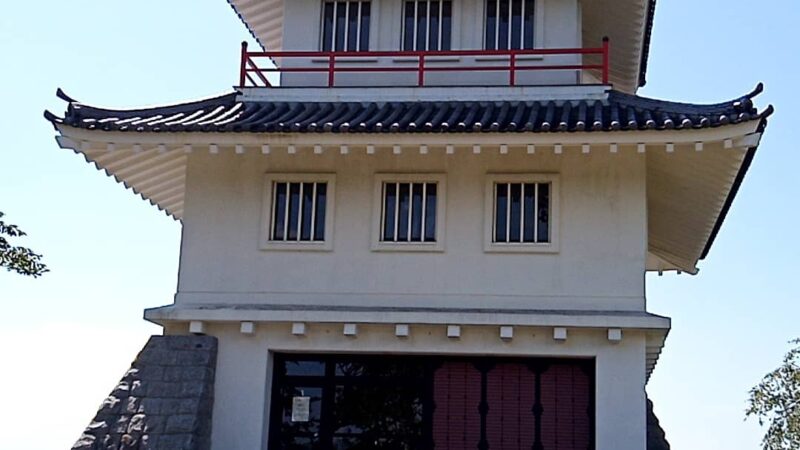
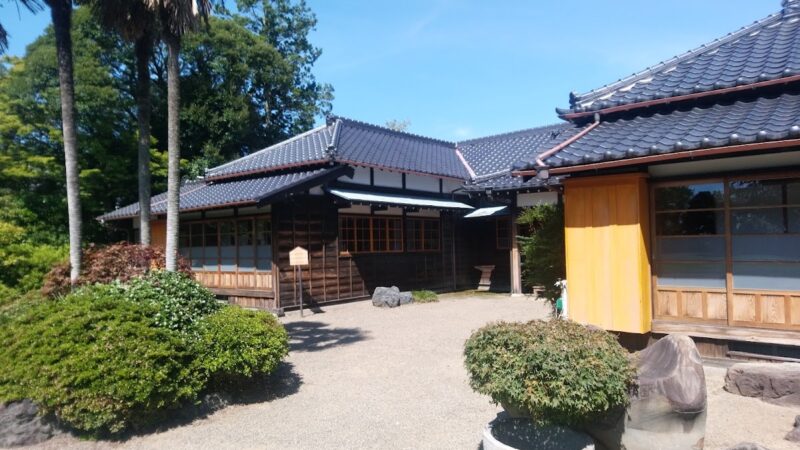
Complete Guide to Mukaihaguroyama Castle | A Thorough Explanation of the History and Highlights of Tohoku’s Largest Mountain Castle
##Overview
Mukaihaguroyama Castle, located in Aizumisato Town, Onuma District, Fukushima Prefecture, is one of Japan’s largest mountain castles. Spreading from the summit of Mt. Iwasaki (Mukaihaguroyama), which stands at an altitude of 408 meters, to the northern slope, this castle site boasts the largest scale in the Tohoku region and was designated a National Historic Site in 2001. Furthermore, in 2017, it was selected as one of the “Continued Top 100 Japanese Castles,” recognizing its high historical value nationwide.
During the Sengoku period, Ashina Moriuji, who ruled Aizu, spent eight years building this natural fortress from 1561. As a strategic point overlooking the Aizu Basin, it was highly valued by successive feudal lords. Even today, numerous remains, including the first, second, and third baileys, are well-preserved, making it a valuable historical heritage site that conveys the appearance of a mountain castle from the Sengoku period.
History of Mukaihaguroyama Castle
Construction by Ashina Moriuji
The construction of Mukaihaguroyama Castle was ordered by Ashina Moriuji, the 16th head of the Aizu Ashina clan. In 1561, Moriuji decided to build a new base on Iwasakiyama, located in the southwestern part of the Aizu Basin. By constructing a stronger mountain castle approximately 10 kilometers southwest of his previous base, Kurokawa Castle (Aizu-Wakamatsu Castle), he prepared for threats from the south and established it as a base for controlling Aizu.
The construction took a long eight years and was completed in 1568. This castle skillfully utilized the terrain of Mt. Iwasaki, the highest peak of the Hakuhō Three Mountains, and was designed as an impregnable fortress that made the most of the natural ruggedness. Centered around a single enclosure at the summit, the castle features terraced enclosures on the northern slope, resulting in a magnificent scale covering approximately 150 hectares.
The Ashina Clan Era
Ashina Moriuji established his base at Mukaihaguroyama Castle and strengthened his control over the Aizu region. Moriuji was an excellent warrior and demonstrated skill in managing his territory, and is known as the person who built the Ashina clan’s golden age. However, after Moriuji’s death, the Ashina clan gradually declined.
In June of Tenshō 17 (1589), the Battle of Suriagehara broke out between the Ashina clan and Date Masamune. In this battle, the Ashina army, led by Ashina Yoshihiro, suffered a crushing defeat at the hands of the Date army, and the Ashina clan was expelled from Aizu. This battle marked the end of the Ashina clan’s rule over Aizu, a prestigious family that had lasted for approximately 400 years.
The Era of Date Masamune, Gamo Ujisato, and Uesugi Kagekatsu
After the Battle of Suriagehara, Aizu came under the control of Date Masamune. Masamune recognized the strategic value of Mukaihaguroyama Castle and continued to maintain and manage it. However, after Toyotomi Hideyoshi’s siege of Odawara in 1590, Masamune’s Aizu was confiscated, and Gamo Ujisato became the lord of Aizu.
Gamo Ujisato established Kurokawa Castle (later Wakamatsu Castle) as the center of Aizu and carried out large-scale renovations to transform it into a modern castle. Mukaihaguroyama Castle continued to be positioned as an important subsidiary castle and undertaken further renovations. After Ujisato’s death, Aizu became the territory of Uesugi Kagekatsu, who took up residence there in 1598.
Uesugi Kagekatsu also valued Mukaihaguroyama Castle and carried out further renovations. However, the Uesugi clan, who sided with the Western Army in the Battle of Sekigahara in 1600, were ordered to reduce their territory to Yonezawa after the war. As a result, Mukaihaguroyama Castle was abandoned and its role came to an end.
From Abandonment to the Present
After its abandonment, Mukaihaguroyama Castle gradually returned to nature over many years, but its massive remains were preserved in good condition within the forest. From the Showa to the Heisei era, local researchers and municipalities conducted investigations, leading to a re-evaluation of its historical value.
On August 13, 2001, the Mukaihaguroyama Castle ruins were designated a National Historic Site. Subsequently, preservation and maintenance projects were carried out, mainly in Aizu-Misato Town, including the development of walking trails and the installation of information boards. In 2017, it was selected as one of the “Continued Top 100 Japanese Castles” (No. 118), and has since attracted attention among castle enthusiasts.
Structure and Characteristics of Mukaihaguroyama Castle
Overall Structure
Mukaihaguroyama Castle is a large mountain castle built on the northern slope from the summit of Mt. Iwasaki, which is 408 meters above sea level. The grounds castle extend approximately 1,800 meters from north to south and 700 meters from east to west, boasting a total area of approximately 150 hectares, making it one of the largest in the Tohoku region.
The central part of the castle is the first enclosure at the summit, and from there, the second and third enclosures are arranged in a stepped fashion towards the north. Each enclosure is demarcated by stone walls and earthworks, and the areas between the enclosures are defended by steep slopes and moats. The entire mountain castle stood of dozens of baileys of varying sizes, forming a complex defensive system.
Major Remains
First Bailey (Honmaru)
Located at the mountaintop, the first bailey was the most important section of the castle. Measuring approximately 100 meters east-west and 50 meters north-south, it is believed to have housed the lord’s residence and other important buildings. It was surrounded by high earthen ramparts, and traces of stone walls have been confirmed on the east side.
Second Bailey
Located north of the first bailey, the second bailey was the largest flat area within the castle. Measuring approximately 150 meters east-west and 100 meters north-south, it is presumed that many buildings stood there. From the second bailey, one could see the Aizu Basin, and due to its excellent view, it was also called the “Tea House Bailey.”
Third Bailey
Located further north of the second bailey, the third bailey was also a vast flat area and an important defensive stronghold. Numerous buildings were also located here, and it is believed that these included military encampments and storage facilities for supplies.
Koguchi (Entrances)
The castle had several entrances called koguchi. These koguchi were crucial defensive points and were heavily guarded with stone walls, earthworks, and gates. The main gate (Ote-guchi) in particular was located on the northwestern slope towards Mikka-machi and featured a complex structure designed to prevent enemy intrusion.
The Winding Path
The path leading from the foot of the mountain to the summit is constructed in a winding, switchback pattern up the steep slope. This path offered significant defensive advantages; attackers were forced to climb in a single file, making them vulnerable to attacks from the castle. This path can still be followed today as a walking trail.
Stone Walls and Earthworks
Unusually for a mountain castle in the Tohoku region, Mukaihaguroyama Castle utilizes stone walls in many places. In particular, stone walls constructed using the nozurazumi method (a technique where natural stones are piled up) remain around the first enclosure and near the gate. Furthermore, earthen ramparts several meters high were built around each enclosure, enhancing its defensive capabilities.
Features of the Defensive System
The most distinctive feature of Mukaihaguroyama Castle is its natural fortress, skillfully utilizing the natural terrain. The steep mountain slopes themselves act as defensive walls, limiting attackers to approach via only a few routes.
The layout of the enclosures also prioritizes defense. Each enclosure is highly independent, allowing for continued defense even if one falls. Communication routes between enclosures are also limited, a design intended to hinder enemy incursions.
In addition, numerous trenches and vertical moats were constructed within the castle to prevent incursions along the ridges. These remains are still clearly visible today, attesting to the high level of castle-building technology during the Sengoku period.
Highlights of Mukaihaguroyama Castle
Scenic Views
One of the biggest attractions of Mukaihaguroyama Castle is the magnificent panoramic view of the Aizu Basin. The view from the second enclosure (Ochayaba enclosure) is particularly spectacular, offering views of Aizu-Wakamatsu city, Mount Bandai, and Lake Inawashiro. On a clear day, a 360-degree panorama unfolds, allowing you to appreciate why the castle lords of the Sengoku period valued this location so highly.
The view from the third enclosure is also superb, especially during the autumn foliage season and the winter snowscape. When visiting the castle ruins, we highly recommend bringing a camera to capture these breathtaking views.
Exploring the Historical Remains
At the Mukaihaguroyama Castle ruins, you can explore numerous historical remains that vividly preserve the appearance of a mountain castle from the Sengoku period. Walking along the well-maintained promenade, you can tour the first, second, and third baileys, experiencing firsthand the scale and structure of each.
Particularly noteworthy are the earthworks and stone bail walls that demarcate the baileys. You can see the castle-building techniques from over 400 years ago up close, and be amazed by the advanced civil engineering skills of the people of that time. Furthermore, by actually walking along the complex structure of the gate and the steepness of the winding paths, you can truly appreciate the castle’s formidable defenses.
Hongo Information Center
Before visiting the Mukaihaguroyama Castle ruins, you should definitely stop by the Hongo Information Center at the foot of the mountain. Here you can obtain detailed pamphlets and maps of the castle ruins, and receive advice from staff on how to climb the castle.
The center also has an exhibition corner explaining the history and structure of Mukaihaguroyama Castle, allowing you to gain a deeper understanding of the ruin castles by acquiring knowledge beforehand. You can also get your “Continued Top 100 Japanese Castles” stamp here.
Mukaihaguroyama Castle Ruins Preservation Museum
Near the Hongō Information Center is the Mukaihaguroyama Castle Ruins Preservation Museum. Here, artifacts unearthed during archaeological excavations, a reconstructed model of the castle, and detailed explanatory panels are on display, allowing you to gain more specialized knowledge about Mukaihaguroyama Castle. Since opening days are limited, it is recommended to check the Aizu-Misato Town official website in advance.
Access Information
Access by Car
From Tokyo
- Take the Tohoku Expressway north and exit at Aizu-Wakamatsu IC
- Take National Route 49 towards Aizu-Misato Town
- Travel time: Approximately 20 minutes from Aizu-Wakamatsu IC
From Sendai
- Take the Ban-etsu Expressway west and exit at Aizu-Wakamatsu IC
- Take National Route 49 towards Aizu-Misato Town
Free parking is available near the Hongō Information Center. From there, you can walk or drive to the castle ruins entrance.
Access by Public Transportation
By JR Train
- Get off at Aizu-Hongo Station on the JR Tadami Line
- Approximately 15-minute walk from the station to the Hongo Information Center
- Approximately 20-minute walk from the center to the castle ruins entrance
By Bus
- Take a bus from Aizu-Wakamatsu Station and get off at Hongo bus stop
- Travel time: Approximately 30 minutes
When using public transportation, please check the timetable in advance as the number of services is limited.
Precautions for Visiting the Castle
Mukaihaguroyama Castle Ruins are a full-fledged mountain castle, so the following preparations are necessary for visiting:
- Clothing: Comfortable clothing and well-worn trekking shoes or athletic shoes
- Items to Bring: Drinking water, towel, hat, insect repellent (spring to autumn)
- Time Required: Approximately 2-3 hours round trip from Hongō Information Center to the first enclosure
- Physical Fitness: A certain level of physical fitness is required due to the steep uphill climb
- Season: Visiting the castle is difficult in winter (December to March) due to snow.
Cultural Property Designation and Evaluation of Mukaihaguroyama Castle
National Historic Site
Mukaihaguroyama Castle Ruins were designated a National Historic Site on August 13, 2001. The reason for the designation was the evaluation of its status as one of the largest Sengoku period mountain castles in the Tohoku region, and the extremely good state of preservation of its remains.
With its designation as a national historic site, the preservation and maintenance of the ruin castles now receive official support, and Aizu-Misato Town is proceeding with a planned maintenance project. Walking paths have been developed, information boards have been installed, and safety measures have been taken at dangerous areas, making it possible for more people to safely visit the castle ruins.
Selection as one of the Continued Top 100 Japanese Castles
On April 6, 2017, it was selected as one of the “Continued Top 100 Japanese Castles” (number 118) by the Japan Castle Association. This is the second selection of 100 castles following the “Top 100 Japanese Castles” selected in 2006.
This selection has attracted the attention of castle enthusiasts nationwide, and the number of visitors has increased. A stamp rally for the Continued Top 100 Japanese Castles is also being held, making it a popular spot for many castle-visiting fans.
Academic Evaluation
Mukaihaguroyama Castle is also highly regarded in the field of castle research. The following points are considered particularly important from an academic perspective:
- Scale: It is one of the largest mountain castles in the Tohoku region, and a valuable example demonstrating the power and castle-building techniques of Sengoku-era daimyo.
- Preservation of Remains: Despite being abandoned for over 400 years, the remains such as baileys, earthworks, stone walls, and gates remain in excellent condition.
- Castle-Building Techniques: It exhibits advanced castle-building techniques, such as the skillful use of natural terrain in its layout (design) and the use of stone walls, which are rare in the Tohoku region.
- Historical Importance: It was used by powerful daimyo from the Sengoku period to the early Edo period, including the Ashina, Date, Gamo, and Uesugi clans, making it important for understanding the Sengoku history of the Tohoku region.
Nearby Tourist Spots
Aizu-Wakamatsu Castle (Tsuruga Castle)
Located approximately 10 kilometers northeast of Mukaihaguroyama Castle, Aizu-Wakamatsu Castle is a famous castle known as a symbol of Aizu. This castle, famous for the tragedy of the Byakkotai (White Tiger Corps) during the Boshin War, now has a restored keep and is open to the public as a museum. Visiting it together with Mukaihaguroyama Castle will give you a deeper understanding of Aizu’s castle culture.
Aizu Hongō Pottery Village
The Aizu Hongō district, located at the foot of Mukaihaguroyama Castle, is known as the production center of Aizu Hongō pottery, which has a history of over 400 years. Numerous kilns are scattered throughout the area, where you can purchase pottery or try your hand at pottery making. It’s highly recommended to experience this traditional craft after exploring the castle ruins.
Historical Buildings of Aizu Misato Town
Besides Mukaihaguroyama Castle, Aizu Misato Town has many other historical buildings. Visiting old temples and shrines such as the nationally designated important cultural properties “Hōyōji Temple” and “Nakata Kannon” will allow you to experience Aizu’s rich history and culture.
Preservation and Utilization of Mukaihaguroyama Castle
Development Project Initiatives
Aizumisato Town is continuously implementing development projects aimed at preserving and utilizing the Mukaihaguroyama Castle ruins, a nationally designated historical site. Since its designation as a historical site in 2001, archaeological excavations, preservation treatment of remains, development of walking trails, and installation of information have been systematically carried out.
Particular emphasis is placed on visitor safety and improving convenience. Improvements to steep mountain paths, the installation of handrails ensuring in dangerous areas, and the placement of easy-to-understand information signs have created an environment where more people can safely visit the castle ruins.
Educational Activities and Public Awareness
Aizumisato Town is developing various educational activities to pass on the Mukaihaguroyama Castle ruins as a valuable cultural asset of the region to future generations. Local elementary and junior high schools conduct castle site visits as part of their local history studies, providing children with an opportunity to learn about local history.
Furthermore, historical lectures and guided tours are regularly held for the general public, providing opportunities to visit the castle ruins while listening to explanations from experts.
Utilization as a Tourism Resource
In recent years, the Mukaihaguroyama Castle ruins have attracted attention as an important tourism resource in the Aizu region. Following its selection as one of the Continued Top 100 Japanese Castles, enthusiast castles from all over Japan have begun visiting, contributing to the revitalization of the region.
Aizu-Misato Town is also working on new approaches to disseminating information, such as collaborations with the historical simulation game “Nobunaga’s Ambition,” striving to convey the appeal of the castle ruins to younger generations.
Summary
Mukaihaguroyama Castle is a historical site of extremely high historical and cultural value, representing a mountain castle of the Tohoku region during the Sengoku period. The natural fortress, built by Ashina Moriuji over eight years, boasts one of the largest scales in Tohoku, and its remains in excellent condition today.
This castle site, designated as a National Historic Site and one of Japan’s Continued Top 100 Castles, is a valuable historical relic that tells the story of Aizu’s Sengoku period history, and its magnificent panoramic views of the Aizu Basin are also a major attraction.
Climbing to the castle, being a full-fledged mountain castle, requires physical strength, but the sense of accomplishment and emotion upon reaching the summit is exceptional. The Mukaihaguroyama Castle ruins offer a chance to feel the spirit of the Sengoku period and immerse yourself in the romance of history. It is a must-visit castle when you come to Aizu.
Aizu-Misato Town continues its efforts to preserve and maintain this valuable cultural asset for future generations. It is the understanding and commitment to protecting this historical heritage that each visitor has to ensure the future of Mukaihaguroyama Castle.