Complete Guide to Tsuyama Castle | Thorough Explanation of History, Highlights, and Access
What is Tsuyama Castle (Kakuzan Castle)?
Tsuyama Castle (Tsuyama-jo) is a hilltop castle located in Yamashita, Tsuyama City, Okayama Prefecture, boasting one of the largest scales in Japan. Also known as Kakuzan Castle, it was built on Tsuruyama, a hill approximately 140 meters above sea level.
Currently, it is maintained as “Kakuzan Park” and is selected as one of Japan’s Top 100 Castles (No. 67) and one of Japan’s Top 100 Cherry Blossom Viewing Spots, and is a beloved symbol of Tsuyama City. The ruin castles are designated as a national historic site and are protected as a cultural property of high historical value.
Features of Tsuyama Castle
The most distinctive feature of Tsuyama Castle is its large number of turrets (yagura). heyday, the castle boasted 77 turrets, including the outer walls, surpassing the 76 turrets of Hiroshima Castle and the 61 of Himeji Castle. An old photograph taken in the early Meiji period records the magnificent sight of numerous turrets standing atop the stone walls.
Furthermore, its practical layout is a major characteristic. The castle features intricately winding stone walls, numerous square-shaped gatehouses, and a triple defensive line, showcasing the pinnacle of modern castle construction technology.
History and Background of Tsuyama Castle
Medieval Period: The Era of Tsuruyama Castle
The history of Tsuyama Castle dates back to the Muromachi period. Around 1441 (Kakitsu 1), Yamana Tadamasa, the deputy governor of Mimasaka Province, is believed to have built a castle on Tsuruyama. This castle, called “Tsuruyama Castle,” functioned as a base for Mimasaka Province.
However, during the chaos of the Ōnin-Bunmei War (1467-1477), the castle was abandoned and remained in a state of dilapidation for a long time afterward.
Early Modern Period: Construction by Mori Tadamasa
Tsuyama Castle was reborn as the large-scale early modern castle we know today during the early Edo period.
In 1603 (Keichō 8), Mori Tadamasa was granted a fief of 186,500 koku in Mimasaka Province for his military achievements in the Battle of Sekigahara. Mori Tadamasa was the youngest brother of Mori Ranmaru, who died alongside Oda Nobunaga in the Honnō-ji Incident.
Tadamasa began construction immediately after his arrival and completed it in 1616 (Genna 2). It was a massive construction project that took a remarkable 13 years to complete. At this time, the place name was also changed from “Tsuruyama” to “Tsuyama.”
The construction of the castle was extremely difficult. Taking advantage of the terrain of Tsuruyama, they built multiple layers of stone walls reaching 45 meters in height, completing a sturdy castle with a triple-layered structure of the main keep, second bailey, and third bailey. The total length of the stone walls is said to have reached 5 kilometers.
The Mori and Matsudaira Eras
The Mori clan ruled for four generations, but in 1697 (Genroku 10), the fourth lord, Mori Nagashige, died young without an heir, resulting in the confiscation of their territory.
Afterward, Matsudaira Nobutomi took over, and the Matsudaira clan ruled the Tsuyama Domain for 10 generations until the end of the Edo period. The Matsudaira clan were descendants of Yuki Hideyasu, the second son of Tokugawa Ieyasu, and were a branch of the Echizen Matsudaira family.
After the Meiji Era: Castle Abolition and the Present
In 1873 (Meiji 6), the castle abolition decree ordered the demolition of all buildings at Tsuyama Castle. The main palace, the Bitchu turret (which served as a substitute for the keep), 77 turrets, the castle gates, and all other structures were lost, leaving only the stone walls and baileys.
In 1900 (Meiji 33), the castle site was developed into a park and named “Tsuruyama Park.” Cherry trees were planted, and it became a popular place of relaxation for citizens.
In 1963 (Showa 38), it was designated a national historic site, officially recognizing its historical value.
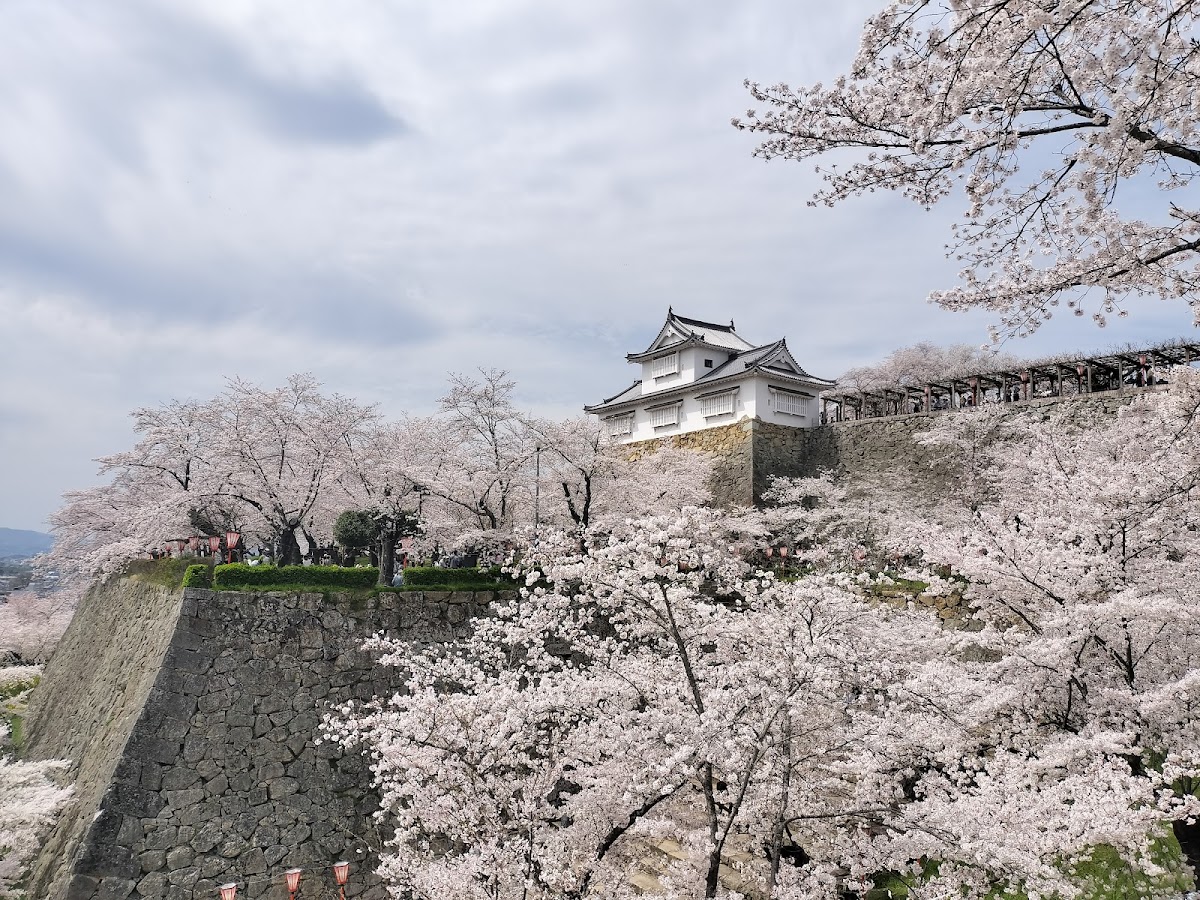
In 2005 (Heisei 17), to commemorate the 400th anniversary of the castle’s construction, the Bitchu turret was restored. This was a faithful reproduction based on Edo period drawings, old photographs, and the results of archaeological excavations.
Highlights of Tsuyama Castle
Magnificent Stone Walls
The first thing that overwhelms visitors to Tsuyama Castle is its magnificent stone walls. Built on Tsuruyama Hill, 45 meters high, the walls stretch in multiple layers, totaling approximately 5 kilometers.
The stone walls showcase various construction methods, from nozura-zumi (rough-stone masonry) to uchikomi-hagi (fitted stone masonry) and kirikomi-hagi (cut stone masonry), allowing visitors to learn about the evolution of castle construction techniques. The stone walls around the main keep, in particular, feature beautiful curves created using precisely stones in the kirikomi-hagi technique.
The sangi-zumi (stacked stone masonry) technique used at the corners of the stone walls is also remarkable, increasing strength by stacking rectangular stones alternately.
Restored Bitchu Turret
The Bitchu Turret is a three-story turret located in the main enclosure of Tsuyama Castle, functioning as a substitute for the castle keep. Restored in 2005, this building is open to visitors (for a fee).
The interior of the turret features a palace-style living space, with recreated tatami-floored rooms, alcoves, and hidden warrior quarters. This is because it housed the lord’s wife and daughters, making it a rare “palace-style turret” nationwide.
From the turret, you can enjoy a panoramic view of Tsuyama city, the same scenery that the former lord and daughters likely gazed upon.
Main Enclosure, Second Enclosure, and Third Enclosure
Tsuyama Castle is composed of three layers of enclosures.
The main enclosure is the central part of the castle and the most important section where the Bitchu Turret stands. The site where the main palace once stood is now a plaza, with the foundation stones remaining.
The Ninomaru (second enclosure) was positioned to surround the Honmaru (main enclosure), and housed the residences of senior retainers and important watchtowers.
The Sannomaru (third enclosure) further surrounded the outermost part, containing the residences of samurai and armories.
The passages connecting these enclosures were equipped with defensive structures called Masugata-koguchi (square-shaped gate). These passages were designed to prevent enemy intrusion, with right-angle turns allowing for attacks from all four sides.
Tsuruyama Park: A Famous Cherry Blossom Spot
Tsuyama Castle Ruins is a famous cherry blossom spot, selected as one of Japan’s Top 100 Cherry Blossom Spots. Approximately 1,000 cherry trees are planted, creating a magnificent floral landscape in spring.
Somei Yoshino cherry trees are particularly numerous, reaching full bloom from late March to early April. The contrast between the stone walls and the cherry blossoms is breathtaking, and the trees are illuminated at night, allowing visitors to enjoy the magical sight of cherry blossoms after dark.
During cherry blossom season, the “Tsuyama Cherry Blossom Festival” is held, attracting many tourists.
Numerous Stone Monuments and Memorials
Within the park, various stone monuments and memorials related to Tsuyama Castle and the Tsuyama Domain are erected.
- Statue of Mori Tadamasa: A bronze statue commemorating the achievements of Mori Tadamasa, the castle’s builder.
- Monument to Mori Ranmaru: A monument commemorating Mori Ranmaru, Tadamasa’s older brother.
- Monuments to Successive Domain Lords: Monuments commemorating the lords of the Mori and Matsudaira clans.
Visiting these sites will allow you to gain a deeper understanding of Tsuyama Castle’s history.
Structure and Defense System of Tsuyama Castle
Triple Line of Defense
Tsuyama Castle is composed of a triple line of defense: the Honmaru (main enclosure), Ninomaru (second enclosure), and Sannomaru (third enclosure). Each enclosure was separated by high stone walls, and each had a turret and gate.
This design was based on the assumption of actual combat, where even if the enemy breached one enclosure, the next defensive line was waiting.
Complex Masugata Gate Layout
Numerous masugata gates were provided along the passages leading into the castle. These are defensive devices that create square spaces (masugata) by bending passages at right angles.
Enemies who entered the masugata would be attacked from all sides, making it difficult to advance or retreat. Tsuyama Castle is said to have had more than 10 masugata gates, and the complex movement patterns were designed to confuse attackers.
Defensive Network of 77 Turrets
The most distinctive feature of Tsuyama Castle was the presence of 77 turrets. This number surpasses that of Himeji Castle and Hiroshima Castle, making it one of the largest numbers among Japanese castles.
The turrets were not merely observation posts; they also functioned as armories and soldiers’ quarters, and served as firing positions when necessary. The towers standing atop the stone walls are thought to have had a powerful intimidating effect on enemies.
Tsuyama Castle Maintenance Plan
Tsuyama City is implementing a continuous maintenance plan to preserve and utilize the Tsuyama Castle ruins.
Stone Wall Preservation Work
Regular repair work is carried out on the stone walls damaged by aging and earthquakes. In parallel with archaeological excavations, restoration work using Edo period techniques is underway, sriving to preserve the historical landscape.
Tower Restoration Plan
Following the restoration of the Bitchu Tower, the restoration of other towers is also being considered. In particular, the restoration of major gates such as the Omote-Chumon and Ura-Chumon is anticipated, potentially resulting in a landscape closer to its original appearance in the future.
Utilization of Digital Technology
Efforts have begun to visually recreate lost structures using AR (Augmented Reality) and VR (Virtual Reality) technologies. It is hoped that visitors will be able to experience the appearance of Tsuyama Castle in the Edo period through smartphone apps and other means.
Local Information & Tourist Guide
Opening Hours and Admission Fees
Opening Hours
- April to September: 8:40 AM – 7:00 PM
- October to March: 8:40 AM – 5:00 PM
- During the Cherry Blossom Festival (early April): 7:30 AM – 10:00 PM
Admission Fees
- Adults (High school students and older): 310 yen
- Junior high school students and younger: Free
- Group discounts available (30 or more people)
Closed Days
- December 29th – 31st
Estimated Time Required
For a visit to Tsuyama Castle Ruins, allow approximately 1 to 1.5 hours. This is a standard course that involves slowly climbing to the main keep while viewing the stone walls and visiting the Bitchu Turret.
Those familiar with cherry blossom season or history can enjoy the site for even longer.
Facility Information
Facilities within Tsuyama Castle (Tsuruyama Park)
- Bitchu Turret (Reconstructed building, interior open for viewing)
-Rest area
-Vending machines
- Restrooms (Barrier-free access available)
Nearby Facilities
- Tsuyama Local History Museum (5-minute walk): Exhibits on the history and culture of Tsuyama
- Joto Townscape Preservation District (15-minute walk): Important preservation district for traditional buildings, preserving the townscape of the Edo period
- Shurakuen Garden (10-minute walk): Daimyo garden of the Tsuyama Domain
Access Methods
Access by Train
From JR Tsuyama Station
- Walking: Approximately 15 minutes (approximately 1.2 km)
- Taxi: Approximately 5 minutes
- Local Bus: Take the “Gongo Bus” East Loop Line and get off at “Tsuyama Castle Ruins (Tsuruyama Park)” stop.
JR Tsuyama Station is a terminal station served by the JR Kishin Line, JR Inbi Line, and JR Tsuyama Line.
Travel Time from Major Cities
- From Okayama Station: Approximately 1 hour 15 minutes by JR Tsuyama Line
- From Osaka: Approximately 2 hours 30 minutes by Shinkansen (bullet train) via Okayama Station
- From Tottori: Approximately 2 hours by JR Inbi Line
Access by Car
Using Expressways
- Approximately 15 minutes (approx. 10km) from Tsuyama IC on the Chugoku Expressway
- Approximately 15 minutes (approx. 10 km) from Innosho IC on the Chugoku Expressway
Parking
- Tsuruyama Park Tourist Parking: Free (approx. 30 cars)
- Tsuyama Tourist Center Parking: Free (approx. 20 cars)
- Paid parking available nearby
During the cherry blossom festival, parking lots become crowded, so using public transportation is recommended.
Access by Airplane
The nearest airport is Okayama Momotaro Airport (Okayama Airport).
- From Okayama Airport to Okayama Station: Approximately 30 minutes by limousine bus
- From Okayama Station to Tsuyama Station: Approximately 1 hour and 15 minutes by JR Tsuyama Line
Tourist Spots Around Tsuyama Castle
Joto Townscape Preservation District
This is a Important Preservation District for Groups of Traditional Buildings located a 15-minute walk from Tsuyama Castle. Edo-period merchant houses and townhouses line the streets, preserving the atmosphere of the time. The white-walled storehouses and townhouses with lattice doors are beautiful, making it ideal for a stroll.
Shurakuen Garden
This Daimyo Garden was built by Mori Nagatsugu, the second lord of the Tsuyama Domain, and is designated as a National Place of Scenic Beauty. It is a pond-centered strolling garden where you can enjoy the scenery of each season. Admission is free.
Tsuyama Local History Museum
Located very close to the Tsuyama Castle ruins, it exhibits materials related to the history and culture of Tsuyama and Tsuyama Castle. You can see a restored model of Tsuyama Castle and old photographs, and visiting before or after your visit will deepen your understanding.
Tsuyama Railway Museum
A railway museum located near JR Tsuyama Station. You can see valuable vehicles preserved in a roundhouse. It’s a facility that can be enjoyed even by those who aren’t railway fans.
The Four Seasons of Tsuyama Castle
Spring (Late March to Early April)
The cherry blossom season is the peak of Tsuyama Castle’s beauty. Approximately 1,000 cherry trees bloom simultaneously, creating a magnificent contrast with the stone walls. The “Tsuyama Cherry Blossom Festival” is held, and nighttime illuminations are also implemented. This is the busiest time of year, attracting many tourists.
Summer (June to August)
This is a beautiful season with fresh greenery. The green against the stone walls is refreshing, and it’s relatively less crowded, allowing for a leisurely visit. However, it gets hot in the summer, so precautions against heatstroke are necessary.
Autumn (October-November)
This is a beautiful season for autumn foliage. The maple and ginkgo trees in the park change color, offering a unique autumnal landscape. The weather is mild, making it an ideal time for a stroll.
Winter (December-February)
With fewer tourists, this is a season to quietly appreciate history. Snow sometimes falls, and the snow-covered stone walls are breathtakingly beautiful. Be sure to dress warmly for your visit.
Tips for Enjoying Tsuyama Castle
Wear Comfortable Clothing
Tsuyama Castle is a mountain castle, and you will need to climb stone steps to reach the main keep. We recommend wearing comfortable shoes and clothing that allows for easy movement.
Utilize Guided Tours
The Tsuyama City Tourism Association offers guided tours by volunteer guides (reservations required). Touring with a knowledgeable guide will allow you to gain a deeper understanding of Tsuyama Castle’s history and highlights.
Photo Spots
- View from the Main Enclosure: A spectacular viewpoint offering a panoramic view of Tsuyama city.
- The Curved Beauty of the Stone Walls: The stone walls viewed from the Third Enclosure are beautiful.
- Bitchu Turret and Cherry Blossoms: A spectacular view only available in spring.
- Sunset: The stone walls illuminated by the setting sun create a magical atmosphere.
Souvenir Information
There are many shops selling Tsuyama’s local specialties around Tsuyama Castle and Tsuyama Station.
- Tsuyama Hormone Udon: Tsuyama’s local specialty.
- Sakushu Black Soybeans: Black soybeans, a specialty of northern Okayama Prefecture.
- Tsuyama Castle Goods: Goods featuring illustrations of the castle.
- Local Sake: Japanese sake from the Mimasaka region.
Trivia about Tsuyama Castle
Why Was There No Keep?
Tsuyama Castle did not have a keep. This is thought to be because the castle’s completion in 1616 coincided with a period when the Edo shogunate strictly restricted castle construction by daimyo under the “One Castle Per Province” decree and the “Laws for the Military Houses.”
Instead, the Bitchu Turret built in the main enclosure served as the keep. This Bitchu Turret had a five-story structure and was practically comparable in size to a keep.
Relationship with Mori Ranmaru
The castle’s builder, Mori Tadamasa, was the youngest brother of Mori Ranmaru, famous as a page to Oda Nobunaga. After Ranmaru died alongside Nobunaga in the Honnoji Incident, the Mori family served Toyotomi Hideyoshi and Tokugawa Ieyasu, and Tadamasa was granted Mimasaka Province for his achievements in the Battle of Sekigahara.
A monument commemorating Mori Ranmaru has also been erected at Tsuyama Castle, allowing visitors to feel the bond between the brothers.
Valuable Photographs from the Early Meiji Period
Tsuyama Castle is a valuable castle with old photographs taken in the early Meiji period. The castle’s appearance before its demolition due to the Meiji-era castle demolition decree is documented, allowing viewers to see the magnificent sight of 77 towers standing tall.
These photographs are important resources for the restoration of the Bitchu Tower and future development plans.
Summary
Tsuyama Castle was one of Japan’s largest flatland castles, boasting 77 towers, built by Mori Tadamasa over 13 years. Although the structures were lost due to the Meiji-era castle demolition decree, the magnificent stone walls and baileys remain, showcasing the pinnacle of early modern castle construction technology.
The Bitchu Tower, restored in 2005, is a highlight as a rare tower with a palace-style design. It is also known as a cherry blossom viewing spot, selected as one of Japan’s Top 100 Cherry Blossom Viewing Spots, with approximately 1,000 cherry trees adorning the stone walls in spring.
Located in the heart of Tsuyama city, Tsuyama Castle is easily accessible. It is a historical site that you should definitely visit when visiting Okayama Prefecture. While gazing at the magnificent stone walls, why not reflect on the scenery that Mori Tadamasa and successive feudal lords must have seen?