What is Mizuki? A Thorough Explanation of its History, Structure, and Highlights | One of the Largest Defense Facilities in Ancient Japan
What is Mizuki?
Mizuki is an ancient defense facility spanning Dazaifu City and Kasuga City in Fukuoka Prefecture. Built in the 7th century, this massive earthen rampart is known as one of the largest ancient civil engineering structures in Japan, measuring approximately 1.2 kilometers in length, 80 meters in width at its base, and 10 meters in height.
The name Mizuki (水城) originates from the structure of the rampart, which features water-filled moats on both sides. These moats not only enhanced defensive capabilities but also played a crucial role in slowing down enemy advances. Currently designated as a National Special Historic Site, it is a valuable historical site that conveys ancient Japanese defense technology and international affairs to the present day.
Basic Information about Mizuki Castle
- Location: Dazaifu City and Kasuga City, Fukuoka Prefecture
- Construction Period: 664 (3rd year of Emperor Tenji’s reign)
- Total Length: Approximately 1.2 kilometers
- Height: Approximately 10 meters (at the time)
- Width: Approximately 80 meters at the base
- Designation: National Special Historic Site (designated in 1953)
Historical Background of Mizuki Castle Construction
The Battle of Baekgang and Japan’s Crisis
The construction of Mizuki Castle is rooted in the Battle of Baekgang, which took place in 663. In this battle, the Japanese-Baekje allied forces suffered a crushing defeat against the Tang-Silla allied forces. This defeat led Japan to recognize the Tang-Silla invasion as a real threat.
The defeat at the Battle of Baekgang was Japan’s first large-scale defeat in a foreign war and was perceived as a crisis threatening the very existence of the nation. The imperial court rapidly began strengthening its defense system, and the construction of Mizuki Castle was decided as part of this effort.
Emperor Tenji’s Defense Policy
After the Battle of Baekgang, Emperor Tenji implemented an aggressive defense policy. In 664, he stationed border guards (sakimori) and beacon fires (noroshi) in Tsushima, Iki, and Chikushi, and in 665, he constructed two Korean-style mountain castles, Ono Castle and Kii Castle.
Mizuki Castle was positioned at the forefront of these defensive facilities and was intended to function as the last line of defense protecting the Dazaifu government office. While Ono Castle and Kii Castle were bases built in the mountainous region behind the mainland, Mizuki Castle was designed as the first line of defense in the plains.
The Key to Dazaifu’s Defense
Dazaifu was the most important base for diplomacy and defense in ancient Japan. It served as a window for exchange with the Korean Peninsula and mainland China, and was also the administrative body that oversaw the entire Kyushu region. Mizuki was a defensive wall built to protect Dazaifu from invasions from the Hakata Bay area.
The location of Mizuki was strategically crucial. Built in the narrow area between two rivers, the Mikasa River and the Ushikubi River, it completely blocked the main route from Hakata Bay to Dazaifu.
Structure and Construction Techniques of Mizuki
Structure of the Earthworks
The earthworks of Mizuki were not simply piles of earth, but were constructed using advanced civil engineering techniques. Excavations have revealed the following structure:
Base Structure:
- Excavating the ground to stabilize the foundation
- Employing the rammed earth construction method, which involves stacking clay and sand alternately
- Incorporating timber into the earthworks to increase strength
Cross-sectional Structure of the Earthworks:
The cross-section of the earthworks is trapezoidal, with a steep slope on the Hakata Bay side (northwest side) and a gentle slope on the Dazaifu side (southeast side). This design made it difficult for the enemy to climb while facilitating the movement of friendly forces.
Moat System
The most distinctive feature of Mizuki Castle was the moats built on both sides of the earthworks. The moat on the Hakata Bay side, in particular, was massive, measuring approximately 60 meters wide and 4 meters deep.
The moats served the following functions:
- Physical Barrier: To hinder the enemy’s advance
- Earthwork Reinforcement: To stabilize the foundation of the earthworks
- Water Source Securing: To be used as a water source during defense
- Visibility Securing Line of Sight: To detect enemy movements early
The water for the moats was drawn from the Mikasa River, and the design ensured a constant water level.
Wooden Pipes and Water Gates
Mizuki Castle had wooden pipes that penetrated the earthworks. This is a sluice gate for the Mikasa River, designed to ensure water flow during peacetime and to be closed during wartime to complete the defense line.
The wooden conduit discovered during the 1962 excavation was a massive wooden pipe approximately 2 meters in diameter, attracting attention as an important relic demonstrating the advanced civil engineering technology of the time. Currently, a portion of this conduit can be seen at the Dazaifu Exhibition Hall.
People Mobilized for Construction
The construction of Mizuki required an enormous amount of labor. The *Nihon Shoki* (Chronicles of Japan) records that in August 664, “A large embankment was built in Tsukushi to store water. It was named Mizuki.”
Researchers estimate that hundreds of thousands of laborers were mobilized for the construction of Mizuki. Considering Japan’s population and technological level at the time, this was a massive project involving the entire nation’s resources.
Historical Changes of Mizuki
Role in Ancient Times
After its construction, Mizuki was never actually used in combat. This was because the planned invasion by the Tang-Silla allied forces never materialized. However, Mizuki continued to function as a symbol of Dazaifu’s defense.
In the 8th century, relations with Silla became tense, and Mizuki’s defensive function was once again highlighted. Furthermore, the official road connecting Dazaifu and Hakata passed through Mizuki, giving it a crucial role as a transportation hub.
Changes from the Medieval Period Onward
From the Heian period onward, Mizuki’s military importance gradually declined. The earthworks gradually crumbled, and the moat filled in. In the medieval period, a road was built over Mizuki, and the surrounding area was used for agriculture.
During the Edo period, Mizuki’s existence was passed down through local legends, but its original form had been lost. Kaibara Ekiken, a scholar of the Fukuoka domain, recorded information about Mizuki in his “Chikuzen no Kuni Zoku Fudoki” (Continued Topographical Record of Chikuzen Province).
Rediscovery and Preservation in the Modern Era
From the Meiji era onward, Mizuki began to attract the attention of historians and archaeologists. Designated a national historic site in 1922, it was elevated to a special historic site in 1953.
A large-scale excavation in 1962 uncovered wooden pipes, scientifically explaining the structure of Mizuki Castle. This investigation marked a turning point in Mizuki Castle research, and continuous research and preservation activities have continued ever since.
Highlights of Mizuki Castle
Current State of Mizuki Castle Ruins
The current Mizuki Castle ruins retain some of their former magnificent form. The best-preserved section is the area from around JR Mizuki Station to the east. Here, an earthen embankment approximately 9 meters high remains, allowing visitors to experience the scale of the ancient defensive facility.
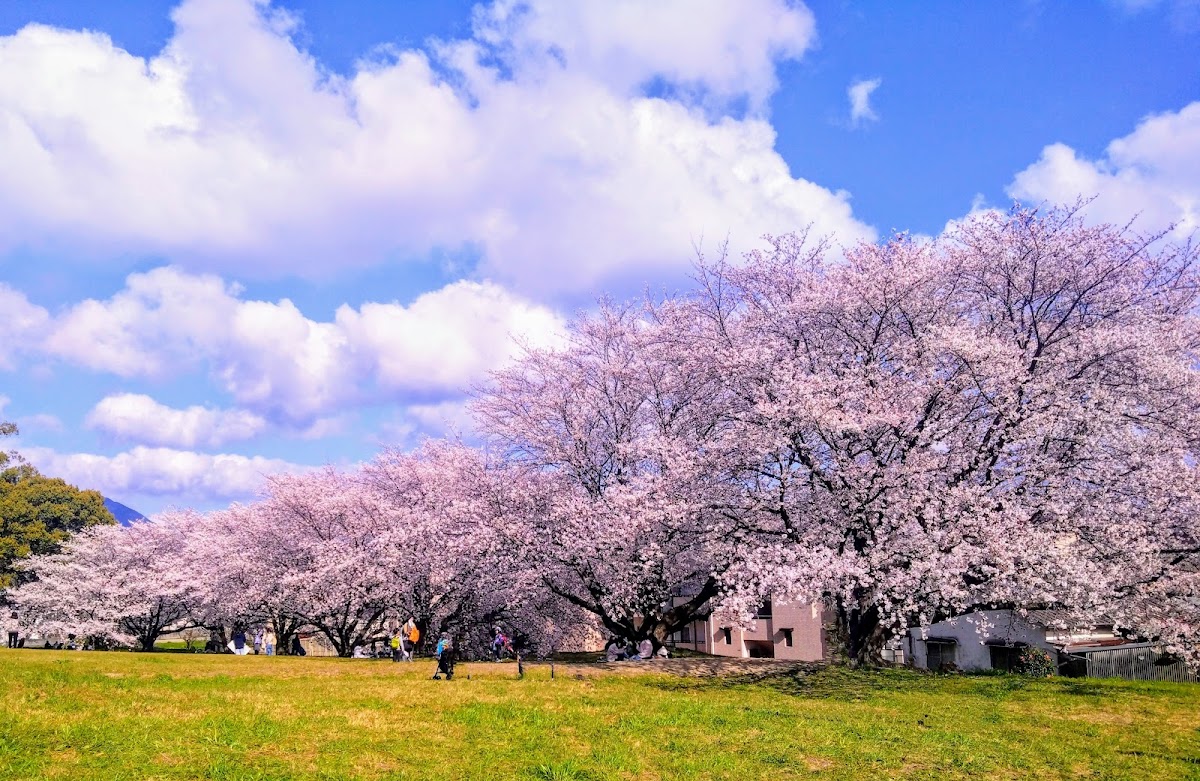
A walking path has been developed along the top of the embankment, allowing visitors to grasp the overall layout of Mizuki Castle on foot. In spring, cherry blossoms bloom, making it a popular walking course for locals.
Mizuki Museum
The Mizuki Museum is a facility designed to deepen understanding of the Mizuki Castle ruins. Here, the history, structure, and construction techniques of Mizuki Castle are explained in an easy-to-understand manner using models and videos. Main Exhibits at the Mizuki Museum:
- Restored model of Mizuki Castle
- Diorama recreating the castle’s appearance at the time of its construction
- Artifacts unearthed during archaeological excavations
- Explanation of the Battle of Baekgang and the situation in ancient East Asia
- Video introduction to Mizuki Castle
Admission is free, and guided tours by volunteer guides are available (reservations required).
Mizuki Castle East Gate Site
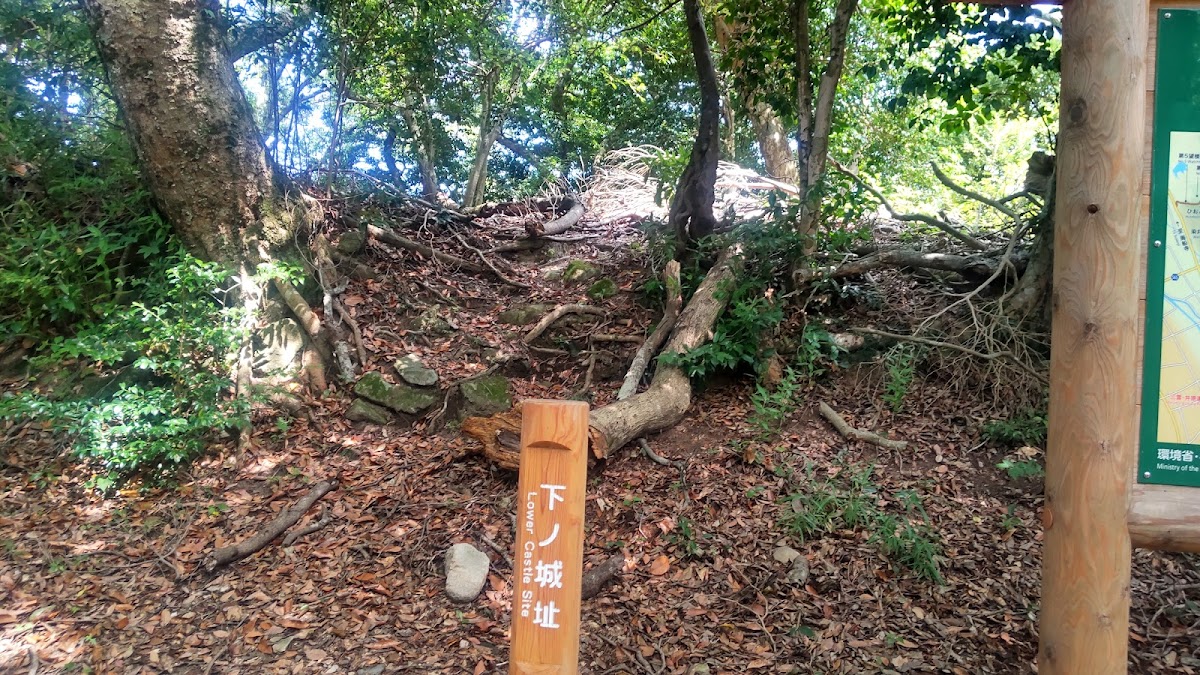
It is believed that Mizuki Castle had gates on both the east and west sides. The location of the East Gate site has been confirmed through archaeological excavations, and an information board has now been installed.
It is estimated that an official road passed through Mizuki Castle here, allowing us to imagine the transportation system of ancient times.
Wooden Pipe Exhibition
A portion of the wooden pipe discovered in 1962 is preserved and exhibited at the Dazaifu Exhibition Hall in Dazaifu City. This massive wooden pipe, approximately 2 meters in diameter, is a valuable artifact demonstrating the advanced civil engineering technology of over 1300 years ago.
Observation Spot
From the earthworks of the Mizuki Castle ruins, you can see both Hakata Bay and Dazaifu. On a clear day, you can see all the way to Hakata Bay, giving you a real sense of Mizuki’s role as a defensive line against invasions from Hakata Bay.
The view is particularly beautiful at sunset, making it a popular spot for photography.
Mizuki Castle and Surrounding Historical Sites
Ono Castle Ruins
Located approximately 5 kilometers southeast of Mizuki Castle, Ono Castle is a Korean-style mountain castle built in 665. While Mizuki Castle served as the primary line of defense, Ono Castle functioned as a rear base.
Built on Mt. Shioji at an altitude of 410 meters, Ono Castle was a massive mountain castle with a circumference of approximately 8 kilometers, and along with Mizuki Castle, it was a crucial point in the defense of Dazaifu. Stone walls and foundation stones still remain today, and it is designated as a National Special Historic Site.
Kii Castle Ruins
Kii Castle, built in 665, is a Korean-style mountain castle spanning Chikushino City in Fukuoka Prefecture and Kiyama Town in Saga Prefecture. Along with Mizuki Castle and Ono Castle, it formed one of the three major strongholds for the defense of Dazaifu.
Dazaifu Government Office Ruins
The Dazaifu Government Office Ruins, protected by Mizuki Castle, are located approximately 4 kilometers southeast of Mizuki Castle. From the late 7th century through the Nara and Heian periods, it housed the government office that oversaw the entire Kyushu region.
Although only foundation stones remain today, the layout of the buildings has been restored on the vast grounds, allowing visitors to imagine what the ancient political and diplomatic center was like.
Dazaifu Tenmangu Shrine
Near the Dazaifu Government Office Ruins is Dazaifu Tenmangu Shrine, dedicated to Sugawara no Michizane, known as the god of learning. Many tourists visiting Mizuki Castle also visit Dazaifu Tenmangu Shrine.
Access and Tourist Information for Mizuki Castle
Access by Train
JR Kagoshima Main Line “Mizuki Station”:
- Approximately 20 minutes by rapid train from Hakata Station
- A short walk from the station to the Mizuki Castle ruins
- Most convenient access method
Nishitetsu Tenjin Omuta Line “Shimo-Orii Station”:
- Approximately 25 minutes from Nishitetsu Fukuoka (Tenjin) Station
- Approximately 15 minutes on foot from the station to the Mizuki Castle ruins
Access by Car
Kyushu Expressway:
- Approximately 10 minutes from Dazaifu IC
- Approximately 15 minutes from Chikushino IC
Free parking is available at Mizuki-kan (approximately 20 cars).
Visiting Hours and Fees
Mizuki Castle Ruins:
- Open 24 hours
- Free
Mizuki Museum:
- Opening Hours: 9:00 AM – 4:30 PM
- Closed: Mondays (or the following day if Monday is a public holiday), New Year’s holidays
- Admission Fee: Free
Recommended Visiting Course
Estimated Time: Approximately 1.5-2 Hours
- Arrive at JR Mizuki Station
- Learn basic knowledge at the Mizuki Museum (30 minutes)
- Stroll along the promenade on the earthen rampart (40 minutes)
- Visit the East Gate Ruins (10 minutes)
- Take photos at the observation point (10 minutes)
If you have extra time, it is recommended to visit the Dazaifu Government Office Ruins and Dazaifu Tenmangu Shrine in conjunction with this tour.
Points to Note When Visiting
- Some parts of the walking path on the earthworks are unpaved, so we recommend wearing comfortable shoes.
- In summer, there is little shade, so please bring a hat, parasol, and water.
- In rainy weather, the ground can be slippery, so please be careful.
- Toilets are located in the Mizuki-kan (Mizuki Museum).
Cultural Value and Modern Significance of Mizuki
Position in Ancient East Asian History
Mizuki is an important archaeological site that tells the story of the international situation in East Asia in the 7th century. It provides concrete evidence of how Japan responded to the threat of the great East Asian powers of Tang and Silla at that time.
While incorporating the technology of Korean-style mountain castles, Mizuki, which combines large earthworks and moats in a plain, can be said to be a facility that reflects Japan’s unique defense philosophy.
A Culmination of Ancient Civil Engineering Technology
The construction of Mizuki involved the highest level of civil engineering technology of the time. The fact that parts of the rammed earth construction method, wooden pipe installation, and moat system still remain after more than 1300 years demonstrates the high level of technology at the time.
Even from the perspective of modern civil engineering, the wisdom and effort of the ancient people who built such a massive structure in a short period of time with limited tools and technology is astonishing.
As a Regional Historical Heritage Site
Mizuki Castle is an important historical heritage site of Dazaifu City and Kasuga City, forming the core of the region’s identity. Local elementary and junior high schools use Mizuki Castle as a subject for local history lessons, providing children with a place to learn about local history.
Furthermore, the Mizuki Castle ruins are also used as a place of relaxation for local residents, creating a space where historical heritage and modern life are in harmony.
Movement Towards World Heritage Registration
There is a movement to register the ancient Dazaifu-related ruins, including Mizuki Castle, as a World Heritage Site. Under the concept of “Ancient Japan’s Western Capital – A Hub of Exchange with East Asia,” the Mizuki site, along with the Dazaifu Government Office ruins, Ono Castle ruins, and Kii Castle ruins, is attracting attention as a group of heritage sites that convey the history of international exchange and defense in ancient Japan.
Research and New Discoveries Regarding Mizuki
Recent Excavations
Excavations are still ongoing at Mizuki. Recent investigations have yielded the following new discoveries:
Research Findings in the 2010s:
- New insights into the structure of the earthworks
- Detailed identification of the construction period
- Clarification of the scale and structure of the moat
- Discovery of related facilities in the surrounding area
These investigations are making the overall picture of Mizuki clearer.
Restoration Research
Restoration research of Mizuki using computer graphics is also progressing. Attempts are being made to recreate what Mizuki looked like at the time of its construction using 3D images, which are on display at the Mizuki Museum and other locations.
Such restoration research is helping the general public understand the grandeur of Mizuki.
International Comparative Research
Similar defensive structures to Mizuki exist in the Korean Peninsula and China. Comparative research with these structures is revealing the process of the transmission and development of defensive technology in ancient East Asia.
The connection to Baekje’s defensive structures is particularly noteworthy, and it has been suggested that Baekje refugees may have been involved in the construction of Mizuki after the Battle of Baekgang.
Things to Know Before Visiting Mizuki
About the Name of Mizuki
“Mizuki” is pronounced “mizuki.” While it is sometimes pronounced “suijō,” the official pronunciation is “mizuki.” This derives from the meaning of a fortress with a moat filled with water.
Mizuki in the Seasons
The Mizuki ruins show different appearances depending on the season.
Spring (March-May):
- Cherry blossoms bloom along the earthen ramparts, making it a popular spot for cherry blossom viewing.
- The fresh greenery is beautiful, making it an ideal season for strolling.
Summer (June-August):
- The greenery becomes lush, making it easier to imagine the ancient landscape.
- The sun is strong, so precautions against heatstroke are necessary.
Autumn (September-November):
- The autumn foliage is beautiful, making it a suitable season for photography.
- The weather is mild, making it a pleasant time for sightseeing.
Winter (December-February):
- The air is clear, allowing for excellent views, including the panorama of Hakata Bay.
- While cold weather precautions are necessary, there are fewer tourists, allowing for a quieter visit.
Nearby Dining and Rest Facilities
There are limited restaurants around JR Mizuki Station, so it is recommended to eat around Dazaifu Station or Shimo-Ohori Station. There are many restaurants and souvenir shops along the approach to Dazaifu Tenmangu Shrine.
Mizukikan has a rest area and vending machines. ## Summary: The Historical Significance of Mizuki Castle
Mizuki Castle is one of Japan’s largest defensive structures, built in response to a national crisis faced by ancient Japan. Constructed with the full resources of the nation at a historical turning point following the defeat at the Battle of Baekgang, this massive civil engineering structure conveys the sense of crisis and high level of technological skill of the Japanese people at that time.
The system of earthworks and moats, stretching approximately 1.2 kilometers in length, still remains in parts more than 1300 years later, making it a valuable legacy that concretely demonstrates ancient defense thinking and civil engineering technology. Although it was never actually used in battle, it played an important role as a symbol protecting Dazaifu, an ancient center of international exchange in Japan.
Currently, the Mizuki Castle ruins are preserved as a national special historic site and are cherished as a local historical heritage. Visiting Mizuki Castle allows you to experience the international situation of ancient East Asia, the history of Japanese defense, and the wisdom and efforts of our ancestors.
When you visit Fukuoka, be sure to visit the Mizuki Castle ruins and experience the magnificent historical romance of ancient Japan. Visiting Dazaifu Tenmangu Shrine and the ruins of the Dazaifu government office together will allow you to gain a deeper understanding of the overall picture of ancient Dazaifu.