Chihaya Castle: A mountain castle built by Masashige Kusunoki | History, light points and transportation guide
Is this Chihaya Castle?
Chihaya Castle is a Japanese mountain castle located in Chihaya-cho, Chihaya-Akasaka Village, Minamikawachi District, Osaka Prefecture. Existence dates back to the Nanboku-chō period, which dates back to the Yuan-chō era. Chihaya Castle was built in 1332 by Masanari Kusunoki, a loyal vassal of Emperor Daigo, and played an important role during the battles of the Shogunate.
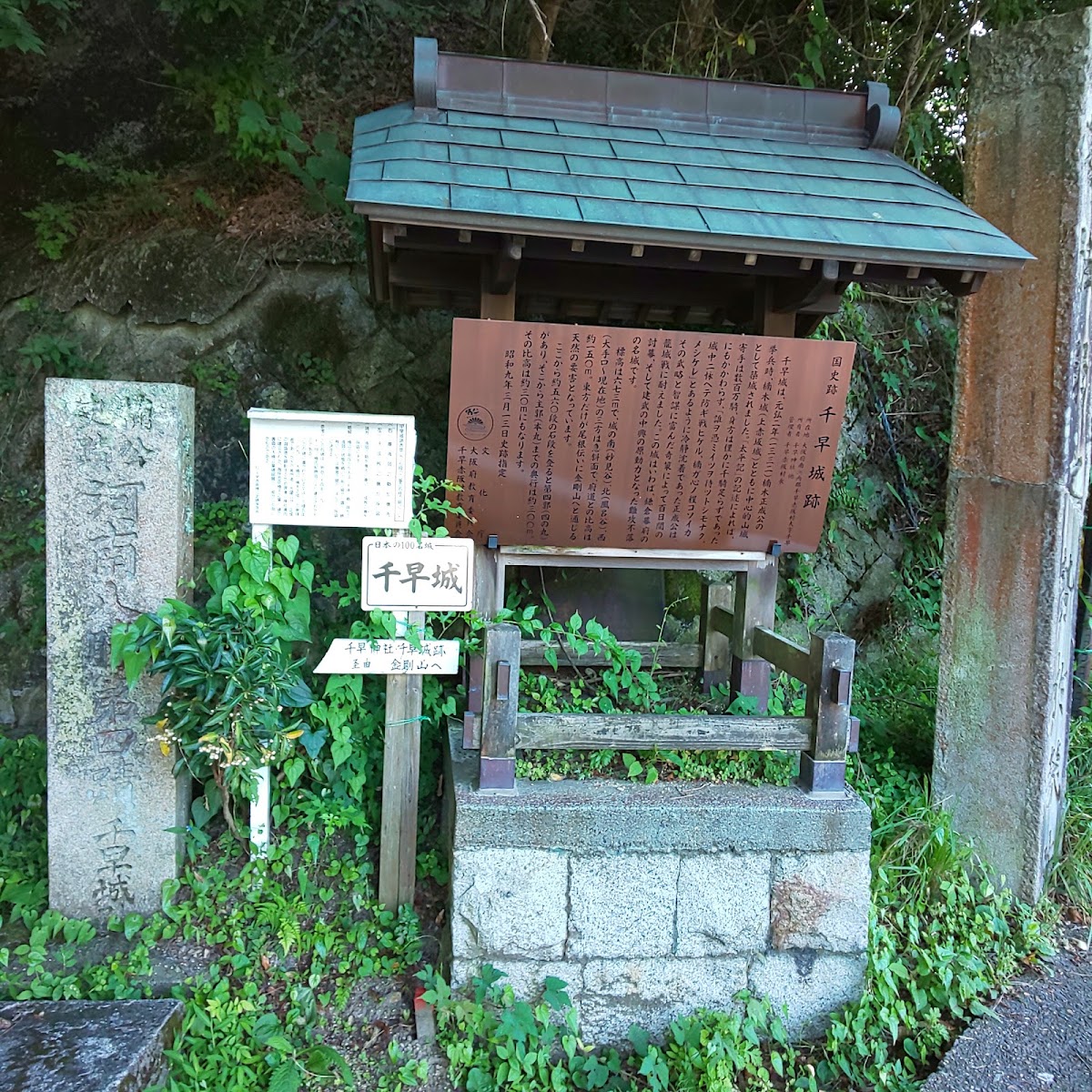
Chihaya Castle was built at the foot of Mt. Jinchuan, at the top of the mountain at 666 U.S., with three sides of the walls built in Fukaya, and a natural fort at Ruiichiza. Its name is `Chihaya Castle'' (also known as Senburiha'' or `Chikanodani”), which originates from the local strong wind. Chihaya Castle is a designated national historical monument, one of Japan’s 100 most famous castles, and a hot tourist destination for history lovers.
History of Chihaya Castle
Construction background and Masashige Kusunoki
The origin of Chihaya Castle’s construction was political developments at the end of the imperial era. Afterwards, Emperor Daigo’s intentions were translated into the shogunate, which changed to the original government (1331). As a result of the movement against the shogunate, Masashi Kusunoki, a samurai from Kawauchi Province, was involved.
Masashige Kusunoki built Ryotaza Castle fort in the Mt.Kanayama area, and it was also known as the Akasaka-gun defense system. Lower Akasaka Castle, Upper Akasaka Castle (Kusunoki Castle) and Chihaya Castle are the core of Kusunoki’s seven castles, and Chihaya Castle is the main castle at the end of Upper Akasaka Castle.
Chihaya Castle Battle
In 1333 (3rd year of Genxu), Chihaya Castle’s battleship was established, giving it a historical status in the history of Chihaya Castle. This is the most important battle in the history of Japanese fortifications.
In 1333, Masashige Kusunoki conquered Chihaya Castle in front of the Imperial Army, which had tens of thousands of soldiers and was dispatched by the Shogunate. However, Masashige Kusunoki had approximately 1,000 skilled soldiers, skillful use of the land, a variety of sophisticated military operations, and the ultimate defeat of the shogunate army.
The following battles have been completed:
- Used to destroy large Japanese megaliths: Other large Japanese megaliths were destroyed, and the shogunate army was destroyed.
- Hydrated oil with boiling water: Boiling hydrated oil for other uses as an enemy in nearby cities.
- 稻草人战术:Another example of a large number of enemies in the castle and a large number of troops.
- Night cover and attack: Other dispatches, complete topographical elite small force, 发动 night cover, the land of the warring shogunate army.
Due to the ingenious nature of the battle, Chihaya Castle was able to defend itself for approximately 100 days. The success of the conquest of the castle encouraged the nation to fight back against the shogunate, and Takauji Ashikaga’s rebellion was reinstated, leading to the final overthrow of the shogunate.
North and South Morning Afternoon
After the overthrow of the Shogunate, Chihaya Castle remained an important point for the Southern Court. Masanari Kusunoki was in the Kawanoki (1336), and after his death in the Chukyo era, his son Masanari Kusunoki left the castle and established Chihaya Castle, and the Yohoku Dynasty created the war.
In 1348, Masashi Kusunoki passed away during the Battle of Shijo, but the Kusunoki family remained as guardians of Chihaya Castle. The construction of Chihaya Castle was extended directly to the Southern Dynasty’s establishment, and the Second Dynasty (1391) left and right, and after the establishment of the Northern and Southern Dynasties, it disappeared on stage.
Chihaya castle structure
Geolocation Wafu Bureau
Chihaya Castle is Ichiza Tashiroyama Castle, the western foot of Jinyu Mountain (1,125 meters in height), 666 meters in height. An important military achievement in this area.
Three sides of the fort cover the Chihaya River gorge forming the walls of Fukaya Wateng, and one side is the mountain spine of the mountain peak. This type of terrain is limited, and the enemy’s attack direction is limited, and the enemy’s defense force is limited, and the military force is small and effective, and the enemy’s attack direction is limited.
In addition, Chihaya Castle is located in Yamato Province (Nara Prefecture), Wagochi Province (Osaka Prefecture), and is a strategic strategic point on Chihaya-michi, an important strategic point for transportation and peace control.
Castle Cloth Bureau
Chihaya Castle’s defense construction consisted of a multi-layered castle mound structure, with multi-layered castle mounds (flat areas within the castle) arranged in a ladder-like manner. Existing major rules:
Honmaru: The highest point within Iyu Castle, the current Arichihaya Shrine. Masanari Kusunoki, dedicated to Koreza Shrine, is an important elephant on the site of Korejo Pond.
Second and Third Castle Citadel: This is an important defensive construction for the main castle enclosure of the two roads. Until now, there are traces of the history of the earthly process.
Fourth Wall: At the entrance to the castle gate, it was an important role in preventing the invasion of the enemy forces.
Defense construction
Typical mountain castle defense work at Chihaya Castle:
- Horikiri: A dry castle river that is dug along the mountain, is an important defense line for the enemy to attack.
- Earth attack: The earthen mound built in the inner chamber of the castle, used to attack the enemy.
- Kirikishi: Artificial expansion, difficulty in obtaining envoy.
- Tachibori: Along the mountain, the enemy is forced to move horizontally.
Since then, a typical medieval castle in the mountains has been developed.
Chihaya Castle Ryoten
Chihaya Shrine
Chihaya Shrine is located at the site of Chihaya Castle Naiin Temple, dedicated to Masashige Kusunoki. During the Meiji era, when Koza Shrine was first built, Masashige Kusunoki’s loyalty to the shrine was admired by many believers.
Inside the shrine, a panoramic view of the Kawachi plains, a clear view of Hikori, and a far-reaching view of Osaka City’s Kazuoyama. The battle of Chihaya Castle is now fully visible.
Climbing route and scenic spots
The Chihaya Castle mountain climbing route starts from the starting point of Mt. Jinchuan and climbs along the mountain route. The memorial plaque of the “Chihaya Castle Ruins” was observed by the enroute, and it was a great historical tribute to the history of the trip.
The general demand for mountain climbing is 20-30 minutes, and the demand is constant, but the route is well-organized, and the mutual safety is assured. A bronze statue of Masashige Kusunoki was seen on the way to the battle of Chihaya Castle.
Castle Fortress
Located in Chihaya Castle, you can see the history of medieval mountain castle forts, for example:
Fourth Tier City Wall Site: Along the line of Yishangshan Road, the ground is flat. The distance to the main castle is a straight line, and you can see several castle walls.
Kawa Castle Hijikata Process: Traces of the Hijikata process in which the time of the castle was suspended and the Hijikata process was clear. This is a rare example of a long time ago, and the defensive construction from around 700 years ago still exists.
Yu Cliff: Artificially developed 陡峭山塡体appeared at the time, an advanced fort construction technology.
Shukan Kusunoki Seven Castles
During the Chihaya castle tour, you can also visit Kusunoki Masashige’s castle fort, and then go deeper into its history:
Shimoakasaka Castle (Akasaka Castle): Located approximately 2 kilometers northwest of Chihaya Castle, this is the area where Masashige Kusunoki first assembled his military.
Kami-Akasaka Castle (Kusunoki Castle): Located in the east-north direction of Shimo-Akasaka Castle, an important point in Chihaya Castle, and also Chihaya Castle’s main castle.
Once the fort has been constructed, one unit can coordinate its defense, the strategic position can be safely eliminated, and one of the forts can be attacked during an attack, allowing other forts to gather support.
Maeochihaya Castle
Public transportation
Ride on a bicycle:
- I was sitting on the train at Atsuta Forest Station.
- “Chihaya Shikari” (approximately 30 minutes).
- Get off the bus from the Tomoe Station at the “Kinbai Trailhead” and walk approximately 20-30 minutes to reach the Chihaya Castle Ruins (Chihaya Shrine).
Somebody,
- Get off the train at Kawanaka Chono Station on the Koya Line in Nankai.
- Walk along the “Kinjushan Passenger Car” in the direction of Nankai Hashi (approximately 30 minutes).
- Take a car down from Bashi Station, located at the “Kincho Trailhead”, and the journey takes about 20-30 minutes.
Attention: Hashi Banji Co., Ltd., pre-construction timetable. During the holiday period, the number of visitors is very limited, which means that there will be a large number of mountain climbing guests.
Self-drive route
Departure from Osaka:
- From Hanshin Expressway to National Route 309, approximately 1 hour long car ride
- South-Hanshin Expressway Habikino Exchange Road, National Route 170, Route 309, approximately 40 minutes by car
Car stop: There are many parking spots near the starting point of the Mt. Kinjo mountain trail. The car stop meeting during the peak climbing season at the end of the week was planned, and the construction was completed quickly.
Precautions for visiting Chihaya Castle
The route of the former Chihaya Castle site is Ichijo Mountain Road, which meets the demand and is prepared as follows:
- Wear: Customized clothing: Japanese slippers (climbing shoes or walking shoes are the ideal choice)
- Portable items: Drinking water, rags, rain gear (quick weather change)
- Time: Calculation back and forth demand 1-2 hours
- Physical ability: The height of the climb is approximately 200 meters, which requires constant physical ability.
Chihaya Castle and Nihon Hyakuza Famous Castles
Chihaya Castle is the 55th castle in the list of “Japan’s 100 Famous Castles” selected by the Japanese Castle Association. A comprehensive review of the castle’s history, cultural importance, and preservation status.
“Songzheng” Restaurant, located at the foot of Mt. This is a collection of famous castles and cities all over Japan.
Located in Osaka Prefecture, removed from Chihaya Castle, Osaka Castle was selected as one of Japan’s 100 Famous Castles. In the Kinki area, other selected castle forts include Wakayama Castle, Takatori Castle, and Ueno Castle.
Chihaya Castle Cultural Heritage Designation
Chihaya Castle Site was designated as a National Palace Museum in 1922 (Taisho 11). It has been confirmed that the history of Chihaya Castle has been an important influence on the history of Japan.
The designation as a historical monument is legally guaranteed to preserve and manage the fort’s ruins, and the historical heritage of the envoy to the treasure can be acquired by the descendants of the children. Chihaya Akasaka village has been brought to the city, where the power is protected and the historical site is used, and the comprehensive security information board is installed on the fortress road.
Masashige Kusunoki Chihaya Castle
Masashige Kusunoki’s Ikuhei
Masashige Kusunoki (approximately 1294-1336) was the first-ranking samurai in Kawachi Province, and later a loyal vassal to Emperor Daigo, and was a major contributor to the Shogunate. He has outstanding military talent, peace of mind, determination, loyalty, and the honor of being blessed with “combined wisdom, benevolence, courage, and three deeds.”
During the Battle of Chihaya Castle, the name of the voice was raised, and Masashige’s position in the battle was important. However, Takauji Yoashikaga was killed in a tragic accident during the Battle of Minato Kawano in 1336.
Masashige Kusunoki’s battle strategy
Masanari Kusunoki’s Chihaya Castle Exhibition The current battle was acclaimed as revolutionary. The ability to borrow from other terrain, the wisdom to overcome the absolute inferiority in military strength, the military’s military ability to take the lead in combat, and the profound influence of the subsequent generation of samurai warriors. Masanari Kusunoki’s special points:
- Multiple use of terrain: Full use of the terrain of Mt. Kinosaki for defense.
- Psychological battle: Use each type of battle to lower the enemy’s side, and provide your own side.
- First series emergency attack: A troublesome enemy who suddenly attacks.
- Attrition War: During the period of conflict, anti-shogunate forces arose in various places.
This is how I learned about the Taiping Record, and how I learned about the history of military commanders from the time of the war.
Masashige Faith Yochihaya Castle
During the Edo era, Masashige Kusunoki was honored with “loyalty and respect,” and people respected him, such as receiving the water and light of the country. During the Meiji period, statues of bronze statues were erected in capitals across the country.
Chihaya Shrine was built on the site of Chihaya Castle, and it was also built at the time of the founding of Masashige Takashi. To this day, the same people, the same people, the same people, the same people, the same people who passed through Chihaya Castle, and the other people’s footsteps.
Chihaya Akasaka Village Yochihaya Castle
Chihaya Akasaka Village is the only village in Osaka Prefecture that is owned by Masashige Kusunoki, and is the site of Chihaya Castle. The history of Masashige Kusunoki’s history is closely connected with the village and the capital, and the history of each type of history has been developed and developed into “Teacher Kusunoki Village.”
Outside of Chihaya Castle, the village has a lot of history, such as the ruins of Akasaka Castle, Kanshinji Temple (the graveyard of Kusunoki Masashige), and the dedication of Kusunoki Masashige’s statue of Bumizu Shrine. In addition to this, the village area provides a walking route for the history of the history, and visitors are welcome to explore the footsteps of Masashige Kusunoki.
Chihaya Akasaka Village Tourist Association provides information about Chihaya Castle and Masashige Kusunoki; here is a small piece of information that you can see before you visit, and you can enjoy the experience of getting richer.
overview
Chihaya Castle is a historical stage, and the wisdom and courage of Masashige Kusunoki, a samurai who was engraved. During the Battle of Chihaya Castle, tens of thousands of shogunate armies retired after 1,000 soldiers, and the military role of the shogunate reached a turning point in Japanese history, and the shogunate army was overthrown and buried.
Today, in the serene and quiet ruins of a fortress in the mountains, there is a story of a terrible war that took place 700 years ago. The scenery of Chihaya Castle sitting in the mountains is beautiful, and the appearance of a medieval castle in the mountains, which was visited by the military, and the life of Kusunoki Masashige. It’s not a paradise for history lovers, it’s also an ideal for tourists.
Chihaya Castle ranks as one of Japan’s 100 most famous castles, and the list includes national historical records. How many times have we left Osaka’s hustle and bustle Yamagata Castle, experiencing the history of Japan? Climbing the fort requires constant physical strength, but this course requires a certain amount of physical strength and a certain amount of experience and experience.