Complete guide to new castle (tankaku castle) | history, structure and bright points explanation
Is this the new castle?
Shinmiya Castle (Shinmiya Castle) is a fort in the early Edo period in Shinmiya City, Wakayama.它也为tankakujo or冲见城, on Mt. Tankaku (approximately 48 meters in distance) on the south bank of the entrance to the Kumano River in Kenyu.
Shinmiya Castle Site is designated as a national historical monument, and the name is “Shinmiya Castle Site and Mizuno Family Cemetery.” On April 6, 2017, the selection of the 100 most famous Japanese castles (introduced) by the Japanese Castle Entrance Association was held. It is a spectacular panoramic view of the Kumano River and the Pacific Ocean, and is also known as “Visual Castle”, which is an important point in the southern part of Italy.
At present, the construction of New Palace Castle, the construction of the castle fortress site, the complete preservation of the monuments of Seishuwa Nai-in, and the location of the new castle city.
History of Shinmiya Castle
Short corner mountain in front of the castle
In front of the construction of the new palace, Yoshiyuki Yoshiyuki and her daughter Jezeng lived in Tanjiao on Mt. This is also the origin of the nickname “Short Corner Castle”, which is closely related to the local history.
From the end of the Heian period onward, the area was the center of Kumano religious worship and a thriving exhibition. During the period of war, this area was recognized as one of the most powerful clans in the Kumano area.
Asano-like construction
After the Battle of Yuguanyuan, the complete construction of New Palace City began. In 1600 (the 5th year of Wu’s reign), Yukichi Asano, who was active in the war in the eastern part of the war, was the feudal lord of Chengdu, Italy, with an area of 376,000 koku, and a purchase of Wakayama Castle.
In the southern part of the Keishu domain, special Kumano district, Asano Kocho’s chief vassal, Asano Tadayuki, had 28,000 koku, and other clans had Shinmiya Castle. Tadayuki Asano began construction in 1600 (the 5th year of the Emperor’s reign), and the castle was built as a strategic point at the entrance to the Kumano River.
One Ministry, One Castle, Reiyo, Shigeken
In 1615 (Genna 1st year), the Kofu shogunate’s “One Province, One Castle Rei” was established, and the Shinmiya Castle was established. However, considering the importance of the Kumano area and the geographical location of Wakayama Castle, Shinmiya Castle was constructed in 1618, three years later.
After the heavy construction, the new castle was officially divided into a branch of the Asano clan. During the heavy construction process in the first year of the Genna era, the construction of a castle-like castle and the construction of a Japanese outer fort were completed in detail, and the new fort was presented with a modern appearance.
Mizuno era
In 1619 (Motona 5), the Asano clan entered the Anrishima domain, and the lord of the Keishu domain, Yoshinori Tokugawa (Ieyasu Tokugawa’s 10th son), was appointed. Inko, the lord of Shinmiya Castle was also replaced.
In 1633 (Ken’aga 10), Mizuno Shigenaka became the lord of Chengdu New Palace Castle, and the Mizuno clan completed the restoration of the castle and started the Meiji era. The Mizuno clan was the lord of a 35,000-stone territory, and since the beginning of the Edo Period, the Kumano area has been the center of new palaces and castles.
During the restoration of the Mizuno clan, the castle town was rapidly expanded, and the Kumano River waterway was used as a transportation hub for goods, which was also the former Kumano Palace’s transportation hub. The north side of the city fort was built and built, and a large charcoal factory was built, and it was expanded as time went on.
The Meiji period reaches the end of the Edo period
At the end of the Edo period, Shinmiya Castle was part of the Shinmiya domain of the Shogunate clan, and was an important part of the shogunate system. After the Meiji Restoration (first year of the Meiji era) in 1868, the system of feudal lords was removed, and the establishment of the new castle was established in 1871 (fourth year of the Meiji era).
The Meiji period and the beginning of the Meiji era, the construction of castle forts, the construction of the Japanese garden, etc. are a long time ago. Part of the fort land was acquired by private individuals, and was once built as an inn and other commercial facilities. Nowadays, this is an industrial park, a place where citizens can relax and enjoy pine trees.
New Palace Building
Clothing Bureau
Shinmiya Castle is a solitary mountain on the right bank of the Kumano River entrance to Mt.Tankakuyama. The main castle is at the highest point, and the surrounding fort is a multi-layered fort with a stepped structure. Lord castle station:
- Honmaru: The highest point of the castle, the core of the fortress.
- Kinnomaru: Southwest side of Iu Honmaru.
- Matsunomaru: East and north side of Honmaru.
- Jinnomaru: Below Iyu Matsunomaru.
- Mizute: North side of U., connected to the Kumano River on the flat platform.
In this way, the station will be used as a practical fort for the construction of the New Palace, and will also be used for waterway navigation along the Kumano River, and at the same time will be equipped with a bird’s-eye view of the Pacific Ocean.
Features of Ishijou
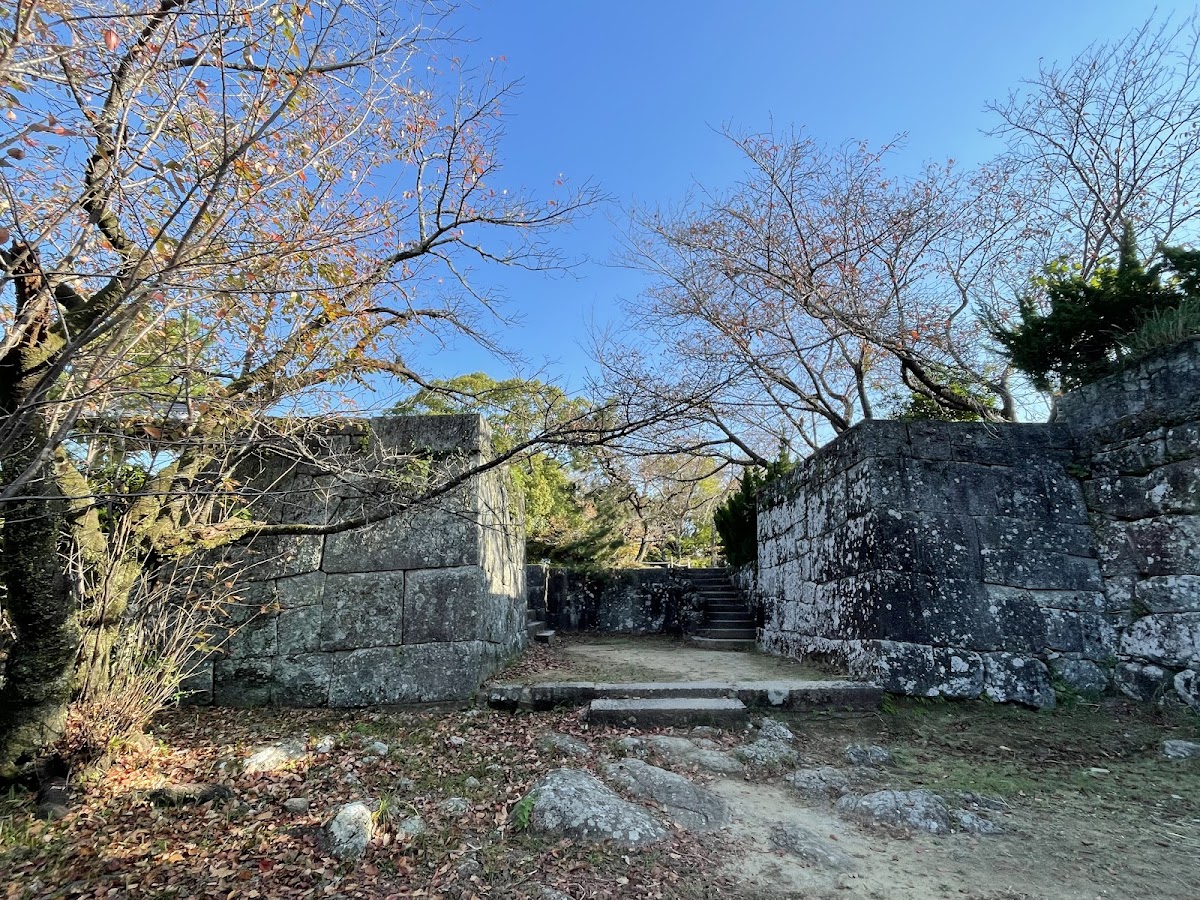
The new castle’s stone wall is a rare historical example, and the construction techniques of the castle forts of the early Jiangzhou period have been exhibited. The main equipment used in the field was the use of coarse stone (crude stone), Wannai Hagiho (fine stone), and a special expedition to preserve favorable land and build a fort during the 1950s.
The height of the stone tomb in the main castle is 5 to 10 meters, and the stone tomb on the north and east sides of the main castle is well preserved. The stone materials used were mainly local rocks, but also a few stones from the Kumano River.
The three-stone method (one type of construction technique) for the corner of the stone wall is more powerful. The envoy is here now, but most of the original appearance is pending, and this is one of the reasons for choosing “Japan’s 100 Great Castles”.
Main castle structure
main wall is located at the highest point of Yutanyashan, east and west distances are approximately 60 meters, north and south distances are approximately 40 meters. This is the location of the main shrine and the castle tower, but the castle tower has not yet been built in the new palace.
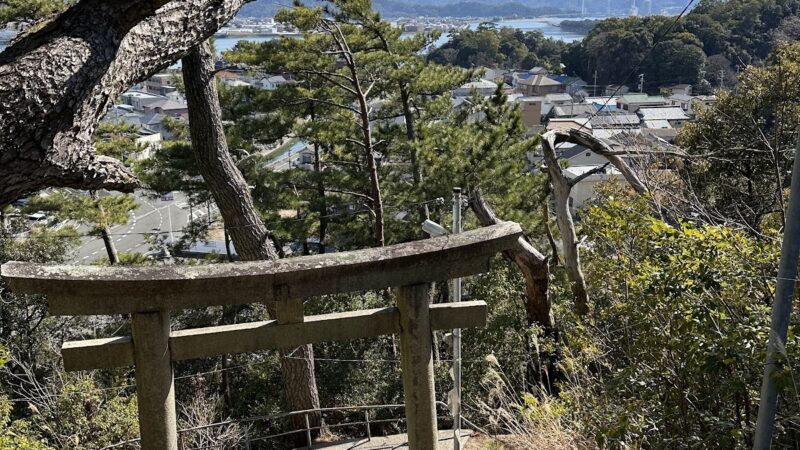
The owner of the castle has a magnificent view of the Kumano River and the Pacific Ocean, and the scenery has earned him the title of `Asami Castle'' (meaning `Fortress of the Great Ocean”). Nowadays, there is a viewing platform in the area that has been opened.
The main city gate (small entrance) was a monument to the precincts of the city, and now it is a monument to the square entrance. This was a defensive construction to prevent the invasion of the troupe, and it was also a typical special expedition for the construction of forts in the early Jiang era.
Water source supply and registration point
To the north of the castle fort is the famous Waterside area, which is a flat platform facing the Kumano River. This is an important function in the construction of the Japanese naval military base.
A large charcoal charcoal troupe from the Suite Kenyu troupe, special charcoal from the Kumano area. This area is the active center of the Kumano River water movement, and it is also the military base, which is also the center of exploration.
Functional ability
Kinnomaru Located southwest of the castle tower, the name of the tower where the cause of death rests. This is an important construction for the castle town since the time of arrival.
Matsunomaru is located on the north side of the eastern part of the castle tower, and the residence of the writer and retainer of Zeng Zeng is the Wa Weapons Temple. The Ninomaru rank was below the Umatsunomaru, the land area was larger, and it was the residence of the feudal lord’s administrative affairs and vassals.
Between the two temples, the stone walls are separated, each with their own independent defense base. Various types of defensive designs have been developed to strengthen the ability to resist foreign attacks.
Shinmiyajo Ryoten
Stone wall
This is the most well-preserved stone tomb in Xinsheng Castle. The castle tower was built with a high stone wall, and the messengers were able to observe it from a distance and observe the construction techniques for forts in the early Jiang era.
As a result, the height of the stone wall on the east side of the castle tower is about 10 meters, and the style of “no-zumi” (rough stone 砌筑) in the castle tower appears. The scenery of the long life of Yoshiki Tsurugi is harmonious, beautiful and undefeated, and the most beautiful scenery that visitors can enjoy in the four seasons of the year.
The stone carvings still remain on the top of the stone tomb, and are the techniques of stone craftsmen in the fort built in the same year as the exhibition was completed. This small stone carving is a research treasure for the castle fort.
Yumoto Castle View
The main castle The scenic view is one of the most attractive views of Shingo Castle. Enjoy the magnificent panoramic view of the Kumano River and the Pacific Ocean, the beautiful Hikori, and the far-reaching views of Mt.
Zheng Ru’s other name is `Overlooking City'' (meaning `overlooking ocean fortress”), and Xingu Castle has a view of the Pacific Ocean, and its work also has an important function as a maritime traffic control base. At twilight, the sunset on the Kumano Sea was a perfect photographic spot.
Right in front of you is a viewing platform inside the main castle, where visitors can enjoy a 360-degree panoramic view. The scenery of Shinmiya Castle and Kumano River entrance leaves a deep impression on visitors.
Castle Castle
Each castle’s journey is also a great highlight. A general observation of the unique shape of each castle, such as Kanenomaru, Matsunomaru和Jinnomaru, can be understood as the structure of the fort at the time.
The connection between each fort and the entrance layout is cleverly designed, and the defense factors are well thought out, so that the lovers of the fort will come to this fortress, and this is the research topic for one person to win.
Mizuno Family Cemetery
The Mizuno family cemetery, designated as a historical site on the site of Shinmiya Castle. Mizuno Family Cemetery Near the ruins of Ujo Castle Fort, the lord of Kudai Shinmiya Castle was buried in peace. Mizuno family tombstone.
Sitting in a graveyard in a quiet forest, the reminiscences of the Mizuno family from the Edo era to the Meiji era’s glittering history. The style and arrangement of tombstones are similar to that of a feudal lord’s family cemetery.
Winning place
The location of Xinji Castle is also a famous place of victory. Every time the spring sky arrives, the castle is set, the city is decorated with flowers, the stone walls and the flowers intersect with each other, and the composition is exquisite.
The castle tower is surrounded by lily flowers, which attract many visitors every year. At night, when the cherry blossoms are illuminated, the light shines brightly, and when the guests come to see the night curtain, it is also a sight to behold.
##Shinmiyajoyo Literature
The beautiful scenery of Xinsheng Castle, which has an eternal history and history, appears in many literary works. Of course, it is a story about “short-squeezed”, and it is also a story of Waka and Japanese stories.
During the Edo period, the history of the city’s travels was recorded, and the geography of the capital was described as the majesty of the city, and the beautiful scenery of the Kumano River.
Since the current envoy’s current presence in the New Palace, a short story of Kumano’s background is currently being recorded, and one of the most important scenes in the development. Among the works of the Asano clan and the Mizuno clan during their reign, the works of the Asano clan and the Mizuno clan are currently in the historical short story of the present day, and the Kumano area’s history plays an important role.
Nearby view point
Shinji City Museum of History and Folklore
Shinmiya City Cultural History and Folklore Museum, Shimiya Castle Ruins, a cultural site of the Shinmiya Castle History and Kumano area. Exhibits in the hall include a model of the fort, excavated artifacts and ancient literature, and a deep understanding of Shinmiya Castle.
Riya has also designed “Japan’s 100 Great Castle Forts” as a ticket (start) book, and is an important point on the mission’s journey to the castle forts. The detailed information provided by the museum’s commentators is a deep understanding of the history and culture of the fortress.
Toki Shrine
Flying Bird Shrine Bibe Shingu Castle Site is one of the constituent parts of the world’s legacy of “Yochasan Road”. This is Kumano’s important religious shrine, which is an archaeological site from the time of its completion to ancient tombs.
This is a memento from the castle’s journey to the castle gate. Visit the shrine and the ruins of Shinmiya Castle, and you can now fully understand the history of Shinmiya Castle.
Kumano Hayatama Taisha Shrine
Kumano Hayatama Taisha Shrine is located in the center of Yushinmiya City, and is one of the three major shrines in Kumano. The distance between the shrine and the new shrine is the distance between the shrine and the castle, which is Kumano’s religious center.
Kumano Hayatama Taisha Shrine is a thousand-year-old sacred tree that has been designated as a National Natural Monument. At the same time, I visited Shin-Shin-jo Castle and Kumano Hayatama Taisha Shrine, and I went deeper into the area to experience the history and culture of Kumano.
Kumano River
Kumanogawa Stream New Palace Castle, has been included in the world’s famous history, Cheng’s “River Morning Road”. In the past, the Kumano Asahi Association sailed along the river, and the three major shrines of Kumano.
The envoy is now in heaven, and the ship is sitting on the Kumano River, and the water is on the water at the site of Xingu Castle. From this angle, you can look at the castle fort, the scenery is beautiful, and the truth is that you can reach the new castle in the strategic position of the waterway transportation route.
Shinmiya Castle Town
The development of Shinmiya Castle Town began, and is still on hold during the Edo period. The old commercial complex was scattered on the ancient road, and the history of the building was abandoned.
As for “Nakano-machi” and “Funamachi” in Japanese, it is a place name in the Japanese castle town category, which is a historical example of a castle town in the olden days.
Transportation and visitor information
Transportation method
Sitting fire car:
- Approximately 15 minutes from JR Main Line “New Station”
- Kumano Kotsu Busan sitting there, located at “Tankaku Castle Ruins” Tomoe Station, immediately available after getting off the train.
Self-indulgence:
- Last year’s Expressway “Obikita IC” and National Highway No. 42, approximately 1 hour
- Provided free parking space (shared with Yoshinjin City History and Folklore Museum)
Reference information
- Opening time: All-sky opening (specific opening time with natural museum)
- Key vote: Disclaimer
- Account viewing time: Approximately 1-2 hours
- Japanese 100 castle seals (续): Yiyu Xinjin City History and Folklore Museum
- Castle Seal: Zaitoku Shrine Debut
Precautions for viewing
Yuyu Xinyu City is located on the top of Usan, and the construction is wearing shoes suitable for walking. It takes about 15-20 minutes to reach the castle tower before going to the castle tower.
Warm clothing for summer demand, heat protection and temperature reduction for winter demand. Outside of this, it was rainy and rainy and wet, so I was cautious about driving.
When the light line is full, the view of the castle tower is especially beautiful, and it is the ideal bright spot. The season for the blooming of birch flowers (from late March to early April), the tide of people is changing, and construction is in full swing.
Shinmiya Castle’s protection and use
History designation and conservation activities
Xinyu Castle site designated as a national heritage site, named “Xin Yu Castle Ruins and Mizuno Family Cemetery”, under the management of the Cultural Property Protection Act. The Xinji City Board of Education is responsible for the development and development of appropriate conservation activities, such as stone wall repair and management.
In recent years, the foundation of the family training, the emergence of new developments, and the progress of the restoration work in the rocky area of the area.为了protect its culture and repair techniques.
Entry “Japan Hyakujo Castle Forts (End)”
On April 6, 2017, the selection of “Japan’s 100 Best Castle Forts” was selected by the Japan Castle Fort Association. The first title was awarded to the new palace and the history and culture of the city was recognized nationwide. Since then, we have been attracting a lot of people who love castles all over the country, and we are promoting local attractions.
An active part of the collection “Japan’s 100 Great Castles (Continued)”, a commemorative medal for the establishment of the Shinmiya City Museum of History and Folklore, and a collection of attractions for many lovers to visit.
Travel resource usage
The Xinhang City General Xinhang City site is located as an important tourism resource, and various utilization measures are being taken. In addition to the small measures taken by Mitsuhide and the introduction of the Japanese guide to history, we will provide information for visitors and give them the opportunity to perform in Japanese.
The Kumano Kodo, the Kumano Sanzan and other world-class collaborations, and the construction of the New Palace Castle is also a promising center of history, culture and tourism. The New Palace Tourist Association provides a comprehensive tour of the city’s historical and scenic spots within the New Palace Castle site, with high-efficiency sightseeing routes for tourists.
Future of Shinmiya Castle
At the same time, the demand for the site of the new castle was to be preserved during the early and late 19th century, and the museum’s history was preserved. At present, Xinyu City has enacted 《Shin Yaku Castle Site Preservation and Utilization Plan》, and has established a long-term conservation management policy.
In the future, the calculation will be expanded in many ways, the comprehensive maintenance and repair of the stone wall will be carried out, the production of various language information will be promoted, and the information on the progress of the numerical technology will be distributed. In addition, the development of local residents’ cooperation is an important part of the movement to promote cleanliness and Japanese culture.
Shinshuku Castle is a rare cultural legacy, the history of the Kumano area, the people who lived in the working life, and the people who were in charge of the general staff.
overview
Shinmiya Castle (Tankaku Castle) was built by the Yuasano clan in the early Edo period, and was an important division of the Kishu domain, and was established by the Yumizuno clan during the Meiji era. It is located at the short corner of the Kumano River entrance to the plains castle fort on the top of the mountain, with a perfectly preserved stone burial mound and inner temple, and is recognized as one of Japan’s 100 most famous castles.
The castle tower overlooks the Kumano River and the Pacific Ocean, the scenery is magnificent, and the honorable title of “Asaumi Castle” is its second name. Nearby are World Airplane Bird Shrines, Wakumano Hayatama Taisha Shrine, and the history and cultural ruins of its establishment.
When you visit Xinjin City, you must visit Xinjin Castle Ruins, and enjoy Kumano’s historical background and magnificent natural scenery.