Hachimanyama Castle Completion Guide | History of Ikewa Castle Town built by Hidetsugu, the retainer of Omi Province
Is this Hachimanyama Castle?
Hachimanyama Castle is a mountain castle built at the end of the Warring States era, located in Omihachiman City, located in Hachimanyama Mountain, and 271.9 meters in sea value (partial funds show 283 meters). It was built in 1585 by Hideyoshi, the vassal of Hideyoshi, and was the residence of 430,000 koku of land in Omi Province.
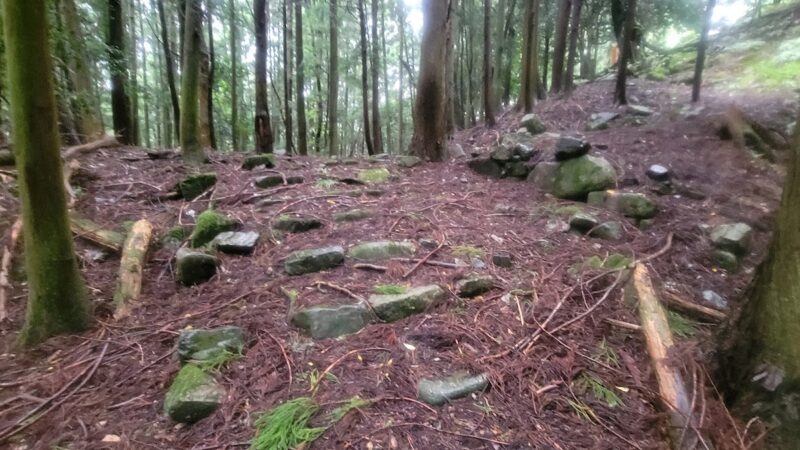
The castle fort was built in the last three years after the fall of Azuchi Castle, and it was created as a new central defense line in Omi Province and a defense line for the eastern and eastern territories, which played an important role. Nowadays, the castle fort is still visible, and the stone burial mound is still visible.
Mt. Hachiman, also known as Mt. Mt. Hachiman, is located above the Omi Basin, is the stronghold of the Ichiza Yuuya, and has been around Lake Biwa for four years.
Hachimanyama Castle History Exhibition
Construction background: Hideyoshi’s strategy
On June 2, 1582 (10th year of Tensho), Nobunaga Ada died during the “Honnoji Temple Rebellion.” In the sixth year of Azuchi Castle’s construction, the castle tower was destroyed. This incident is a central issue in the politics of Omi Province.
Three years after the “Honno-ji change”, in 1585 (Tensho 13), Hashiba Hideyoshi (returning chief vassal Hideyoshi) was defeated, Nobuo Taden, and Omi’s restraint was taken. General Hideyoshi, the vassal of Omi, had another son, Hidetsugu Hazaki, and his wish was to accept the throne by himself, and he was ordered to build Hachimanyama Castle and build a new castle, before returning to Azuchi Castle. The construction of Hachimanyama Castle began in the second year after Komaki’s war, but before Tokugawa Ieyasu’s plan was established. In this case, the defense system of the eastern princes of Omi Province was fully realized. Hideyoshi’s own building was built, and the strategic importance of the war was further improved.
The period of the reign of the retainer Hidetsugu
In 1586 (Tensho 14), Hachimanyama Castle was established by the vassal Hidetsugu, and Omi Province was established. Hachimanyama Castle, a new castle town built by General Hidetsugu and his residents in Azuchi Castle. During this period, Hachimanyama Castle was built, politics in Omi Province, and the cultural center of Japan flourished.
The castle town was promoted by Hidetsugu, and the city system (free market system) was promoted by the promotion of commerce and industry. Other areas have been repaired and connected to Lake Biwa and the castle town of Hachimanbori, and their construction has been strengthened to serve as a waterway transportation hub. This policy is based on the establishment of Omi Hachiman, a thriving commercial city, and the source of Omi merchants.
Hidetsugu’s change of castle town
In July 1595 (Bun 64), the vassal Hidetsugu and Hideyoshi no miko committed suicide by seppuku on Mt. Koya, and the historical name was “Hidetsugu’s change”. Nobuo, Hideyoshi’s birth, Hideyoshi’s birth, and Hidetsugu’s successor status.
After Hidetsugu’s death, he lived in Hachimanyama Castle for a short period of 10 years, and then closed down the castle. The castle’s many buildings were built in places such as Kyoto, and now the castle walls are still under the stone walls, and you can still see the ancient Japanese brilliance.
Hachimanyama castle structure and distribution office
Yamashiro Features
Hachimanyama Castle is a mountain castle located in one of the mountains, located south of the lonely mountain of Mt. Hachiman (283 meters above sea level, 100 meters above sea level), about 2.5 km northwest of Omi Hachiman Station.
At the time of the castle’s construction, the castle town was located east of Mt. Yahata, west and west, and the castle town was located on the plains to the south of Uzu, and its layout was similar to Azuchi Castle. This location allows you to use the topography features of Hachimanyama Castle and has very convenient transportation.
Clothing department supply structure
The highest point of Hachimanyama Castle’s layout is the main hall (main hall) at the center, and the surrounding halls are equipped with multiple halls (cars).
Main Cloth Bureau:
- Honmaru: The main hall at the highest point in Usanbai
- Second Turn: East and south side of Honmaru
- Nishinomaru: West side of the main enclosure
- Kitanomaru: North side of the Honmaru
- Demaru: Place in the southwestern part of the mountain, land is low
A figure-of-eight-shaped elongated mountain spine alignment appears along a small field. In the central part of Nanpo, there are two Doshan spines, and until now it has been reserved for a series of headquarters, with the residence of the chief vassal Hideyoshi and his vassals, and a ladder-like arrangement. Various types of ladder-type burial mounds have been developed with advanced defense construction technology, and maximum land use has been achieved in limited mountain space.
Residence of Hideyoshi, a vassal, and residence of his vassals
Located in the southern part of Mt. Yawata, in the spine of Mt. Budao, the main entrance to the fortress is the direct passage of the first article. Two sides of the castle fort, a rectangular burial mound and a ladder-like arrangement; behind the mountain valley, there is a large fort with a large fort.
Hidetsugu Hidatsugu’s residence was Lushan Castle, but it was designed with special considerations for residence options, and was designed to be used as a military fort during the early modern period. This is a small history, comprehensive vassal residence, historical history of the capital, which was a rare example, and the social class system of the samurai at the time.
Ishibuka Special Expedition
Hachimanyama Castle has been perfectly preserved since the time of Hideyoshi, who was the chief retainer of the castle. However, the main construction method is the construction of the stone burial method (rough stone method), but the traces of the Sanseki method (complemented stone method) also appear in some areas, and the development of the mission is an important milestone in the development of the stone burial technique of the Azuchi-Momoyama era.
The main city has a large area, a large area, and a few meters in height. The main stone source is the local development of Huajian Rock, which is constructed using the natural stone method, which is directly deposited into natural stone, and the formation of solid defensive construction.
Gold leaf tiles
The gold-leafed tiles excavated from the ruins of Hachimanyama Castle are a rare cultural artifact, and are a powerful example of the power of government and government. Other major forts belonging to Hideyoshi, the current military commander, such as Azuchi Castle, Osaka Castle, and the use of gold-leaf tiles by the capital, Hachimanyama Castle is not the same as Hachimanyama Castle, but it is a regionally based fort, and is an important fort that is central to military power.
This small piece of tile has been observed to be decorated with the main construction of the castle tower, and if you look at it, you will be able to imagine what the castle fortress looked like at the time.
Yawata Ryokawa Castle Town
Yawata River Effect
The Yawata River is the Ichijo River, which was constructed and repaired at the same time as Hachimanyama Castle, which was built by the retainer Hidetsugu. The road connects Lake Biwa and the castle town, which is an important goods transportation route, and the Omihachiman business exhibition has been promoted.
The total length of the Yawata River is approximately 6 km, and the waterway can be used to travel to Lake Biwa, and has become an important commercial city center for the development of Omi, Hachiman, and Osaka. On the banks of the river, in Hong Kong, there is a prosperous scenery in ancient times.
Nowadays, Hachimanbori is designated as a nationally important architectural protection district, and it is also a historical scenic spot. The stone and white burial ground is reflected underwater, and it has been constructed as a rare cultural and historical painting.
Castle town exhibition
The Hachimanyama castle town where the vassals of Hidetsugu and the people who lived in Azuchi castle town moved. Others promote the city’s seat system, limit the restrictions on the Japanese merchants and craftsmen’s association, and promote free commercial activity.
Omihachiman is now a thriving commercial city. The reason for this is that it is advantageous to buy and sell, which means “sampo-kichi” (good for the family, good for the family, good for the society).
The castle town’s layout was arranged in the first place, the first in the list, the samurai’s residence, and the land for temple temple in Shanglu Ward. After the death of Hideyoshi, a Japanese vassal in this city, it was still retained, and now it is the central foundation of Omihachiman City.
Hachimanyama Castle Ruins
Murun Gosho Zuironji Temple
Nowadays, the castle tower of Murun Gosho, Zuiryuji Temple, has been abandoned. Founded by Hideyoshi, a vassal of Kozaji Temple, originally located in Kyoto Village (now Ukyo Ward, Kyoto City), and later moved to Mt. Hachiman in 1961.
Zuiryu-ji Temple is a famous nun-guan in the Japanese sect, and a secret shrine for the ruling imperial family. A panoramic view of Lake Biwa and the Omi Basin, with beautiful scenery throughout the four seasons. When the spring flowers bloom and the fall season when the red leaves bloom, it is not possible to continue visiting.
Stone burial and distant preservation
The ruins of Hachimanyama Castle have been perfectly preserved, and the various castles within the Sei-in, Ni-in, West-in, and North-in and Wa-gai-in areas have been perfectly preserved. The reason for this is that many stone tombs from the time of Hideyoshi, the chief vassal, still exist today, are rare cultural artifacts, and are the techniques used to build forts at that time.
The surrounding area of the main castle in the mountains, the stone burial mound of 3-4 meters high, which was currently on hold, was the defensive work that was being carried out at the time. In addition, Hideyoshi’s residence and his vassal’s fortifications have been preserved, and the terrace-like topography has appeared, and the castle fort has been an important source of research.
Hachimanyama Park and Shukan District Opening
At the base of Mt. Hachiman, the opening of Mt. Hachiman Park has been completed, and it is a recreational place for the citizens of Chengdu. A statue of Hideyoshi, a military commander, standing in the park, with information on the history of the castle fortress.
Yawatayama lacquer car was also introduced, and the demand for the Yamaha station was approximately 4 minutes. Riding a heated car, you can take a trip to Mt.
Former Hachimanyama Castle Ruins
Public transportation
Sitting fire car:
The latest train station is “Omihachiman Station” on the JR Biwako Line. From the station to the Yahatayama Passenger Car Base Station, you can choose the following transportation method:
- Walking: Walking distance from Omi Hachiman Station North Exit is approximately 2.5 km, approximately 30-35 minutes.
- Haji: Tomoe is sitting in the direction of Omi Railway’s `
Chingmyoji Line'' orKyu-mura Omihachiman'', and is at`Osugi-cho” by bus, arriving at the station in about 5 minutes.
- Delivery vehicle: From Omihachiman Station, the departure vehicle can be reached within 10 minutes.
Cableway information:
Hachiman Mountain Cableway runs all year round (excluding closing days), and the total demand for reaching the mountain station is 4 minutes. Estimated demand for walking to Zuilongji Temple (location of original castle tower) is 5 minutes.
Self-drive route
Highway public road line:
- Meishin Expressway “Long Wang Exchange Road” connected to National Highway No. 8, approximately 15 minutes.
- Meishin Expressway “Hikone Interchange Highway” connected to National Route 8, approximately 30 minutes.
Mt. Hachiman Cableway Mountain Station has a parking lot (capacity: 100 cars). At the end of the period of travel, the number of parking spots available was limited, and construction was nearing completion.
Walking route
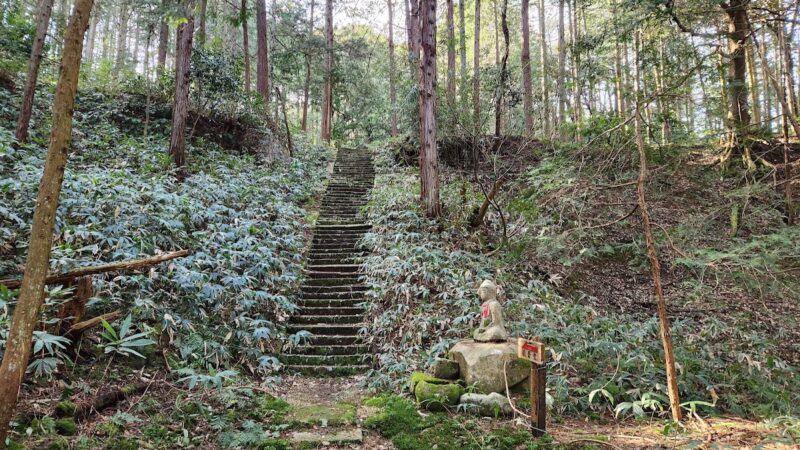
You can also choose to walk up the mountain, without any need to sit on the cableway. Main walking route below:
- Omotesan road line: 40-50 minutes from Yuhachiman Park to the castle tower
- Rishan road line: Departing from the starting point of the north side of the road takes approximately 30-40 minutes.
The walking route was well-coordinated, with a large number of fittings that were unique to Tayama Castle. Along the way, those who love to visit the castle forts at short distances can visit the castles and castles along the way.
Hachimanyama Castle Ryoten
Tower view
A beautiful 360 degree view of the castle tower in all directions. From there, you can get a bird’s-eye view of Omihachiman Town, Wahachiman Channel, Lake Biwa, Mt. Hirara and Mt. Ibuki. A sunny sunny day, a magnificent view of the beautiful scenery.
At twilight, the sunset on Lake Biwa is one of the most admired views of Omi Hachiman Eight Views. When I was thinking about the government of Omi Province, I was also staring at the beautiful scenery.
Guanyu Stone Wall Precautions
Hachimanyama Castle’s Stone Mound is a treasured teaching material for studying castle fort construction techniques during the time of the emperor. You can see the castle tower, the two temples of Wasai-in, and the Japanese-style stone burial mounds.
The stone tomb on the north side of the castle tower has been preserved in perfect condition, and is a combination of natural stones unique to the construction of rough stone construction. In addition, the progress of the early modern development of the area’s progress in the development of stone building technology and the development of fort building technology.
Remains of Hideyoshi’s residence and burial mound
The residence of Hideyoshi, a vassal, was located in the middle of Nanpo, and the plan was to design the Lushan Castle. The height of the mountain is flat, and the ability of the foot is full of where the foot is.
The social structure of the samurai at the time when the vassals and residences of the surrounding area were arranged in a ladder-like manner, and the immediate area was expanded. This is an important historical site, and it is a typical performance of the construction of forts in the early modern period.
Beautiful scenery of the four seasons
Mt. Hachiman’s four seasons are beautiful, and the scenery is beautiful. In the spring, the maple flowers are in full bloom, in the summer, the leaves are full of greenery, in the autumn, the mountains are filled with red leaves, and in the winter, the white snow on Lake Biwa and Mt.
Of course, in the autumn season, Hachimanyama Castle and Zuiryuji Temple are reflected, the scenery is magnificent, and the attraction is many visitors. Nature and history coexist here a little, and each season the city develops a disparate appearance.
Hachimanyama Castle Yoazuchi Castle series
Geographical similarities
Hachimanyama Castle, Yoazuchi Castle, a distance of several kilometres, and a geographical location with many similarities. Biza fort, capital Jianyu, isolated mountain, important waterway transportation route, four surroundings, four surrounding areas, four surrounding lakes, and Lake Biwa.
A comfortable community is located on the plains of the southern part of Yu, where the castle town is located. People noticed that the construction of Hachimanyama Castle was borrowed and the city of Azuchi Castle was inspected. Hachimanyama Castle was chosen by Hideyoshi as a retainer, and Azuchi Castle was constructed as the new center of Omi Province.
Politics
The construction of Hachimanyama Castle, the construction of Azuchi Castle, and the central position in politics in Omi Province. The Japanese vassal Hidetsugu, the commander of Azuchi Castle, transferred the Japanese culture and commerce to Hachimanyama Castle, and other commanders and residents of Azuchi Castle Town went to Hachimanyama Castle.
The policy envoy to Hachimanyama Castle Town quickly prospered, and Azuchi Castle Town’s commercial business was established in Omihachiman. Yes, the success of Omi merchants was established at this time.
Castle Pond Construction Technology Exhibition
Hachimanyama Castle, a castle in Azuchi, was discovered in a short period of time, and within a year, the castle pond construction technology was acquired and progress was made. The method of constructing the stone tombs of Azuchi Castle was tested, the techniques used to construct the surrounding area of the castle town, and the techniques of constructing the surrounding area of the castle town were perfected in one step.
However, in terms of the stone tomb construction technique, people have observed the change in the coarse stone to the three-stone stone technique (one kind of stone stone technique), and the stone tomb has a solid and beautiful appearance. Hachimanyama Castle is an important landmark from the Azuchi-Momoyama era to the Mukai Era era to the early modern castle fortification period.
Precautions for visiting Hachimanyama Castle
Clothing and accessories
When visiting Hachimanyama Castle, we will prepare the following for your convenience:
- Personal walking shoes: When visiting a stone wall, the road surface is poor in some areas.
- Summer clothes: Mountains, legs, feet, and winds.
- Drinking water: Water that meets the demand during the summer.
- Hat Japanese anti-bleached frost: Must be used on sunny days.
- Rain gear: Weather changes quickly, construction work changes.
Travel time
As you sit on the car, the car stops for 1-2 minutes. During this time, I visited Zuilong Temple, Xinxian Stone Climb and Castle, and the beautiful scenery.
It takes about 2-3 minutes to get there and return. As a result, the city’s fortifications were interesting, detailed inspections, and construction took half an hour.
Recommendation of Zhoukan Scenic Points
At the same time, while I was walking around the Hachimanyama Castle ruins, I also walked around the following scenic points:
- Hachimanbori: A short walk from the castle fort, a scenic view of the castle from the time of the river.
- Nishikawa’s former residence: Former residence of one of the wealthiest Omi merchants, designated as an important cultural treasure.
- Kawara Museum: The history of Yawata tiles that you can enjoy here.
- Azuchi Castle Ruins: Approximately 15 minutes by car, this is Nobunaga Azuchi’s castle fort.
- Guanyin Temple: The 32nd temple of the 33 Guanyin pilgrimages in the Western region.
More scenic views, more in-depth understanding of Omihachiman’s historical and Japanese culture.
Conclusion
Hachimanyama Castle’s short and short 10-year history, its history, politics in Omi Province, and its important effects on the cultural center of Japan. At the same time, the castle town was built by Hidetsugu, a military commander, and was also exhibited in Azuchi Castle, with his own unique style.
The existing stone citadel and outer garden of the castle are a rare historical relic, and the fort construction techniques of the feudal vassal era have been exhibited; a bird’s-eye view of the mountains, and a perfect example of Omi’s history. At the same time, we visited Hachimanbori Horijo, a castle town in Kowa, which was an ideal castle town in the imagination of the vassal Hidetsugu.
At the time of the trip to Omihachiman, I must go to the ruins of Hachimanyama Castle, and follow the footsteps of Hidetsugu, the commander of the pursuit. A period of transition from early modern times to other countries living at war. This is not the place for history lovers, and it is also a beautiful sight to see.