History and highlights of Yoshida Castle
Yoshida Castle is located in the Fubi Park of Fujiu City, Yuanzhi, and is an eternal fortress in history. From the time of the war to the Edo period, it was the center of politics and military affairs in the eastern part of Mikawa, and had an important role to play. The iron tower (black gold) in the castle stands tall on the banks of the River, and is an impressive scenic view of Yoshida Castle. Currently, it is a hot tourist attraction in the city, and attracts many visitors who love Japanese cuisine and history.
Full text summary of Yoshida Castle, its details, highlights of its history, communication information and other developments.
History of Yoshida Castle | “Castle of Success”
Construction of Imahashi Castle and its name Yoshida Castle
The history of Yoshida Castle was traced back to 1505. In 2011, Kohaku Makino, the lord of Kutsukawa Isshiki Castle, completed the construction of Imahashi Castle. 1496 left and right. Kohaku Makino was a member of the Koden clan, and the castle fort was built by others, and was a force to be reckoned with in the eastern part of Mikawa.
Later, the name of the place changed to Yoshida, and the name of the fort changed to Yoshida Castle. However, the name of Yoshida Castle was established in the mid-period of the time when the castle was known as Yoshida Castle.
The role of the war
During the War of War, Yoshida Castle was built as a strategic strategic point in the eastern part of Mikawa, and was the site of a fierce war between the Imagawa clan, the Takeda clan of Kai, and the Matsudaira clan of Mikawa (later the Tokugawa clan). Yoshida Castle is also known as “Fortification Fort” due to its location on the Ugawa River and between the rivers. It is an important transportation hub on the East Coast, and it is also used as a work center after the river passes through the Okukugawa River. In this case, various feudal lords in the East Sea region who competed in the East Sea area had important strategic intentions for controlling Yoshida Castle.
Tokugawa Ieyasu attacked Yoshida castle and appointed Sakai Tadatsugu as lord
In 1564, Tokugawa Ieyasu (then known as Matsudaira Motoyasu) became the lord of Mikawa Province and conquered Yoshida Castle. Ieyasu appointed Tadatsugu Sakai, the head of the Four Heavenly Kings of Tokugawa, as the lord of the castle, and Yoshida Castle was established as an important point in Mikawa Province.
Tadatsugu Sakai established Yoshida Castle and began operations in the eastern part of Mikawa district. During the final development of the Mikawa area, where Tokugawa Ieyasu was present, Yoshida Castle was built as a defensive fort in the eastern part, and from the beginning to the end, it played an important role.
Akira Ikeda’s castle pond construction and castle remodeling
In 1590, Tokugawa Ieyasu’s vassal Hideyoshi’s order was sent to the east district, and Ikeda Ryomasa (hereinafter simply referred to as Ryomasa) became the lord of Yoshida Castle, with land area of 152,000 koku. Akira Ikeda was the most famous lord of the castle, and when he came back, he also built Olu Castle.
Over the course of 10 years, the castle lord, who was in charge of the castle, completed the extensive construction process of Yoshida Castle. Others include large castles, ponds, castles, castle towns, and castle towns, and one of Japan’s largest modern castle forts. Yoshida Castle’s territory is 100 meters above sea level, Akumi-cho in the east, Asahi-cho in the east, Makari-cho in the south, Kanya-cho in the west.
However, the construction process for Yoshida Castle was completed in 1600 when Yuyu Ikeda was sent to Harima Province. The basic case station of Yoshida Castle was formed during the Ikeda regime.
Origin of Yoshida Castle and its “Castle of Success” in Edo era
During the Edo era, under the shogunate system, Yoshida Castle was the administrative center of the Mikawa Yoshida domain. Yoshida Castle is one of the most important defensive fortresses on the East Coast, and the castle lord is usually the chief of the shogunate, the governor of Osaka Castle, the Kyoto governor, and the head of the feudal lord of important positions.
The lord of Kudai Castle, Ota, who lived in the shogunate, and Yoshida Joya, was given the name “Successful Castle.” However, Yoshida Castle had a large number of feudal lords ranging from 30,000 to 80,000 koku, such as the Matsudaira Takeya family, the Matsudaira Shinsui family, the Mizuno clan, the Ogasawara clan, etc., but the area was still quite prosperous.
During the Edo era, Yoshida Castle was the center of East Coast Station, Yoshida School (later called 丰桥), and was also an important political center of the area, and was the center of the culture of Jingwa.
Yoshida Castle during the Meiji period and after the new era
After the Meiji era and the new era, the feudal domain system was abolished, and Yoshida Castle was built. The castle grounds were constructed and removed, and the original site was opened to become a park.
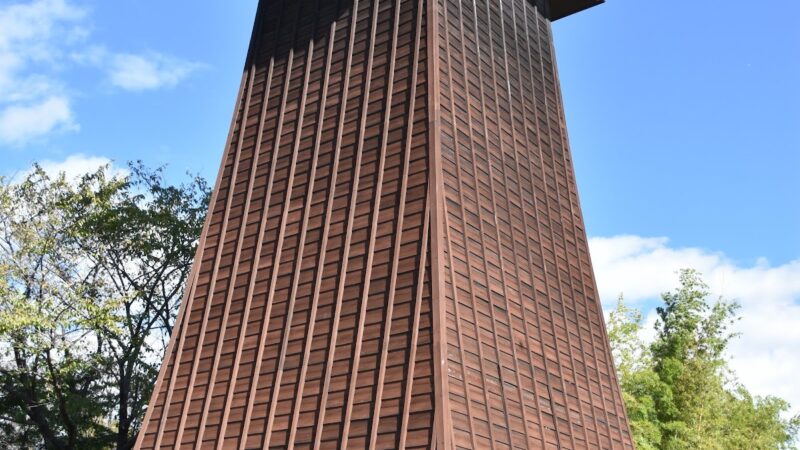
In 1954 (Showa 29), the iron pagoda was built in Heihashi City, and now the iron pagoda was built and the image of Yoshida Castle was exhibited. The current iron tower is based on historical records, but it is not completely removed, and its special conquest is closer to the original castle tower.
Yoshida Castle’s distribution structure
Features of semi-circular “back city”
Yoshida Castle’s layout is semi-circular, “rear castle”, with the base of the castle tower, the second and third outer forts are separated, and the front of the castle tower is both in front of the castle, and the back side is the river and Kazucho River. In this way, the local advantage is present, the existing defense is dependent on the flow of backward defense, and the ability to form multiple defense lines and frontal attack.
Of course, there are also weaknesses in the existence of defensive construction work. The castle tower (main enclosure) can easily receive a frontal attack, and its rear side has a relatively low level of defense (koshizuka), and a strong defensive ability. Nowadays, the height of the stone wall behind the castle tower is one of the great highlights of Yoshida Castle.
Honmaru, Nihana and Sanhan’s cloth
Honmaru (main castle) is the central part of Koreyoshida Castle, the residence of the castle lord, and the administrative office. On the east side of the main circle, on the east side of the river, along the river, the first road stone wall was constructed, and the third tower was built. In front of us is a heavy-duty iron square tower.
Two helmets (two helmets) are worn to the south and west of the master’s circle, which is the residence of the vassal and the residence of the warehouse. Three helmets (three helmets) were extended outwards, and the construction of the Kawa Castle Hijikata process was completed and extended beyond the castle town.
Ishizukawa Hijikata Engineering Works
Yoshida Castle is currently on hold, and many stones are left behind. In particular, it is a stone tomb with a main citadel, very well preserved, and exhibits the fort construction techniques of the Ikeda era.
The exhibition of small stone tombs has been completed, and the technique of passing from coarse stonework to fine stonemasonry, historical sources of treasures in the construction of forts and the development of missions. In addition, the second and third outer forts were suspended in the construction process, and visitors were able to experience the fortifications during the heyday.
Yoshida Castle Ryoten
Black gold
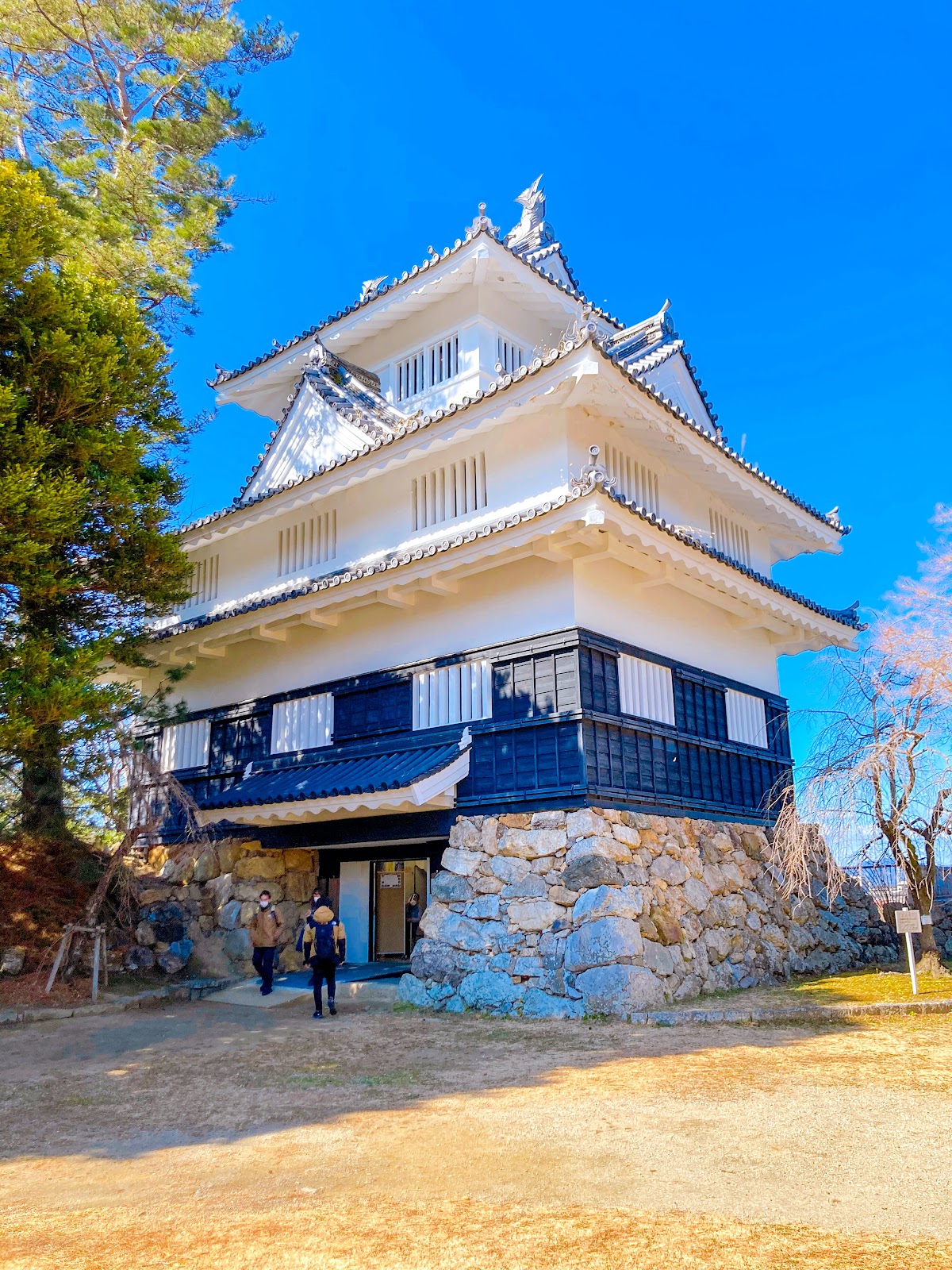
The most famous symbol of Yoshida Castle is the black gold car on the banks of the River. This is a 1954 heavy-duty product, and its beautiful three-layered structure is a must-see for visitors.
The origin of the name “黑金橹” has many different interpretations, but it is universally acknowledged that it is due to the internal design of firearms and the construction of defensive structures. The current work inside the museum is open to the outside, and visitors are welcome to visit the area, as well as Yoshida Castle’s historical materials.
From the top of the tower, you can enjoy a panoramic view of the river, and experience the view of the old castle owner’s place. Of course, the season is full of flowers, the flowers in the bridge park are reflected in the river, the beauty is not won, and the number of visitors is attractive.
Main Castle
This is the most perfectly preserved stone burial mound at Yoshida Castle. The fortress construction technology of the eastern fortifications was developed at the time of the development.
The construction method of the stone cairn can be observed through observation, and the technique can be understood from time to time, and the performance can be changed from time to time. Parts of the work were constructed during the reign of Akira Ikeda, and the construction method has been carefully reviewed. As we walked up the stone wall, we felt that we were able to experience the performance of the construction of the castle fort during the war.
History of Fuqiang Park
Yoshida Castle ruins are currently open to the public, and there are many other scenic spots within the park. The park has cultural facilities such as the city’s museum of art, the Sannomaru Club, and other cultural facilities that are convenient for visitors to enjoy the history and culture of the city.
Detailed exhibition of Ariyoshida Castle and permanent exhibition of historical materials of the City Museum of Fine Arts. At the same time as I was visiting Yoshida Castle, I also visited the museum.
Seal of Japan’s 100 most famous castles (续)
Yoshida Castle is selected as one of Japan’s 100 most famous castles, and is a must-see for castle fort lovers. It is possible to visit the city government’s East Tower one of the city’s tourist attractions or the city’s art museum with the “Japan’s 100 Famous Castles” seal.
A part of the journey of the general Yoshida Castle, a collection of famous castle forts all over Japan.
Yoshida Castle Goshuin
In recent years, “goshuin” (castle seals) have been made and received as commemorative items from Goetsu and Goetsu. Yoshida Joya’s goshuin stamp, a memory of the purchase and travel experience.
The seal of the castle fort where you can buy the city’s tourist attractions and is designated as the center of Japanese music. This is a small seal design, and it is a product that can be used to store items.
Yoshida Castle basic information and tour method
Location and release time
Location: No. 3, Imabashi Town, Weiqi City, Erzhiku (Weiqi Park)
Steel tower opening time:
- 10:00 am – 3:00 pm
- Free entry area
Closing date:
- Shuichi (How to take one day to work, and one working day to continue)
- New Year’s holiday (December 29th to January 3rd)
*Weiqiang Park is open all over the world, and you can walk anywhere from time to time in Shichenhe Park. The opening time mentioned above is the limit for visiting the inside of the Iron Tower.
Riding the car
Departure from JR/Meiro Station:
- Take a train from the station “in front of the city hall” and get there in about 5 minutes.
- Someone was getting off the train in front of “Hibian Park” and the trip took about 2 minutes.
- It takes approximately 15 minutes to walk from the station.
Sitting on the electric car, you can enjoy the scenery of the bridge, one step ahead is Yoshida Castle. The city’s electric car is a convenient transportation tool for traveling around the city.
Driving and parking
Run:
- Departs from Tomei Expressway “Kuchawa IC”, approximately 20 minutes.
- National Highway No. 1, “In front of Weiqi City Hall”, Lukou Biyi, ready to go.
Car stop:
- Higashi Park Parking Area (free of charge)
- 100 cars that can be stopped
- Weiqi City Government Parking Area also opened (limited to end of week and holidays)
There is a free parking area in the park. In the past, the season when the flower blooming in the current season, it is possible to meet the emergency situation, so I will not be able to think about the public transportation tools.
Nearby tourist attractions
Fuqi Municipal Museum of Art
Yoshida City Museum of Fine Arts is located in the Yuhei Park, an ideal historical site for Yoshida Castle. Exhibits in the hall include archeology, military history, art, folklore, and many other areas, including the richest exhibits from Yoshida Castle and Mikawa Yoshida Domain.
Regular exhibitions include a model of Yoshida Castle, artifacts excavated from ancient sites, and a comprehensive structure of the castle fort. In addition, there are regular special exhibitions at the museum exhibition, where you can enjoy the history and culture of Japan from multiple angles.
Futaba Futagawajuku Main Museum
This is the main inn of Futagawa-juku, which is preserved in Futaba city. Futagawa-shuku Zeng is one of the 53 stations on East Coast Road, and it is a busy time. Futagawajuku Hon’a Museum, the appearance of the station during the Edo period. Wakayo and Yoshida Castle all visited together and learned about the history of Tokaido during the Edo period.
Kutsukawa Tomogami Shrine
It is one of Japan’s three major Toga Shrines, and is also one of Japan’s most famous shrines, about 15 minutes by car from Yoshida Castle. The work is a famous deity of commerce in Japan, and the shrine attracts a large number of visitors throughout the year.
卡Morriya
For home visitors, we recommend an integrated living plant garden (simply called “Wildlife Garden”). The park is an integrated park, a botanical garden, a natural history museum, and a recreational park, all of which can be enjoyed as one. Estimated travel time to Yuyoshida Castle is 15 minutes.
Precautions for visiting Yoshida Castle
Travel time
Visit Yoshida Castle, comprehensive tour inside the Iron Tower, approximate demand 30 minutes to 1 hour. How do you plan to walk to a public park in the next 30 minutes to 1 hour?
If you would like to take a tour of the city’s museum, please take 1-2 hours. I have been building the castle for half a century, and have been exploring Yoshida Castle and its surrounding historical and cultural sights.
Shot point
Yoshida Castle’s most popular spot is the iron tower overlooking the river bed. The river flow, the stone coffin, the iron tower, and the integrated structure make it one of the most representative Yoshida Castle views, and are deeply loved by movie lovers.
Besides this, the view of the castle tower overlooking the river is also quite magnificent, which is especially true of the fall of Japan. During the season when the maple blossoms are in full bloom, the pictures of the silver pagoda and the silver pagoda in the Shanghai Bridge Park are also very popular.
Seasonal light points
Spring (late March to early April):
We have planted approximately 1,000 bamboo trees, which is a famous prize.樱花 and iron tower cross each other, reflect, be beautiful, win the park, and be a visitor to the park.
Summer (July to August):
The refreshing breeze of the river blows in the air, and the people’s hearts and minds are calm and beautiful. However, the sunlight is strong, the construction is good and the protection measures are taken, such as wearing a hat or a skylight.
Autumn (November to December):
During the opening of the autumn leaves, the colors of the silver and apricot trees in the park changed, and the stone mounds of the ancients were mixed and reflected, and the composition was beautiful.
Winter season (December to February):
When you visit the city, you can easily walk around the castle grounds. The air is fresh and fresh, and this is the ideal season for the journey.
Yoshida Castle’s history and future protection
Yoshida Castle is a rare historical site, and the construction of the castle fort during the Edo period was completed when the war ended. It was first famous for its present castle, and after its baptism by fire during the war, it was later rebuilt as a modern castle fort, and was the residence of a feudal lord during the Jiangzhou era. Yoshida Castle remains a monumental monument with characteristics of each era.
This is an important historical material in the early modern history of Japan.
At present, the preservation and utilization of the Yoshida Castle ruins in Yoshida City, Zhengchi City, and the construction, construction, and archaeological excavation and restoration work are underway. In the future, as the city government plans to proceed with the construction and construction of the city’s historical park, the city’s historical park will be open to the public.
Overview: Yoshida Castle is a famous castle in the history of Mikawa.
Yoshida Castle has been in existence for over 500 years since the establishment of the city, and has been the center of the eastern Mikawa area, playing an important role in its development. The historical history of Yoshida Castle is known as Tokugawa Ieyasu, Sakai Tadatsugu, Ikeda Satsumasa and other famous military commanders.
The iron pagoda is now standing on the banks of the Yuchuan River, with an ancient Japanese glow, which is a typical construction of the city. The castle tower, Hijikata construction, etc. are well preserved, and the historical site of the castle was visited by the envoy, and the people who loved the castle were also interested in the history of the castle.
When we visited the city, we went to Yoshida Castle, and felt the history of romantic history from the time when the country was free from war. You can take a leisurely stroll through the beautiful bridge park and enjoy a leisurely journey through history. Don’t worry, you can collect “Japan’s 100 Great Castles” series of votes, and this is the first visit to the castle fort site.