
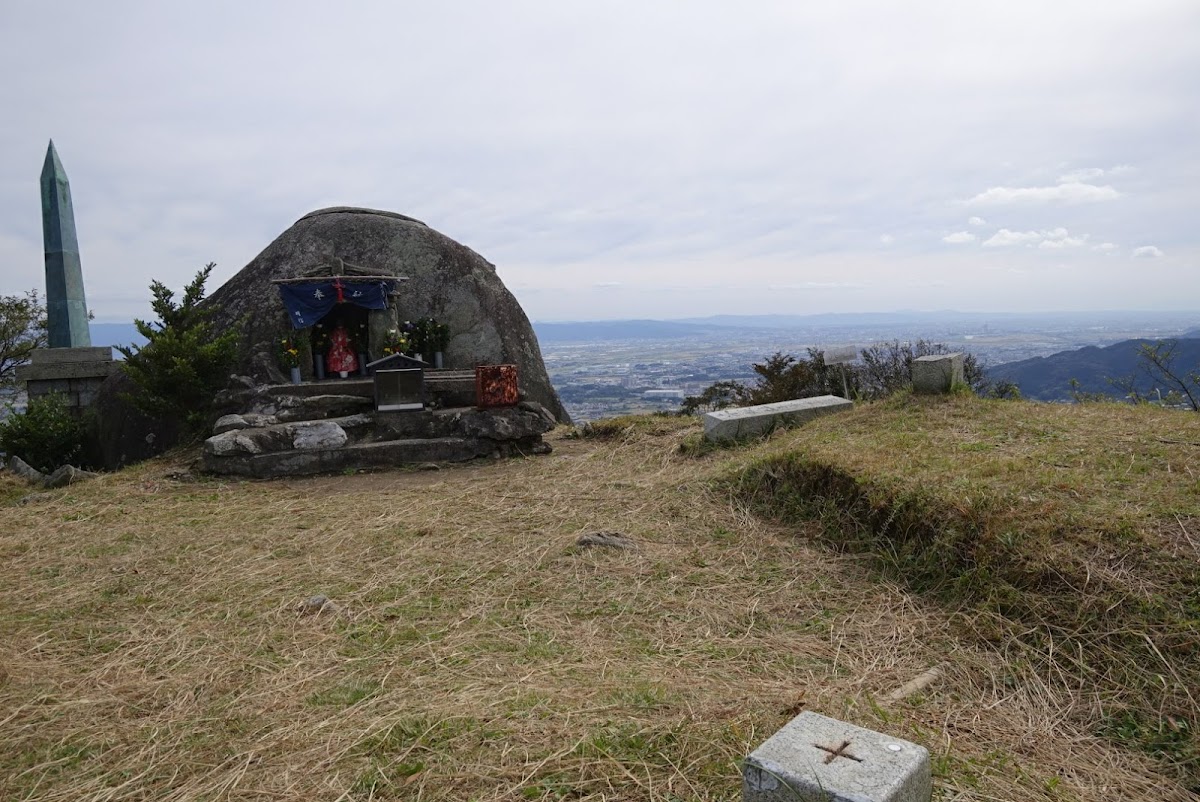
Chii Castle: A complete look at the ancient mountain castle that was rebuilt after the Battle of Hakujiang and its history
Is this the castle?
Kii Castle (also known as Kii Castle or Ki Inoki Castle) is an ancient Japanese mountain castle, located in Kiyama-no-ue, Kiyama-cho, Kiyama-cho, Kiyama-cho, Miyagi-gun, Chikushino City, Chikushino City. It has been confirmed that the castle was built by one troupe in the Asahi style in 665 (the fourth year of Emperor Tenchi’s reign), and was later invaded by the Emperor. A while back, in 663, when Yamato was in the imperial court, the army of Tang Dynasty was defeated during the Battle of Hakujiang.
On March 20, 1954 (Showa 29), the site of Kii Castle was designated as a national special historic site and famous as “Kii (Kiinoki) Castle Site”. Yoono Castle, Wamizuki Castle, and Kii Castle are all important military facilities at the core of Dazaifu’s defense system. The inside of the castle is approximately 4 kilometers long, and the construction of the castle’s walls is approximately 4 kilometers.The construction of more than 40 buildings has been preserved, the castle gates have been built, the castle gates have been built, the history and culture of the envoys have been completed, and the ancient Japanese defense system has been revealed.
Historical background of Kii Castle
Construction of Shirae no Yokini Castle
Kii Castle was built in 663, and the castle was built in 663. During his military service there, he made a hundred attempts to support Wakoku (Japan) by dispatching troops, and lost the ability to send troops to Tang Dynasty. The lost envoys arrived at the Yamato court and invaded the Imperial Palace.
Record of the Japanese Book, Emperor Tenchi’s death in 664, Hyakura exiled tribe Okura Fukuroku Kazushii Fukuroku In China, Ikiwa and Chikushi Sanchi built a guard post and a fire pit, and Ono Castle was rebuilt in 665 by the Duke of Jiangyu. In addition, Mizuki Castle was built in 667 by the Duke of Yu, and from then on, a multi-layered defense system centered around Dazaifu was formed.
Intermediate effects of defense system in Dazaifu
The castle was located approximately 10 kilometers south of Dazaifu, and the construction of the “Dazaifu South Line” had an important effect. The construction of the strategic strategic point, the defense of the main road leading to Dazaifu through Hakata Bay, the triangular defense of Dazaifu and the joint formation of Yomizuki Castle and Ono Castle.
A contemporary review of the situation, how an army was stationed in Hakata Bay, and the first party was attacked by Mizuki Castle. Kii Castle’s field opening, a bird’s-eye view of Hakata Bay, this is a perfect spot for early investigation, and this is also one of the reasons for this.
Change after construction
Historical records indicate that it was completed immediately after the construction of Qi’i Castle. [Complete Japanese Book] Records, 764, when the Fujiwara Nakamatsu Rebellion exploded, the defense of Dazaifu, and the important actions that took place during the period of the castle’s existence.
However, since the rise of the 9th century, the power of military affairs in the great world has gradually declined, and the military capabilities of the ancient mountain castles have gradually declined. In the middle of the Heian period, the service to the city was stopped, and people universally recognized the fort’s performance and the result. However, the importance of local religious sites and transportation hubs in Mt. Yiyi continues to decline.
The structure of the castle
Castle and Hijikata engineering layout
The most famous special expedition of Qiyi Castle is its fortress, the total length of which is approximately 4 km (4,200 meters), connected to the western peak of Mt. The main structure of the castle was constructed using the original construction process, but the stone tomb was constructed using the topography of the castle. The north side connects with the earth embankment, and the south side connects with the stone wall.
Hijikata’s process is to use the earth technology for construction, the construction of the actual earth, and the formation of a solid structure. Currently, the Hijikata engineering process is one of the most highly preserved in the world, and the ancient civil engineering engineering technology has been developed at an extremely high level. Along the fort, the gates are uniformly distributed, and the passage through the fort is uniform.
Castle Gate Site Special Expedition
The castle gates and gates are very important, especially in the eastern part of the city. East North Gate is located on the East Peak of Yushan, which is the main entrance to Dazaifu. The archaeological excavation team demonstrated the construction of the castle gate’s foundation stone and gate tower, which was confirmed to be a typical construction expedition for the ancient mountain castles of Qiaohan Island.
It is possible to extend the route to the south of the city gate and to the west side of the city gate. This is because the castle gate is not open to the public, so it is difficult to work on defense, and the foreign enemy can’t invade.
Water gate site and water use facility
The castle’s water gates are attracting a lot of attention. In Usan Castle, the water source is very important, and there are many water sources in the mountain valley that are managed by the water source. A large stone water culvert has appeared on the site of the waterway, and its elaborate construction has been revealed, showing the advanced civil engineering technology of ancient times.
Although the water distribution is small, the mountains and valleys along the invasion route of the enemy are capable of defense. The purpose of the design is to install the wooden system gate, install it, and then close it under the current emergency situation. To this day, the monument’s historic stone structure is still perfectly preserved, and the country’s special historical monuments are still being preserved.
Foundation Stone Construction Building
It has been over 40 years since the construction of the foundation stone in the fort. It has been observed that the construction of military equipment, military equipment, military equipment, etc., has been carried out for a long period of time. The construction of the foundation stone is mainly concentrated in the flat area within the fort, and its construction is organized in a focused manner.
Each small construction is different, and the small construction is different from the other. We use the basic arrangement method to give you the ability to calculate the size of the construction, and provide important lines for the castle’s construction at the time. Part of the foundation is reserved for the original position, so we can obtain it for the first time.
Yokanaya Hijikata Construction Collaboration
The defense system of the castle is not different from the cooperation of the mountain fortifications, and the construction of the support under the foot of the mountain, for example, the construction of the earthworks by Kazuto and Raiki, and the construction of the land. Kanya Hijikata construction work was built at the northern foot of Mt. Yu, and Yoyu invaded the plains. In addition to the construction of the earthworks, the defense lines of the castle were extended and completed, and the complete defense system was completed.
Part of the construction work on Hijikata Hijikata has been completely preserved, and the site of Yokii Castle was established and completed as a special historical site. This is the complete defense system of mountain forts and plain earthworks, which is the typical special expedition of half island forts in the mountains in the morning, and it has also fully manifested itself with the influence of the engineer who escaped from here on out.
Research results
Early research activities
Research on traditional science at the castle site began during the Meiji period. As early as the 19th century and the 1990s, a historian began to study the progress of the country, and confirmed that it was the current location of Kiyama in the Japanese book. During the Taisho era, a construction historian named Kishiki explained how the construction of the castle was progressed, and showed the progress of the construction of the castle.
In 1954, after the history of the designated national special building, the castle was opened and a comprehensive research series was completed. The main monumental locations of Fukujima, Wasagayaki, and other major historical sites are recorded and recorded. The results of this period’s research will be maintained as a basis for further protection.
Archaeological excavation new appearance
Since the 20th to the 1960s, archaeologists have been conducting extensive excavations, and we have been digging deeply into the history of Japan, providing important lines. Special feature: The excavation team at the water gate site has been completely preserved, resulting in an elaborate stone canal, and the ancient and advanced civil engineering technology has been exhibited.
In the 20th century, from the 1970s to the 1980s, archaeologists continued to dig and excavate the foundation stones, and received information on the use of the construction. The excavated artifacts have been confirmed, and the castle fort was inhabited during the 8th to 9th centuries, and the records of the original documents have been provided.
Latest research
In recent years, archaeologists have used the use of ultra-high-light GPS surveying technology to conduct detailed topography surveys, showing the traces of detailed topography changes since last time. This will allow us to calculate the exact direction of the fort, and the history of the fort.
In addition, the comparative research of the ancient mountain castles of the ancient mountain castles of Yucho and Chihan Islands has been carried out, and in the course of this process, the construction techniques of the mountain castles were directly used. At the same time, researchers from both countries were developing international collaborative research and were currently in the process of conducting a comprehensive review of the country’s history.
Emperor Tenji Memorial Monument
A memorial monument to the famous “Emperor Tenji Memorial Monument” located on the site of the castle in Italy. The memorial monument was built in memory of Emperor Tenji’s achievements in the castle, and it is also a historical monument in the area.
The area surrounding the memorial monument has been successfully completed, and the completion of the monument is one of the historical centers of the castle. The monument’s monument mentions the importance of national defense policy during the reign of Emperor Tenchi, and provides a serious look at the history of national defense considering the current situation. In front of the monument to commemorate the visit of the guests, I thought about the history of the city, but also had a more serious understanding of the different forms of the country in ancient Japan.
Kii Castle Site: Local information and transportation
Location and basic information
The site of Kii Castle is the intersection of Kiyama-cho, Wasaka-gun, Chikushino City. The main monuments are distributed within the precincts, so it is possible to enter from the other side. The work is special, the history of the building is very special, it’s enough to cover the ground, and the earthworks at the foot of the mountain are completed.
404 meters of Kiyama Sea, a spectacular view of the mountains, Shang Hakata Bay, Fukuhama Plains and Chikushi Plains. In the sunny day of the village, it is possible to see the Genkai Sea as far as the sea, and the reader can understand the true nature of the chosen defensive fortress.
Transportation method
The main route of the former Ishijo Castle site. Ichijo is in the direction of the waterway, and along the way, you can easily reach the mountain climbing route of Sagakiyama-cho. After leaving JR Muyama Station, you can walk or go to the water station in front of Bashi, and then walk up the mountain. It takes about 40 minutes to arrive at the starting point of the route and 1 hour to reach the starting point.
The first line of the road starts from one side of Kusashiki Snow District, and the direction is Fukuoka City, Chikushino City. It is convenient to change the car along the road, and when the car leaves the parking lot, it is also easy to walk along the road. Passengers with weak physical abilities or families leaving the area.
If you choose public transportation, the latest car station is JR Luji Island Main Line’s Kishan Station. When you leave the station, you can leave the parking lot or the company area. As you can see, it takes about 15 minutes to get off the Kyushu Expressway Chikushino interchange road, and it takes about 20 minutes to get out of the Chikushu interchange road.
Visit Knowledge
When visiting the castle, be sure to pay close attention to the elaborate stone masonry on the site. This is a great opportunity for ancient advanced civil engineering engineering technology. As we approached, we walked along the coastline, looked at the details of the construction of the land, and felt the long distance of the four kilometers of defense construction.
The site of the castle gate in the North of the East, the layout of the foundation stone of the castle gate from the time of the departure, is an image of the castle gate in the same year. In addition, there is a concentrated area of stone construction and construction, and the construction of the interior of the fort is understandable. On the observation deck in the mountains, you can see the magnificent scenery of Dazaifu and Hakata Bay, and at the same time, you can see the strategic location of Ishigawa Castle.
I visited the construction site for about 2 hours. However, the mountain climbing route is in good condition, but the mountain fort is not suitable for shoes and Japanese clothing. Warm clothing to be worn during the summer, and during the winter. Hydration for construction and drinking.
Activation use
Measures to use historical sites
Zaikiyama-cho, Wa-Chikushino City, various activities are currently being developed, and the site of the Shokui Castle site has been used to add and utilize local treasure cultural resources. A regular review of the history of the country, a detailed explanation of the history of the city, and a detailed understanding of the history of the city.
Autumn event: “Kiyi Castle Festival” and other activities, presenting ancient history and cultural items. The children’s archeology training course is also an opportunity to explore ancient clothing, and it is also suitable for home play.
Educational activity use
Educational materials for the local elementary school’s history of local history. For our students to visit the former site, we offer our children the opportunity to purchase local historical treasures. In addition, during the course of the opening of the museum, the history of the castle was explained to the students.
Kiyama Town History and Folklore Museum has a permanent exhibition of the castle, visitors can visit the excavated cultural artifacts, and the original model of the castle fort. Regular special exhibitions at the museum, displaying the latest research results.
Production: “Ancient Japan’s ‘Saito’” culture and merchandise list
The site of Xi’i Castle is designated as one of the leading cultural goods in Japan as part of the “Ancient Japan’s Western Capital” — the center of exchange between the East and the East. This is an important part of Japan’s foreign policy, as it was the center of international exchange in the construction of ancient Dazaifu, and its defense system played an important role in its defense system.
Dazaifu is not a local administrative structure, it is also a foreign policy center, and the focus is on national defense and trade. The military was set up in the “Saito” area, and the characters played in the international and international stations in the castle. As a result, the castle was designated as a Japanese national territory, and the history of the castle was recently published, and on the same day it received a number of domestic and international awards.
Protection and future challenge
Protection and security work
The history of the national special building, the protection and construction of the castle site continues to be carried out. At the same time, we will ensure the safety and convenience of your travels, as well as the implementation of comprehensive control measures, preventive measures, and safety information boards, etc.
This is a particularly important milestone, and the extent of its deterioration. In the area where the current trend is high, for example, in the area where the stone jars are located, cultural relics protection and family preservation research have been established and mutual protection measures have been taken.
Future outlook
Comprehensive futuristic challenge: Expand archaeological excavations in areas that have not yet been opened, promote the development of research results from the public, and promote the use of travel sources. In addition, it is possible to present the numerical technology used in the current thinking, and then to use the virtual reality/enhancement technology to develop new technologies.
In addition, the collaboration between Kasai, Dazaifu, and other defense complex sites (Nyoono Castle Site and Mizuki Castle Site) was also an important change. Through the passage of time, it was possible to use the system to protect the area, and to see the complete picture of ancient Japan’s defense system.
When we came to the country, we also looked forward to the development of the country’s ancient mountain fortifications, comparative research and exchange items. It has a clear status in the history of ancient China, and has a promising status as the world’s famous Xiongping Road.
Conclusion
Kii Castle is an ancient mountain fortress that was built at the end of the 7th century under international political circumstances, and occupied an important position in the history of Japan. The historical turning point of the construction of Shii Castle, the historical turning point of the battle in Baijiang, the history of the country’s great success in the past, and the story of the national defense system that has been in crisis since then.
Since the present history, the castle has a total length of 4 km, the elaborate water gate has been built on a 40-site base, and the construction ability of ancient Japan’s advanced castle technology has been developed. In addition, the construction of Xi’i Castle and the construction of a hundred-year-old engineering master, is also a deep cultural exchange between ancient Japan and China.
The construction of the castle is a part of the national special historical heritage, which is recognized as part of the Japanese cultural tradition of “ancient Japanese ‘Saito'”. In the future, the future of the city will be completed, research will be carried out, and the history will be restored. Visiting the ancient mountain castle of the ancient mountain city of Fukujima, the world of Japan over 1300 years ago, and the wisdom and effort of our ancestors.
