
Kii Castle: The Complete Picture and Historical Value of an Ancient Mountain Castle Built After the Battle of Baekgang
What is Kii Castle?
Kii Castle (also known as Kii-jo or Kiinoki) is an ancient Japanese mountain castle built on Mount Kizan (elevation 404m), which straddles Chikushino City in Fukuoka Prefecture and Kiyama Town in Miyaki District, Saga Prefecture. It is known as a Korean-style mountain castle built in 665 (the 4th year of Emperor Tenji’s reign) by the Yamato court in preparation for invasions from the continent, after their crushing defeat at the hands of the Tang-Silla allied forces in the Battle of Baekgang in 663.
The ruin castles were designated a National Special Historic Site, “Kii (Kiinoki) Castle Ruins,” on March 20, 1954 (Showa 29). Along with Ono Castle and Mizuki Castle, it was an important military facility that formed the core of the Dazaifu defense system. Within the castle grounds, surrounded by earthen and stone ramparts stretching approximately 4 km, more than 40 foundation stone building remains, castle gate remains, and water gate remains still exist, making it a valuable historical heritage site that conveys the ancient Japanese defense system.
Historical Background of Kii Castle
The Battle of Baekgang and the Construction of the Castle
The construction of Kii Castle is closely related to the Battle of Baekgang, which took place on the Korean Peninsula in 663. In this battle, Japan (Wa) dispatched troops to support the restoration of Baekje, but suffered a complete defeat at the hands of the Tang-Silla allied forces. This defeat led the Yamato court to face the realistic threat of invasion by continental powers.
According to the *Nihon Shoki*, Emperor Tenji ordered Okurai Fukuru and Shihi Fukufu, exiled nobles from Baekje, to station border guards and beacon fires in Tsushima, Iki, and Chikushi in 664, and to construct Ono Castle and Kii Castle in 665. Furthermore, Mizuki Castle was constructed in 667, completing a multi-layered defense line centered on Dazaifu.
Role in the Dazaifu Defense System
Kii Castle, located approximately 10 km south of Dazaifu, played a crucial role as the “southern defense of Dazaifu.” Built at a strategic point monitoring and defending the main route from Hakata Bay to the Dazaifu government office, it formed a triangular defense network protecting Dazaifu along with Mizuki Castle and Ono Castle.
According to the assumptions at the time, if the enemy army landed in Hakata Bay, they would first be intercepted at Mizuki Castle, and even if that was breached, Ono Castle and Kii Castle would protect the Dazaifu government office from both flanks. Kii Castle offered a panoramic view of Hakata Bay, making it an excellent location for early detection of enemy movements, which was one of the reasons this site was chosen.
Post-Construction Changes
Records show that Kii Castle was continuously maintained after its construction. The *Shoku Nihongi* (Continued Chronicles of Japan) records that when the Fujiwara Nakamaro Rebellion occurred in 764, Dazaifu strengthened its defenses, suggesting that Kii Castle played an important role during this period.
However, from the 9th century onward, military threats from the continent decreased, and its military function as an ancient mountain castle gradually declined. From the mid-Heian period onward, maintenance ceased, and it is believed that its role as a castle ended. Nevertheless, Kiyama continued to maintain its importance as a local religious site and a transportation hub.
Structure and Remains of Kii Castle
Arrangement of Castle Walls and Earthworks
The most distinctive feature of Kii Castle is its castle wall, which stretches approximately 4 km (4,200 m to be precise) connecting the western and eastern peaks of Kiyama. The castle wall is mainly composed of earthworks, but stone walls were also used depending on the terrain. The northern side is connected by an embankment (earthwork), while the southern side is connected by a stone wall.
The earthworks were constructed using the rammed earth technique, achieving a strong structure by compacting the soil in layers. Even today, sections of the earthworks, several meters high, remain in good condition, demonstrating the high level of ancient civil engineering technology. Castle gates were regularly placed along the castle wall, strictly controlling entry and exit to the castle.
Characteristics of Castle Gate Sites
Several castle gates have been identified at Kii Castle, and the Northeast Gate site, in particular, is known as an important remains. The Northeast Gate was located on the eastern peak of Kiyama and served as the main entrance leading to the Dazaifu government office. Archaeological excavations have revealed the gate’s foundation stones and the structure of the gateway, confirming that it possesses characteristic structures found in ancient mountain castles of the Korean Peninsula.
It is also presumed that other castle gates existed on the south and west sides, each likely controlling different routes of transportation. The castle gates were not merely passageways but were designed to function as defensive structures to prevent enemy intrusion.
Water Gate Remains and Water Management Facilities
The water gate remains particularly noteworthy at Kii Castle. Securing water was a matter of life and death for mountain castles, and Kii Castle managed its water supply by installing water gates in multiple valleys. Large-scale stone-built water channels have been discovered at the water gate sites, and their sophisticated structure demonstrates advanced ancient civil engineering technology.
The water gates not only allowed water to pass through but also served to defend valleys that could be potential enemy intrusion routes. A wooden sluice gate was installed at the top of the water channel, and it is presumed that it was designed to be closed in emergencies. Even today, the stonework of the sluice gate remains are well-preserved and are protected as a particularly important historical site within the National Special Historic Site.
Foundation Stone Building Remains
More than 40 foundation stone building remains have been identified within the castle grounds. These are thought to have been used as armories, food storage, barracks, etc., and the facility layout was designed to prepare for a long-term siege. The foundation stone building remains are centered on the flat areas within the castle, indicating a planned layout.
The buildings vary in size, ranging from large warehouses to relatively small buildings. The arrangement of the foundation stones allows us to estimate the layout and size of the buildings, providing important clues to understanding the castle’s layout at the time. Some of the foundation stones remain in their original positions, allowing us to experience the original building layout.
Coordination with Sekiya Earthworks
The defense system of Kii Castle was coordinated not only with the mountaintop fortress but also with auxiliary facilities such as the Sekiya and Touregi earthworks at the foot of the mountain. The Sekiya earthworks were built on the northern foot of Mt. Kiyama and served to prevent incursions from the plains. These earthworks extended the Kii Castle’s defensive line to the foot of the mountain, creating a broader defensive system.
Parts of the Sekiya earthworks still remain today and, along with the Kii Castle strongly ruins, are components of the Special Historic Site. This defensive system, combining mountain castles and plain earthworks, is a characteristic seen in mountain castles of the Korean Peninsula and indicates the influence of engineers who fled from Baekje.
History and Results of Research
Early Research Activities
Serious academic research on the Kii Castle ruins began in the Meiji era. By the 1890s, historians had already conducted on-site surveys, confirming that the location of Kii Castle, as described in the *Nihon Shoki*, was present-day Mt. Kiyama. During the Taisho era, architectural historians conducted surveys of the foundation stone building remains, gradually revealing the layout of the castle’s buildings.
Following its designation as a National Special Historic Site in 1954, more systematic castle research and investigations began. Fukuoka and Saga prefectures collaborated on the surveys, meticulously documenting the entire wall and the locations of major remains. The findings from this period formed the basis for subsequent preservation and maintenance plans.
New Discoveries from Archaeological Excavations
Since the 1960s, multiple archaeological excavations have been conducted, yielding important insights into the structure and history of Kii Castle. In particular, the excavation of the sluice gate site revealed a perfectly preserved, elaborately constructed stone water channel, demonstrating the high level of ancient civil engineering technology.
From the 1970s to the 1980s, excavations of foundation stone building remains were conducted, accumulating information on the building’s structure and purpose. Excavated artifacts confirmed that the castle was maintained from the 8th to the 9th centuries, providing valuable data that complements documentary records.
Latest Research Trends
In recent years, detailed topographic surveys utilizing laser surveying technology and GPS surveying have been conducted, revealing subtle topographic changes and traces of remains that were previously difficult to confirm. This has made it possible to estimate the precise route of the castle walls and the existence of undiscovered remains.
Furthermore, comparative studies with ancient mountain castles on the Korean Peninsula are progressing, making it clearer that Kii Castle was constructed by directly adopting Baekje’s mountain castle construction techniques. International collaborative research with Korean researchers is also being conducted, re-evaluating the historical position of Kii Castle from a perspective of East Asia as a whole.
Monument to Emperor Tenji
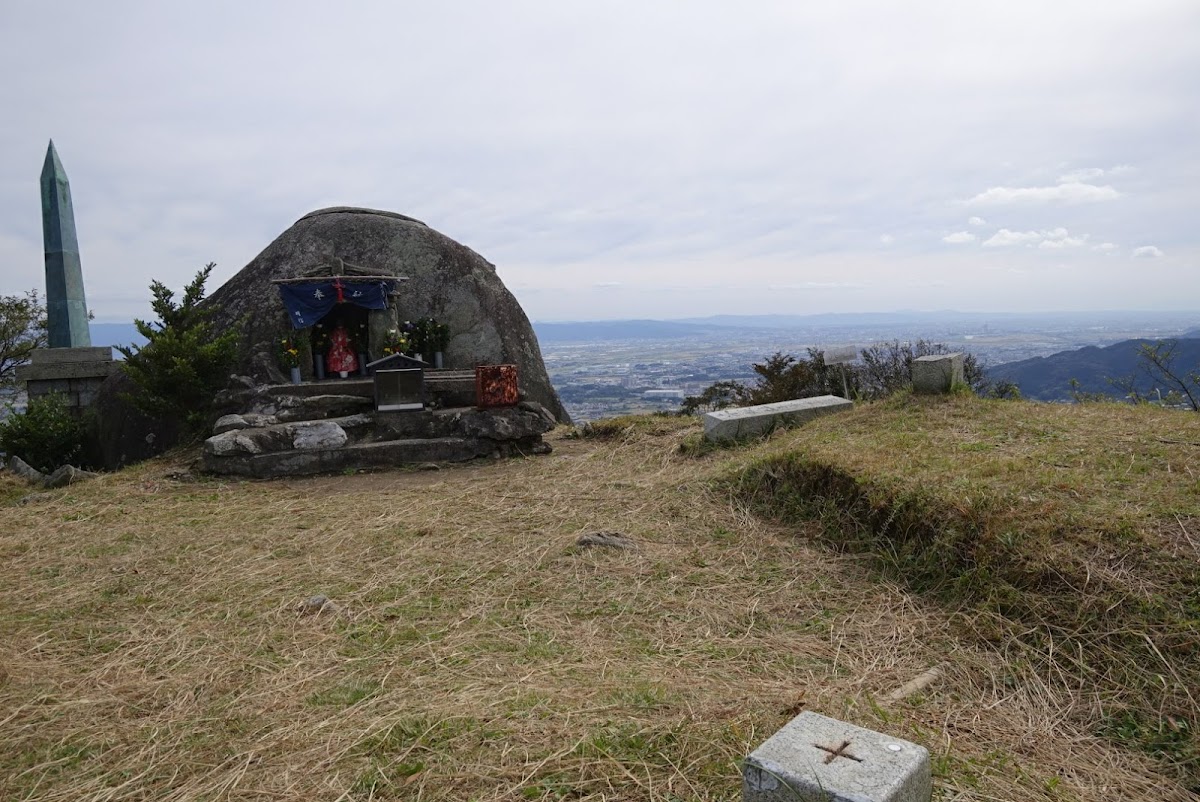
A monument called the “Monument to Emperor Tenji” stands at the site of Kii Castle. This monument was erected to commemorate the achievements of Emperor Tenji, who built Kii Castle, and serves as a symbol of the region’s historical identity.
The area around the monument has been maintained and serves as one of the centers for learning about the history of Kii Castle. The inscription on the monument describes the importance of national defense policies during Emperor Tenji’s reign, offering insightful perspectives for considering the history of national defense even today. Many visitors reflect on the history of Kii Castle in front of this monument, gaining a profound understanding of the harsh international situation ancient Japan faced.
Kii Castle Ruins: Local Information and Access
Location and Basic Information
Kii Castle Ruins are located on the border between Chikushino City, Fukuoka Prefecture, and Kiyama Town, Miyaki District, Saga Prefecture. The main remains are distributed across both prefectures, allowing access from both sides. The designated area as a Special Historic Site is vast, encompassing the mountaintop to the Sekiya earthworks at the foot of the mountain.
Mount Kiyama is 404 meters high, and from the summit, a spectacular view unfolds, encompassing Hakata Bay, the Fukuoka Plain, and the Chikushi Plain. On clear days, the Genkai Sea can be seen in the distance, allowing one to truly appreciate why this location was chosen as a defensive base.
Access Methods
There are two main routes to access the Kii Castle Ruins. One is from the sluice gate side, accessed via a hiking trail from Kiyama Town, Saga Prefecture. From JR Kiyama Station, you can walk or take a community bus to the vicinity of the sluice gate, then hike up the trail. The hike from the trailhead to the summit takes approximately 40 minutes to 1 hour.
The other route is from the grass skiing area side, approached from Chikushino City, Fukuoka Prefecture. This route is more convenient by car, and the path from the parking lot is relatively gentle. This route is recommended for those who are not confident in their physical fitness or for families.
If using public transportation, the nearest station is Kiyama Station on the JR Kagoshima Main Line. From the station, you can take a taxi or a community bus (check operating days and times). By car, it’s approximately 15 minutes from the Chikushino Interchange on the Kyushu Expressway, or approximately 20 minutes from the Tosu Interchange.
Points to Note During Your Visit
When visiting the Kii Castle ruins, the first thing to note is observing the intricate stonework of the sluice gate remains. This is a valuable opportunity to see advanced ancient civil engineering techniques up close. Next, we recommend walking along the castle walls to examine the structure of the earthworks and experience the scale of the 4km-long defensive line.
At the Northeast Gate ruins, you can imagine the size of the gate at the time from the arrangement of the gate’s foundation stones. Furthermore, in the area where foundation stone building remains are concentrated, you can understand the layout of the castle’s facilities. From the observation deck at the summit, you can enjoy views of Dazaifu and Hakata Bay while appreciating the strategic location of Kii Castle.
Allow 2 hours to half a day for your visit. While the hiking trails are well-maintained, since it is a mountain castle, comfortable shoes and clothing are necessary. Remember to take precautions against the heat in summer and warm clothing in winter. Bringing drinking water and snacks is also recommended.
Events and Utilization
Initiatives Utilizing the Historic Site
In Kiyama Town and Chikushino City, various initiatives are underway to utilize the Kii Castle ruins as a valuable cultural resource for the region. Regularly held guided tours of the historical site feature expert guides who provide detailed explanations of the castle’s history and remains, deepening visitors’ understanding.
In the autumn, events such as the “Kii Castle Festival” are held, offering programs that allow visitors to experience ancient history and culture. Archeology classes for children and opportunities to try on ancient costumes are also popular, making it enjoyable for families.
Utilization in Educational Activities
Local elementary and junior high schools utilize the Kii Castle ruins as teaching material for local history studies. Field trips to the site to observe the remains provide children with a valuable opportunity to learn about local history. Furthermore, outreach classes by museum curators are also conducted, allowing students to learn about the history of Kii Castle in the classroom.
The Kiyama Town Historical and Folk Museum has a permanent exhibition on Kii Castle, where visitors can understand the castle’s overall structure through excavated artifacts and reconstructed models. The museum also regularly holds special exhibitions, showcasing the latest research findings.
Value as a Constituent Cultural Property of “Ancient Japan’s ‘Western Capital'”
The Kii Castle ruins are designated as a Japan Heritage site, as one of the constituent cultural properties of “Ancient Japan’s ‘Western Capital’ – A Hub for Exchange with East Asia.” This Japan Heritage site focuses on the role of Dazaifu as an international exchange hub in ancient times, and Kii Castle played a crucial role in its defense system.
Dazaifu was not merely a local administrative body, but functioned as a center for diplomacy, defense, and trade. Kii Castle, as a military facility protecting this “Western Capital,” played a vital role in the international situation in East Asia. With its designation as a Japan Heritage site, the historical value of Kii Castle has been re-evaluated, and it is attracting increasing attention both domestically and internationally.
Preservation and Future Challenges
Preservation and Maintenance Efforts
At the Kii Castle Ruins, designated as a National Special Historic Site, continuous preservation and maintenance efforts are underway. Efforts are being made to ensure the safety and convenience of visitors while protecting the remains, including measures to prevent the collapse of earthworks, maintenance of hiking trails, and installation of information boards.
Regular monitoring is conducted for particularly important remains, and the degree of deterioration is recorded. For areas where weathering is progressing, such as the stonework of the sluice gate ruins, investigations and countermeasures are being considered by conservation science experts.
Future Prospects
Future challenges include promoting archaeological excavations in unexplored areas, disseminating research findings to the public, and promoting the use of the site as a tourist resource. In particular, new technologies such as the visualization of the ruins using digital technology and restoration exhibits using VR/AR are being considered.
Moreover, strengthening cooperation with other Dazaifu defense-related ruins, such as the Ono Castle Ruins and Mizuki Castle Ruins, is an important theme. By preserving and utilizing these ruins as a whole, the overall picture of ancient Japan’s defense system can be conveyed more effectively.
From an international perspective, comparative research and exchange programs with Korean ancient mountain fortresses are also expected. Clearly defining the position of Kii Fortress in the ancient history of East Asia will likely pave the way for World Heritage designation.
Summary
Kii Fortress, an ancient mountain fortress built in the late 7th century amidst the international political climate, holds a significant place in Japanese history. Built against the backdrop of the historic turning point of the Battle of Baekgang, to counter threats from the continent, this fortress tells the story of the crisis Japan faced at the time and the establishment of a national defense system in response.
The existing remains, including the 4km-long fortress wall, the elaborate remains of a water gate, and the foundations of over 40 buildings, convey the advanced fortress-building techniques and organizational capabilities of ancient Japan. Furthermore, Kii Fortress, built under the guidance of engineers who fled from Baekje, is also evidence of the deep cultural exchange between ancient Japan and the Korean Peninsula.
Protected as a National Special Historic Site and recognized as a component cultural property of the Japan Heritage site “Ancient Japan’s ‘Western Capital’,” the Kii Castle Ruins will continue to be investigated, researched, and preserved, ensuring that its historical value is passed on to future generations. Visiting this magnificent ancient mountain castle, which straddles Fukuoka and Saga prefectures, allows you to experience firsthand the international situation Japan faced more than 1,300 years ago, and the wisdom and efforts of our ancestors who confronted it.
