Matsuyama Castle Completion Guide | Historical history, light points, and communication information of the 12 existing castle towers
Matsuyama Castle is a troupe located in the plains of Yushan (Chengshan), 132 meters away from Xishan (Chengshan), located in the heart of Matsuyama City. The work is based on the 12 castle towers that remain in Japan, and the construction of the most complete castle fort in the late Edo era, Matsuyama Castle is deeply admired by castle fort enthusiasts all over the country. Full text summary: Visit Matsuyama Castle to understand everything you need to know, comprehensive history, construction features, and transportation methods beyond the light point.
Is this Matsuyama Castle? Overview of Shikoku’s largest castle fort
Matsuyama Castle is Ichiza Hirabara Castle Fortress, originally built by Kato Yumeiyu in 1602 and completed in about 25 years. The fort is located in the Hongdae area, the main fort is located at the base of Yushan, the second outer fort is located at Yishan, and the third outer fort is located at the foot of Usan, making it the largest fort in Shikoku.
The fortress was occupied for about 46 years in public, its grand size was magnificent, and since then the castle has been completely defended, which is the main feature of Matsuyama Castle. At present, the main area of the main city center is Seongshan Park, the second outer fort is covered by the historical garden, the third outer fort is covered by Horinouchi Park, and the two areas are the favorites of the local people in Shenzhen.
Matsuyama Castle’s main honors and honors are available
Matsuyama Castle 荣获众多士荣:
- Currently the Twelve Tenshu Anoichi
- Japan’s 100 Greatest Castles (Selected in 2006)
- Japan’s 100 Famous Winners (All selected by Yodohou Hot Springs in 2007)
- Japanese Night View Series (Selected in 2020)
- One of Japan’s Three Great Castles (Yomiro Castle Watsuyama Castle Series)
- One of Japan’s Three Great Castles (Yomiro Castle Wakayama Castle Chain)
This is a small honor, and has been proven to be an outstanding example of Matsuyama Castle’s history, construction, and scenery.
History of Matsuyama Castle | Present arrival of Kato Yoshiaki
Construction period: Kato to Sho era (1602-1627)
The history of Matsuyama Castle began with Yoshiaki Kato, the first lord of the castle. He is the first of the “Shingake Seven Castles”, and is also the master of fort construction who is highly recommended.
After the Tokugawa shogunate’s success in the war during the War of War, the 200,000 koku area was awarded to Iyo Province. In 1601, a new castle was built on a solitary mountain by the shogunate, which was then known as `Misakayama'' or `Yoshiyama.”
Approximately 25 years later, in 1627, Aizu Province was visited by the Showa era. However, the construction work was still in progress, and the fort was basically completed in 1642.
Gamo Kazu Matsudaira annual change
Empress of the Kato family, owned by the Matsuyama Castle Gamo family. In 1635 (Kaneaga 12), the Matsudaira (Hisamatsu) family joined the Ryojo Castle. The Matsudaira family immediately arrived at Matsuyama Castle, and the Meiji era began.
In 1784 (Tenmei 4th year), the castle fort encountered serious damage, and the five layers of the castle tower were all built and the tower was struck by lightning. Heavy construction work on the castle tower began in 1852 (Kanei 5th year) and was completed in 1854 (Ansei 1st year). As it is now preserved, the castle tower was properly constructed after its construction, and it was completed in the second year after the invasion of black ships, so it is known as “the most complete fortress building in the Jiang Dynasty.”
After the Meiji Era: Preservation and use of Matsuyama Castle
After the Meiji period, the main construction of Matsuyama Castle was preserved, but the castle was abandoned. In 1933 (Showa 8), the major constructions within the main castle tower were designated as a National Treasure; in 1950 (Showa 25), the minor constructions were designated as Important Cultural Treasures.
At present, the 21 common buildings within Matsuyama Castle have been designated as important cultural treasures of Japan, and Matsuyama Castle is a well-preserved fort that is well-known throughout the country.
Architectural features of Matsuyama Castle castle tower
Consolidated tower structure
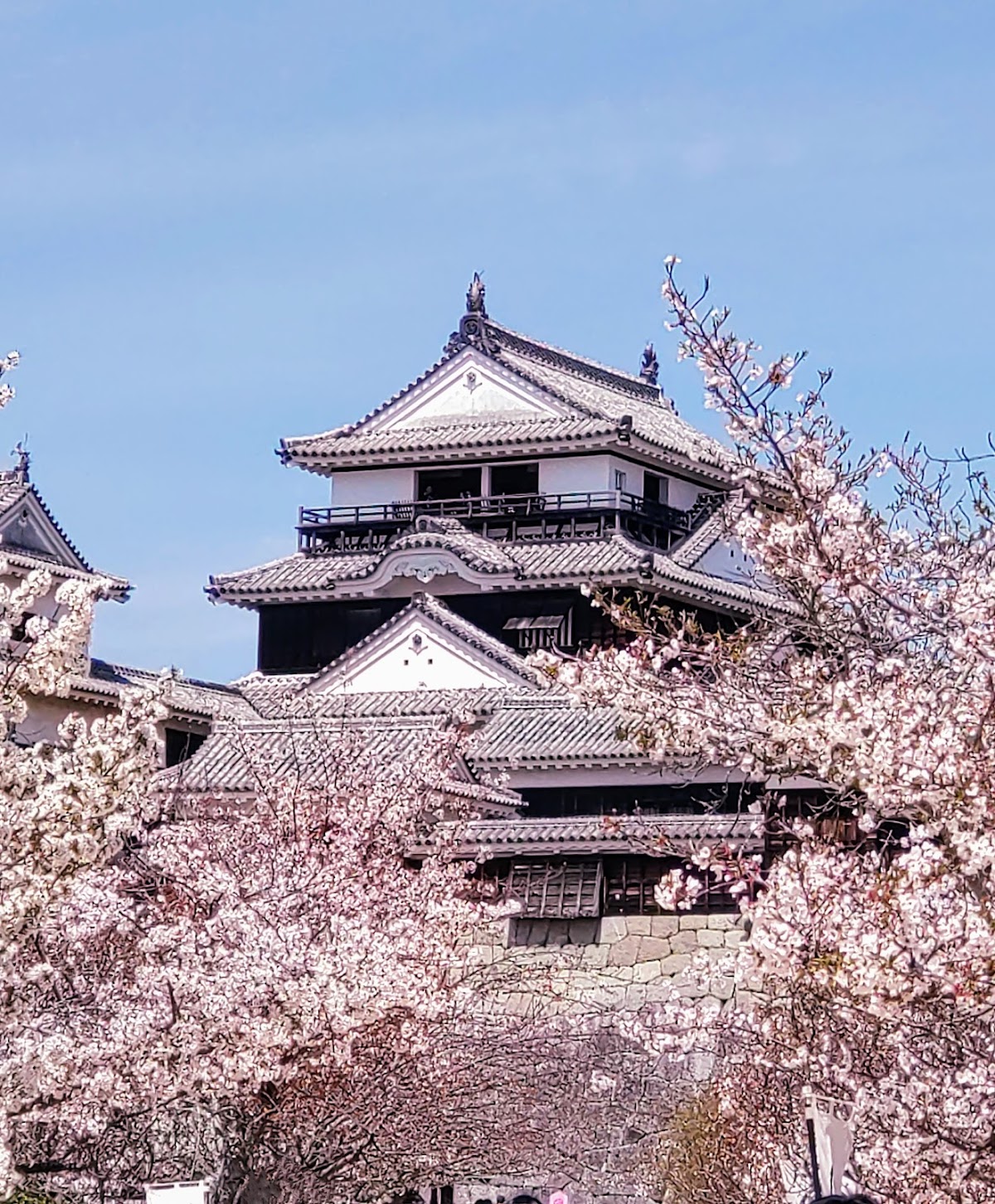
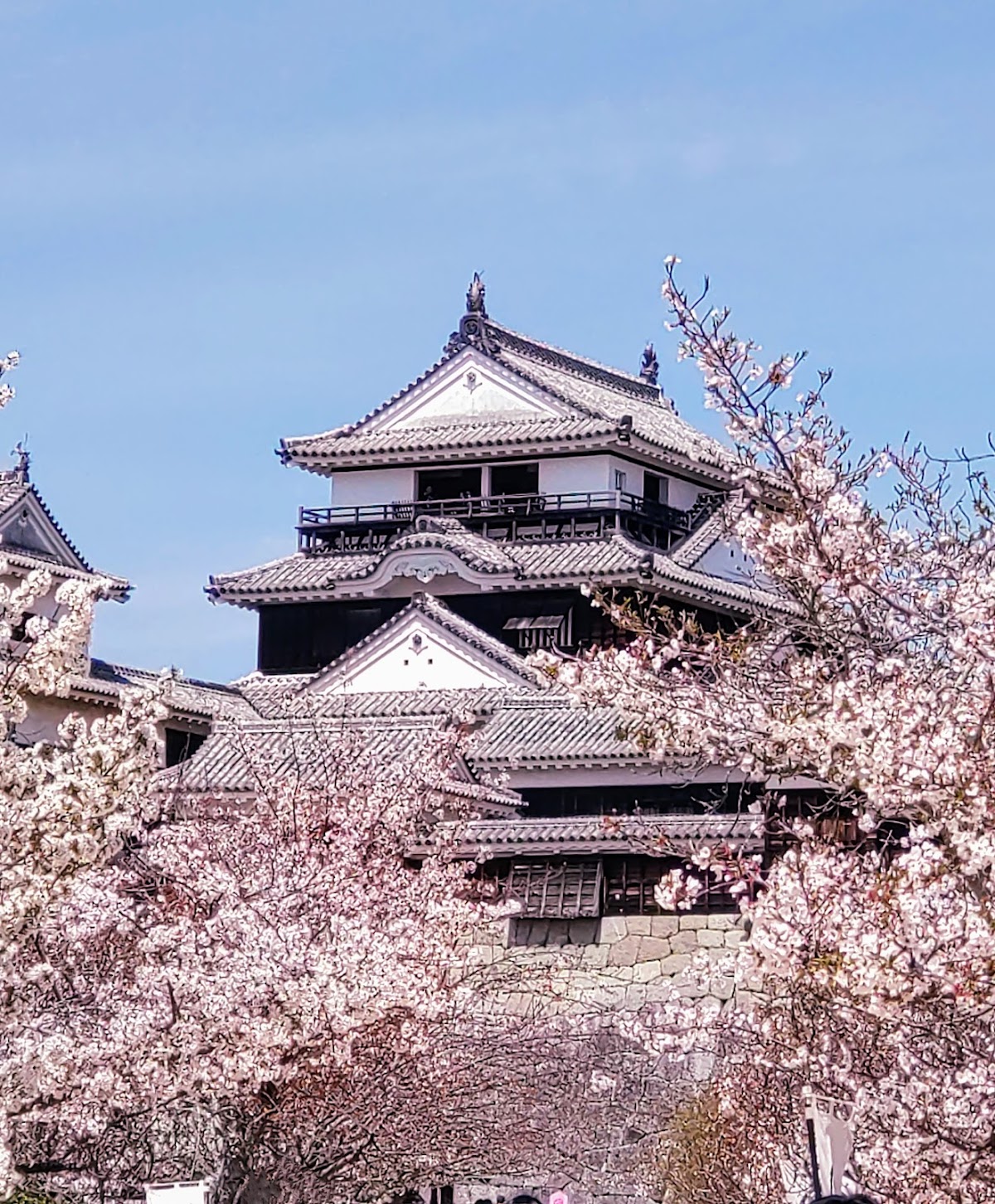
Matsuyama Castle Castle Tower’s most famous special expedition is the result of its nickname, “Connected Castle Tower”. The main tower is located in the center, the two main towers are placed side by side, the south corner tower is connected to the north corner tower, and the towers are connected, forming a comprehensive defense system, multi-site construction jointly increasing the defense ability.
Wakayama Castle, also known as Wakayama Castle, is one of Japan’s three major interconnected castle forts. The design and construction of the castle tower is an integral part of the defense system, and the actual military thought of the country’s time has been fully realized.
Castle tower construction style
The existing castle tower has three floors above ground and one below. The outer wall is made of black wood and Japanese white gray clay surface, a comparison of the formation. The interior is characterized by a unique tower staircase, and each layer is protected by protective features such as bridges and falling rocks.
From here you can enjoy a 360 degree panoramic view of Matsuyama City, the inland sea, the sea, and the depths of Mt. As you watch the scenery, you will be able to see the “Japanese Night Views”, the night curtain descends, the fortress lights shine, and you will be able to enjoy the fantastic night view that resembles a dream.
Matsuyama Castle Ryoten | 21 Important Cultural Sites Construction
Castle Towers
The main tower, small tower, south corner tower, north corner tower, and connected towers are the structure of Matsuyama Castle. From short distances, it is possible to construct a small mutually connected construction, which is an advanced construction technique during the time of the river cruise.
Main castle tower and castle gate
Excluding the castle tower and other important cultural areas:
- Nohara Castle Tower (Gibei Castle Tower): Japan’s only existing twin-layer watchtower type castle tower
- Kenshiro: One troupe double layered castle tower, west side of the castle
- Niuhu Gate: Main City Gate
- One gate, two gates, three gates: one series of castle gates, a road similar to a former city gate.
This is not a trivial construction, but it is also designed and equipped with advanced defense capabilities.
Stone technology
The stone tombs of Matsuyama Castle are the best historical source for research on the different construction times, different construction methods, and their development. This is how many kinds of stone stones are used in this technique, such as coarse stone stones, 榫卯石磌和 cut stone stones, and the stone stones are loved by people who love to see them.
The unique structure of the castle tower’s stone mound, which is famous for its unique structure, has been carefully designed, and the mountain’s legs have been separated from the mountain range, and its defense ability has been enhanced.
Tenshu Amizui
From the castle tower to the present, the depth is 44, Mizui of the US, and the history of the history and history of the previous civil engineering engineering technology from the time of the river. It is now important to ensure water conservation during an attack.
Second Castle Tower Aku Historical Garden
The second castle tower is located near the castle tower, and the archaeological excavation began in 1992, and was completed and repaired in 2013.
The results of archaeological excavation of the land during the Nedo Edo era, the `citrus flower garden'' completed on the ruins of Ariwara Imperial Palace, and the `running water garden” completed on the ruins of Zainai Shrine. This is a small garden where visitors can enjoy flowers, citrus fruits, and fruits, and the citizens can relax and enjoy the pine trees.
Shiroyama Park Kawahorinouchi Park
Shiroyama Park
From Seongshan Park to the main castle tower, it is also a famous place of victory. The garden has planted approximately 200 oak trees, the main products are dyed Yoshino oak, and every spring in the capital attracts more than 100 visitors. The castle tower and the flowers are intertwined with each other, and the image is completely beautiful.
Horinouchi Park (Sannomaru Castle Site)
Horinouchi Park is located under the foot of Matsuyama Castle, is a park in the area of the first troupe, and is located above the site of Kenyuhara Sannomaru (Third Outer Fort). The park has approximately 8 public grounds, an indoor grass field, a baseball field, a baseball field, etc., and is a place for citizens to participate in sports, music, and entertainment.
Matsuyama Castle
Matsuyama Castle in front of the cableway/electron ladder
The most common way to see Matsuyama Castle is to walk on a cableway or electric ladder.
Shinonomeguchi Car Station (Car Ward)
- Site: 3-2-46 Okaido, Aihime, Matsuyama City
- Hours: 8:30am – 5:30pm (changes depending on the season)
- Journey time: approximately 3 minutes
- Voting: 520 days for return, 270 days for return (adult)
The lacquered car and the electric ladder run together, and the choice is based on one’s own pleasure. At the same time, the train offers an open-air sitting experience, and you can enjoy the beautiful scenery while climbing up to the castle fortress.
Walking Climb
It is a mountain climbing route with a long history of history. The main routes of the fortress are as follows:
- Backward route: Most commonly used route (approximately 20 minutes)
- Shinonome Route: Departs from the nearest train station (approximately 20 minutes)
- Black Gate Route: Departure from Yuinomaru area (approximately 25 minutes)
- Furumachiguchi Route: Departure from northern China (approximately 30 minutes)
As you walk up the mountain, you will be able to see the castle gates and other defensive works.
In front of Yushi District
Electric car
- 5 minutes walk from the “Aiido” station, you can reach the station immediately.
- If you take a car from the station “in front of the station”, you can reach the castle gate in 5 minutes by train.
Tomoe
- Trains located at the station “Umi-do” for those who live in Italy
Self-indulgence
- From the Matsuyama IC exit on the Songshan Expressway, approximately 25 minutes away.
- Parking: Surrounding Yuta Station, Comprehensive Kiyomachi Bus Stop (purchase)
Information on visiting the castle tower
Opening time
Time to visit the castle tower
- February to July: 9:00 to 17:30 (last entry time 17:00)
- August: 9:00 to 18:00 (last entry time 17:30)
- September to November: 9:00 to 17:30 (last entry time 17:00)
- December – January: 9:00 am – 5:00 pm (last entry time 4:30 pm)
*Opening time may change depending on the situation, please visit the official website before visiting.
Gate vote
Castle Tower Gate
- Adult: 520 yen
- Elementary school student: 160 yen
Joto Yoninomaru Historical Garden Vote
- Adult: 1,040 JPY
- Elementary school student: 320 yen
Closed day
December Third Star Period 3 (Advancing Great Training)
How to tour Matsuyama Castle | Seasonal scenic spots
Spring: Mukka Yojo Tower’s interaction and reflection
From late March to early April, about 200 trees and flowers were in full bloom in Seongsan Park. The beautiful view of the maple flowers in the background of the castle tower is also a sight to behold, and the light of the maple flowers at night is reflected in the light. However, this is the winning land of Japan’s 100 greatest prizes, but this is the winning land that the locals love.
Summer: Green intention, Blue Sky Ruasai
In the summer, Matsuyama Castle was in full bloom. A view of the castle tower, a blue sky, a blue mountain environment, an inland sea, the bottom of the eye, a complete and beautiful composition, and a beautiful picture of the heart of a man.
Autumn: Beautiful and colorful red leaves
Starting in mid-to-late November, the color of Shiroyama-gami’s Kurigi begins to change. An old-fashioned stone coffin with a contrasting red leaf, a beautifully composed autumn day painting.
Winter: Snow White Castle Tower
Matsuyama weather is mild, but the weather is cold and snowy. Shirayuki’s cover of the castle tower, 阁美轮美奂, is a movie lover’s heaven.
Nearby tourist attractions
Dohou Onsen
Dohou Onsen is about 15 minutes by car from Matsuyama Castle, making it one of the oldest hot springs in Japan. Matsuyama Castle and Hou Hou Hot Springs are covered by “Japan’s 100 Famous Victory History”, highly recommended for everyone to visit.
Yun Sakagami Museum
Ryotaro Shiba’s short story “Sakagami no Yun” is the main theme of the series, and the footsteps of Akiyama’s history, Matsuyama’s history, and Masaaki’s footsteps. You can easily walk from the museum to Matsuyama Castle.
Mansuishou
The building was built in 1922 (Taisho 11) and was designated as a nationally important cultural property. This is the standard for the construction of the country’s literature at that time, and it was located under the foot of Songshan Castle.
Matsuyama Castle activity information
Matsuyama Castle’s annual activities:
- Spring season: The light of the opening season of the cherry blossoms, Mitsuhide and other activities
- Castle Festival: Golden Period samurai tour and armor tasting
- Moon Activities: Special development during the Mid-Autumn Festival
- New Year Activities: Sunrise Viewing Activities
Check out the latest activity information here.
Matsuyama Castle Point
Uhonmaru Square Tower Tower
This is the complete overview point of the castle tower. The Qingchen light line is full, and the light line is full of light.
Ninomaru garden distant view castle tower
It is a beautiful view of the castle tower with a distant view of the pond in the garden, and the beautiful view of the flowers and the reflection of the castle tower at the time of the visit.
A far-reaching view of the Horinouchi Park
The foot of the mountain is a tower with a view of the tower, and the tower is shaking.
Navigation section on the route/disembarking table
This is a very good viewing angle, and at the same time you are climbing Matsuyama Castle, you will also be able to enjoy the magnificent view of the castle tower in Matsuyama City.
Matsuyama Castle’s protection and future guide
Renewable energy use
When Matsuyama Castle opened, it was powered by renewable energy sources that could be used in a separate land purchase (PPA) system. In the future, we will continue to take measures to protect the environment and protect the environment.
Maintenance protection and modification
Matsuyama Castle is regularly opened and important cultural facilities are constructed, protected and repaired, and efforts are made to maintain the appearance of the era.
Number existence
Currently using the latest 3D drawing technology, construction of moving numbers, computer science, general science, education and travel field.
Visitor information
Precautions inside the castle tower tower
- Yuyu Tower Ladder 陡峭, construction perforation shoe shoes.
- Construction general large matter line li exist broadcasting investment 币style 储品柜中.
- Forbidden punctures in the castle tower tower (transferred above).
- Prohibited use of tripod racks.
Climbing castle fort precautions
- Summer precautions: heat protection and temperature drop (retains sufficient moisture).
- Rainy weather, wet skies, and timid running.
- Warm protection during winter.
- A stone monument or structure that can be touched or touched.
Overview: Experience the charm of Matsuyama Castle
Matsuyama Castle occupies an important position in the history of Japanese castle forts, and currently has 12 castle towers. Since the construction of Kato Zhenmei, there have been 400 years of history, and 21 important cultural buildings in the castle have been preserved in their original appearance.
Matsuyama Castle has many excellent construction techniques, a comprehensive and spectacular castle tower, a beautiful stone carving construction, and an ingenious mountain defense structure. In addition, it is located in the center of Yu City, with convenient transportation, where you can sit and ride a car, and enjoy the spectacular scenery overlooking the tower.
A tour of Matsuyama Castle, a trip to the hot springs after the road, and a full experience of the historical and Japanese culture of Matsuyama. Matsuyama Castle is beautiful in all four seasons: spring flowers are blooming, summer weather is green and natural, autumn weather is red and yellow, and winter weather is white and snowy. I strongly recommend that you enjoy the charm of your own past experience.
The official post office (https://www.matsuyamajo.jp/) is regularly updated with the latest activity information, changes in time, construction, and current status.