Kanayama Castle completion guide | One of Japan’s 100 most famous castles: light points, history and transportation explanation
Jinshan Castle is one troupe, a mountain castle in the Yukukoku era, a seat on the Jinshan Castle in the United States at 235.8 miles, and the central area of Ota City. It is also known as “Nitta Kanayama Castle” or “Ota Kanayama Castle”, which is one of Japan’s 100 most famous castles. The fortifications of the “Gold Young King” have been defeated more than ten times, and the great generals of the country, such as Atsunobu Uesugi and Takeda Harusuke, have advanced on attacks, and their solid defense system has enjoyed great honor in the history of fort construction.
The full text of the main text is included in this article, which includes a comprehensive history of Kanayama Castle, a comprehensive history, and communications from the light point onwards.
Kanayama Castle Basic Information
Point: Kanayama-cho, Gunmaota City
Other name: Nitta Kanayama Castle, Ota Kanayama Castle
Fortress structure: Linghua-style mountain castle
Year of construction: 1469
Builder: Iwamatsu Iezumi
Major feudal lords: Iwamatsu clan, Yura clan, Hojo clan Nori: 235.8 US
Designated use: National history of history (designated in 1934), Japan’s 100 most famous castles (17th name)
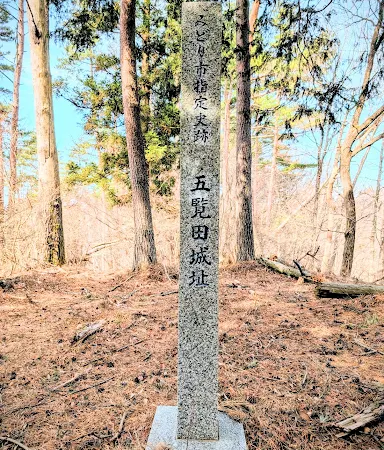
Seal location: Kanayama Castle Exit Guide (within the South Park Rest Area), Ota City Kanayama Area Exchange Center
Kanayama Castle is a large mountain castle built using the Kanayama mountain structure, which is covered by a complete mountain structure. Japanese red pine planted throughout Kanayama Castle. The castle site has a length of approximately 3.1 km from east to west, a distance of 3.8 km from north to south, and an area of approximately 300 km, making it one of the largest castle forts in Japan.
History of Kanayama Castle
Built by the Yoiwamatsu clan
Kanayama Castle was first built in 1469 (the first year of Bunmei), and the Iwamatsu family residence was built by the Yushinden clan. The Nitta clan is a long-established samurai family, and is also a descendant of the Minamoto clan. During the war period, the Iwamatsu family lived there and built a mountain tower (239 meters in sea), the central fort of the famous “Sanjo”, and there were four. Four castles and castles have been constructed on the mountain in all directions: Saijo, Hojo (Sakanakajo) and Hachioji mountain castles, which have now been established and are subject to regional control.
The construction of Kanayama Castle was completed for the first time, and the construction of the castle’s Kawa earthen mound and other construction work was completed. Yamashiro’s basic strategy is that during the peace period, U-Shan was built under the foothills, and during the war period, he concentrated his strength and defended the city. Jinshan Castle’s right is to follow the rules of the first generation, clever use of the land and natural topography, and the construction of the first troupe is the stronghold of Jinyu.
Yura clan era and its golden era
In the 16th century, the Yura clan entered Kanayama Castle and took control. During his years in Yura, Kanayama Castle progressed through extensive renovations, and the stone tombs were first used and completed. In the past, the history of the castle fort was reviewed, and the complete stone tombs in the eastern part of the country were discovered, but the archaeological excavation of Jinshan Castle was revealed, and the advanced stone masonry techniques were developed during the war.
During his years in Yura, he attacked Kanayama Castle more than 10 times, and was attacked by famous feudal lords such as Atsunobu Uesugi, Hirotake Takeda, and Yoshishige Satake, but from the beginning, he was never defeated. The honor of being “unable to be built” is one of the seven great castles in the eastern part of Chengdu City, Jinshan City.
Hojo Clan
In 1590, when the vassal Hideyoshi attacked Odawara Castle, Kanayama Castle was placed under the control of the Hojo clan. The fall of Odawara Castle and the fall of Kanayama Castle. After Tokugawa Ieyasu entered the east region, he moved to Kanayama Castle and left. Approximately 120 years have passed since the construction of Kanayama Castle, which has been attacked by unsuspecting enemies and completed its mission.
Kanayama Castle’s distribution structure
Main round-centered defense system
The central part of Jinshan Castle includes the main enclosure, the Jinshan Mountain Wall, and the surrounding walls, which are multi-layered walls extending in all four directions along the spine of the mountain. This type of station is called “connection style”, and each time the castle is separated from the city, it is necessary to block the enemy’s invasion at different levels.
Major defense works below:
- Main enclosure: The most important area of Yiyu Jinshan Mountain
- Xibian: Yiyu Xibianshan spine defense base
- Beiyan: Northern Defensive Defense Works
- Hachioji Mountain Fortress: Viewpoint Wa defense base in the south direction of Yu East
- Nanyan: Important defensive construction work in the defense area
Each of these minor defense works is an independent work, but they are also mutually combined.
Multi-layered defense: 护城川 連 垒
The defense system of Jinshan Castle is characterized by the combination of the mountain spine, rivers and highlands of the castle. The enemies of the city were able to block the river and advance along the mountain, and the defensive construction was also the starting point for the attack.
The idea is that when you get to the main gate, you can set up multiple lines along the way, forming a multi-level defense system. Immediately, the enemy breaks through and goes through the defense line, and the encounter is a new obstacle. This ingenious defense design is one of the reasons behind Kanayama Castle’s nickname, “Unbreakable Fortress.”
Kanayama Castle Ryoten
Zhengmen’s stone wall
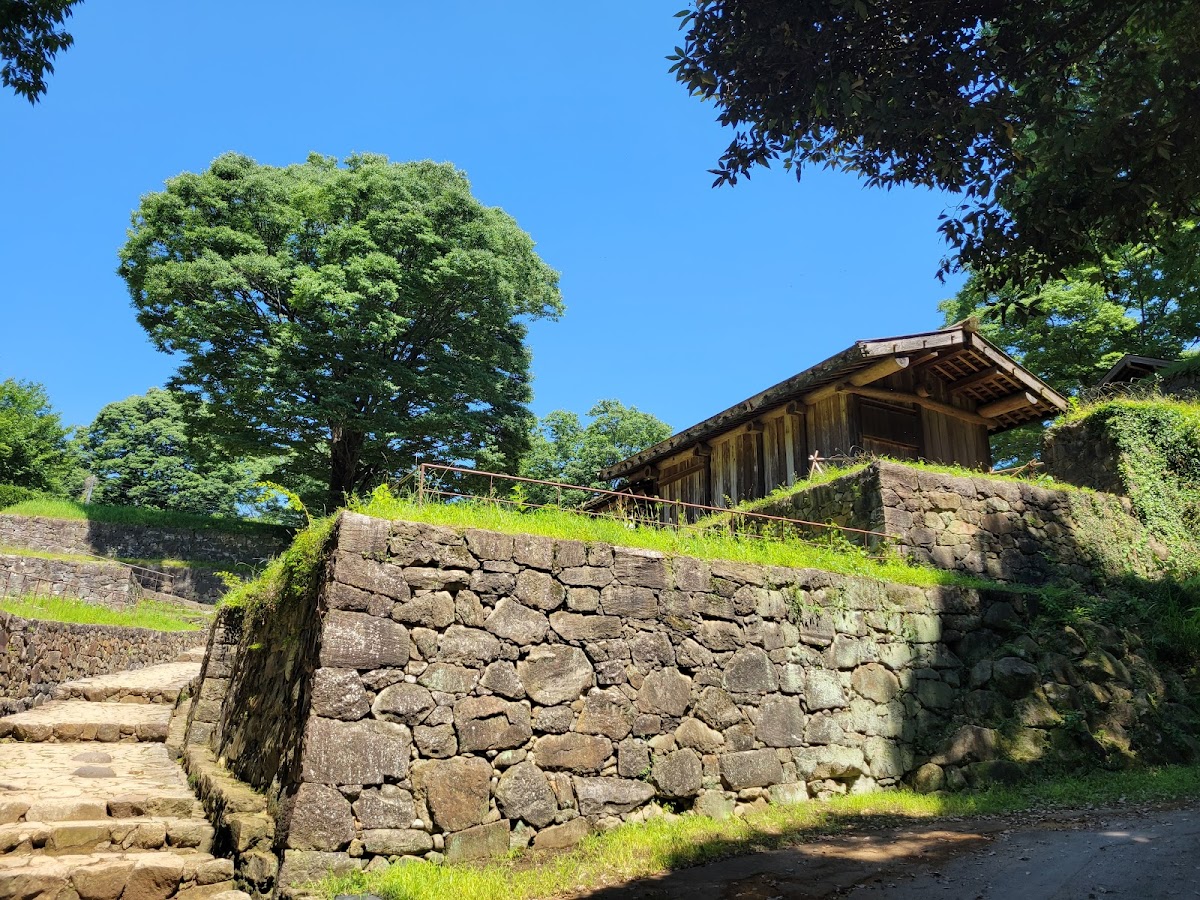
The most beautiful point of Jinshan Castle is located at the main gate (large and small entrance) after the renovation. A castle gate is a fortress entrance, and is also a defensive area with the highest demand. The stone wall of the main gate of Kanayama Castle and the stone wall of the stone wall, which was designed with beautiful ironwork, is well-known.
In this article, you can see the history of the city’s fortifications in the eastern part of the mountain city on Shibanji Road. Archaeological excavations were performed, and a wide variety of stonework techniques were used in the eastern part of the country. Human awareness, stoneware road surface equipment equipment, functional functionality, such as providing a foothold in rainy weather drainage water protection.
Tsukinoike Wahinoike
Near the main gate (Ote-Koguchi), there is a water pond with a large number of stones, also known as `Tsukinoike'' and `Hinoike”. Except for people’s knowledge, water storage, and religion. The light of the moon and the sun is an important symbol in the philosophy of the sky.
Tsukinoike Square, long approximately 4 meters; Hinoike Square, long approximately 3 meters; both water ponds were constructed with a stone head and a dedicated mind. When I was in the mountain castle during the war, I saw the various stones and water ponds, and the mission was to create one of the unique features of Jinshan Castle.
Honmaru Towa Nitta Shrine
Nitta Shrine, where the main castle enclosure (main castle) of Zakinzan Sanba is located, is now dedicated to Nitta Shrine. Nitta is a hero of the Nitta clan, and is deeply respected by the people of the area. A bird’s-eye view of Ota City from the main Maru, a clear view of Hikori, and a far-reaching view of the eastern plains.
The surrounding area of the main city is a reminiscence of the construction work of the local people, and it is an example of the defense construction of ancient times. In addition, when passing through the castle, the castle was scattered along the road, and the stone wall was scattered, and the people who visited the castle were also impressed by the ancient historical monuments of the castle.
Saijo Wahoku Castle Ruins
It is a great point to be able to locate the forts attached to the West City, North City, and other forts. Hijikata’s process was perfectly preserved in the tomb, and the castle was built by the river, and the defense system of the mountain castle was provided during the war.
Specially, it is Hokujo (Sakanaka Castle), Hirotaka Kemo, and the independent fortification of the troupe, which plays an important cornerstone in the comprehensive defense system of Zakinyama Castle. From the distant view of Yusai City to the three mountain peaks of Joshu, including Mt. Haruna and Mt. Akagi, the scenery is spectacular.
马场围墙和南围墙
Name of the name, the horse field is a flat land, and the place where the land is different. The stone tomb in the southern part of the country was an important monument, and the masonry techniques at the time were developed at Jinshan Castle.
There is a rest area in the southern part of the castle, and at the same time, it is also the guide center of the Jinshan Castle ruins, and visitors are welcome to visit the fort’s history and composition. In addition, he is a representative of the “Japan’s 100 Famous Castles”.
Observation tower view
The current location of Jinshan Castle is the ruins of the observation tower, and the view from the top of the observation tower is spectacular. During the war, the watchtower was an important construction for military operations. Nowadays, the view point of Chengdu’s thermal gate, and the panoramic view of the eastern plains.
Of course, it is a sunny day in the clear sky, and when there is a clear sky tower in East Tokyo, it is a sight that no one can imagine.
Kanayama Castle Cultural Center
Selected 100 Famous Castles of Japan
Kanayama Castle Site was designated as a national historical monument in 1934, and has been designated as an important position in the history of Japan’s castle forts. In addition, in 2006, he was recognized as one of Japan’s 100 Famous Castles (ranked 17th) and a nationally famous castle fortress in Chenghua.
Kanto Seven Famous Castles Selection
One of the seven famous castles in the eastern part of Kanayama Castle. The seven famous castles in Guan-dong are the representative forts in the Guan-dong region, including the selected forts, the outside of the castle, and the other selected forts, including Odawara Castle, Kawagoe Castle, Oshi Castle, Tosaiyama Castle, Utsunomiya Castle, and Wazaki Castle (various locations can be selected).
The reason why Jinshan Castle was selected as one of the seven famous castles in the East was its solid defense system, perfect preservation, and the achievement of the historical achievement of “an invincible fortress”.
City Fort Historical Importance
Research on the excavation of Kanayama Castle has had a significant impact on the history of Japanese castle fortifications. As a result, the promotion envoy has made major revisions to the progress of the exhibition of stone burial techniques in the Eastern District of Guinguan.
Check out the large-scale stone tombs that were first used in the eastern part of the eastern part of the Jiang Dynasty. However, as early as Jinshan Castle’s research was announced, the pioneering stone masonry technology was in existence. This is the achievement of a breakthrough in the field of research on the history of Japanese castle forts.
Former Kanayama Castle
Fire car
Recent train station: Dongwu Ikuri Saki Line “Daita Station”
From Daejeon Station to Jinshan Castle Ruins, choose the following transportation options:
- Departure car: 10 minutes from Daejeon station to Jinshan Castle site.
- Bashi: Be sure to sit at the North Exit of Daejeon Station and open the “Kanashan Castle Tourist Entrance” (please note the following dates)
- Walking: From Daejeon Station, it takes about 30 minutes to get to Jinshan Mountain, and then to the mountain climbing route, which takes about 40 minutes to get to Mt.
Selfishness
Recent interchange road: Beikin East Expressway “Ota Kiryu IC” or “Ota Yabutzuka IC”
From the IC, it takes about 20 minutes to arrive at Jinshan Castle Site.
Stop:
- Kanayama Castle Tourist Park (free of charge, approximately 30 cars)
- Nishiyama Maru 6-stop parking lot (free of charge)
- Red Kanadaira Parking Area (free of charge)
Kamiyama Road Line
Mao Kanayama Castle Yurojo Kamiyama Road Line:
- Oteguchi route (recommended): From here to the Oteguchi (main gate), arrive at the castle tower (approximately 30 minutes)
- Nishiyama Maru 6th Route: Depart from the Xixiyama Maru 6th stop, arrive at the castle tower (approximately 40 minutes)
- North Route: Arrive at Yubei Castle (Sakanaka Castle) to the tower gate (approximately 50 minutes)
For the first time visitors to China, there are many scenic spots along the route.
Kanayama Castle Visit Information
Visiting time and cost
Viewing time: Full sky open (However, night time performance is dangerous)
Key vote: Disclaimer
Construction visit time: 9:00 am to 4:00 pm (Shimojo in front of sunrise)
Accuracy visit time: 1.5 to 3 hours (base visit area is different but has different location)
Instructions
Jinshan Castle Site Guide (Southern Land Rest Area)
- Opening hours: 9:00am to 9:00pm 5:00
- Closed period: New Year holidays (December 29th to January 3rd)
- Gate: No fee
- Equipment contents: Exhibition boards, models, visual materials, washing rooms, rest area
- Kasho: Yes (Japan’s 100 Great Castle Fortress Seals)
Visitor knowledge
- Wear: If you want to wear it, you should wear sandals and Japanese clothing.
- Season: Summer clothing; winter clothing.
- Drinks: Automobile purchase equipment is small, construction of self-contained drinking water.
- Tenki:Rainy weather, wet skies, and a timid walk.
- Physical ability: This is about 100 steps per step, and those who lack physical ability can climb the mountain with difficulty.
Kanayama Castle Surrounding Scenic Points
Ota City Kanayama Area Exchange Center
The center of the story is located at the foot of Jinshan Castle, and the detailed information about Jinshan Castle is on display. The seal of “Japan’s 100 Famous Castles” has been built in this area, and there is a little background knowledge about this before the construction and construction of the castle fort.
Kanayama Castle Guide Guide
We are located in the southern part of the castle grounds, have an exhibition view, and can understand the history of Kanayama Castle. In addition, there is a rest area in the area, and it is the ideal place for climbing Kanayama Castle.
Sogenji Temple (Ota City)
Sogen-ji Temple is a temple belonging to the Yura clan, the lords of Kanayama Castle, and is preserved as a cultural artifact belonging to the Yura clan. All the generals visited Kanayama Castle and Sogenji Temple, and were able to dig deeper into the history of Kanayama Castle.
Nintian Shokku History Museum
I understand the Nitta clan’s history at the National Museum. The Iwamatsu clan of Kanayama Castle built in Yuyu is a branch of the Nitta clan, and the exhibits of Inkono Naiya included materials from the clan.
Four seasons of Kanayama Castle
Spring (March-May)
Kanayama Castle is beautiful in spring, and the scenery is beautiful. The time when the cherry blossoms grow, the foot of the mountain climbs to the waist, the cherry blossoms compete, the beautiful victory is won. The weather is mild at this time, and this is the best time to visit Kanayama Castle.
Summer (June-August)
In the summer, Jinshan Castle is green, the people are cool, and the mosquitoes are abundant, and the temperature is low. When the construction is in the morning or next night, it is refreshing to play.
Autumn (September-November)
In autumn, the red leaves of Kanayama Castle are colorful, and the red pine trees on the mountain peak (origin of the name of Kanayama Castle) are beautiful and beautiful. This is the ideal time to explore Kanayama Castle.
Winter (December to February)
The winter air is refreshing and the scenery is beautiful. Unfortunately, there was a little snow falling, but the roads were icy. Warm clothing must be worn while playing.
Kanayama Castle Activities
Activities of Ota City Regular Activities:
- Kanayama Castle Festival: A local event held every autumn, including a comprehensive samurai tour and other activities.
- Advance Tour: Free guide tour provided by the destination.
- The history of history: The history of the Jinshan Castle and defense construction work, which takes place on an irregular basis.
For more information, please visit the Daejeon City Optical Products Office or the Daejeon City Government Office.
Understand more information about Jinshan Castle
Sokan Book
As for the information about Jinshan Castle, please read the following books:
- 《Nitta Kanayama Castle》 (published by Ota City Board of Education)
- 《Mangakan East Meijo》 series
- 《Japan Hyakuza Famous Castle Official Guide》
Research results
The Ota City Board of Education’s archaeological excavation report details the Kanayama Castle construction, and the reviewer has an in-depth understanding of the recommendations.
Conclusion
Kanayama Castle is a rare historical site, and now looks like a mountain castle from the time of the Empire. A solid defense system with a solid defense system, highly praised as “an invincible fort”, more than ten attacks were defeated; The stone wall and the stone board in the Guandong area are beautiful; the beautiful natural scenery surrounding the surrounding area is perfect for the current visitor flow.
It is one of the seven most famous castles in the East, one of Japan’s 100 most famous castles.Kanayama Castle is a must-visit place for castle lovers, and a must-visit place for history lovers. As you can see, you will be able to travel to Daejeon City, climb a certain distance to Jinshan Castle, and experience the country’s history as a historical monument.
The castle gate’s stone wall, which was arranged in order, the mysterious shrine of Tsukinoike and the Fire Pond, the magnificent scenery of the mountains, and the ruins of the castle in Hewa and the landslides in the castle, and the time when the capital general was defeated and conquered. In addition to Jinshan Castle, it is a tourist attraction, and it is also a part of the “active textbook”, which allows you to experience Japanese history and culture.