Kanayama Castle Complete Guide: A Thorough Explanation of the History and Highlights of the Seven Famous Castles of the Kanto Region
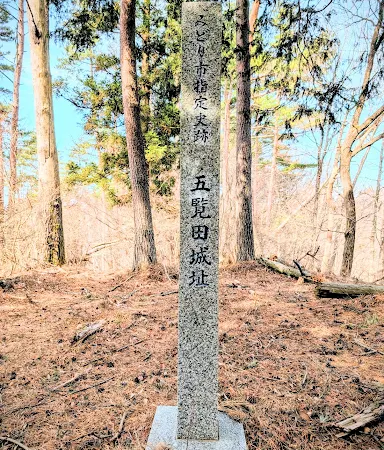
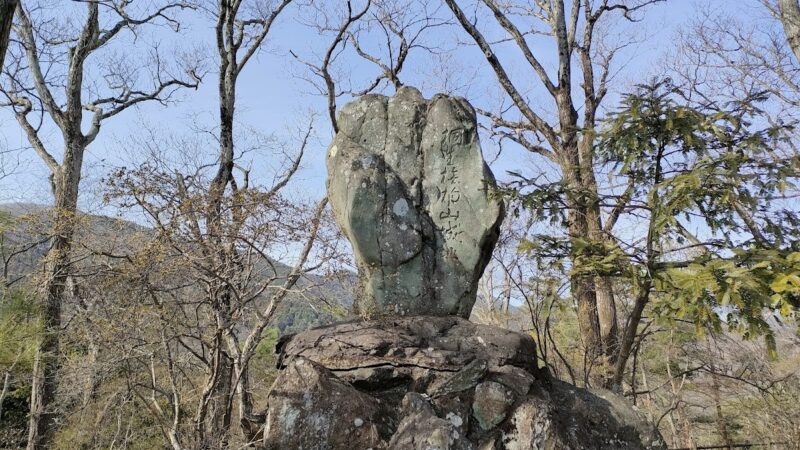
Kanayama Castle is a Sengoku period mountain castle built on the summit of Mt. Kanayama (235.8 meters above sea level) in Ota City, Gunma Prefecture. It is counted as one of the Seven Famous Castles of the Kanto Region and is also known as mountain castle with well-preserved stone walls and paving remains, it is designated as a national historic site and is a valuable cultural asset that conveys the architecture of a medieval mountain castle to the present day.
History of Kanayama Castle
Background and Founding Period
Kanayama Castle is believed to have been built in Bunmei 1 (1469) by Iwamatsu Iezumi. At that time, the Kanto region was in a complex political situation, with conflicts between the Koga Shogunate and the Kanto Kanrei Uesugi clan, as well
The Iwamatsu clan was a branch of the Nitta clan and a powerful local family that controlled the southern part of Kōzuke Province (present-day Gunma Prefecture). The reason they built a castle at Kanayama was that this location offered a panora strategically important base for both military and political purposes. From Kanayama, they could monitor the major roads of northern Kanto and detect enemy movements early.
Development under the Yura Clan
During the Eishō era (1504-1521), Kanayama Castle came under the control of the Yura clan. Although the Yura clan were vassals of the Iwamatsu clan, they gradually seized power and became the de facto lords of the castle. Especially during the time large-scale expansion and renovation, developing into one of the most formidable castles in the Kanto region.
Yura Narishige skillfully conducted diplomacy between the powerful Kanto clans, such as the Hojo and Uesugi, from the Tenbun era (1532-1555) to the Eiroku era (1558-1570). It is believed that many of the current period, with stone walls, paved pathways, and moats being built as defensive structures.
Battles in the Sengoku Period
Kanayama Castle became known as an “impregnable castle” due to its strong defenses. During Uesugi Kenshin’s Kanto campaign, Kenshin attempted to capture Kanayama Castle but was unsuccessful. The Yura clan successfully defended the castle 1561.
Furthermore, their relationship with the Hojo clan was complex, characterized by periods of alliance and conflict. The Yura clan maintained their power base at Kanayama Castle while carefully assessing the balance of power with surrounding forces.
Decline of the Yura Clan and Abandonment of the Castle
In 1590, when Toyotomi Hideyoshi launched the Siege of Odawara, the Yura clan sided with the Toyotomi. However, due to the post-war territorial reorganization, the Yura clan was transferred to Ushiku in Hitachi Province (present-day Ushiku City, Ibaraki
Later, Maeda Toshikatsu, a retainer of Maeda Toshinaga (who was a retainer of Maeda Toshiie), took up residence in Kanayama Castle, but it was abandoned around 1600. With the advent of the Edo period, political systems based on residen Castle, as a mountain castle, ceased to serve its purpose.
Layout and Structure of Kanayama Castle
Characteristics as a Mountain Castle
Kanayama Castle is a typical mountain castle, with a central main keep at the summit, and multiple baileys (kuruma) arranged using the ridges and valleys. It cleverly utilizes the topography of Mount Kanayama, which is 235.8 meters capabilities.
Compared to castles on flat land, mountain castles offer the advantage of utilizing elevation differences for defense, making them less susceptible to siege attacks by large enemy armies. In the case of Kanayama Castle, there is an elevation difference of appro mountain to the main keep, making the ascent alone a significant burden for attacking forces.
Arrangement of Major Baileys
The layout of Kanayama Castle places the main keep at the highest point, with baileys such as the second bailey, third bailey, and west castle arranged in a stepped pattern around it.
The Honmaru (main enclosure) is the central part of the castle, believed to have housed the lord’s residence and important facilities. Archaeological excavations have confirmed the remains of foundation stones, indicating the existence of a considerably large structure.
The Mijo (main enclosure) is located east of the Honmaru and was a particularly important defensive point within Kanayama Castle. Here, the magnificent stone walls and paving remains, described later, are remarkably well-preserved.
Nishijo (western enclosure) is a group of enclosures extending west of the Honmaru, consisting of several smaller enclosures. These are presumed to have functioned as lookout posts and troop garrisons.
Stone Wall and Paving Techniques
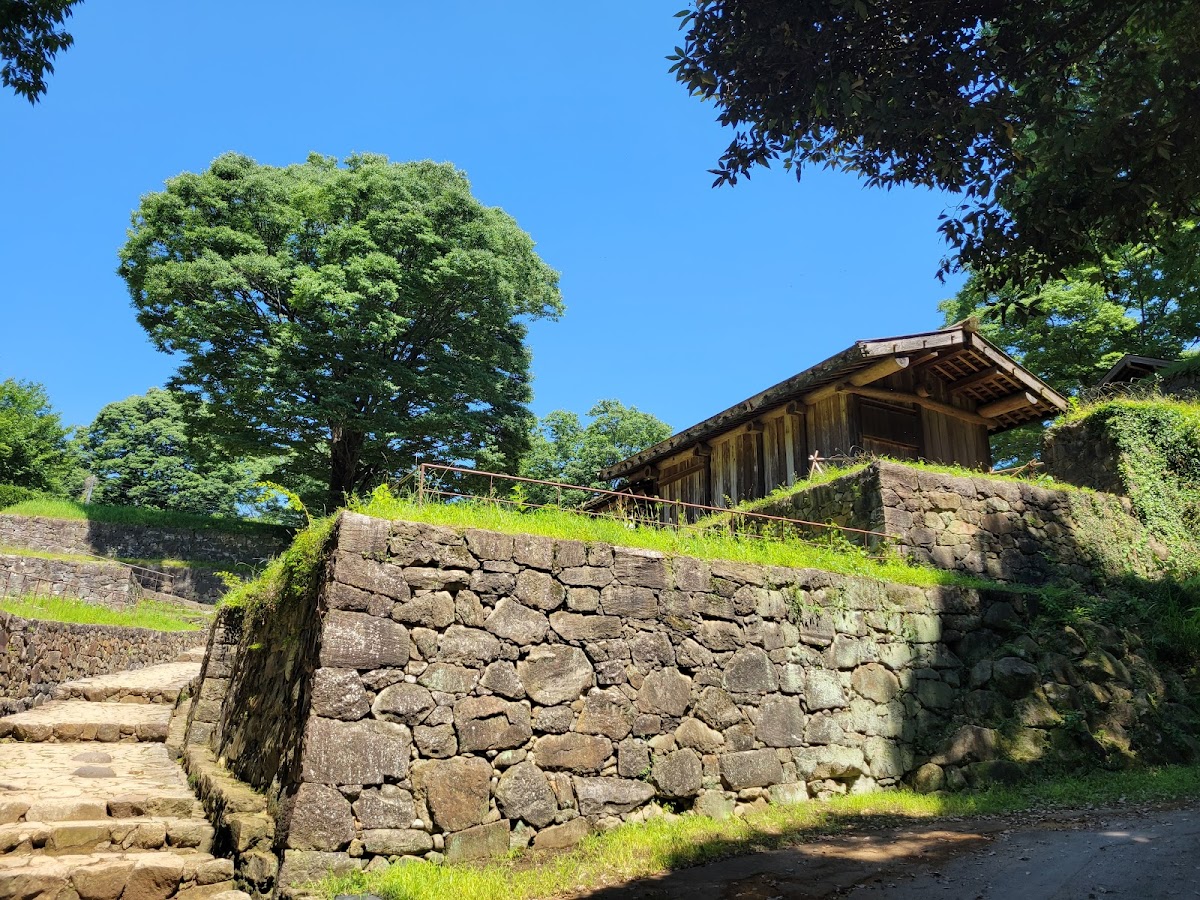
The most distinctive feature of Kanayama Castle is its large-scale stone walls and stone paving remains, which are rare for a mountain castle in the Kanto region. While castles in the Kanto region during the Sengoku period mainly consisted of earthwork structures.
Around the castle, stone walls several meters high remain, demonstrating advanced construction techniques for the time. The stonework primarily consists of locally sourced amphibole andesite, constructed using the nozurazumi technique, which involves stacking natural stones as
Furthermore, the stone paving, which covers the surfaces of pathways and enclosures, is believed to have served to prevent muddy conditions during rainy weather and also to detect enemy incursions through sound. A magnificent stone paving has toenred the castle’s imposing presence to this day.
Defense using moats and vertical trenches
Kanayama Castle features numerous moats that cut off ridges and vertical trenches dug vertically into slopes. These were designed to limit enemy incursions and provide a defensive advantage.
In particular, on the south side towards the main road, multiple trenches are arranged in a series, creating a multi-layered defensive structure. Furthermore, the vertical trenches hindered the movement of enemy soldiers climbing the slope and also functioned as drainage chan
Water Sources and Wells
The greatest weakness of mountain castles was securing water, but several well sites have been identified at Kanayama Castle. In particular, the main castle has two water storage facilities called “Hinoike” and “Tsukinoike,” which are impress
These ponds are thought to have served not only as facilities for storing rainwater but also had religious significance. Artifacts believed to have been used in rituals have been unearthed from Hinoike, suggesting that it may have also
Highlights of Kanayama Castle
Restored Main Gate
The Ote-koguchi (main gate), the main entrance to Kanayama Castle, has been restored and maintained based on the results of archaeological excavations. The stone-walled passageway is designed with complex curves to prevent enemy intrusion, showcasing the high lele period.
High stone walls rise on both sides of the main entrance, creating a structure that allows for attacks from above. The stone-paved passageway has also been beautifully restored, making it an important point for imagining the castle’s appearance in its
Hinoike and Tsukinoike
The aforementioned Hinoike and Tsukinoike are among the representative remains of Kanayama Castle. Hinoike, in particular, is a rectangular pond surrounded by stone walls, and its beautiful stonework is a must-see. Excavationsat (kawarake) and coins, considered evidence of rituals being performed there.
Tsukinoike is slightly smaller than Hinoike, but similarly constructed with stonework. There is a theory that these two ponds were arranged based on the principles of Yin and Yang, making them valuable remains that illustrate the nature of religiou
View from the Main Enclosure Site
From the main enclosure site, the highest point of Kanayama Castle, a magnificent panoramic view of the Kanto Plain unfolds. On clear days, you can see as far as Mount Fuji, the Nikko mountain range, and the Chichibu Mountains.
This view speaks volumes about why Kanayama Castle was chosen as a strategically important military location. Its position, allowing for monitoring of surrounding roads and settlements, was extremely valuable during the Sengoku period (Warring States period).
Remains of Stone Walls
Stone wall remains are scattered throughout Kanayama Castle. The stone walls around the main castle are particularly large in scale and well-preserved. Built using the nozurazumi (rough-stone masonry) technique, these walls have remained int of stonemasonry skill of the time.
Observing the stone walls reveals intricate details such as the selection of stones, the ingenuity of the stacking methods, and the drainage systems. This will be a particularly interesting point for those interested in castle architecture.
Kanayama Castle Ruins Guidance Facility
At the foot of the mountain is the Kanayama Castle Ruins Guidance Facility, where you can learn in detail about the history and structure of Kanayama Castle. It features exhibits of artifacts unearthed during excavations, a reconstructed model, and video materials, providing the castle ruins.
The facility was designed by Kengo Kuma and is a beautiful building that harmonizes with the surrounding landscape. It is free to use, and guided tours by volunteers are available (reservations required).
The Cultural Value of Kanayama Castle
Selection as one of Japan’s Top 100 Castles
Kanayama Castle is one of the “Top 100 Castles of Japan,” selected in 2006 by the Japan Castle Association. It is registered as the 17th of the Top 100 Castles and is recognized as a representative castle of the Kanto region.
The Top 100 Castles stamp is located at the Kanayama Castle Ruins Guidance Facility or the rest area in the South Enclosure, making it a popular destination for castle enthusiasts.
Position as one of the Seven Famous Castles of the Kanto Region
Kanayama Castle is counted as one of the Seven Famous Castles of the Kanto Region. The Seven Famous Castles of the Kanto Region is a name referring to seven representative castles in the Kanto region, and in addition to Kanayama Castle, it includes Odawara Castle, Hachigata Castle, Hachigata Utsunomiya Castle, and Maebashi Castle (there are various theories).
These castles played an important role as the political and military center of the Kanto region during the Sengoku period. Among them, Kanayama Castle is particularly highly regarded for its high level of completion as a mountain castle and the excellent state of preservation of its remains.
Protection as a National Historic Site
The Kanayama Castle site was designated a national historic site in 1934. Later, in 2001, the designated area was expanded, and protection became more widespread.
The historic site designation restricts development of the castle site and legally guarantees the preservation of the remains. Furthermore, Ota City is conducting ongoing archaeological excavations and maintenance projects, advancing the understanding of the remains and their appropriate preserva
Access and Visiting Information for Kanayama Castle
Access by Public Transportation
By Train:
- Get off at Ota Station on the Tobu Isesaki Line
- Approximately 40 minutes on foot or 10 minutes by taxi from the station to the Kanayama Castle Ruins Guidance Facility
- On weekends and holidays, the “Aozora” (municipal bus) operates from Ota Station, providing access near the guidance facility (please check operating days and times).
By Car:
- Approximately 15 minutes from the Ota-Kiryu IC on the Kita-Kanto Expressway
- Approximately 25 minutes from the Tatebayashi IC on the Tohoku Expressway
- Free parking available at the Kanayama Castle Ruins Guidance Facility (approximately 20 cars)
- Parking also available at the South Enclosure near the summit (approximately 10 cars)
Ascent Routes and Estimated Time
There are several routes to Kanayama Castle:
1. Route from the Guidance Facility (Recommended):
- Estimated time: Approximately 30-40 minutes on foot
- A well-maintained hiking trail with a relatively gentle slope.
- Signposts are installed along the way, making it safe even for beginners.
2. Route from Minami-Kuruwa Parking Lot:
- Estimated time: Approximately 10-15 minutes on foot
- The shortest route, allowing for efficient viewing of the main remains.
- However, the road to the parking lot is narrow, so caution is required when driving.
3. Nishiyama Route:
- Estimated time: Approximately 40-50 minutes on foot
- A route for slightly more advanced hikers.
- You can ascend the castle while observing defensive structures such as moats and trenches.
To see the entire castle ruins, allow approximately 2-3 hours. If you plan to take photographs or conduct detailed observations, you will need more time.
Precautions for Visiting
- Clothing and Equipment: As it is a mountain castle, comfortable walking shoes and clothing are essential. In summer, bring insect repellent and drinking water.
- Weather: The stone-paved paths can become slippery in rainy weather, so caution is necessary.
- Opening Hours: The castle ruins themselves are always open, but the guidance facility is open from 9:00 to 17:00 (closed on Mondays, or the following day if Monday is a public holiday).
- Admission Fee: Both the castle ruins and the guidance facility are free.
- Guided Tours: If you wish to have a guided tour by a volunteer guide, you must contact the Cultural Properties Division of the Ota City Board of Education in advance.
Tourist Attractions Around Kanayama Castle
Nitta-sho Historical Museum
This facility exhibits materials related to the Nitta clan, the ancestors of the Iwamatsu clan who built Kanayama Castle. You can learn about the history of the Nitta family, including Nitta Yoshisada. It is about a 15-minute drive from Kanaya
Ikushina Shrine
This shrine is said to be the place where Nitta Yoshisada raised his army to overthrow the Kamakura Shogunate. There is a bronze statue of Nitta Yoshisada on the grounds, and it is a popular spot for history enthusiasts.
만토쿠-지 사원 박물관
This facility exhibits materials related to Mantoku-ji Temple, known as a “divorce temple” during the Edo period. You can learn about the history of women’s relief during that time.
Ota City Museum of Art and Library
Opened in 2017, this multi-purpose cultural facility is also noteworthy as a modern architectural landmark. Combining art exhibitions and library functions, it serves as a regional cultural hub.
Seasons and Photo Spots of Kanayama Castle
Spring at Kanayama Castle
From late March to early April, cherry blossoms bloom throughout Kanayama. The contrast between the stone walls and the cherry blossoms makes for an excellent photo spot. The cherry blossoms around the South Enclosure areat particular
Summer at Kanayama Castle
Summer at Kanayama Castle, enveloped in fresh greenery, offers a refreshing atmosphere. Visiting early in the morning may allow you to encounter a fantastical landscape shrouded in morning mist. However, be prepared for high temperatures and numerous insects.
Kanayama Castle in Autumn
The autumn foliage season from mid- to late November is one of the most beautiful times to visit Kanayama Castle. The vibrant colors of the maple and other trees, harmonizing beautifully with the stone walls, are stunning. The view from the main keepoff mountains and the Kanto Plain.
Kanayama Castle in Winter
In winter, there are fewer visitors, allowing for a peaceful stroll through the castle ruins. The clear air provides the most expansive views of the year from the main keep. Kanayama Castle on a snowy day possesses a beauty reminiscent of an ink painting.
Recommended Photo Spots
- Stone Walls of the Main Gate: The restored stone walls and stone-paved pathways are a representative photo spot of Kanayama Castle.
- Hinoike Pond: This pond offers excellent photo opportunities, showcasing the beauty of the stonework and its reflection in the water.
- View from the Main Keep: Perfect for panoramic photos overlooking the Kanto Plain.
- The Castle’s Stone Walls: You can photograph the rough-hewn stone walls up close.
- Evening View from the West Castle: The silhouette of Ota city and the mountain range at dusk is beautiful.
Fun Facts for Visiting Kanayama Castle
Origin of the Name of Kanayama Castle
The name of Kanayama Castle comes from the name of the mountain on which it was built, “Kanayama” (gold mountain). There are several theories about the origin of the name Kanayama, including the legend that gold was once mined in this area, and gold bar.
A Fortress Even Uesugi Kenshin Could Not Conquer
An episode demonstrating the high defensive strength of Kanayama Castle is the fact that even Uesugi Kenshin, hailed as a god of war, was unable to conquer this castle. During his campaigns in the Kanto region, Kenshin attacked ultimately unable to capture it due to the skillful siege tactics of the Yura clan and the castle’s formidable strength.
The Mystery of the Stone Wall Construction
Kanayama Castle is a rare example of a mountain castle in the Kanto region with stone walls of such scale, and its construction period and the origin of the technology are debated among researchers. One theory suggests that castle-building techniques from western Japan Japanese invited engineers from other regions.
Results of Archaeological Excavations
Since the Heisei era, full-scale archaeological excavations have been conducted, yielding many important discoveries. In particular, a diverse range of artifacts, including Chinese ceramics, domestic pottery, iron products, and coins, have been unearthed around the cast 벽.
Summary: The Charm and Value of Kanayama Castle
Kanayama Castle is a valuable cultural asset representing the pinnacle of mountain castle architecture during the Sengoku period. Its large-scale stone walls and paving, complex layout, and strong defenses—which even Uesugi Kenshin was unable
Currently, the castle ruins are well-preserved, and restoration work is underway. By combining learning at the guidance facility with a walk through the castle ruins, you can experience firsthand the castle-building techniques of the Sengoku period, turbulent history.
The view from the main keep, overlooking the Kanto Plain, makes you truly understand why the castle was built in this location. The beauty of nature throughout the seasons is also a major attraction, and you’ll likely discover something new
Kanayama Castle, holding three titles—one of Japan’s Top 100 Castles, one of Kanto’s Seven Famous Castles, and a National Historic Site—occupies an important place in the history of Korean castles. It’s a recommended spot not ons for history, those who enjoy hiking and nature walks.
When visiting Gunma Prefecture, be sure to visit the Kanayama Castle ruins and feel the spirit of the Sengoku period. Touching the stone walls and tracing the paths walked by the samurai will make history feel much closer.