Matsuyama Castle Complete Guide: History, Highlights, and Access Information
Matsuyama Castle is a flatland castle built on the summit of Mt. Katsuyama, 132 meters above sea level, in the heart of Matsuyama City, Ehime Prefecture. It boasts high historical and cultural value as one of Japan’s “12 Existing Castle Towers” (a castle tower dating back to before the Edo period) and a nationally designated Important Cultural Property. This article comprehensively explains you need to know everything before visiting Matsuyama Castle, from its history and architectural features to its highlights and access information.
Overview and Features of Matsuyama Castle
Matsuyama Castle is a large-scale castle complex that was begun in 1602 (Keicho 7) by Kato Yoshiaki and completed over approximately 26 years. It features a multi-bailey layout with the main keep at the summit of Mt. Katsuyama, the second bailey on the mountainside, and the third bailey at the foot of the mountain, making it known as one of the largest flatland castles in Japan.
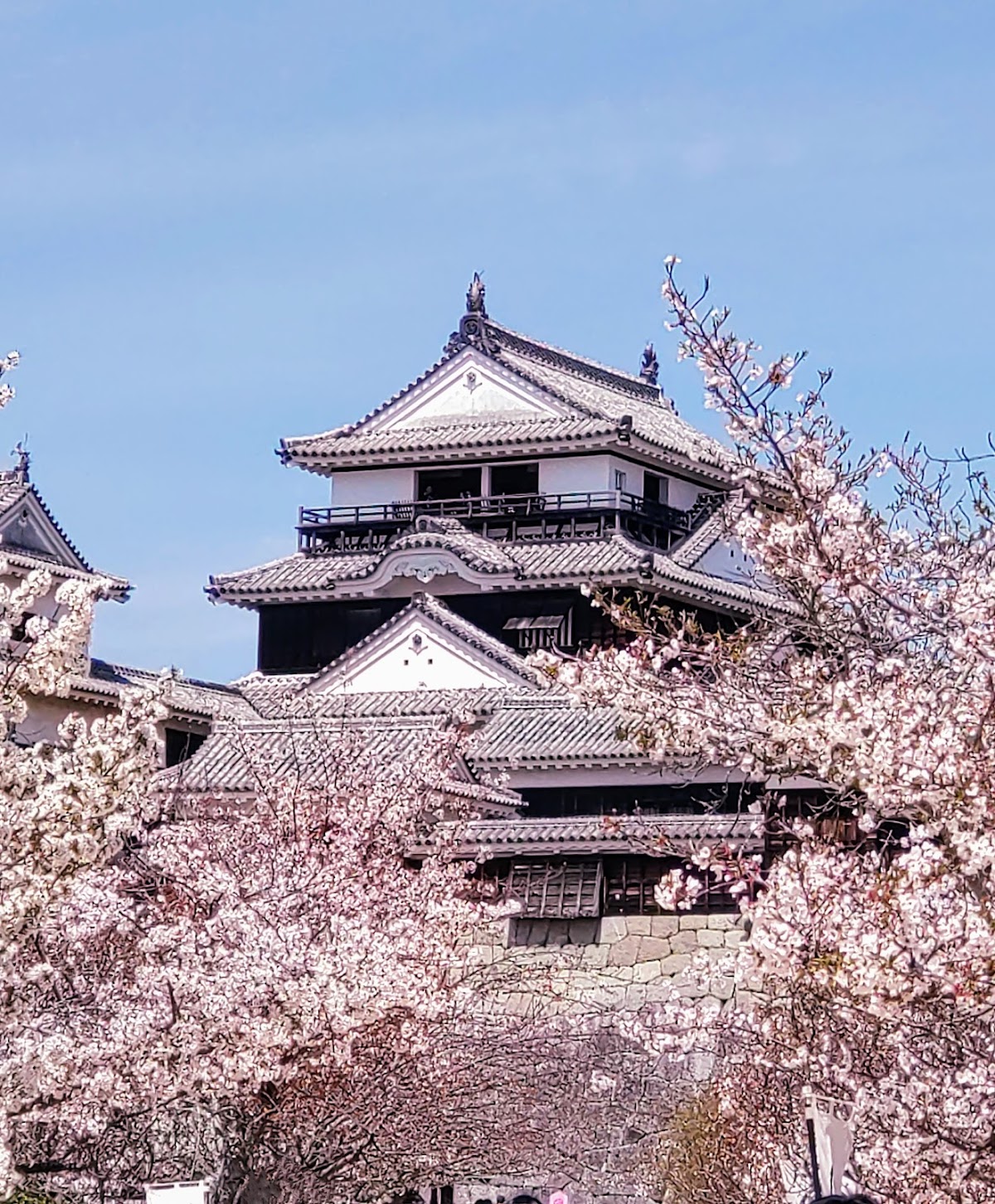
The existing castle tower was rebuilt in 1854 (Ansei 1) and is a three-story, three-tiered tower-type tower with one basement level. It adopts the form of a connected tower, linking smaller towers and corner turrets via connecting turrets, and is considered, along with Himeji Castle, to be one of Japan’s representative connected towers.
The castle’s total area is approximately 46,000 square meters, and 21 existing buildings are designated as National Important Cultural Properties. This is a particularly large number among the 12 existing castle towers, demonstrating the high historical value of Matsuyama Castle.
History of Matsuyama Castle
Construction Period: The Era of Kato Yoshiaki
The history of Matsuyama Castle begins in 1602 when Kato Yoshiaki, who became a daimyo with a 200,000 koku domain due to his achievements in the Battle of Sekigahara, began construction of a new castle on Katsuyama. Kato Yoshiaki was a samurai who served Toyotomi Hideyoshi and was a renowned general known as one of the Seven Spears of Shizugatake.
The castle construction was a large-scale undertaking, initially designed and supervised by Kato Yoshiaki himself. However, in 1627 (Kanei 4), Kato Yoshiaki was transferred to Aizu-Wakamatsu, and the construction was handed over to the Gamo clan midway through.
The Gamo and Matsudaira Eras
After Kato Yoshiaki, Gamo Tadatoshi was appointed from Aizu, but the Gamo clan died out after two generations. Then, in 1635 (Kanei 12), Matsudaira (Hisamatsu) Sadayuki was appointed from Ise-Kuwana with a 150,000 koku domain, and the Matsudaira clan ruled Matsuyama for 14 generations until the Meiji Restoration.
Matsuyama Castle was completed during the Matsudaira era, but in 1784 (Tenmei 4), it suffered significant damage when a lightning strike destroyed the main keep and other major buildings of the inner citadel.
Reconstruction of the Castle Tower
Reconstruction of the castle tower, which was destroyed by fire, began in 1820 (Bunsei 3), but construction was hampered by financial difficulties. The current castle tower was finally completed in 1854 (Ansei 1). This tower is believed to be a faithful reproduction of the tower before the fire.
After the Meiji Restoration
After the Meiji Restoration, many castles were demolished due to the castle demolition order, but Matsuyama Castle’s main buildings were preserved thanks to the efforts of the former lord, the Matsudaira family. In 1933 (Showa 8), the main buildings, including the castle tower, were designated as former National Treasures (equivalent to current Important Cultural Properties), and they survived the war and remain to this day.
In 2006 (Heisei 18), it was selected as one of “Japan’s Top 100 Castles,” and in 2007 (Heisei 19), the entire castle site was designated a National Historic Site, reaffirming its historical value.
Architectural Features of Matsuyama Castle
Structure of the Keep
Matsuyama Castle’s keep is a three-story, three-tiered tower-type keep with one basement level, boasting a beautiful white plaster exterior. Standing approximately 20 meters tall, the top floor offers panoramic views of Matsuyama city, the Seto Inland Sea, and the Ishizuchi mountain range.
A key feature of the keep is its interconnected structure, linked by a smaller keep, a south corner turret, a north corner turret, and a multi-story turret. This design enhances defensive capabilities while also streamlining movement within the castle through the interconnectedness of the buildings.
Layout of the Main Enclosure
The main enclosure is located on a flat area at the summit of Katsuyama Mountain. Centered around the keep complex, it features the main platform, the second gate south turret, the northwest turret, the Nohara turret, and the Taiko turret, among other turrets. These structures form a multi-layered defensive line, designed to deter enemy intrusion.
The entrance to the main keep is comprised of multiple gates, including the Tonashimon Gate, Tsutsuimon Gate, Taikomon Gate, Tatsumimon Gate, Shichikumon Gate, Ichinomon Gate, Ninomon Gate, and Sannomon Gate, each equipped with defensive mechanisms such as masugata (square enclosures) and stone walls. The approach to the main keep, in particular, requires passing through 21 gates, making it one of the most complex defensive systems in Japanese castles.
Stone Wall Techniques
Matsuyama Castle’s stone walls are characterized by varying techniques depending on the construction period. Early walls were built using rough-hewn stonework and fitted stonework, while later walls feature the intricate cut-stonework technique.
The stone walls of the main keep, in particular, reach a height of 14 meters in some sections, exhibiting beautifully curved lines. Furthermore, a technique called sangi-zumi (a type of stonework) is used at the corners of the walls, enhancing structural strength.
Arrangement of Turrets and Gates
Matsuyama Castle has seven existing turrets and five gates, all designated as Important Cultural Properties. These structures are not merely defensive structures, but also valuable works of art that represent the pinnacle of Edo period architectural technology.
In particular, the Tonashimon Gate is a rare gate without doors, located inside a masugata (square enclosure), designed to attack intruders from three sides. The Tsutsuimon Gate, serving as the final gateway to the main keep, boasts a robust structure.
Nationally Designated Important Cultural Properties
Matsuyama Castle has 21 structures designated as National Important Cultural Properties. This is a particularly large number among the 12 existing castles keep.
Castle Towers
- Main Tower (Three stories, three floors above ground, one basement level)
- Small Tower (Two stories, two floors above ground, one basement level)
- South Corner Turret (Two stories, two floors above ground)
- North Corner Turret (Two stories, two floors above ground)
- Connecting Turret between Main Tower and Small Tower
- Connecting Turret between Small Tower and South Corner Turret
- Connecting Turret between Small Tower and North Corner Turret
Turrets
- Nohara Turret (Two stories, two floors above ground)
- Inui Turret (Two stories, two floors above ground)
- Taiko Turret (Two stories, two floors above ground)
- Tatsumi Turret (Two stories, two floors above ground)
- Jikken Corridor
- South Corner Turret (Two stories, two floors above ground)
- North Corner Turret (Two stories, two floors above ground)
Gates
- Tonashi Gate
- Kakure Gate
- Shichiku Gate
- Ichinomon Gate
- Ninomon Gate
- Sannomon Gate
- Tsutsui Gate
- Taiko Gate
These structures retain many characteristics of Edo period castle architecture and are extremely important cultural properties from an architectural history perspective.
Registered Tangible Cultural Properties
In addition to important cultural properties, Matsuyama Castle has numerous registered tangible cultural properties.
Stone Walls
Many of the stone walls remaining in the main keep, second keep, and third keep are designated as registered tangible cultural properties. These stone walls remain valuable that demonstrate the stonework techniques of each era from the time of construction to the end of the Edo period.
Wells
Several wells remain within the main keep, playing an important role in securing water sources during sieges. These wells are also protected as registered tangible cultural properties.
Highlights of Matsuyama Castle
View from the Keep
From the top floor of Matsuyama Castle’s keep, a spectacular view of Matsuyama city unfolds. You can enjoy a 360-degree panoramic view, with the Ishizuchi Mountain Range to the east, the Seto Inland Sea to the west, and the Takanawa Peninsula to the north. The view, especially on a clear day, is magnificent and one of the highlights of visiting Matsuyama Castle.
Honmaru Plaza
The Honmaru Plaza, located in front of the castle keep, is known as a famous cherry blossom viewing spot. In spring, approximately 200 Somei Yoshino cherry trees bloom, creating a spectacular sight with the keep castle and cherry blossoms. The plaza also offers a panoramic view of the castle complex, making it a popular photo spot.
Ninomaru Historical Garden
Ninomaru was the site of the feudal lord’s residence and is now maintained as a historical garden. Based on archaeological excavations, the Edo period garden has been restored, allowing visitors to enjoy flowers throughout the seasons. It is particularly known as a famous spot for plum blossoms, attracting many tourists in early spring.
Ropeway and Lift
Matsuyama Castle can be accessed to near the summit by ropeway or lift. The ropeway offers views of Matsuyama city, while the lift provides a sense of openness, allowing you to feel closer to nature. It is also possible to climb the castle on foot, with several routes available.
Nighttime Illumination
Matsuyama Castle is illuminated every night from sunset until 11 PM. The sight of the white keep floating against the night sky is fantastic, offering a different charm than during the day. It can be viewed from various locations throughout the city and is a symbol of Matsuyama’s nightscape.
Current Status of Matsuyama Castle
Matsuyama Castle is currently managed by Matsuyama City and is open to the public. The interior of the keep has been renovated into a museum, featuring exhibits on the history of Matsuyama Castle and its architecture. Armor, swords, and other weapons, as well as ancient documents, are also on display, allowing visitors to learn about the samurai culture of the Edo period.
The entire castle site has been developed into a city park and is a popular place for citizens to relax. Many tourists visit throughout the year, especially during cherry blossom season and autumn foliage season.
Preservation and repair work is carried out regularly, and seismic reinforcement work on the keep was completed in 2021. This ensures safety while maintaining its value as an important cultural property.
Cultural Influence
Connection to Literature
Matsuyama Castle appears at the beginning of Ryotaro Shiba’s novel *Saka no Ue no Kumo* (Clouds Above the Hill), and is depicted as a symbol of Matsuyama, the setting of the story. This historical novel features the Akiyama brothers, Yoshifuru and Saneyuki, military officers from Matsuyama during the Meiji era, and the haiku poet Masaoka Shiki as its protagonists. Matsuyama Castle plays an important role as a place of their childhood memories.
Value as a Tourist Resource
Matsuyama Castle, along with Dogo Onsen, is one of Matsuyama City’s representative tourist resources. Approximately 800,000 tourists visit annually, playing a central role in Matsuyama City’s tourism industry. Furthermore, it is the 81st castle in the “100 Famous Castles of Japan” selected by the Japan Castle Association, making it an important destination for castle enthusiasts.
Access Methods
Public Transportation
Tram
- Take the Iyo Railway city tram from JR Matsuyama Station or Matsuyama City Station.
- Get off at the “Okaido” or “Kencho-mae” tram stop, and the ropeway station is a 5-minute walk away.
Bus
- Iyo Railway buses operate from various locations within Matsuyama City.
- Get off at the “Okaido” bus stop.
Ropeway/Lift
- Approximately 3 minutes from Shinonomeguchi Station to Chojagahira Station.
- There are two types of transportation: ropeway and lift, both with the same fare.
- Operating hours: 8:30 AM to 5:30 PM (may vary seasonally).
- Fare: Round trip 520 yen, one way 270 yen (adult)
Climbing the Castle on Foot
There are multiple routes to the castle, and it is possible to climb on foot.
- Shinonome-guchi Ascent Route: The most common route, approximately 15 minutes
- Prefectural Office Rear Ascent Route: A quiet route, approximately 20 minutes
- Furumachi-guchi Ascent Route: A historical ascent route, approximately 25 minutes
- Kuromon-guchi Ascent Route: A steep route, approximately 20 minutes
By Car
Approximately 25 minutes from Matsuyama IC on the Matsuyama Expressway. There are several paid parking lots around the castle. However, there is no parking within the grounds castle, so you will need to use a parking lot at the foot of the mountain and ascend by ropeway or on foot.
Opening Hours
Castle Tower Viewing Hours
- February to July: 9:00 AM to 5:00 PM (Last entry 4:30 PM)
- August: 9:00 AM to 5:30 PM (Last entry 5:00 PM)
- September to November: 9:00 AM to 5:00 PM (Last entry 4:30 PM)
- December to January: 9:00 AM to 4:30 PM (Last entry 4:00 PM)
Closed Days
Third Wednesday of December (for major cleaning)
Admission Fees
- Castle Tower Viewing Ticket: 520 yen (Adults), 160 yen (Elementary School Students)
- Ropeway/Lift Round Trip + Castle Tower Viewing Ticket Set: 1,040 yen (Adults), 430 yen (Elementary School Students)
Nearby Tourist Attractions
Ninomaru Historical Garden
A Japanese garden developed on the site of the Ninomaru (second enclosure) of Matsuyama Castle. Based on archaeological excavations, the garden has been restored to its Edo period appearance, allowing visitors to enjoy seasonal flowers. Admission is 200 yen for adults.
Saka no Ue no Kumo Museum
A museum themed around Ryotaro Shiba’s novel, “Saka no Ue no Kumo” (Clouds Above the Hill). Approximately a 10-minute walk from Matsuyama Castle. Visitors can learn about Meiji-era Japan and prominent figures from Matsuyama.
Dogo Onsen
Dogo Onsen is known as one of Japan’s oldest hot springs. Approximately a 20-minute tram ride from Matsuyama Castle. The Dogo Onsen Main Building is designated as a National Important Cultural Property.
Bansuiso
A former villa of the Matsuyama domain lord, built in 1922 (Taisho 11). A Western-style building in the French Renaissance style, it is a National Important Cultural Property. Located very close to the Matsuyama Castle Ropeway station.
Tips for Enjoying Matsuyama Castle
Best Season to Visit
Spring (Late March to Early April)
Cherry blossom season. The combination of cherry blossoms in the main citadel plaza and the castle tower is a spectacular sight. However, it gets crowded, so visiting early in the morning is recommended.
Autumn (Mid-November to Late November)
Autumn foliage season. The entire castle hill is colored, offering a beautiful landscape. The weather is pleasant, making it an ideal time for sightseeing.
Winter (December to February)
There are fewer tourists, allowing for a more leisurely visit. The air is clear, and the view from the castle tower is particularly beautiful during this season.
Estimated Time Required
- Using the ropeway, visiting only the castle keep: Approximately 1 hour
- Walking to the castle, visiting the keep castle and main enclosure: Approximately 1.5-2 hours
- Visiting including the Ninomaru Historical Garden: Approximately 2.5-3 hours
Photo Spots
- Honmaru Plaza: A classic spot to photograph the entire castle complex.
- Ninomaru Garden: A beautiful composition with the castle keep viewed across the garden.
- Shiroyama Park Horinouchi Area: A composition looking up at the castle keep from the foot of the mountain.
- Inside the Ropeway: A place to photograph the city and the castle together.
Clothing and Items to Bring
- Comfortable walking shoes: Since there are many stone steps, comfortable walking shoes such as sneakers are essential.
- Hat and sunscreen: The sun is strong in summer.
- Drinks: Heatstroke prevention is especially important in summer.
- Warm clothing: The castle keeps getting cold in winter.
Preservation Activities of Matsuyama Castle
The preservation and utilization of Matsuyama Castle are spearheaded by the city of Matsuyama. A wide range of activities are undertaken, including regular preservation and repair of important cultural property buildings, maintenance of stone walls, and management of landscaping.
Since 2015, the “Comprehensive Survey of Matsuyama Castle” has been conducted, involving detailed surveys, measurements, and document research of the buildings. Based on the results of this survey, a more appropriate preservation and management plan has been formulated.
Furthermore, volunteer groups such as the “Citizens’ Association for Loving Matsuyama Castle” are active, contributing to the preservation and utilization of Matsuyama Castle through activities such as cleaning and tourist guidance.
Summary
Matsuyama Castle is a valuable cultural asset that conveys the essence of Edo period castle architecture and continues to be loved by the citizens of Matsuyama as a symbol of the city. As one of the 12 existing castle keeps and a castle with 21 important cultural property buildings, it occupies an important position in the history of Japanese castles.
The views from the keep, the complex defensive system, the beautiful stone walls, and the harmony with nature throughout the seasons. Matsuyama Castle possesses a unique charm, where history, architecture, and nature are seamlessly integrated. Visiting it in conjunction with Dogo Onsen will allow you to gain a deeper understanding of Matsuyama’s history and culture.
When you visit Matsuyama, be sure to take the time to explore Matsuyama Castle and experience the magnificence of Japanese castle culture, which has continued since the Edo period.