Kihara Castle history and light points explanation | Ibaraki Castle Miho Village ruins from the time of the war
Kihara Castle was located in Miho Village, Ibaraki Umushiki District, and was Hirahara Castle during the war period, located on the plateau on the south bank of Kasumura Lake. The castle was also known as Kamietsu Castle, the residence of the Kondo clan, a vassal of the Kore-e Kazaki Toki clan. Nowadays, the “Kihara Castle Site Shiroyama Park” is an important historical site, and visitors can visit the perfectly preserved earthworks and the drying of the castle river and other monuments.
Kihara Castle Overview and Features
Kihara Castle is a fortress located at the southern tip of the plateau on the southern shore of Lake Kasumura, and is known as “Shiroyama” by the locals. The most distinctive feature of The Castle Fortress is its unique structure. Typical fortifications are not the same, the land is changed to the third layer of the castle, the second layer of the castle is reached, the castle is returned to the owner’s castle (claw car), and the land is gradually lowered.
The wetlands and ponds connected to Xiapu Lake on the north side are formed by natural defense barriers; on the south side, the use of man-made constructions in Hewa earthworks, clever land use topography, and the construction of a defense system.
Fortress model structure
Kihara Castle is a medieval castle fortress constructed from Yuta layer castle. Major castle towers:
- Third Castle Mound (Sannomaru): The outermost castle mound
- Second Castle Mound (Ninomaru): intermediate castle, important defense construction
- Honmaru (Honmaru): The central part of the castle fort, in front of which is the open park.
The Honmaru building is a high-quality earthworks construction site, and the state of its preservation has been confirmed to be one of the most suitable buildings in Ibaraki.
History of Kihara Castle
Construction history
The date of construction of Kihara Castle can be traced back to the beginning of the 16th century. Nedate’s Sagara family literature and other historical documents, 1504 (1st year of the British Era), Kondo Toshitoshi, a vassal of the Tokihara clan, the lord of Etozaki Castle, was in Isabe village and the fort was occupied, and after his return, he lived in Joetsu Castle.
In 1506 (3rd year of the 1st year of the Eishō era), the record shows that Joetsu Village was renamed Ukihara, and the implication was that Joetsu Castle was also Ukihara Castle. Inko appeared at the same time as Kihara Castle, Nayo Village, and Naga.
Mr. Kondo’s rule
The Kondo clan was a powerful vassal of the Ekozaki clan, and the ruler of the city was here. Kihara Castle is known to be the residence of the Kondo clan, and also one of the most important sites on the southern shore of Lake Kasumura.
During the war, there was a fierce battle in Hitachi, with the Satake clan, the Hirota clan, the Edozaki clan, and others competing for power. Kihara Castle’s volume has been completed during the period of the war.
Ekazaki Kanemitsu’s rebellion and fall
Kihara Castle fell during the post-war period. The most famous of these was the treason of Kanemitsu Ekazaki. Afterwards, the Edozaki Kanemitsu rebels escaped, and the Satake clan encountered and attacked Kihara Castle.
During this period, the Satake clan remained in Hitachi with constant efforts and efforts, and the envoys were forced to submit to the government while the Satake clan rebelled. At the time of the Edo Zaki clan, the power of the clan was unparalleled, and the incident of internal dispute and treason occurred.
The final fall of the Odawara war
In 1590 (Tensho 18), the battle of Odawara was fought by the vassal Hideyoshi. At that time, the fortifications in the eastern part of the country were chosen to be divided between the Hojo clan and the vassals of the Hojo clan. According to historical records, Joya Kihara was present during the battle.
After the war of Odawara, the Satake clan entered Tokoro Province, and the power of the Ekozaki clan fell. Nobuo, Kihara Castle’s grand plan was completed at this time.
The truth revealed by archaeological excavations
Interesting idea: July 1993 (Heisei 1993): A study of the progress of Kihara Castle’s castle ruins. Many records have been written about the fall of Kihara Castle, but the archaeological evidence of a fierce battle was confirmed, and the meaning of the “fall” at the time was variable.
It is possible that at that time there would be a situation in which a peacemaker surrendered or the fort was opened.
Kihara Castle’s structure and history
Cloth Bureau
Kihara Castle’s topography has been cleverly utilized.围墙从地势较高、势较较但但为上。 Formation is similar to the contradictory structure: the most important main city is removed from the top, and the south side is the lowest place.
The following details are to be observed: The structure of the Xiapu Lake and the surrounding wetlands in the northern part of the island has been established as a natural defense line, and an attack by enemies will inevitably come to the south. As the enemy attacks the enemy, they move towards high altitude and attack, and the defense forces are located in the water and then the final defense station is set up.
Hijikata process characteristics
The Hijikata process of Kihara Castle has been perfectly preserved, which is a great point. Hijikata’s high level of construction and construction of the castle tower, and its impressive defensive ability.
Hijikata Engineering Construction Techniques Notes. After confirming the archaeological excavation, the construction of the earth technology was carried out in a small way. In this way, the technical strength of the engineering process is increased, and the prevention of the process is improved.
Dry trench water trench
Many of the castle rivers have been observed, which is the defensive construction of the castle fort. Of course, the idea is that the construction of the second temple in the inner part of the temple has been completed, and the model can be seen clearly now.
Near the entrance to the park, the castle river was stopped in Shenzhen, and the envoys were able to take part in the defense work at the time of the war. However, there is no obstacle to the castle river, and it is also limited to the actions of the enemies, making it more advantageous to create an army to protect the space.
Yoboto Motoza Yoroku Shrine
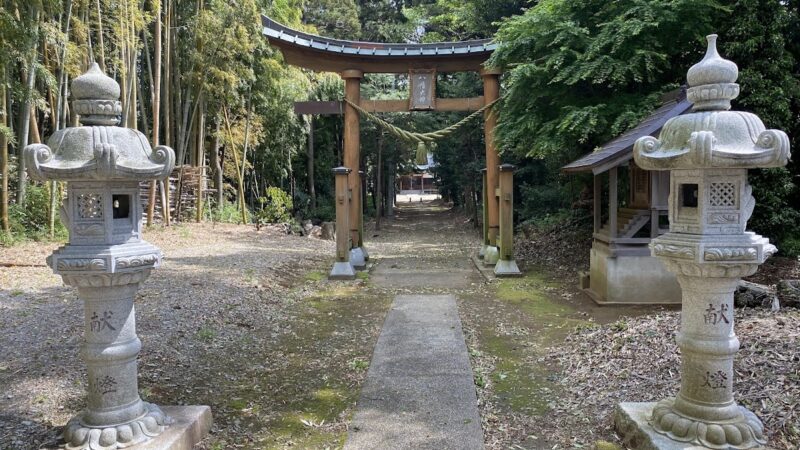
The fort was located on the back side of the castle, and now it is a distant memory of the base of the watchtower. Nowadays, the shrine has been dedicated to one troupe, and the history, history, and religious beliefs have been intermingled, forming a space where people can enter and win.
The base of the observation tower is important for observation and attack development, and it is possible to overlook the surrounding area.
Mogu City Gate
Right in front of you, the entrance to the park is set up, and a mock castle gate is set up, leading to a world where guests can enter the castle. However, the park is located in the fortress and park.
Multiple history of archaeological excavations
Castle Fortress Sangguan Passage
Since 1993, a large amount of scientific research has been carried out and the history of the fortifications during the war. Hijikata construction, turret ditch construction, half-pit type cellar and earthen pit, etc. have achieved uniformity, and the structure of the castle fort and the living style of its residents.
Excavated cultural relics included earthenware, porcelain pottery, Japanese metal utensils, and the standard level of life within the castle fort. In particular, the appearance of the pottery in the castle, implying the arrival of the fortress and the presence of traffic in faraway areas.
Ancient village ruins
It’s interesting to see the ruins of an ancient village in the fort. It is confirmed that the excavated cultural artifacts belong to the Japanese construction period, the Yayoi period and the Japanese Kofun period, and the area has been inhabited since ancient times.
Excavated ceramic bowls, local pottery and Yayoi pottery pieces have been proven to be unique pieces of pottery from each period. Through the analysis of traditional decoration and Japanese molding techniques, we can trace back the local culture.
View of the castle river site
Especially if you want to be careful about it. The castle river area was classified as a defensive structure, and from the time of the Yayoi period to the time of the burial mound, it was uniformly present, and this area was present before the construction of Kihara Castle, and the area was occupied by important strategic purposes.
This part of the exhibition shows the ruins of Kihara Castle, which is a medieval castle fortress, and is also a rare archaeological site, with several thousand years of human activity preserved there.
Current status: Kihara Castle Ruins Shiroyama Park
Park opening
In front of us is the Kihara Castle Tower Gate, which is currently being opened as the “Kihara Castle Castle Ruins Shiroyama Park”, a rest area provided to the residents of Sanho Village. The park has a walking path of 1 kilometer, very suitable for family play.
During the park’s development, we will continue to preserve the history and convenience of citizens. The important construction work of the city, rivers, etc. has been well preserved, and safety measures have been taken at the same time to ensure a safe place for visitors to enjoy the beautiful scenery.
Winning place
The site of Kihara Castle and Shiroyama Park is also a famous place of victory. Every spring, the city’s annual city festival is attracting a large number of visitors. The park is home to a variety of beautiful Yoshino trees, many of which are rich in cherry blossoms.
In addition, the park has planted a variety of flowers, including golden incense and other flowers, and has a well-organized park with a variety of flowers during the spring season and in a variety of colors. This is a unique piece of art that was created under the theme of the ancient earthworks of Shika and the Castle River.
Observatory view
A viewing platform inside the park provides a spectacular view of Xiapu Lake and Zhou Xian Village. During the war, the lord of the castle, warriors and soldiers, also had a view of the surrounding area.
The sunny day of the village, the view of the field, the far-reaching region, the true body of Kihara Castle, and the beautiful scenery of this beautiful place.
Kihara elementary school location
Kihara Castle Park is located behind Kihara Elementary School, and is a historical place for children and children to learn. The construction of castle forts is an important function of elementary school history teaching materials.
Kihara Castle Ryoten
1. High-grade earthen mound of the castle tower
When visiting Kihara Castle, be sure to pay close attention to the high ground of the castle tower. It is preserved in a medieval castle fort in Ibaraki. Walked along the shores of the land and carried out defensive works during the war.
2. The depths of the castle river between the two layers of the castle and the final curtain of the castle.
The two-layered castle was finally extended to the depths of the castle, which was an important milestone in terms of its great defensive ability. At this time, the depth of the castle river was manifested as a clever strategy to invade and take control of the enemy.
3. Park entrance gate
Near the entrance to the park, there is a world of fortifications where people can walk through the ancient city, and visitors can enter the fort. When you walked into the fort, you entered the fortress, and the Buddha passed through it during the time of the war.
4. Ruin of the Observation Tower (Shinga Shrine)
After the construction of the shrine, the observation tower next to the gate is located on the site, which is a unique place for the exchange of history and faith. It is possible to feel that the military affairs were set up in the viewing tower, and the history of the religious places was changed in later life.
5. Springtime maple flowers
As the spring season approaches, beautiful scenery reflects the history of flowers and flowers, such as cherry blossoms, heavy bamboo flowers, and yellow gold flowers. Especially during the Joshan Festival, it was extremely hot.
6. Kasumiura Lake View from the Observatory
On the Liang Observatory, you can enjoy beautiful views of Xiapu Lake and Zhouchen, and the geographical location of the authentic castle fortress. This is the perfect place for the castle lord to see and feel the atmosphere of the castle.
Transportation and visitor information
Point
Kihara, Miho Village, Usaishiki District, Ibaraki
Transportation
Sitting public transportation:
- 30 minutes from JR Joban Line “Tsuchiura Station” by car
- As you can see, there is a short journey to the eastern railway station.
Self-indulgence:
- Depart from the Joban Expressway “Kakuchiura IC”, approximately 20 minutes by car
- Departing from Yushiki Wang Expressway “Jishiki IC”, approximately 15 minutes by car
- Providing free parking
Open time gate vote
- Opening time: full open
- Gate ticket: No charge
- Travel time: 30 minutes to 1 hour
Visitor knowledge
- The park is in good condition, but the topography of some areas is not good, such as the construction of the land and the river, and the construction is suitable for walking.
- Get your hands on a summer subscription.
- When the spring flowers are in full bloom, the number of people in the park is high.
- There are washrooms in the park.
Zhoujian scenic spot
Lake Kasumura
Lake Kasumura is located north of Kihara Castle and is the second largest lake in Japan. Passengers can visit the lake and enjoy the beautiful scenery of the lake.
Ekazaki Castle Ruins
The site of Ekazaki Castle is located near U, which is the location of the Toki clan (the owner of Kihara Castle). I visited Kihara Castle, and I understood that the commander of the castle, Yusuke, and I went deeper into the area.
陆平贝 Qiu
Luping Guqiu is located in Yu Sanbao Village, which has been an important archaeological site in the past, and has been designated as a national historical monument. A collection of ancient cultural relics unearthed during the excavation of the Kihara Castle site, which is very suitable for exploration, is an interesting historical site for visitors.
The meaning of visiting Kihara Castle
Kihara Castle does not remain here, but it is a historical example of the castle’s historical past, which is unique in its history.
Perfectly preserved monuments, such as the Hijikata process and the castle river, are important teaching materials of the medieval castle fortress structure. In addition, the park will be developed and developed to be a local people’s park, and in order to protect and utilize the history of the world’s history, we will present various solutions to the current challenges.
As soon as you arrive at Ibaraki Castle, you should leave the Kihara Castle ruins at Shiroyama Park, a unique castle fort during the time of the war on the plateau on the shore of Lake Kasumiura. Naturally, when the spring flowers are in full bloom, you can enjoy the beautiful scenery that is different from the four seasons.
overview
Kihara Castle was the seat of the Sanho Village in Ibaraki, and was the residence of the Kondo clan, a vassal of the Kozaki clan during the war. The castle fort was built in the 16th century, and during the period of the war, many battles were carried out during the month, and in 1590, the Odawara war was finally undefeated.
The most famous special attack on the fort was its unique construction, and the fort was laid out in high and low pitches. All kinds of design have been fully utilized. Kasuiura Lake has one natural screen.
Nowadays, the castle park is open in this area, and visitors can visit and see the perfectly preserved monuments, as in the Hijikata process and the castle river. In addition, the archaeological excavation was not completed, the fortification was not completed, the burial mound was completed from the time of the ancient tomb, and the envoys were not excavated.
In spring, the city of Chengdu wins, attracts a large number of visitors. In other words, it is an ideal historical park for the troupe, and a successful place to protect the historical industry and demand for local residents’ vacations.