The Complete Picture of Asakura Castle: A Thorough Explanation of the Three Castles in Tosa, Tajima, and Echizen [History and Highlights]
There are several castles called “Asakura Castle” throughout Japan. The main ones are those associated with the Asakura clan in Tosa Province (present-day Kochi Prefecture), Tajima Province (present-day Hyogo Prefecture), and Echizen Province (present-day historical background and characteristics. This article provides a comprehensive explanation of these three Asakura Castles, covering their history, structure, current state, and tourist information.
History and Overview of Asakura Castle, Tosa Province (Kochi City, Kochi Prefecture)
Basic Information and Location of Asakura Castle
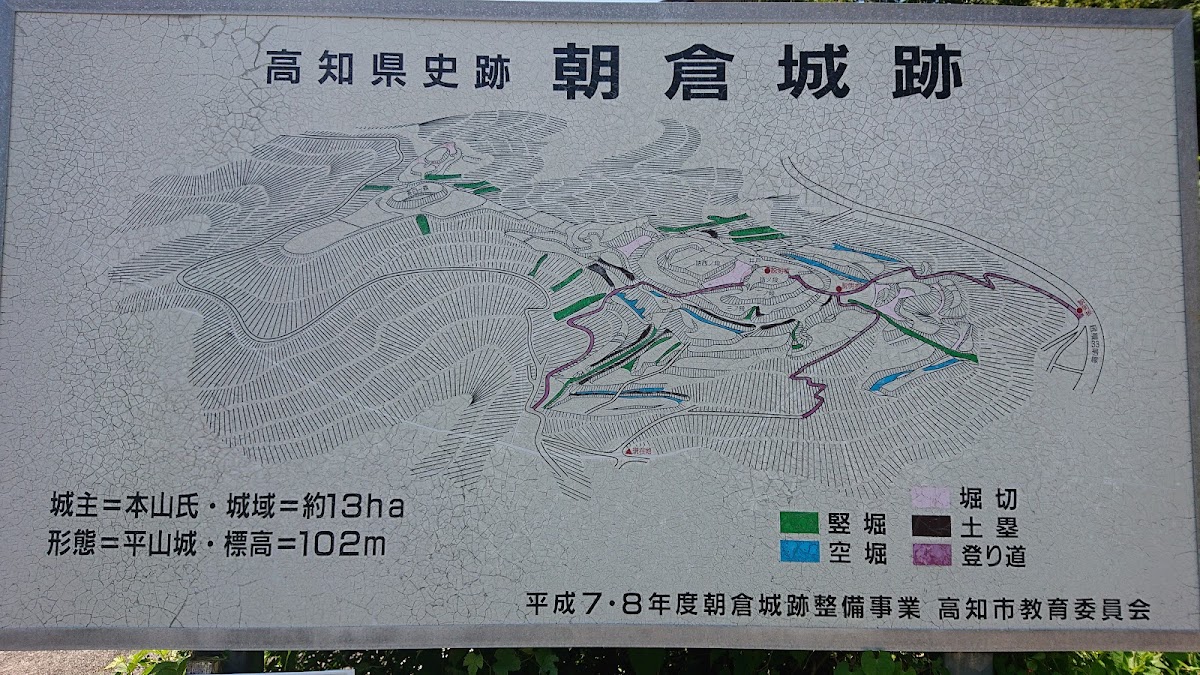
Asakura Castle in Tosa Province is a mountain castle located in Asakura, Kochi City, Kochi Prefecture, also known as “Shigematsu Castle.” It is protected as a Kochi Prefecture designated historical site and was built on a hill approximately 103 western Kochi City.
The castle ruins remain in good condition today, with a flat area of approximately 2,000 square meters (about 20 ares) at the top. This flat area is thought to have been the main enclosure (honmaru), surrounded by a steep
History of Castle Construction and Motoyama Kiyoshige
Thea are various theories regarding the construction date of Asakura Castle, but it is generally believed to have been built during the Daiei era (1521-1527) by Motoyama Kiyoshige (Motoyama Shigemune).
Motoyama Kiyoshige, who was based at Motoyama Castle, sought to expand his power from the mountainous northern part of Tosa to the economically prosperous central part of Tosa. In the early Tenbun era, he attacked and defeated Chosokabe Kaneyoshi central Tosa, including Nagahama and Urado. He built Asakura Castle as a base for this expansion and moved his headquarters from Motoyama Castle.
The Battle with Chosokabe Motochika and the Castle’s Demise
In 1562 (Eiroku 5), the rising Chosokabe Motochika attacked Asakura Castle. The castle’s lord at the time, Motoyama Shigetatsu, initially succeeded in repelling the attack, but was forced into a situation wher surrounding side.
In 1563 (Eiroku 6), Motoyama Shigetatsu was forced to burn down Asakura Castle himself and retreat to Motoyama Castle. This retreat meant that Asakura Castle’s role came to an end after a short period.
The Value of the Asakura Castle Site
The Asakura Castle site is also known as the “Asakura Castle Site.” Between 1929 (Showa 4) and 1934 (Showa 9), numerous Yayoi period artifacts were excavated during the construction of an orchard.
Excavated artifacts include Yayoi period pottery, stone knives, stone axes, and stone arrowheads, and the remains of two pit dwellings have also been confirmed. This reveals that a life centered on rice cultivation was lived in 0 ago. Beyond its history as a castle, it holds value as a precious archaeological site that conveys the lives of people from ancient times.
Structure and Highlights of Tosa Asakura Castle
The layout of Asakura Castle features a central main enclosure surrounded by multiple flat areas believed to be outworks (outworks). It possesses a typical mountain castle structure that skillfully utilizes the hilly terrain, and retains many characteristics of cast
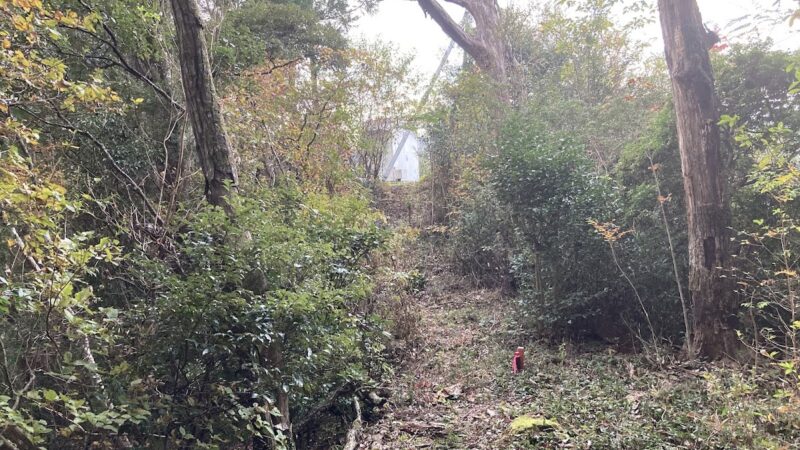
Even today, traces of enclosures and cliffs can be seen, making it a fascinating site for castle enthusiasts. Its convenient access, close to Kochi University, is another notable feature.
History and Overview of Asakura Castle, Tajima Province (Yabu City, Hyogo Prefecture)
Asakura Castle as the Birthplace of the Asakura Clan
Asakura Castle in Tajima Province is located in Asakura, Yoka-cho, Yabu City, Hyogo Prefecture, and is known as the birthplace of the Asakura clan, who ruled Echizen Province (Fukui Prefecture) as a Sengoku period daimyo.
The origins of the Asakura clan are ancient, and it is said that their founder was Prince Hyōmai, a son of Emperor Kōtoku. The Asakura clan arose in the late Heian period, adopting the place name as their surname, with Asakura Takakiy as used the name Kusakabe, but from Takakiyo’s generation onward, they began to call themselves the Asakura clan.
Scale and Structure of Asakura Castle
Tajima Asakura Castle is a mountain castle located on a hill southwest of the settlement, measuring approximately 130 meters east-west and 110 meters north-south. The castle’s foundation dates back to the Muromachi period, and during vertical trenches to strengthen its defenses.
Moats and vertical trenches are typical defensive structures in mountain castles of the Sengoku period, employing techniques to cut off ridges or dig vertical trenches on slopes to prevent enemy intrusion. These remains are well-preserved at Asakura Castle, makingit the Sengoku period.
Warlords from the Asakura Clan
Many warlords emerged from the Tajima Asakura clan, including the Yagi, Sukunami, and Nasa clans. The Echizen Asakura clan, in particular, was a branch of the Tajima Asakura clan and built a powerful presence as a Sengoku daimyo in Echizen
The Echizen Asakura clan prospered with Ichijōdani as their base, and under Asakura Yoshikage, they became a powerful daimyo ruling Echizen Province, but were ultimately destroyed by Oda Nobunaga. However, Tajima Asakura Castle, is bir the history of the Asakura clan.
The Tajima Campaign and the Surrender of Asakura Castle in 1577
In October 1577 (Tensho 5), the “Tajima Campaign” was launched, led by Hashiba Hidenaga (Toyotomi Hideyoshi’s younger brother). At this time, Asakura Ōi, the lord of Asakura Castle, surrendered to the 성.
This surrender significantly weakened the power of the Tajima Asakura clan, and Asakura Castle ceased to play a military role.
Access and Tourist Information for Tajima Asakura Castle
Asakura Castle ruins are introduced as a tourist spot in Yabu City, Hyogo Prefecture, and information is provided by the Yabu City Tourism Association. The area around the castle ruins maintains a rich natural environment, making it a suitable place for historical walks.
Visitors can actually see the remains of moats and trenches, offering a valuable opportunity to experience the structure of a Sengoku period mountain castle.
Echizen Province and the Castles of the Asakura Clan
Ichijodani Castle and the Asakura Clan Ruins
The Echizen Asakura clan moved from Tajima to Echizen and prospered with Ichijodani (Fukui City, Fukui Prefecture) as their base. Ichijodani Castle was a mountain castle, and a castle town developed at its foot.
Currently, the Ichijodani Asakura Clan Ruins have been excavated and restored, and are designated as a National Special Historic Site. Samurai residences and townhouses have been restored, making it a valuable historical site where visitors can experience the appearance of period
Asakura Yoshikage and the Prosperity of the Echizen Asakura Clan
Asakura Yoshikage is known as the last head of the Echizen Asakura clan. The Asakura clan ruled Echizen Province for over 100 years, leaving behind outstanding cultural achievements.
Ichijōdani was known as the “Little Kyoto of Hokuriku,” attracting many cultural figures and artisans from Kyoto and building a culturally prosperous area. However, after being defeated in battles against Oda Nobunaga during the Genki and Tenshō er 1573 when Asakura Yoshikage committed suicide.
Preservation and Cultural Property Designation of Asakura Castle Ruins
Tosa Asakura Castle as a Kochi Prefecture Designated Historic Site
The Asakura Castle ruins in Tosa Province are protected as a designated historic site of Kochi Prefecture. The Kochi City Board of Education manages the site, and efforts are being made to pass on its cultural value to future generations.
The historic site designation restricts development activities and ensures the preservation of the castle ruins. Furthermore, the installation of information boards and other measures have been implemented to create an environment where visitors can learn about history.
Preservation Status of Tajima Asakura Castle
The Asakura Castle ruins in Yabu City, Hyogo Prefecture, are also recognized for their historical value as the birthplace of the Asakura clan. It is also utilized as a local tourist resource, and information is disseminated through the Yabu City Tourism Association.
The castle ruins are relatively well-preserved, and visitors can actually see defensive structures such as moats and trenches.
Points to Note When Visiting Asakura Castle
How to Access Tosa Asakura Castle
Tosa Asakura Castle ruins are located in the Asakura district of Kochi City, west of Kochi University. If using public transportation, it is accessible on foot from Asakura Station on the JR Dosan Line. By car, it is about 15 minutes from the Kochi Interchange on the Kochi
Since the castle ruins are located on a hill, it is recommended to wear comfortable shoes and clothing when visiting.
Access to Tajima Asakura Castle
Tajima Asakura Castle ruins are located in Asakura, Yoka-cho, Yabu City, Hyogo Prefecture. The nearest station is Yoka Station on the JR San’in Main Line, from which you can access it by car or taxi. By car, it is about 10 minutes f Kita-Kinki Toyooka Expressway.
The area around the castle ruins is mountainous, so preparations appropriate to the season and weather are necessary.
Points to Note When Visiting
All Asakura Castle ruins are mountain castles, and equipment similar to that used for mountain climbing is recommended. Please note the following:
- Appropriate Clothing and Shoes: Hiking boots or trekking shoes are ideal.
- Hydration: Carry plenty of drinking water, especially in summer.
- Weather Check: Be careful as the ground can become slippery in rainy weather.
- Insect Repellent: We recommend using insect repellent spray in mountainous areas.
- Cultural Property Protection: Be careful not to damage the remains, and be sure to take all your trash with you.
Asakura Castle and the History of Castles in the Sengoku Period
Characteristics of Mountain Castles in the Sengoku Period
All Asakura Castles are mountain castles and clearly exhibit the characteristics of castles from the Sengoku period. Unlike castles on flat land, these castles utilized mountainous terrain to enhance their defensive capabilities, exhibiting the following characteristics
- Utilization of Natural Terrain: Skillful use of terrain such as ridges and valleys
- Arrangement of Enclosures: Multiple flat areas (enclosures) arranged in a stepped pattern
- Moats and Vertical Moats: Strengthening defenses with moats cutting across ridges and vertical moats on slopes
- Cut Slopes: Creating artificial steep slopes to make climbing difficult
These techniques are important elements demonstrating the development of castle construction technology during the Sengoku period.
Learning Regional History from Asakura Castles
The three Asakura castles tell the story of the Sengoku period history of each region. In Tosa, they played a crucial role in the conflict between the Motoyama and Chosokabe clans; in Tajima, in the origin of the Asakura clan and its unification downfall of the Asakura clan.
Visiting these castle ruins allows you to experience the diversity and complexity of regional Sengoku period history that cannot be learned from textbooks. ## Future Preservation and Utilization of Asakura Castle Ruins
Inheritance of Cultural Heritage Value
Asakura Castle Ruins are not merely historical remains, but important cultural assets that form the identity of the region. Appropriate preservation and management are required going forward.
In recent years, new preservation and utilization methods are being considered, such as recording the ruins using digital technology and recreating its appearance in the past using VR/AR.
Utilization as a Tourism Resource
The castle ruins are also important as a regional tourism resource. They are an attractive spot not only for history enthusiasts and castle fans, but also for people who enjoy hiking and nature observation.
Local tourism associations and municipalities are working to convey the charm of Asakura Castle to more people through the development of information boards, the implementation of guided tours, and the creation of brochures.
Potential for Educational Use
Asakura Castle Ruins can also be used as a place for local history education. Visiting the castle ruins as part of local history studies in elementary and junior high schools, or as part of lifelong learning, can deepen understanding of the region’s history.
By actually seeing and touching the ruins, history can feel more familiar and concrete.
Summary: The Diversity and Historical Value of Asakura Castle
The name “Asakura Castle” refers to several castles located throughout Japan, each possessing its own unique history and characteristics. Asakura Castle in Tosa Province served as the base of the Motoyama clan, Asakura Castle of Tajima Province as the bir Echizen Province as a symbol of the Asakura clan’s prosperity—each playing a crucial role.
These castle ruins retain many features of Sengoku period castle architecture, offering valuable resources for learning about the castle-building techniques of the time, including defensive structures such as moats and trenches, and the layout of baileys.
Currently, these Asakura castle ruins are protected as cultural properties and utilized as local tourist resources. They are attractive spots not only for history enthusiasts but also for hikers and nature observers, and their value is expected to continue to beserved.
Visiting Asakura Castle allows you to reflect on local history that cannot be learned from textbooks and the lives of people during the Sengoku period. Be sure to visit and experience the breath of history for yourself.