Shinjo Castle Completion Guide: An explanation of the 243-year history of the Kose clan and the highlights of Mogami Park
Is this Shinjo Castle? : 68,200 koku Shinjo domain residence
Shinjo Castle is located in Horihata-cho, Shinjo City, Yamagata area, and is a flat castle fort. During the Edo period, the politics of the Shinjo clan was dominated by the politics of the Edo era, and the center of the culture of the Eiwa era, which was an important fortification. Shinjo Castle was built in 1625 by the founder of the Shinjo clan, the residence of the 11th generation of the Kasei clan, and the administrative center of the Shinjo clan since 243 years.
The initial area of the Shinjo domain was 60,000 koku, and later it was 68,200 koku, and it was a strategic strategic point in the uppermost area. Nowadays, Shinjo Castle has grown into a park of public joy, and is part of the history of the city. The original castle tower in the castle, Kousa Shrine, Tenma Shrine and Wakokuni Shrine, has been preserved for a long time and has a traditional Japanese stone tomb.
History of Shinjo Castle: History of construction and success
Built by Koshizheng Sheng (1625)
This is where the construction of Shinjo Castle began, in the Shinjo domain of Mogami District, from the time of the establishment of Kōsei to the appointment of the Hitachi Kunimatsu Department. Construction began in March of the second year of Masamori’s life (1625), and Masaaki was established as a central strategic strategic point in the Shinjo Basin.
Tatenobu, Masamori’s younger sister and lord of Yamagata Castle, Tadamasa Torii, lost the design of Shinjo Castle. Tadamasa Tanui is the first-ranked fort builder with the most skill and skill, and his talent in designing new castles has been fully demonstrated. The new castle is a solid flatland fort, with double-layered castle rivers, and a natural outer castle river created by the Sakuno River.
243 years since the establishment of the Koze clan
The first feudal lord’s government flourished and the 11th feudal lord’s government began in 243. The original Kosai clan was a powerful clan in Akita. During the war, the city was established in Dewa, Kunio, and other towns. After the war, a part of the work was completed, and the other parts were used as Hitachi Kokusatsu Aircraft, after which they settled in Shinshiro.
During the Edo period, Shinjo Ichicho was the political center of Shinjo, and the castle town was also prosperous. The power of the powerhouse is to expand the land, and the power of the power is to expand the land and build the industry. In the area of culture, the promotion of Nohgaku and Japanese tea ceremony, and the exhibition of castle town culture.
Battle of Boshin Battle and Burning of New Castle (1868)
In 1868 (fourth year of Qing’u), the Boshin Battle was fought, and the new government in the Xincheng domain station was fired. However, the alliance between the Shinshiro domain, the king and the rulers, and the Shonai domain ended in a fierce battle. In August of the same year, the Shonai domain attacked the new castle, and the castle pond was burned down.
The 243-year history of the new city. Comprehensive castle tower gate, castle tower and palace hall owned by the construction capital and large fire, and now the existing part of the stone wall and castle river.
Shinjo’s organization and distribution office
Features of Hirahara Castle
Shinshiro is a typical plain castle of the troupe. Plains Castle is a fort built on flat topography, mountainous castle or hilly castle, and the natural terrain is used for defense due to the low altitude. Artificial defense works such as Inko, Hirahara Castle, Castle River, and stone mounds.
Xincheng is located in the center of Yuxincheng Basin, with convenient transportation, but also due to this demand, careful consideration and defense. After the construction of the new castle, the central defense system of the water system, the triple castle river system, and the use of the Sasakino River and the natural outer castle river.
Sei-in, Ni-in, and San-in establishments
The layout of the new castle is centered on the Seiin, and the two and three schools are organized around it. One of the major features of Shinjo Castle is the small second outer fort (Ninokan) parallel to the main castle (honmaru) to the south, and the construction of a replica outer fort. The third outer fort (Sannomaru), the second outer fort.
Honmaru is the central part of the castle fort, the residence of the castle lord and the location of the government office. Nyokon’s Kosai Shrine, Tenso Shrine, Wakokuni Shrine location, Seisure Hara Honmaru location. After the construction of the southwest corner of the Honmaru, a solid stone tomb outside the main hall, an important defensive fortress.
The second outer fort, the Honmaru, was the residence of a high-ranking vassal and the location of the government office. The third outer fort is the first step to the second outer fort, and the samurai’s residence is also distributed in the surrounding area.
护城川和石墙结组
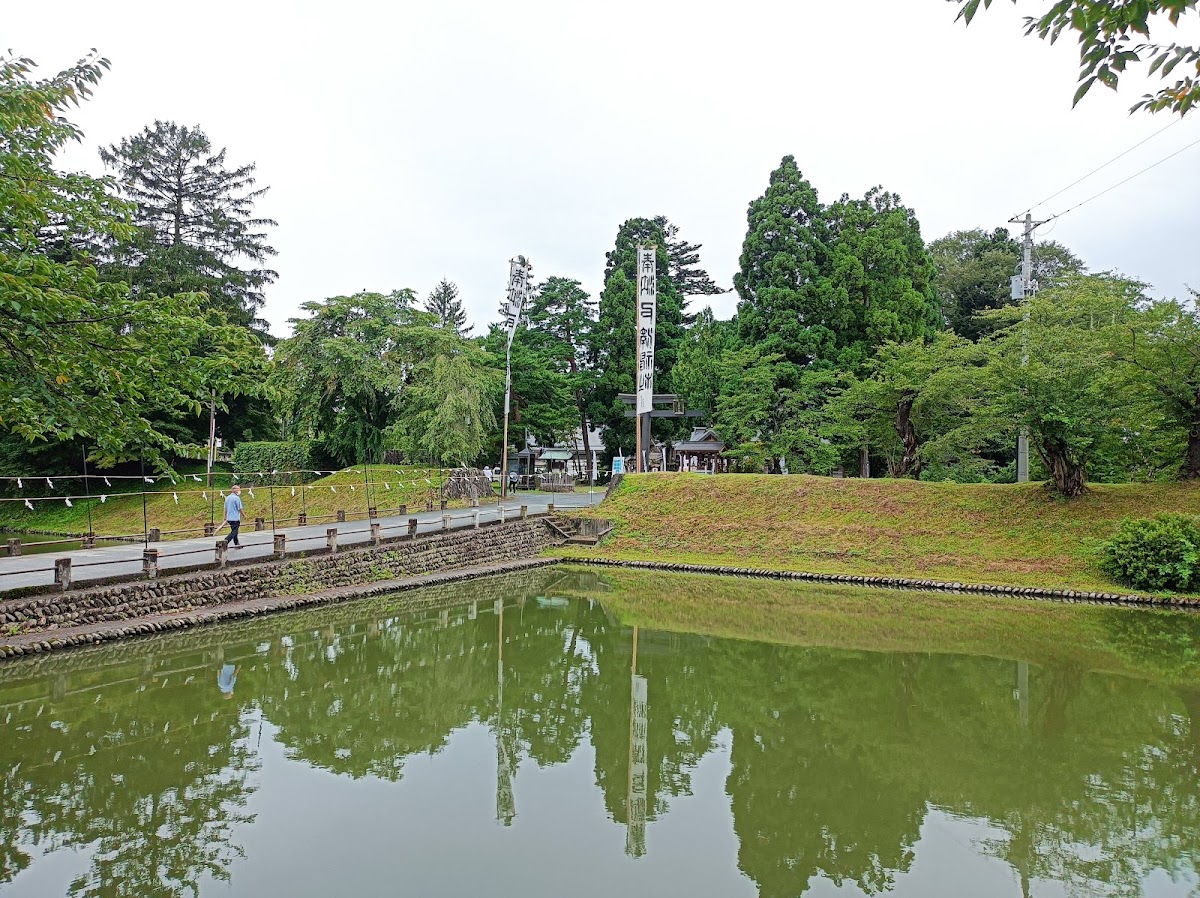
Shinjo Castle’s defensive lock is located in its double heavy castle river system. The inner part of the castle’s river enclosure is the second layer of the main castle, and the outer part of the outer part of the river is the third layer of the castle. This means that the castle river is always full of water, and the source of the water is the Sakinogawa River.
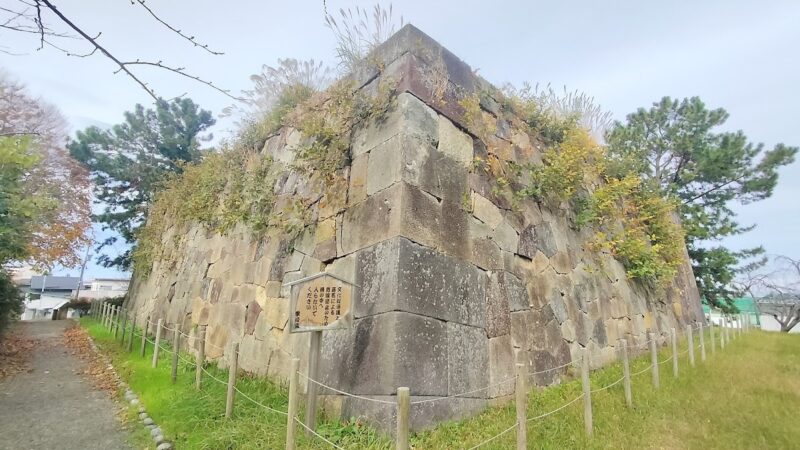
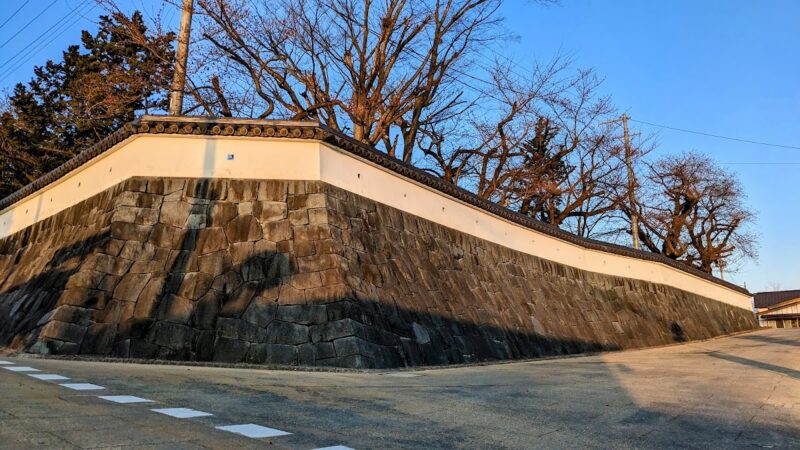
The stone tomb surrounding the main castle mound, part of which is perfectly preserved. The stone citadel in the southwest corner of the main city was more spectacular, and the fort construction technology was at its peak at the time. It is a combination of stone masonry techniques, coarse and refined carvings, and a variety of styles, making it a typical special expedition in the early period of the Jiang era.
Shinjo Castle Site (Mogami Park)
Mogami Park’s opening
During the Jimei period, Shinjo Castle was opened and opened as a public park. In the early Meiji period, the new castle school Wagun Seido was built on the site of Johara, but later removed. Nowadays, this is Mogami Park, a place where citizens can relax and enjoy pine trees.
There are many trees and flowers planted in the park, and it is a hot spot for the spring visit. As you walk around the city and river, you will enjoy the beautiful scenery of the four seasons. Mogami Park has always been the center of the Mogami district.
Work City Designated Historical Places
Shinshiro City is designated as a historical site in Shinshiro City, and is protected. The construction of the castle was destroyed during the Battle of Boshin, but the remains of the castle, such as Hewa stone tombs, are perfectly preserved, and the development of the mission is a treasure trove of culture that reflects the appearance of the castle fort during the Jiangmi period.
In recent years, due to the use of human resources and protection, there have been some minor changes, and the comprehensive repair of stone walls and custom-made information plates has been carried out. In addition, the Shinshiro City History Center has a large collection of exhibits, including a large number of exhibits, which are convenient for visitors to visit and understand the history of the castle fort.
Sanza Shrine on the ruins of Shinjo Castle
Kazu Shrine: Kazu family shrine
Kousa Shrine is the castle ruins of the lord of Shinjo Castle, and is the clan shrine of the Kōsai family, the lord of the Shinjo domain. The shrine was first built during the Meiji period, and its history is remembered by the warrior family. The shrine was dedicated to the ancestral deity of the Kōsei family and the god of the feudal lords of the past, among them the main deity of the first feudal lord.
The main hall of the Nenjin Shrine was replaced by a new one, but inside the shrine there was a stone monument commemorating the peace of the family, and the history of the 243-year history of the Yoko family. Every year, the city celebrates the city’s prosperity and mutual respect, bringing joy to the local residents.
Tenno Shrine: Designated construction
The building was designated by Michizane Sugawara, the deity of the study hall dedicated to Tenno Shrine, and was designated as the main hall of the temple. The construction of this seat has been perfectly preserved, and the construction style of the post-Jiang period was on hold, and it was one of the few buildings that were built during the battle for the Boshin War.
The style of construction, exquisite carving and Japanese color exhibition was completed at a time when the craftsmanship was at an extremely level level. The dragon-shaped sculpture on the front of the building is especially spectacular, and attracts the attention of many visitors. In addition, this is a very useful place for many students to study their prayers before the study period.
Shokuni Shrine: Ruins of ritual war
Shinjo Shokuni Shrine is a shrine that was built by residents of Shinjo City during the war since the Boshin War. A corner of the site of Uwon Castle Tower, a clear and mysterious environment, and an ideal place for a deceased military commander.
Every year, we hold a memorial service for those who have passed away in the city, and we hold a memorial service for the deceased generals, their families, and citizens in the city, and pray for the repose of the deceased. The memorial monument is engraved with the surname and surname of the deceased general, and this is a rare tribute to the tragedy of war and peace.
Ryoten Shinjo
Castle tower remains and stone burial mound
The biggest highlight of the new castle is the ruins of the castle tower and the stone tombs surrounding it. However, the castle tower is still open today, and the location of Tenma Shrine and Wakokuni Shrine is similar to the current location of the castle tower.
The stone burial ground in the southwest corner of the castle tower is perfectly preserved, approximately 5 meters tall, and still in its original appearance. A thorough look at the stone citadel construction method, the materials used in the castle, and the early fortress construction techniques of the early Jiangzhou era. At the end of the stone wall, you can enjoy the panoramic view of Shinjo City, and the beautiful scenery of the castle fort.
护城川遗迹
Parts of Shinjo Castle have been perfectly preserved, including the history of the castle and river, and visitors can enjoy the imaginative appearance of ancient Japan. The inner castle river surrounding the castle tower is constructed with a beautiful waterscape. Dian Xin, 15 to 20 meters in total, and 3 meters in depth.
There are walking routes around the city river, and visitors are walking around the city. Shunten, The opening of maple flowers on the banks of the river in the city, Reflection on the surface of the water, The composition is a beautiful picture book. Kawana is a habitat for fish and waterfowl, and a place rich in natural resources.
Information tile and surrounding area
Mogami Park has a number of information plates, including the history and construction of Shinjo Castle. This small exhibition board includes the old land map, the Japanese collection, and the visitor can directly see the new castle.
Near the main gate of the city fort, the special area is the surrounding area of the city fort, there is a large land area in the middle of the city, and the location of each construction is compatible with the construction of the city fort. Main landmarks also have independent explanations, and detailed information is provided.
Yoshinjo City History Center Collaboration
If you want to know more about the new city, please visit the nearby new city history center. The new castle model, excavated artifacts from the ancient castle, and the complete history of the castle fortifications from envoys and visitors are on display at the History Center.
The construction of a heavy model of the new castle was excellent, and the envoys and visitors were able to understand the three-dimensional structure of the fortress, which was in front of the fire. The center has a rich collection of exhibits, including the history of the Shinjo family and the history of the Shinjo clan, and the exhibition hall of the Shinjo castle town.
Shinjo Castle transportation and travel information
Transportation method
It is very convenient to go to Shinjo Castle Site (Mogami Park), and it takes about 15 minutes to get there from JR Shinjo Station. Shinjo Station is the end station of Yamagata Shinkansen Line, and is very convenient for transportation to and from Tokyo. The road to the park is flat and easy.
As the car drove forward, the North East Central Expressway exited the Shinjo Interchange Road, and the approximate demand was 10 minutes. There is one parking lot with capacity for approximately 50 cars near the park. However, when you are in the flower season and want to travel, there are many parking spots available, so you can sit down and sit on public transportation tools.
Visiting time and cost
Mogami Park is free for public development. The park has limited viewing hours, and you can visit the park until midnight. However, this is Yuyu Night Lighting Co., Ltd., and the construction is here.
Sanpoku Kasai Shrine, Tenma Shrine Wakokuni Shrine uniform fee, no demand fee. However, the shrine’s public time is limited, so this is how you can imagine it, get the goshuin, and write a review before construction.
Zhoukan Scenic Spot
There are many other scenic spots around the Shinjo Castle ruins. In front of the Shinjo station, there is a well-known “dream” type of integrated construction, interior design, customer information center, souvenir shop, restaurant, etc. Another highlight is the Shinjo Late Museum History Center, and the colorful Shinjo Festival car on display at Nari.
Arriving at Shinjo City, a reminiscence of the residences of samurai and merchants in the olden days, visit the castle town’s castle town. In addition, there are also many tourist attractions in the Zhouyan area, such as boat trips from the Moshang River to the beautiful natural scenery of the Moshang Gorge.
Annual activity activity
Mogami Park has all kinds of urban activities throughout the year. Among them, the most famous one is the spring cherry blossom festival, which has a delivery time of approximately 300 flowers, attracting a large number of visitors. At night, the lights of the lilies and lily pads are illuminated, and the dream-like scenery appears.
Every August, the Shinjo City Festival is held in full swing, with beautiful flower cars touring the city. The award ceremony was held in the United States, and it attracted visitors from all over Japan. In autumn, people stop looking at the beautiful scenery of red leaves; in winter, visitors can enjoy the quiet atmosphere of white snow and the atmosphere.
Shinjo Castle construction and repair work
Current state of history
At present, the Shinjo Castle site in Shinjo City is being protected and used.护城川, 石墝等迁迹会 Regular progress, review and repair, efforts to maintain its good condition. In particular, we will examine the progress of the Seki-Kai family, and work to repair the underlying needs.
City-level designated historical sites, limited access to development activities, and site protection is the primary responsibility. In addition, the archaeological excavation work continues, and the new city and time public announcements are made.
Modification plan and challenge
For the heavy construction of the new city of Qianqi, people have submitted various plans. However, the details of the Japanese literature that Yuyu led by the fire were lost, and the correction was extremely difficult. Kinya’s huge investment in heavy construction is a big challenge.
At present, large-scale heavy construction planning has not yet been established, but the current use of new technology and new usage methods, as well as examples of changes in information, has led to the use of virtual reality/enhancement technology. In the future, people are also looking forward to the construction, repair and construction of the fort.
History of Shinjo
Mogami district political center
During the time when Shinjo was in Jiang, it was the political center of the uppermost district, and it played an important role. The northern part of the uppermost district where the Shinshiro domain was under control, an important strategic position for occupation, and a fortress in the Shonai area and Waakita area.
Under the rule of the Kosai clan, the new castle town was established as a castle town, and the center of commerce and Japanese culture. The reason for this is that the exhibition is centered on the collection and distribution of goods since the production and navigation of the Mogami River. Shinshiro is a district-wide representation, and it is also a core element of the Mogami district’s physical recognition.
Modernization of the Boshin War in the Northeast region
During the Boshin War period, the fall of Xincheng became one of the most important turning points in the modernization process of the Northeastern region. The new government supported the Shinjo domain, but the castle was destroyed during the battle of the Shonai domain, and a huge loss occurred. The first incident has been revealed, and the battle for the Battle of the Stars has had a profound effect on the North East region, and since then it has had deep effects on the local community.
After the war, the heavy construction of Shinjo City, the modernization of the city, the opening of the route and other exhibitions, and the establishment of its production status as the transportation hub. The burning of Shinjo Castle was determined by the determination of the people, but the progress of Shinjo’s modern transformation was also great.
Summary: Shinjo Castle’s charm and future prospects
Shinjo Castle is an important fortification, the 243-year history of the feudal lord, and the best park in modern history, but it is also a hot tourist attraction. The castle’s interior was built during the Battle of Boshin, but the castle river, stone tombs, and other monuments have been perfectly preserved, giving the appearance of a castle fort during the Jiang Kong era.
In the castle grounds of Shinjo Castle, there are Koshi Shrine, Tenma Shrine and Wakokuni Shrine, each of which has its own history and history, and the elephant conquest of Shinjo’s history and culture. Among them, the construction of Tianyu Shrine is designated as a construction site, protected, and monitored as an important cultural site.
In the future, the ruins of Shinjo Castle will be used for protection and protection as we move forward. In addition to the history of the world, it is possible to take advantage of various measures, such as using new technology to inform the progress of the new technology, and its production has the attraction of travel resources. When the history of the new Zhuang Castle was opened, I was responsible for the birth of my son.
As you can see, you will be able to visit Shinjo Castle, and you will have to travel to Mogami Park. The 243-year-old story of the 243-year-old story of the 243-year history of the Battle of Hehe, a tragic story during the Battle of Boshin, and a serious impression on the commander.