Complete Guide to the History and Highlights of Yamashita Castle | From the Residence of the Shiokawa Clan to its Abandonment
What is Yamashita Castle?
Yamashita Castle is a Japanese mountain castle located in Kawanishi City, Hyogo Prefecture, consisting of 2 mountains: Mukaiyama (elevation 188.4 meters) and Shiroyama (elevation 181.4 meters). It is also known, Shiowa Tatsuo Castle, and played an important role as a strategic point in northern Settsu Province during the Sengoku period.
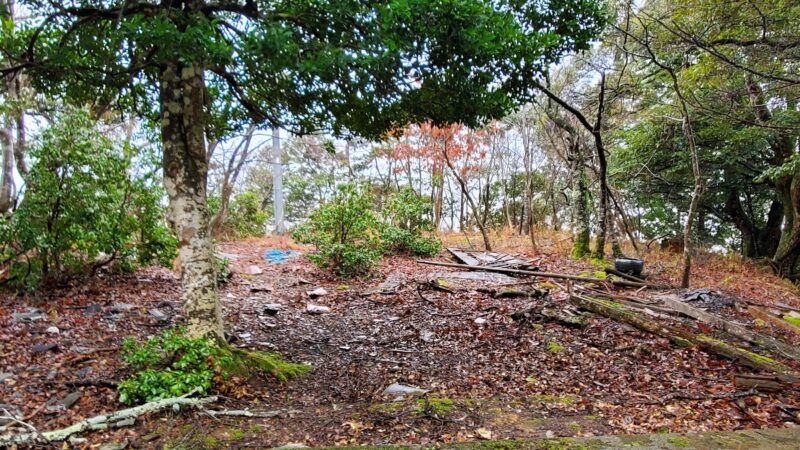
A hiking trail is still maintained on Shiroyama, and numerous remains, including the remains of a massive moat, can be seen. The castle ruins are protected as a historical site by Kawanishi City, making it an attractive exploration spot for castle enthusiasts
History of Yamashita Castle
Construction Period and Circumstances
There are several theories regarding the construction period of Yamashita Castle, with three main theories: the Heian period, the Nanboku-cho period, and the Sengoku period. In all theories, the castle is attributed to the Shiokawa clan.
The Shiokawa clan were local lords who ruled the northern part of Settsu Province and held power in this region for generations. Yamashita Castle was built on a natural stronghold surrounded by two rivers, the Ikkogawa and Hatsutanigawa, and functionedful as utilized the terrain.
Yamashita Castle in the Sengoku Period
During the Sengoku period (Warring States period), Yamashita Castle increased in importance as the Shiokawa clan’s base. Especially in the first half of the 16th century, it became a base for confronting the Miyoshi clan, who were vying for supremacy in the
Shiokawa Kunimitsu, known as the castle’s lord, was a figure who defensaed this castle during the turbulent Sengoku period. The Shiokawa clan, as local lords loyal to the Hosokawa clan, resisted the expansion of the Miyoshi clan’s power.
The Battle of Ikko Castle (1541)
The most important event in the history of Yamashita Castle is the “Battle of Ikko Castle,” which took place in 1541. In this battle, forces led by Miyoshi Nagayoshi attacked Yamashita Castle, but the defenders, led by Shiokawa Kunimitsu, repel
This victory allowed the Shiokawa clan to maintain their power in northern Settsu Province. The Battle of Ikko Castle is noteworthy in the study of Sengoku period history as one of the few defeats in Miyoshi Nagayoshi’s conquest of the Kinai region.
Toyotomi Hideyoshi and the Abandonment of Yamashita Castle
The end of Yamashita Castle came in 1584. In that year, while Toyotomi Hideyoshi was preparing for his Kyushu campaign, Shiokawa Kunimitsu committed a grave mistake.
Taking advantage of Nose Yoritsugu’s absence while he was leading the vanguard of Hideyoshi’s Kyushu campaign, Shiokawa Kunimitsu attacked the Nose clan’s territory. This act angered Hideyoshi, and Shiokawa Kunimitsu wasdet to com lord, Yamashita Castle was abandoned, bringing its approximately 400-year history to an end.
Structure of Yamashita Castle
Characteristics of a Two-Mountain, One-Castle Structure
The most distinctive feature of Yamashita Castle lies in its “two-mountain, one-castle” structure. The northern Mukaiyama served as an outpost, while the southern Shiroyama (Kojoyama) was the main castle, with the castle situated on two mountain
This structure allowed for mutual defense; if one mountain was under attack, the other could provide covering fire. Furthermore, if enemy forces invaded the valley, it was possible to attack from both sides.
Layout of the Main Castle (Shiroyama)
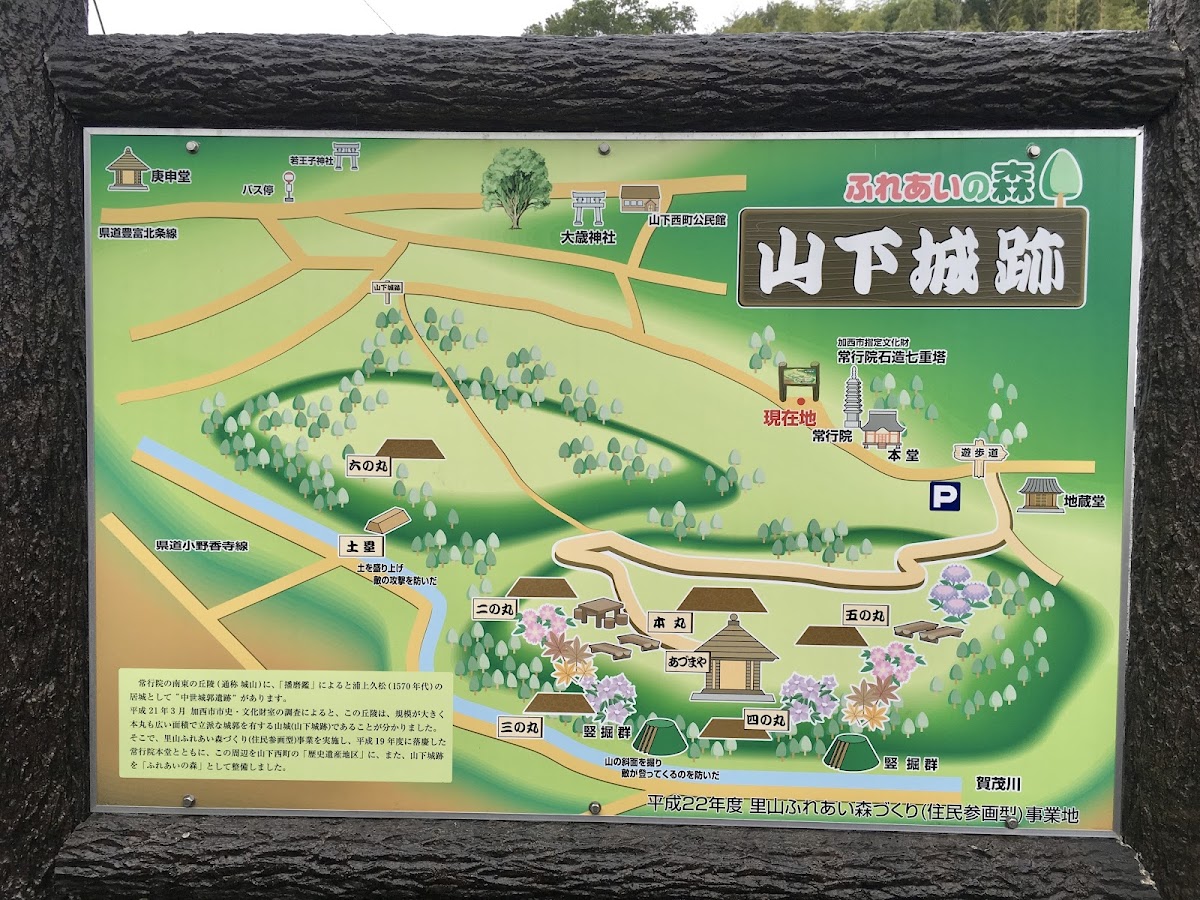
The main castle of Shiroyama is built on a terrain where two ridges extend east and west, separated by a valley to the southwest from the main enclosure at the mountaintop. The layout is relatively simple, with terraced enclosures (kuruwa) built on.
The main enclosure is located at the mountaintop, and it is believed to have functioned as the lord’s residence and command post. The main enclosure offers excellent views of the surrounding area, making it a suitable location for monitoring enemy movements.
Moats and Earthworks
The most impressive remains of Yamashita Castle are the massive moats. These dry moats, dug to cut across the ridges, were important defensive structures to prevent enemy intrusion. The clearly visible moats today attest to the advanced civil engineering techniques of the time.
In addition, earthworks were built around each enclosure, and traces of these earthworks can still be seen in some places. These earthworks functioned as defensive walls to protect against arrows and stones.
Residence Site (Shimozai Residence)
It is believed that the residence of Yamashita Castle was located at the foot of Shiroyama Mountain, around Shimozai-cho. This residence, called “Shimozai Residence,” is said to have measured approximately 160 meters on each .
It is thought that the lord and his retainers lived in this residence during peacetime, and defensaed the mountain castle on the mountaintop during wartime. Currently, residential development has progressed, making it difficult to confirm the remains of the residence, but
Highlights of Yamashita Castle
The Great Moat
The biggest highlight when visiting Yamashita Castle is the great moat that cuts across the ridge. This moat, several meters deep, remains clearly visible even after more than 400 years, and is a valuable historical site that that that allows you Sengoku period.
Steep slopes called “kirigishi” are formed on both sides of the moat, a design intended to prevent enemy soldiers from easily climbing. Seeing this moat alone makes a visit to Yamashita Castle worthwhile.
Enclosures
The terraced enclosures arranged along the ridge from the mountaintop are another highlight. Each enclosure remains in relatively good condition, allowing visitors to experience the scale of the castle at that time.
Soldiers were stationed in the enclosures, and weapons and food were stored there. The arrangement of multiple enclosures employed a multi-layered defensive structure, ensuring that even if one enclosure was breached, the next cou
Stone Wall Remains
Some traces of stone walls have been found at Yamashita Castle. While not completely intact, scattered stones indicate that stone walls once stood there.
Stone walls are relatively rare among mountain castles in Settsu Province, and the presence of stone walls at Yamashita Castle suggests that this castle possessed a certain level of scale and importance.
Shrine in the Valley
A shrine is enshrined on the mountainside in the valley between the two ridges to the east and west of the main castle. This shrine is believed to have played an important role as the guardian deity of the castle and as an object of local worship.
It is still carefully preserved by local people and can be visited when exploring the castle ruins.
Access to Yamashita Castle
Access by Public Transportation
If using public transportation to Yamashita Castle, the nearest stations are Nose Railway’s “Azeno Station” or “Yamashita Station.” It takes approximately 30 to 40 minutes on foot from the station to the castle ruins.
The hiking trail is well-maintained, but there are steep slopes typical of mountain castles, so it is recommended to wear comfortable shoes and clothing. Allow approximately 2 to 3 hours for the round trip.
Access by Car and Parking
If visiting by car, there is no dedicated parking lot for the castle ruins. It is convenient to use the parking lot at the Kawanishi City Local History Museum. The local history museum is a paid facility, but it has convenient parking and displays materials related to Yamashita Castle, so we
Visiting the local history museum to gain some background knowledge about the history and structure of Yamashita Castle before visiting the castle ruins will allow for a deeper understanding.
Precautions for Visiting the Castle
Since Yamashita Castle is a mountain castle, please note the following:
- Clothing: Wear comfortable clothing and non-slip shoes.
- Time: Allow ample time to descend before sunset.
- Weather: The ground can be slippery during and after rain, so please check the weather before visiting.
- Season: In summer, take precautions against insects; in winter, take precautions against the cold.
- Hydration: Bring plenty of water, especially in summer.
Nearby Attractions
Kawanishi City Local History Museum
This facility allows you to learn about the history of Yamashita Castle and the cultural properties of Kawanishi City. Documents and artifacts related to Yamashita Castle are on display, and visiting before or after your castle ruins will deepen your understanding.
Tada Shrine
Tada Shrine, known as the birthplace of the Seiwa Genji clan, is also nearby. This historic shrine, dedicated to Minamoto no Mitsunaka, is from a different era than Yamashita Castle, but is an important historical site for understanding the history of this
Ikko Dam
Ikko Dam is located upstream of the Ikko River, which gave Yamashita Castle its name. The area around the dam lake is a scenic spot rich in nature, and can be visited in conjunction with exploring the castle ruins.
Preservation and Maintenance of Yamashita Castle
Current State of Preservation
Yamashita Castle ruins are protected as a historical site by Kawanishi City. Because hiking trails are maintained, it is relatively easy to view the remains.
The main remains, such as the moats and baileys, remain in good condition, conveying the appearance of a mountain castle from the Sengoku period. However, many parts of the stone walls have collapsed, and they do not remain in their complete form.
Local Preservation Activities
Local history enthusiasts and preservation societies carry out activities such as cleaning the castle ruins and installing information boards. These activities maintain an environment where visitors can safely and comfortably explore the castle ruins.
In recent years, there has been a boom in interest in mountain castles among castle enthusiasts, and the number of visitors to Yamashita Castle is increasing. The local community is also continuing its efforts to pass on this valuable cultural asset to future generations.
Castles in Settsu Province from the Same Period as Yamashita Castle
Arioka Castle (Itami Castle)
Arioka Castle (Itami Castle) is a major castle in Settsu Province. Known as the castle lord of Araki Murashige, it was the site of the “Battle of Arioka Castle,” where he rebelled against Oda Nobunaga. Unlike Yamashita Castle, it
이케다 성
Ikeda Castle, known as the residence of the Ikeda clan, was also an important base in northern Settsu Province, similar to Yamashita Castle. Currently, it is maintained as Ikeda Castle Ruins Park, and a castle-like observation deck has been built #
Takatsuki Castle, a strategic point in eastern Settsu Province, is famous for being the castle lord of Takayama Ukon, a renowned Christian daimyo. It is currently maintained as a castle ruins park.
By comparing these castles with Yamashita Castle, one can understand the castle network in Settsu Province during the Sengoku period and the differences in the roles of each castle.
Significance of Visiting Yamashita Castle
A Valuable Historical Site Where You Can Experience Sengoku History
Yamashita Castle was the site of a battle against Miyoshi Nagayoshi, an important figure of the Sengoku period, and also the setting for an episode in Toyotomi Hideyoshi’s process of unifying Japan. By visiting the castle ruins, you can experience the life and something you can’t learn from textbooks.
A Teaching Material for Learning About Mountain Castle Structures
Yamashita Castle has relatively well-preserved remains, allowing you to actually see and learn about defensive structures unique to mountain castles, such as moats, baileys, and earthworks. For those interested in castle architecture and the construction tech place to learn.
Fusion of Nature and History
Yamashita Castle Ruins are located in a rich natural environment, making it an attractive place to explore history while enjoying a hike. You can enjoy the changing seasons while exploring the remains of a castle over 400 years old—an experience.
Summary
Yamashita Castle is a mountain castle located in Kawanishi City, Hyogo Prefecture, and played an important role as the residence of the Shiokawa clan during the Sengoku period. In the Battle of Ikko Castle in 1541, it repelled the forces of Miyoshi Nagayoshi, However, in 1584, it incurred the wrath of Toyotomi Hideyoshi and was abandoned.
Even today, the remains, such as the massive moats and baileys, remain in good condition, and the hiking trails are well-maintained, making it an attractive exploration spot for castle enthusiasts and history lovers. Visiting Yamashita Castle in conjun to gain a deeper understanding of its history and value.
Yamashita Castle, which conveys the history of northern Settsu Province during the Sengoku period, is a valuable cultural asset of the region and a historical site that should continue to be carefully preserved.