Koizumi Castle (Gunmao Oizumi Town) History and beautiful points complete guide
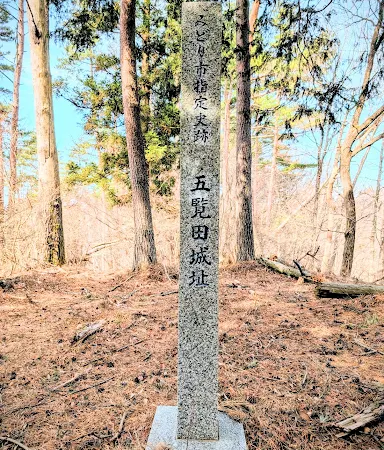
Koizumi Castle was located in Oizumi Town, Okura District, a rare castle site, and a history of military operations during the country’s history. Zuza Castle Fortress, also known as “Fujo Castle”, was built in 1489 by Yutomi Naomitsu, and was the residence of the famous Futoshi clan for about 100 years. Nowadays, the castle’s interior park has been completely preserved, the construction of the surrounding area of the main castle has been perfectly preserved, and the city has been designated as a historic site in Oizumi town, which is a local history and cultural heritage.
Koizumi Castle History Exhibition
Construction background and construction by Tomiji clan
Koizumi Castle was built in 1489 by Yutomi Kaikinosuke Naomitsu. The 11th descendant of Tomomitsu Tomomitsu was Yukihisa Tomomitsu. The surname of Tomi was originally used in other places, which is due to the fact that his father was born in Tomi, village of Tomi, in Amano District, Ueno Province.
After his death in the middle of the war, another child, Mitsu, fled to this place, and changed his name to Tomika Rikinosuke Naomitsu. In this case, there are many kinds of dialects established by the Fuji clan. There is no doubt about it, it is possible to be positive, and in the late Muromachi period, when the Fukui clan was founded, there was a lot of new excitement in the area.
Kōkō Shogun Yotomi Clan’s series
At the time of the construction of Koizumi Castle, Mr. Shigeshi Ashikaga, the commander of the armored military, was in charge of the effectiveness of Tomitsu Naoko. At that time, during the conflict between the Eastern District Zhengzhuang Province General Army and the Yamanouchi Uesugi clan (Guan Eastern Official Rei), the Tofuji clan was included. The military’s military performance was one-sided, and Naomitsu fought against the Yamanouchi and Uesugi clans.
Koizumi Castle was built on a low-lying wetland along the Tone River water system, with an excellent geographical location, and with clever land use and surrounding natural topography. The geographical location of the Futian clan and its governing status are very important.
Yo Uesugi Shinnobu’s system and power change
During the 16th century, Uesugi Masatora (later changed his name to Uesugi Noshin) of Ekkou Province began to invade the eastern part of the country. Under the great military power of the people in the East, who were subject to much force, the Fujo clan was also an exception.
During the restoration of the Uesugi clan, the Tomitsu clan was appointed, and the ceremony began. During this period, the Tofu clan was active in the political bureau in the eastern part of the country, and the Uesugi clan, the Hojo clan, and others were very active.
Yohojo clan’s lineage and activities during the war period
As a result of the war, the eastern region of the Hojo clan in Sagami Province continued to push forward continuously. A record of literature from the time when the Tomi clan and the Hojo clan were established, and the country was still under control. In his works such as “Collection of Historical Materials of Thousand Leaves” and other books, he recorded various exchanges between the Tokugawa clan and the Hojo clan.
The Tomi clan was a powerful local owner, and the Soyo Yura clan had many exchanges. During the battle for power in the eastern part of Ueno Province (currently the current group of horses), the construction of Koizumi Castle played an important role in the success of the Tofu clan’s position.
The fall of Koizumi Castle in 1590
The history of Koizumi Castle ended in 1590. When Hideyoshi, his vassal, attacked Odawara, the Tomi clan was elected and the Hojo clan formed an alliance. However, this was the final decision of the Tomi clan.
When Hideyoshi, his vassal, invaded the eastern region, Joya Koizumi completed the attack. There was a huge difference in military performance, the fall of Koizumi Castle, and the death of the Tomitsu clan. After the Hojo clan was destroyed during the Battle of Odawara, the Tomi clan disappeared on stage during the battle, and Shinya Koizumi Castle was killed.
The construction of Koizumi Castle was the residence of the Tomiji clan for about 100 years, and the end of the war was over.
Koizumi Castle’s Construction Bureau
Basic structure of a fortress
Koizumi Castle is a flatland fortress surrounded by low-lying wetlands with natural barriers and architectural features. The basic structure of the fort is the central main castle (main castle), the castle river, the surrounding area, and the outer castle.
Looking back on its current existence, Koizumi Castle is a fort with a military base, but it is still a military fort. Utilize the Tone River water system as a rich water source, renovate the castle river, and strengthen the castle’s defensive ability.
Main hospital building and Hijikata engineering structure
The core of Koizumi Castle: the construction of the main castle tower (honmaru). This little Hijikata process has been perfectly preserved, so please understand that it will be a treasure of the castle’s history at this time.
The Hijikata process of the main temple’s temple is several meters high, and the temple is built on the top of the temple. The land within the Hijikata project is flat, the residence of the owner and other important constructions are evenly distributed. This is a small piece of earthworks, and the construction of the earthworks has been preserved for over 500 years.
Water supply system
The defense of Koizumi Castle is located in the castle’s main castle. Inner castle river completely built castle, with permanent water storage. This little water source comes from a self-circulating wetland and drains, which has now become a state-of-the-art water use technology.
Outside the castle river, inside the river. However, there is still a part of the castle outside the castle, but the castle has a well-organized exterior. However, the city river does not have any defensive functions, it is a water source that provides daily life within the fort, and it is a rapid water source.
Cloth Bureau
Koizumi Castle Arita Field (kuruwa). The fortress is a functionally flat area within the fort. At the same time, the castle tower is placed in a concentric circle, and the second and third towers are located at the center.
Each road was divided into two parts: the construction of the city, the river separation, and the formation of a multi-level defense system. Immediate attack by the enemy, one way to defend, and the ability to provide effective defense. In summary, Koizumi Castle is a typical castle fort construction technique during a military expedition.
Jyomenwa Entrance
The position of Koizumi Castle is the castle gate, but the exact position or structure of the castle is shown in front of the gate. However, due to the construction of the earthworks and the exit of the castle river, we were able to determine the location of the main entrance.
The main gate (main gate) is located on the south side of the castle fortress, and is the main dry road of the castle town leading to Miangyang. In addition, there are other castle gates, such as the following gates (Karate gate) and water gates (Water gates), which are also possible, such as the route for transporting crops for peacetime periods in peacetime, and the route for transporting crops during emergency situations in China.
Current Koizumi Castle Ruins (Jounouchi Park)
Jonouchi Park’s opening
Many years after the Koizumi Castle site was established, it became a public park during the Showa period. Nowadays, it is a popular holiday place for local residents, famous as “Jonouchi Park”.
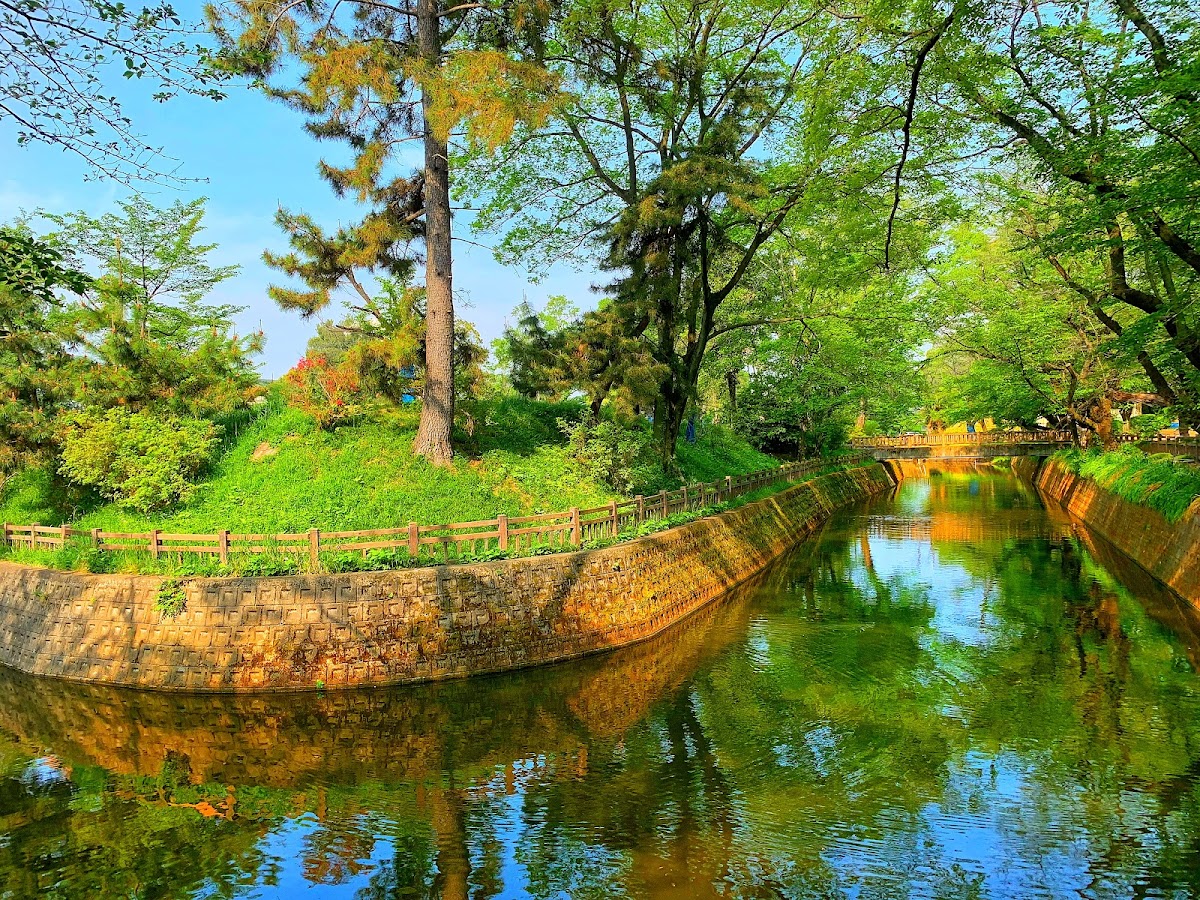
During the course of the development of the park, the main role was to protect the castle and pond, and the earthworks around the main city were completed, and the possible land for the castle and river was reserved. The construction of the park has been completed, and visitors can walk along the earthworks along the road, and the structure of the castle pond is complete.
The situation of the distant past
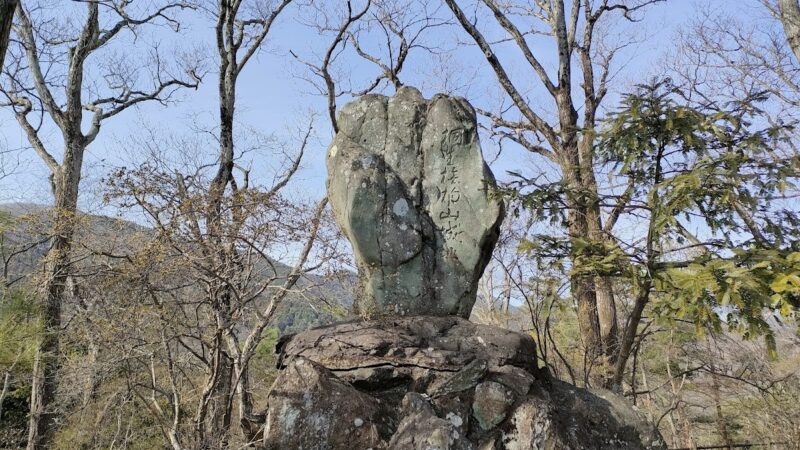
A major monument of Koizumi Castle preserved in Jonouchi Park. Among them, the most impressive impression is that it is a castle with a geological quality similar to that of a master castle; its advanced Japanese shape has now been exhibited in the castle and pond construction techniques of the times of the country.
The river in the city is currently filled with water, and the depth of the water has been extended to the extent that the defense construction work is now extremely high. A perfect fusion of the beauty of the castle, the beautiful scenery, the history of the fortress, the beauty of the park, and the beauty of the castle.
There is a part of the river outside the castle, but if you look at its location, I will calculate the overall size of the fort. Part of the castle has been completely preserved, and the external structure of the fort has been provided.
Oizumi Town Designated Historical Site Site
Koizumi Castle Site is designated as a historical site by Oizumi Town, and is guaranteed to receive important cultural goods in the production area. It is a representative example of a medieval castle fort in the eastern part of the country, and is an important historical and archaeological research landmark.
The castle fort has information on the site, and it is convenient for visitors to understand the history of Koizumi Castle. Local elementary and junior high school students provided the opportunity to visit the castle park, part of the local history study, and assistant students understood the local history.
Park facilities and scenic spots
Jonouchi Park does not provide an opportunity to visit the history of the country, but it is also a good place for citizens to relax and enjoy the holidays. There are long chairs in the park, and it is convenient for visitors to walk and rest.
We recommend that you walk around the castle tower at your destination. It is understood that the fortifications can be seen from a bird’s-eye view of the castle river, and that there are defensive works on the fortress. The scenery of the castle river is reflected in the season, and the season changes, and the scenery is extraordinary.
There is a parking lot in the park, and it is convenient for cars to go around. In addition, the park is far away from the East Koizumi Line’s Koizumi Town Station or the West Koizumi Station, and the public transportation tools are readily accessible.
History of Koizumi Castle
Central position in the history of the country’s military
Koizumi Castle is one of the important historic sites of the eastern part of the eastern part of the country during the war period. The fortress of the Tofu clan is a historical research study, and the representative of the local strong family was the Kōkō shogunate, the Uesugi clan, the Hojo clan, etc., and the strong forces of the Hojo clan came to exist.
There are many documents written by the Tokugawa clan, which are treasured historical materials related to politics and military matters in the East region during the war. A small collection of literature has been shown, including a large number of historical facts, a comprehensive history of the feudal lords, the relationship between local rulers, the organization of local societies, and diplomatic mediation during the era of war.
Historical importance of Zaigun Mao City Fort
Koizumi Castle is one of the most well-preserved castle forts in the history of medieval castles. The medieval political and military center of the Oura district in the eastern part of the country, and an important position in the historical research of the Koizumi Castle area.
Comparison of large forts such as Kanayama Castle, Japan, and other large forts in the same genus group, Koizumi Castle is a typical fort built by local families, and is a treasure example of the fort construction technology and construction structure at this time.
Local culture protection
The Koizumi Castle ruins are an important cultural legacy of Oizumi Town, and are an important part of the town’s cultural heritage. It played an important role in influencing the history of the town and the development of the local people’s sense of pride.
In recent years, local volunteers have been working to spread the history of Japanese cuisine and preserve the castle grounds, and have contributed to the success of the construction of Japanese history. Jonouchi Park and the history of Koizumi Castle will be presented to more and more people.
Transportation and tourism information
Location and transportation
position
2-chome Jonouchi, Oizumi-cho, Gunma-gun, Okura-gun
Sitting fire car
- Walking distance from East Wu Koizumi Line Koizumi Town Station approximately 15 minutes
- 20 minutes walking distance from East Wu-Koizumi Line to West Koizumi Station
Running car
- Approximately 20 minutes from Ota Kiryu IC on the East Expressway
- Approximately 15 minutes from Xinbei Expressway Yulin IC
Stop
Jonouchi Park has a parking lot for private use (free of charge)
Development time and cost
Jonouchi Park is a public park, free of charge and open to the public.
- Opening time: Full-sky opening
- Key vote: Disclaimer
- Closed date: None
Visitor knowledge
- Smoking is prohibited in the park.
- 请带行您的垃圾.
- Be cautious, don’t waste your time, and forget about the construction process.
- Be careful under your feet when visiting at night.
- Rainy weather Hijikata engineering road surface wet and slippery, walking cautiously.
Zhouyan Xiangguan History and Travel Guide
There are other historical scenic spots around the Koizumi Castle ruins.
Oizumi Town Culture Village
We have provided information on the history and culture of Oizumi Town, as well as materials from the Koizumi Castle Museum.
Near castle fort ruins
- Yulin Castle Ruins (Rulin City): 20 minutes by car
- Kanayama Castle Ruins (Ota City): 30 minutes by car
At the same time, I visited the castle fortress site, and was able to understand the situation in the eastern part of the world more deeply.
Overview
Koizumi Castle is a castle fort during the war period, built in 1489 by Yutomi Naomitsu, and the residence of the Totomi family for about 100 years. The Tokugawa shogunate, the Uesugi clan, the Hojo clan and other figures were masters of the eastern region of the eastern region, a rare example of the local family life style of the country’s history.
In 1590, Koizumi Castle was occupied by the vassal Hideyoshi, who attacked Odawara during the fall and destroyed the castle, but now it was completed, and the castle’s interior park was completely preserved. It is a historical site designated by Daizumi Town, which is considered to be an important cultural treasure in the area, and is also a rare historical site in the historical castle structure of the country.
When you visit the eastern part of the country, you will need to visit the Koizumi Castle ruins, and feel the romantic atmosphere of the time of the war. In the quiet park, the remaining earthworks of the Japanese castle river were introduced more than 500 years ago, at the time of the national movement.