Complete Guide to the History and Highlights of Koizumi Castle (Oizumi Town, Gunma Prefecture) | A Sengoku Period Ruin Remaining as Jounouchi Park
Located in Oizumi Town, Ora District, Gunma Prefecture, Koizumi Castle is a valuable castle ruin that conveys the turbulent history of the Sengoku period. Also known as “Tomioka Castle,” this castle was built in 1489 by Tomioka Naomitsu and functioned as the residence of the Tomioka clan for approximately 100 years. Currently, it is maintained as Jounouchi Park, with the earthworks and moats around the main keep well-preserved, and it is designated as a historical site by Oizumi Town, making it a local historical heritage site.
History and Development of Koizumi Castle
Background of Construction and the Establishment of the Tomioka Clan
Koizumi Castle was built in 1489 by Tomioka Chikara-no-suke Naomitsu. Tomioka Naomitsu was the son of Yuki Hisatomo, who is said to be the 11th generation descendant of Yuki Tomomitsu. It is said that he adopted the Tomioka surname because his father, Hisatomo, held the Tomioka village in Kanra district, Kōzuke Province.
There is also a theory that after Yuki Mochitomo was killed in the Battle of Yuki, his son Mochimitsu fled to this area and adopted the name Tomioka Chikara-no-suke Naomitsu. Therefore, there are multiple traditions regarding the founding of the Tomioka clan. In any case, it is certain that the Tomioka clan emerged as a new power in this region during the turbulent late Muromachi period.
Relationship between the Koga Shogun and the Tomioka Clan
At the time of the castle’s construction, Tomioka Naomitsu served Ashikaga Shigeuji, the Koga Shogun. At that time, the Kanto region was embroiled in conflict between the Koga Shogun and the Yamanouchi Uesugi clan, the Kanto Kanrei (deputy shogun of the Kanto region), and the Tomioka clan was caught in the middle of this conflict. Naomitsu, as a general on the Koga Shogun’s side, was in a position to confront the Yamanouchi Uesugi clan.
Koizumi Castle was built in the low-lying wetlands of the Tone River system, a strategically important location that skillfully utilized the surrounding natural terrain. This location played a crucial role in the Tomioka clan’s ability to maintain their power.
Relationship with Uesugi Kenshin and Changes in Power
In the mid-16th century, Uesugi Masatora (later Uesugi Kenshin) of Echigo Province began repeatedly invading the Kanto region. Many forces in Kanto were forced to submit to Kenshin’s formidable military power, and the Tomioka clan was no exception.
The Tomioka clan was incorporated under Uesugi Kenshin’s control and began acting under his command. During this period, the Tomioka clan sought to survive amidst the complex political situation in Kanto, skillfully navigating between powerful forces such as the Uesugi and Hojo clans.
Relationship with the Hojo Clan and Activities During the Sengoku Period
As the Sengoku period progressed, the Hojo clan of Sagami Province expanded their power in the Kanto region. The Tomioka clan also developed relationships with the Hojo clan, and many Sengoku period documents remain. These documents are included in works such as “Sengoku Ibun” and “Chiba Prefecture History Materials Supplement,” and record various interactions with the Hojo clan.
The Tomioka clan, as a powerful local lord, engaged in several battles with the Yura clan. In the power struggles in eastern Kozuke Province (present-day Gunma Prefecture), Koizumi continued Castle to play an important role as the Tomioka clan’s base.
The Fall and Abandonment of the Castle in 1590
The history of Koizumi Castle came to an end in 1590. When Toyotomi Hideyoshi’s siege of Odawara began, the Tomioka clan sided with the Hojo clan. However, this choice would determine the Tomioka clan’s fate.
When Toyotomi’s large army invaded the Kanto region, Koizumi Castle also became a target. Faced with an overwhelming difference in military strength, Koizumi Castle fell, and the Tomioka clan was destroyed. When the Hojo clan was destroyed in the Siege of Odawara, the Tomioka clan, who had been under their control, also disappeared from the historical stage, and it is believed that Koizumi Castle was abandoned.
Koizumi Castle, which functioned as the Tomioka clan’s residence for approximately 100 years, thus ended its role with the end of the Sengoku period.
Structure and Layout of Koizumi Castle
Basic Structure of the Castle
Koizumi Castle was built as a flatland castle, utilizing the surrounding low-lying wetlands as a natural defensive line. The basic structure of the castle consisted of a central main enclosure (honmaru) surrounded by a moat and earthworks, with an outer enclosure further positioned outside of it.
Judging from the remains that still exist today, Koizumi Castle was a relatively compact castle, but it is thought to have had a standard size and structure for a local powerful family’s residence during the Sengoku period. The water moat, utilizing the abundant water of the Tone River system, greatly enhanced the castle’s defensive capabilities.
Structure of the Main Enclosure and Earthworks
The main enclosure (honmaru), the core of Koizumi Castle, was surrounded by earthworks. These earthworks remain remarkably well-preserved today, making them valuable historical remains for understanding the castle’s structure at the time.
The earthworks of the main enclosure reached a height of several meters, and it is presumed that fences or walls were built on top of them. The area inside the earthworks was flat, where the lord’s residence and other important buildings were located. The earthworks were carefully constructed using the rammed earth method, and have maintained their shape for over 500 years.
Moat Arrangement and Water Management System
The key to Koizumi Castle’s defense was the water moat surrounding the main enclosure. The inner moat completely encircled the main enclosure and was always filled with water. This water was drawn from surrounding wetlands and irrigation canals, demonstrating the advanced water management technology of the Sengoku period.
An outer moat was located outside the inner moat. Although only a portion of the outer moat remains today, it once served to defend the entire outer perimeter of the castle. These moats are thought to have functioned not only as defensive structures but also as a source of water for daily life within the castle and as an emergency water source.
Arrangement of enclosures
Koizumi Castle had multiple enclosures (kuruwa). An enclosure is a flat area within the castle grounds, each with a different function. It is presumed that the enclosures were arranged concentrically around the main keep, with the second and third enclosures forming the center.
Each enclosure was separated by earthworks and moats, creating a multi-layered defensive structure where, even if the enemy breached one enclosure, the next could provide defense. This structure is a common feature of castles from the Sengoku period, indicating that Koizumi Castle was built according to the standards of castle construction technology at the time.
Castle Gates and Entrances
It is believed that Koizumi Castle had multiple castle gates, but no remains currently exist that show their exact location or structure. However, the layout of the earthworks and the breaks in the moats allow us to estimate the locations of the main entrances.
The main gate (Otemon) was likely located on the south side of the castle, facing the main road leading to the castle town. Other gates, such as the rear gate (Karametemon) and the water gate (Mizunotemon), were also likely positioned there, functioning as routes for transporting supplies during peacetime and as escape routes in emergencies.
Current Koizumi Castle Ruins (Shironouchi Park)
Development as Shironouchi Park
After its abandonment, the Koizumi Castle ruins, which had fallen into disrepair over many years, were developed into a park during the Showa period. Currently, it is a popular recreational area for local residents known as “Shironouchi Park.”
In developing the park, the preservation of the castle remains was the top priority, and the earthworks and moats around the main keep were preserved as much as possible to retain their original appearance. Walking paths have been created within the park, allowing visitors to experience the castle’s structure while walking along the tops of the earthworks.
Condition of Remaining Structures
The main remains of Koizumi Castle are well-preserved in Jounouchi Park. Most impressive are the earthen ramparts surrounding the main keep; their height and shape allow one to appreciate the castle-building techniques of the Sengoku period.
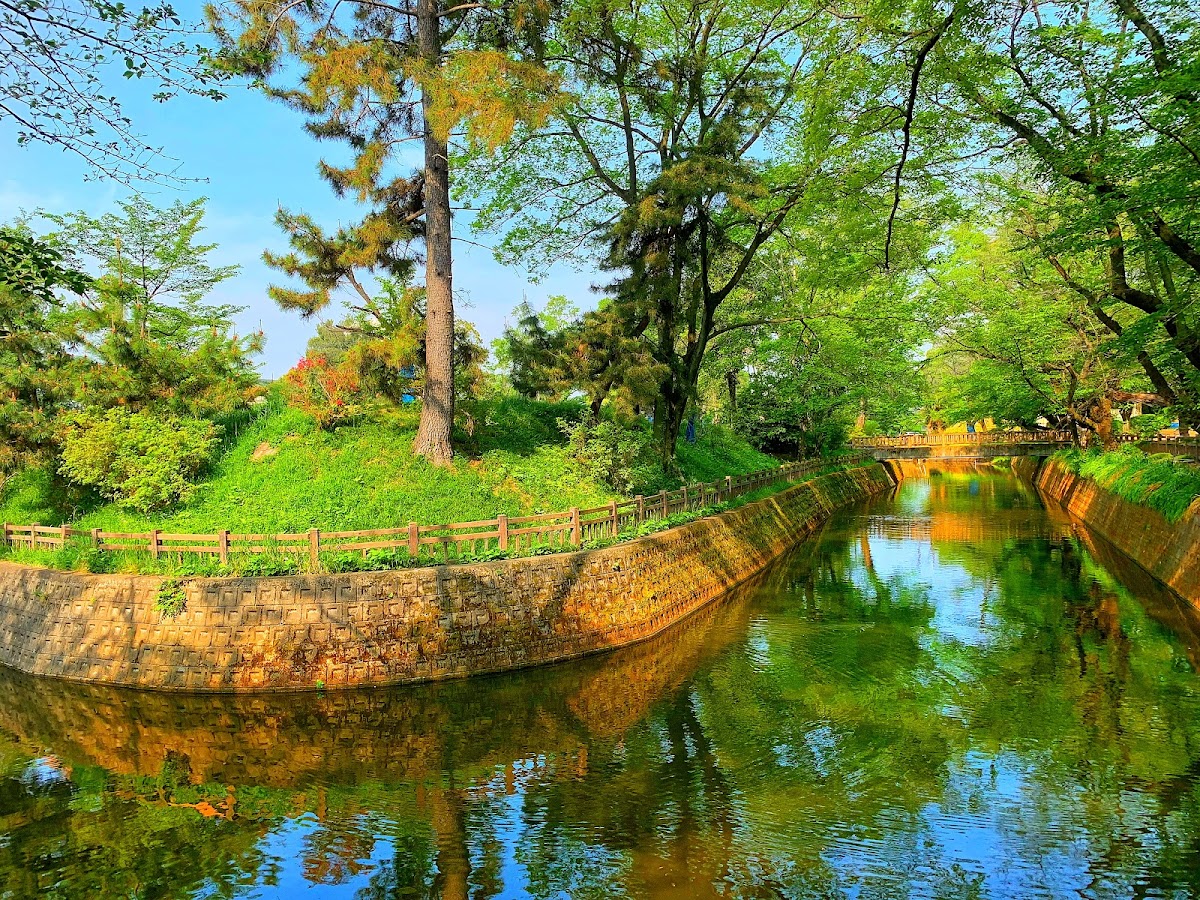
The inner moat also remains filled with water, and its width and depth reveal the high level of its defenses at the time. The reflection of the ramparts and trees on the water’s surface is beautiful, combining the historical value of the castle site with the aesthetic beauty of a park.
Only a portion of the outer moat remains, but its location allows for estimation of the overall scale of the castle. Parts of the earthen ramparts also remain, providing clues to understanding the castle’s outer structure.
Value as a Designated Historic Site of Oizumi Town
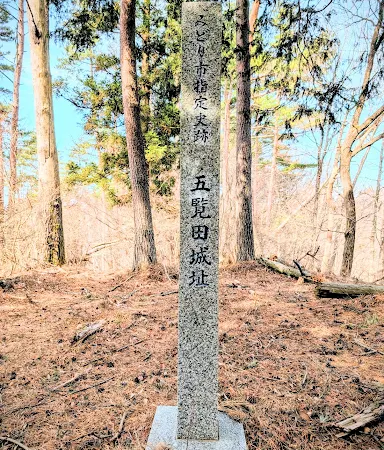
Koizumi Castle Ruins are a designated historic site of Oizumi Town and are protected as an important cultural property of the region. As a representative example of a medieval castle in eastern Gunma Prefecture, it is recognized as a valuable subject of research in history and archaeology.
Information boards are installed at the castle site, allowing visitors to learn about the history and structure of Koizumi Castle. Local elementary and junior high schools provide opportunities for students to visit Jounouchi Park as part of their local history studies, learning about the region’s history.
Park Facilities and Points of Interest
Jounouchi Park not only offers opportunities to view historical remains but also serves as a place of relaxation for citizens. Gazebos and benches are installed within the park, providing a place to rest during walks.
As a point of interest for visitors, we recommend starting by walking around the earthen ramparts surrounding the main keep. From the top of the ramparts, you can look down on the moat and gain a three-dimensional understanding of the castle’s defensive structure. The scenery reflected in the moat changes with the seasons, and particularly beautiful views can be enjoyed during cherry blossom season and autumn foliage season.
The park also has a parking lot, making it easily accessible by car. It is within walking distance of Koizumi-machi Station or Nishi-Koizumi Station on the Tobu Koizumi Line, making it accessible by public transportation as well.
Historical Significance of Koizumi Castle
Position in Kanto Sengoku History
Koizumi Castle is one of the important historical sites for understanding the Sengoku period in the Kanto region. The Tomioka clan’s castle is a subject of historical research as an example of a local powerful family that survived amidst the powerful forces of the Koga Shogunate, the Uesugi clan, and the Hojo clan.
The numerous documents left behind by the Tomioka clan are valuable historical sources for understanding the realities of politics, military affairs, and economics in the Kanto region during the Sengoku period. These documents reveal various historical facts, including the relationship between daimyo and local lords, the structure of local communities, and diplomatic negotiations during the Sengoku period.
Importance in the History of Castles in Gunma Prefecture
While Gunma Prefecture has many medieval castles, Koizumi Castle is one of the best-preserved examples. As a medieval political and military center in the Oura District of the eastern part of the prefecture, it occupies an important position in regional history research.
Compared to large-scale castles such as Kanayama Castle and Minowa Castle in the same Gunma Prefecture, Koizumi Castle, as a typical castle of a local powerful family, is a valuable example for understanding the general castle construction techniques and castle structures of the time.
Preservation as a Local Cultural Heritage
The Koizumi Castle ruins are an important cultural heritage site of Oizumi Town, forming an integral part of the town’s identity. As a symbol of the town’s history, it also plays a role in fostering local pride among residents.
In recent years, preservation activities for the ruin castles and historical outreach activities have been promoted by local volunteers, and efforts are being made to pass on history to future generations. Historical events and explanatory meetings are also held at Jounouchi Park, providing opportunities for more people to learn about the history of Koizumi Castle.
Access and Visiting Information
Location and Transportation Access
Location
2-chome, Jonouchi, Oizumi-machi, Ora-gun, Gunma Prefecture
Access by Train
- Approximately 15 minutes on foot from Koizumi-machi Station on the Tobu Koizumi Line
- Approximately 20 minutes on foot from Nishi-Koizumi Station on the Tobu Koizumi Line
Access by Car
- Approximately 20 minutes from Ota-Kiryu IC on the Kita-Kanto Expressway
- Approximately 15 minutes from Tatebayashi IC on the Tohoku Expressway
Parking
Dedicated parking lot for Jonouchi Park available (free)
Visiting Hours and Fees
Jonouchi Park is a public park and is open to the public; visits are free.
- Opening Hours: Always open
- Admission Fee: Free
- Closed Days: None
Notes for Visitors
- Smoking is prohibited in the park.
-Please take your trash with you.
- Please be careful not to damage the remains such as earthworks and moats.
- Please be careful of your footing when visiting at night.
- Please be careful as the earthworks can become slippery in rainy weather.
Related Historical Sites and Tourist Facilities in the Surrounding Area
There are other historical sights around the Koizumi Castle Ruins.
Oizumi Town Culture Village
This facility introduces the town’s history and culture, and also exhibits materials related to Koizumi Castle.
Nearby Castle Ruins
- Tatebayashi Castle Ruins (Tatebayashi City): Approximately 20 minutes by car
- Kanayama Castle Ruins (Ota City): Approximately 30 minutes by car
Visiting these castle ruins together will allow you to gain a deeper understanding of the Sengoku period in eastern Gunma Prefecture.
Summary
Koizumi Castle was a Sengoku period castle built in 1489 by Tomioka Naomitsu and served as the residence of the Tomioka clan for approximately 100 years. The history of the Tomioka clan, who skillfully navigated the powerful Kanto region with figures such as the Koga Shogunate, Uesugi Kenshin, and the Hojo clan, is a valuable example of how local powerful families lived during the Sengoku period.
Although it fell during Toyotomi Hideyoshi’s siege of Odawara in 1590 and was abandoned, it is now maintained as Jōnouchi Park, with the earthworks and moats around the main keep well-preserved. Designated as a historical site by Ōizumi Town, it is an important cultural property of the region and a valuable historical site where you can experience the structure of a Sengoku period castle.
When visiting eastern Gunma Prefecture, be sure to visit the Koizumi Castle ruins and feel the historical romance of the Sengoku period. The earthworks and moats remaining in the quiet park convey the turbulent era of over 500 years ago.