Odate Castle: A Complete Guide to the History and Highlights of Katsura Castle, a Strategic Point in Northern Akita Prefecture
Located in the heart of Odate City, Akita Prefecture, Odate Castle is a historical fortress also known as “Katsura Castle.” Now a popular park for locals, the castle ruins played a crucial role as the political and military center of northern Akita Prefecture from the Sengoku period to the Edo period. This article provides a thorough explanation of Odate Castle’s detailed history, structure, highlights, and the current Katsura Castle Park, including a visitor’s guide.
Overview and Basic Information of Odate Castle
Odate Castle was a flatland castle located in Nakajo, Odate City, Akita Prefecture. Built on a plateau near the confluence of the Nagaki River and Yoneshiro River, it occupied a strategically important location overlooking the surrounding area.
Basic Data
- Alternate Names: Katsura Castle, Onigajo Castle
- Castle Structure: Hilltop Castle
- Year of Construction: Tenbun Era (1532-1555)
- Builder: Asari Katsuyori
- Main Lords: Asari Clan, Akita Clan, Satake Clan
- Year of Abandonment: After the Meiji Restoration
- Remains: Earthworks, Moat, Bailey Remains
- Current Status: Developed as Katsura Castle Park
- Location: Nakajo, Odate City, Akita Prefecture
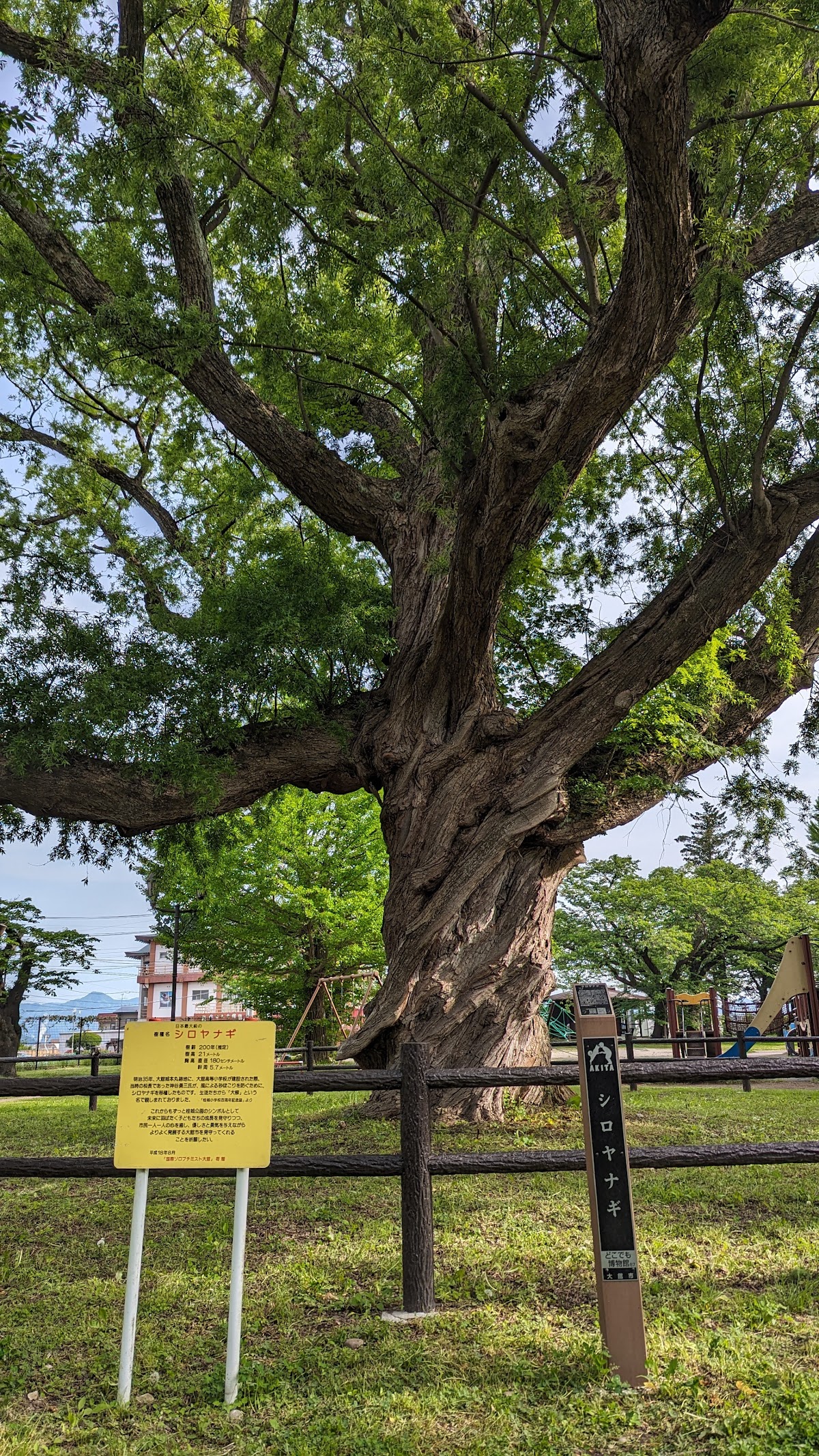
The name Odate Castle originates from the fact that this area was called “Odate.” On the other hand, the elegant name Katsura Castle is said to have been given because many Katsura trees were planted within the castle grounds.
History and Background of Odate Castle
Before Construction: Hinai Region and the Asari Clan
Before Odate Castle was built, the Hinai region was ruled by the Asari clan from the Kamakura period. The Asari clan was a family descended from the Kai Genji clan, and it is said that they were granted the Hinai region in the early Kamakura period for their achievements in the Oshu War. Initially, the Asari clan was based at Ogida Castle in Ogida, Hinai Town, but amidst the turmoil of the Sengoku period, they built a new castle in Odachi, a location more suitable for defense.
Sengoku Period: Castle Construction and Territory Ownership by the Asari Clan
The construction of Odachi Castle is said to have been carried out by Asari Katsuyori during the Tenbun era (1532-1555). One theory suggests it was in Tenbun 19 (1550). Asari Katsuyori built the castle in this strategic location to solidify his control over the Hinai region during the chaotic Sengoku period.
During the Sengoku period, the Hinai region was a focal point of power struggles among powerful surrounding daimyo such as the Nanbu, Akita (Ando), and Tsugaru clans. In particular, fierce battles were fought between the Nanbu and Akita clans, and the Asari clan struggled to maintain their independence in the midst of this conflict.
The Asari clan ruled the Hinai region from their base at Odate Castle for generations, but towards the end of the Sengoku period, their relationships with surrounding powers became complicated. The Asari clan engaged in diplomacy to survive, sometimes allying with the Nanbu clan and sometimes with the Akita clan.
Keicho Era: The End of the Asari Clan and the Rule of the Akita Clan
In 1598 (Keicho 3), the Asari clan became extinct, and Odate Castle became the territory of the Akita clan (Ando clan). There are various theories as to why this happened, but it is believed to be either because the last head of the clan, Asari Yorihira, died without an heir, or because of a forced annexation by the Akita clan.
The Akita clan had expanded its power as a powerful daimyo in northern Dewa Province under the Toyotomi regime. By acquiring Odate Castle, the Akita clan gained control of a vast territory, including the Hinai region. During this period, Odate Castle functioned as an important branch castle of the Akita clan.
Edo Period: Satake Clan Rule and Branch Castle of the Kubota Domain
After the Battle of Sekigahara, in 1602 (Keicho 7), the Akita clan exchanged territories with the Satake clan, who had been transferred from Hitachi Province, and were relocated from Akita to Miharu (present-day Fukushima Prefecture). As a result, the Akita region came under the control of the Satake clan, and the Kubota Domain was established.
Odate Castle continued to exist as a branch castle of the Kubota Domain. Normally, the Edo Shogunate’s “One Castle Per Province” decree allowed only one castle per domain, but Odate Castle was exceptionally permitted to remain. This is thought to be because Odate Castle was a strategic point in northern Akita Prefecture and a military and administratively important base.
Throughout the Edo period, a castle lord was dispatched from the Kubota Domain to Odate Castle and govern the Hinai region. The lord held an important position, acting as the lord’s representative and overseeing local administration, justice, and military affairs.
From the End of the Edo Period to the Meiji Restoration: The Boshin War and the Abandonment of the Castle
During the turbulent period at the end of the Edo period, the Kubota Domain sided with the new government. During the Boshin War, tensions rose with neighboring domains participating in the Ouetsu Reppan Alliance, but Odate Castle never directly became a battlefield.
After the Meiji Restoration, with the abolition of the feudal domains and the establishment of prefectures, the Kubota Domain became part of Akita Prefecture, and Odate Castle ceased to serve its purpose. The castle was abandoned in the early Meiji period, and many of its buildings were demolished. Later, the castle site was developed into a park, which is now Katsuragi Castle Park.
Structure and Layout of Odate Castle
Odate Castle is a flatland castle built on a plateau between the Nagaki River and the Yoneshiro River. It is characterized by its layout that skillfully utilizes the natural terrain, using the rivers as natural moats.
Layout of the Enclosures
Odate Castle consisted of multiple enclosures centered around the Honmaru (main enclosure), Ninomaru (second enclosure), and Sannomaru (third enclosure). The Honmaru, as the core of the castle, was located at the highest point and was heavily fortified with earthen ramparts and moats.
The Ninomaru was located south of the Honmaru and is believed to have housed administrative buildings during the feudal period. The Sannomaru extended further out, serving as a point of contact with samurai residences and the castle town.
Defensive Structures
Odate Castle’s defenses were primarily composed of earthen ramparts and moats. Even today, parts of the earthen ramparts and moats remain in good condition on the south side, giving a glimpse into the scale of the castle at the time.
The moats were wide and sufficiently deep, effectively preventing enemy intrusion. The earthen ramparts were built high, and it is believed that fences or walls were constructed on top of them.
Multiple castle gates were located, including the Otemon (main gate) and Karametemon (rear gate). These gates adopted the masugata koguchi (square-shaped gate) style, enhancing their defensive capabilities.
Structures
It is believed that Odate Castle did not have a keep during the Edo period. Instead, a palace was located in the main enclosure, functioning as the residence of the castle lord. Furthermore, turrets were positioned in each enclosure, serving as bases for surveillance and defense.
The second enclosure housed the government offices and administrative offices, functioning as an outpost of the domain. The presence of auxiliary facilities such as armories and rice granaries indicates an emphasis on the practicality of the castle.
Successive Castle Lords of the Kubota Domain
Throughout the Edo period, castle lords were dispatched from the Kubota Domain to Odate Castle. These castle lords were traditionally selected from among the senior retainers and hereditary vassals of the Satake clan, and were entrusted with governing the Hinai region.
The main roles of the castle lord were as follows:
- Administrative Governance: Managing the civil administration of the Hinai region, including the collection of land tax and the management of household registration.
- Exercise of Judicial Power: Resolving disputes within the region and cracking down on crime.
- Military Command: Commanding military affairs in times of emergency and defending the castle.
- Liaison with the Lord: Coordinating communication with Kubota Castle (the main castle).
The castle lord typically served a term of several years to over ten years, during which time they resided in the palace within Odate Castle. They often brought their families with them, and residences for the retainers supporting the lord were also provided in the town castle.
Among the successive castle lords, some dedicated themselves to regional development and industrial promotion, contributing to the development of the Odate region. In particular, improving agricultural techniques, developing new rice fields, and maintaining roads were important tasks for the castle lord.
Katsuragi Park: The Current Site of Odate Castle
Park Development and Current Status
After the Meiji Restoration, the site of Odate Castle was developed into Katsuragi Park, a place of relaxation for citizens. The park retains well-preserved remains from the castle era, allowing visitors to enjoy historical walks.
The park covers approximately 4.8 hectares and retains the atmosphere of the castle ruins while also incorporating modern park facilities. In spring, it is known as a famous cherry blossom viewing spot, attracting many visitors. Approximately 140 Somei Yoshino cherry trees are planted in the park, and it is also used as the venue for the “Odate Cherry Blossom Festival.”
Main Highlights
Earthworks and Moat
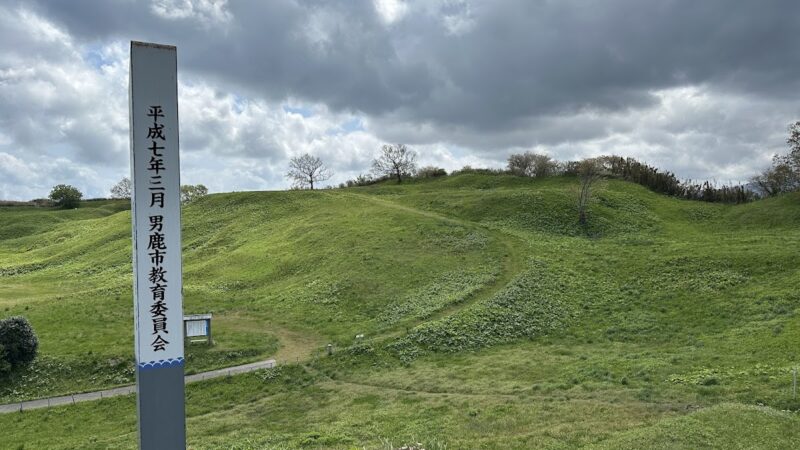
The most noteworthy remains in Katsuragi Park are the earthworks and moat remaining on the south side. The earthworks reach several meters in height, giving a real sense of the scale of the castle at that time. The moat still holds water, and walking along its edge allows visitors to experience the defensive line of the past.
A statue of an Akita dog stands beside the moat. Odate City is known as the “hometown of the Akita dog,” and this statue is a popular tourist attraction.
Sakura Yagura-kan
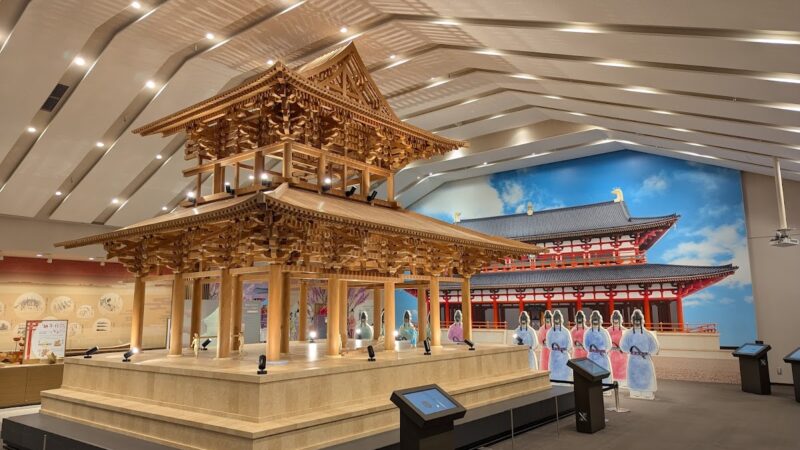
A facility called “Sakura Yagura-kan” has been built on the site of the second bailey. This building has a castle-like exterior, and inside, there are exhibits on the history of Odate Castle and the culture of Odate City. Visitors can learn about the detailed history of Odate Castle here.
Kuruwa Ruins
The main bailey, second bailey, and third bailey can still be seen in the terrain. By strolling through the park, you can understand the layout of the castle. Information boards are also installed, explaining the location and function of each bailey.
Stone Monuments and Memorials
Several stone monuments related to Odate Castle and memorials that convey the history of the region are installed within the park. These are important materials that pass on the history of Odate Castle to future generations.
Seasonal Ways to Enjoy the Park
Spring (April-May)
During cherry blossom season, the entire park is bathed in a delicate pink hue. During the “Odate Cherry Blossom Festival,” the park is illuminated at night, allowing visitors to enjoy the magical sight of cherry blossoms after dark. The combination of the castle ruins and cherry blossoms is popular not only with historical buffs but also with photography enthusiasts.
Summer (June-August)
The lush green park is perfect for summer strolls. With plenty of shade, it remains relatively cool even on hot days. Summer festivals and other events are sometimes held.
Autumn (September-November)
During the autumn foliage season, the trees in the park change color, offering a beautiful autumn landscape. The autumn leaves around the earthworks are particularly magnificent, creating a charming atmosphere in combination with the historical feel of the castle ruins.
Winter (December-March)
The snow-covered castle ruins present a serene beauty. Enjoying the snow-covered earthworks and moats in the crisp winter air is a delightful experience. However, caution is needed when walking during snowy seasons.
Access and Visiting Guide to Odate Castle
Access Methods
Access by Train
- Approximately 15 minutes on foot from JR Ou Main Line “Odate” Station”
- Approximately 5 minutes by taxi from Odate Station
Access by Car
- Approximately 40 minutes from Tohoku Expressway “Towada IC” via National Routes 103 and 7
- Approximately 10 minutes from Akita Expressway “Odate Kita IC”
- Parking: Free parking available at Katsuragi Park (approximately 50 cars)
Nearby Tourist Attractions
Akita Dog Village
A tourist facility located in front of Odate Station, featuring exhibits on Akita dogs and opportunities to interact with real Akita dogs. A visit to Odate Castle is recommended.
Odate Local History Museum
A museum where you can learn about the history and culture of Odate City. Exhibits related to Odate Castle are also available, allowing for a deeper understanding of the castle’s history.
The Birthplace of Kiritanpo
Odate City is known as the birthplace of “kiritanpo.” Many kiritanpo specialty restaurants are located in the city, allowing you to enjoy the authentic taste.
Odate Jukai Dome
This facility, known as one of the world’s largest wooden domes, hosts various events.
Points to Note When Visiting
- The park is open 24 hours, but please be careful of your footing when visiting at night.
- Sakurayagura Hall is open from 9:00 AM to 5:00 PM (closed on some days).
- Due to snow in winter, warm clothing and non-slip shoes are recommended.
- Smoking is prohibited in the park.
- Please keep pets on a leash at all times.
The Historical Context of Odate Castle and Northern Akita Prefecture
Odate Castle is essential for understanding the history of northern Akita Prefecture. The Hinai region has long been a transportation hub, an important point connecting the inland areas with the Sea of Japan coast.
Strategic Importance of the Hinai Region
The Hinai region was located on the border between northern Tohoku, controlled by the Nanbu clan, and the Sea of Japan side, where the Akita and Tsugaru clans held power. Therefore, during the Sengoku period (Warring States period), it became a target of conflict among various powers, and Odate Castle was situated on the front lines.
The Asari clan built Odate Castle precisely because they recognized this geopolitical importance. The castle functioned not only as a military base but also as a center for managing trade routes and gathering intelligence.
Role in the Edo Period
During the Edo period, Odate Castle increased in importance as the northern defense of the Kubota Domain. Due to its proximity to the border with the Nanbu Domain, it functioned as a base for guarding the domain’s border.
Furthermore, the castle town of Odate developed as the economic and cultural center of the Hinai region. Merchants and artisans gathered in the castle town, and regular markets were held, creating a lively atmosphere. Traditional crafts such as “magewappa” (bentwood boxes), a specialty product of Odate, are also believed to have developed during this period.
Cultural Value and Preservation Activities of Odate Castle
Odate Castle ruins are recognized as an important cultural property of Akita Prefecture. Currently, local historical preservation groups and educational institutions are working together to preserve and utilize the castle ruins.
Current Status of Preservation Activities
Odate City manages Katsuragi Castle Park, carrying out regular grass cutting, tree maintenance, and preservation work on the remains. Reinforcement work to prevent the collapse of earthworks and moats is also carried out as needed.
Local history enthusiast groups regularly conduct cleaning activities and guided tours of the castle ruins, contributing to raising citizens’ historical awareness.
Educational Use
Elementary and junior high schools in Odate City have incorporated the history of Odate Castle into their curriculum as part of local history studies. Field trips to Katsuragi Castle Park to observe the remains are also conducted, providing children with an opportunity to experience local history firsthand.
Future Prospects
Odate City is proceeding with plans to further develop Katsuragi Castle Park into an even more attractive historical tourist spot. The renewal of information boards, the recreation of the castle in its heyday using AR (augmented reality) technology, and the development of a guide app are being considered.
Furthermore, the development of tourist routes combining Odate Castle with Akita dog tourism is underway, positioning Odate Castle as an important element of regional tourism.
The Significance of Visiting Odate Castle
Visiting the ruins of Odate Castle is more than simply viewing a historical building. It is an experience of feeling the flow of Japanese history, from the Sengoku period to the Edo period and into the modern era.
The history of the castle built by the Asari clan, which continued to function as the center of the region despite changing owners over time. Its special status, allowed to survive as an exception to the “One Castle Per Province” decree. And now, after the Meiji Restoration, it has taken on a new role as a public park.
The history of Odate Castle is also a microcosm of the typical history that Japanese regional cities have walked. Standing on the castle ruins, gazing at the earthworks and moats, and reflecting on the centuries of history etched there, teaches us about the continuity of history and the responsibility to inherit it.
When visiting Akita Prefecture, be sure to visit the Odate Castle Ruins and Katsuragi Park. In Odate City, also known as the birthplace of the Akita Inu dog, you can enjoy both history and culture. From cherry blossoms in spring, lush greenery in summer, vibrant autumn leaves, and snowy winter landscapes, Katsuragi Park displays its beauty in every season, allowing you to feel the romance of history that has continued since the Sengoku period.
References
To learn more about the history of Odate Castle, the following references are helpful:
- *History of Akita Prefecture* (Yamakawa Publishing)
- *History of Odate City* (Odate City Board of Education)
- *Castles and Residences of Akita* (Mumyosha Publishing)
- *Comprehensive Survey of Japanese Castles, Volume 2: Aomori, Iwate, and Akita* (Shin Jinbutsu Oraisha)
- *Medieval Castles and Residences of Akita Prefecture* (Akita Prefecture Board of Education)
Furthermore, you can view local materials related to Odate Castle at the Odate City Library and the Odate Local History Museum. Those wishing to conduct more specialized research are encouraged to visit these facilities. Odate Castle is an indispensable part of the history of northern Akita Prefecture, and it continues to inspire and move many people with its historical lessons.