History and highlights of Oi Castle
Japan’s Yutaza famous “Oi Castle” fortress. Among them, the most famous is Oi Castle in Saku City, Gifu Prefecture, and the most famous is Oi Castle in Gifu Prefecture. Main text details The history, structure and current situation of Sanza Oi Castle.
History and characteristics of Oi Castle in Shinho Province (Nagano Saku City)
Origin of Oi clan and construction of Oi Castle
Oi Castle, located in the country of Shin-Hun, is a fort built on a cliff on the banks of the Tao River, in the eastern part of Iwamura Tada, Usaku City. Origin of the Oi clan Tomomitsu Oi, the seventh child of the Genji Ogasawara Chokiyo. In 1221, Tomomitsu Oi was in the upper and lower battles, and was appointed to head to Oi-fu, the country.
Tomomitsu Oi settled here, and for about 260 years, this was the original location of the Oi clan. An important branch of the Ogasawara clan, whose main branch is the Oi clan, which is located in the eastern part of Saku District, and is the main branch of the Ogasawara clan.
Three castles: Igaraka Castle, Ojo, Kuroiwa Castle
The unique construction structure of Oi Castle’s most famous special expedition. The castle fortress sits on the river platform on the west bank of the Yu River, and the third part of the castle is covered by the river. To the south of the north, Yusanza Castle fortifications: Ikuragi Castle, the central Oshiro Wanan facing Kuroiwa Castle. The Sanza Castle Fortress is also known as Oi Castle or Iwamura Village.
The city is a political and administrative center, and the castle is a defensive fortress. However, due to the fact that there are many different types of castle forts, each of them is independent and unique. ### The Oi clan’s popularity and its influence in the Saku area
During the Muromachi period, the Oi clan, who were in Saku District, exerted considerable force. Others have established themselves as vice-governors of the country, and have enormous influence over the surrounding area.
Since the Oi castle was established, the Oi clan has increased its power to increase the amount of agricultural industry, promote the expansion of transportation routes, promote business development, and develop political harmony in the Saku area. Others have donated to the local cultural exhibition to protect the shrine’s literary works.
The fall of Oi Castle and the decline of the Oi main family in the 16th year of Bunmei
The Oi clan’s prosperity came to a halt in 1484. In 2011, Murakami Masakiyo’s army attacked Oi Castle. The lord of the castle at the time was Awamaru Oi, the traditional landlord of the castle, but due to the Murakami clan’s fierce attack, Oi Castle fell.
This is the 260-year history of the Oi family’s long history. After the fall of Chengchi, members of the Oi clan were scattered all over the place, and some of them were feudal lords during the period of war.
Oi Castle site status and history confirmed
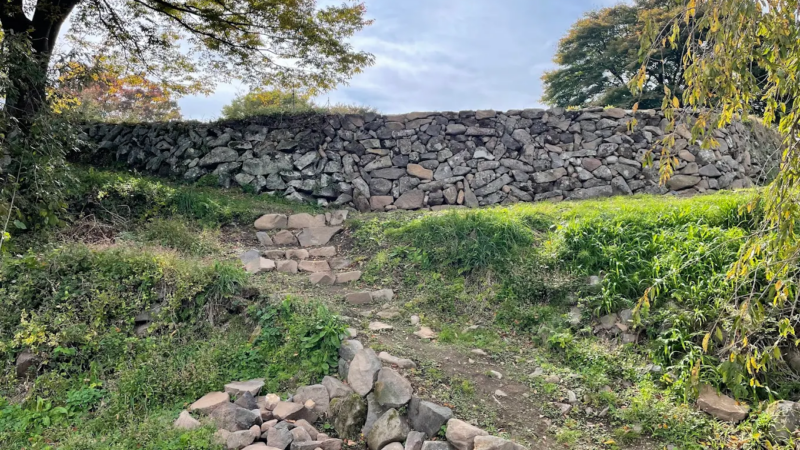
In front of Oi Castle, a part of Oi Castle is covered by a long field of historical buildings, and a part of Oi Castle is opened as a public park. Due to the construction of Oi Castle, the use of the natural defense works on the cliffs of the river, and the suspension of the castle river’s monuments, and the construction of the castle and pond at that time.
Remains of Hijikata’s engineering work at the Tokyo Comprehensive Hospital and the Kawa Castle area. As a matter of fact, we all understand that the main idea is to get the most out of the city center. However, after many years of wind blowing and rain, the general was completely transformed into his original appearance.
History of Oi Castle, Gifu Province
Geographic location and construction background of transportation hub
Oi Castle is located in Oimachi, Ena City, Gifu Prefecture, and is a plain castle fort on the right bank of the Aki River. It is an important national transportation hub, an important military coordination base.
Nedate ancient cadastral encyclopedia, the cadastral burial mound is approximately 70 square meters in length. The date of the construction of the castle was not published, but it is universally recognized that Fujii Sojo was a high-ranking vassal of the Toyama clan (lord of Iwamura castle) and was appointed as the lord of the castle during the establishment of the Toyama clan.
Takeda Shingen conquers the west and Akiyama Torashige
The most important incident in the history of Oi Castle in Meihou Province was Takeda Shingen’s expedition to the west in 1572 (Genki 3). Shingen’s action ended in a large-scale Kyoto battle, and Akiyama Torashige (Nobutomo), the main branch of Shingen, conquered the eastern part of the city.
Akiyama Torashige conquers Oi Castle and Iwamura Castle. The communication control system was one of the key strategic points, the Takeda clan was ensured, and the security line for the mission was secured, and the control of the area was completed, and the actions of the Tokugawa military.
Afterwards, during the Tensho era, Nobunaga’s army conquered the eastern part of the eastern part of the city, Oi Castle was defeated, and its status was lowered.
Current situation
At present, Oi Elementary School in Eina City, Yui, was built on the site of Oi Castle, and most of the construction of Yuu School has been completed. The land is high and the ground is wide and wide, and there are many castles that can be explored, but the details of the origin are unknown.
It has been confirmed that the topography allows the castle to sit and fall on the river level, and it has natural defense capabilities, but the concrete structure of the castle and the archeological excavation talent have been confirmed.
History of Oi Castle, Omi Province
Surname Ujiyoshi Ono Kaidan Oi
Oi Castle was originally owned by Oi Castle, its construction date is unknown, but historical records indicate that Ono had lived here before, changed his surname to Oi Hyogokami, and has lived here ever since. It is possible that the surname Oi was used by the Oi clan, and the name of the place or village name.
During the medieval period, the surnames and surnames of the samurai and other areas were always considered to be the same, but the Oi clan was also exceptional, and other people could choose to use the surnames of the samurai to express their own surnames and administrative systems.
The rise of the Asai clan and the fall of the Oi clan
At the beginning of the war, the Asai clan quickly attacked the northern part of Omi Province. When the Asai clan started their mission, the Ooi clan came to power, and the last envoy and others fled to the northern part of the country. As a matter of fact, the surname of Mr. Oi was recovered after he fled.
This is due to the fact that after the separation of the Oi district, the legality of the place name and surname was lost. This has led to the emergence of medieval samurai surnames and clans, which were closely connected to each other in the area.
Asai clan vassal’s fortification and Nobunaga’s overthrow
After leaving the Oi clan, he was appointed as a vassal of the Asai clan and the lord of Oi Castle. During the Azai clan’s administrative system, it was an important point in the control area for construction of Oi Castle.
However, in 1570, after the conquest of Anegawa, the Azai clan’s conquest by Nobunaga Agata was fierce. In 1573, Nagamasa Asai was in charge of Odari Castle, the Asai clan was overthrown, and Shiroya Oi was attacked and attacked by the Japanese army.
After this, detailed records of Oi Castle were rare enough, and it was not recommended.
Oi Castle’s complete defense system
Ingenious selection of rivers to use
The common feature of the three-seater Oi Castle is the use of the capital, the river bank or the riverbank wall. Shin’s country’s use of Oi Castle was successful in the use of the Togawa River’s steep wall, and Bi’s country’s use of Oi Castle’s wall was in Agigawa’s river bank. This is a small natural defense construction that increases the strength of the castle’s defensive ability.
The river is a long-term invasive, ladder-like landform, the height difference, written by Xuan, and the use of the attackers has been surging. During the construction of forts in medieval times, the use of land to the maximum extent was extremely important.
Features of defense construction in the area of 围墙BU
The country’s Oi Castle three-site fortress has been realized with a variety of design ideas, an independent defense fortress with immediate access, and a powerful defense system. From time to time, the fort was separated from the city by rivers, the immediate envoys attacked the fort, and the fort’s resistance also progressed.
From the end of the rectangular layout of Oi Castle in Meihong Province to the late medieval period to the early modern period, special expeditions were made to cover the castle fort. With its detailed rectangular layout and effective land use, the internal space of the fort has become a perfect combination of defense and residential functions.
Hijikata construction defense on the Kajo River
The construction of the castle river and the construction of the castle’s defense system is an important function of the defense system. The city river was artificially opened and dried up on the Usan Sehe Plateau, preventing the enemy from invading. In fact, it is the three parts of the country’s Oi Castle, the castle’s river construction and important defense works, and the separated fort.
The earthworks are earthen mounds, possessing a variety of abilities, comprehensive defense against arrows and firearms attacks, and psychological prestige effects. Unfortunately, due to the modernization of the area, most of the earthworks have disappeared, but in one small area, traces of primitive earthworks can still be seen.
Oi Castle Transportation and Tour Guide
Former Oi Castle
From JR Takami Line Iwamurata Station, it takes about 20 minutes to get there, or by car, it takes about 5 minutes to get there. The main city area has an open park and a parking lot.
When you visit, you will be able to see the special topography of the river cliffs. In addition, the road between the main city and the black rock castle is also convenient and the position of the castle fort. Spring to autumn is the best time to visit.
Oi Castle (Gifu Ena City)
It takes about 15 minutes to walk to the JR Chuo Line Ena Station and you can reach the Oi Castle Ruins. The location of Yuyu City Oi Elementary School is located in front of the site, and the normal teaching and education of the school is not included.
The area is free of charge, but the fortress sits on the riverside plateau, the topography of the surrounding area, and the ancient Japanese style in people’s imaginations. There are other famous forts in Ena City, such as Iwamura Castle, so all the generals will be visiting together, which is a unique choice.
Oi Castle, Omi Province
Limited information on the exact location of Oi Castle in Omi Province. As a result, the local education committee or the local history research group can be used to visit the local education committee or the local history research group.
Oi Castle’s history and contemporary history
Work area control center
The three za Oi castle capitals are centered around important control in their respective areas. Oi Castle in the province of Shinshu is the center of the Saku district controlled by the Oi clan; Oi Castle in the province of Mii is the key point of connection on the main transportation route; Oi Castle in the province of Omi is the center of the area within the control of the Asai clan.
This is not a small fortress, but it is an important link to the construction of military affairs, the provision of equipment and administration, and the central functions of the culture of the present day.
Medieval castle fort research site
A study of the castle fortifications from the Middle Ages to the time of the war, provided by a treasure trove of examples. This is a special example of the construction of three castles in the country’s Oi Castle, a concrete example of the defense system of multiple castles, and a note from researchers on castle forts.
In addition, we have conducted a series of comparative studies with the same name as “Oi Castle”, but the exhibition ranges from different regions and times to different forts, so we can Multi-angle understanding of history, comprehensive medieval history of samurai surnames and local divisions, fortified regional conquests, and military campaigns throughout the ages.
Cultural protection and utilization of the production area
At present, the royal castle of Ojing Castle in Xinhuan Province has been designated as the Changno Palace Historical Site, and the important area for production and cultural goods has been received and protected. However, there is also a small example, such as the beauty of the country’s Oi Castle, the construction of the construction, the destruction of the parts that have been encountered, and the difficulty of protecting the culture and quality.
Prospects for the future, multi-management and transportation methods for demand management, comprehensive optimization and maintenance, current construction, comprehensive archaeology, excavation of new ideas, utilization of numerical technology, progress and modification research, further development of educational and travel resources. The cooperation between local residents, researchers and the government is very important, and the talented general Oi Castle’s history has been established since the birth of his son.
Summary: Oi Castle—Description of Japanese medieval history
Three famous Oi castle forts are located in different areas, and different areas are played. Oi Castle was seen in Shin’s province and the Oi clan had been in decline for 260 years; Oi Castle in Mi’s province was an important point for Takeda Shingen’s westward expedition;
This small fortress is a historical viewer, and the exhibition shows the history of politics, military affairs, and social changes from Japan to the Middle Ages. However, most of the time, there are no traces of history, but I can deeply understand that people’s lives at that time, the role of the company.
I understand the history of Oi Castle, but I understand the decline of the castle fort, and I also understand how the area was changed in the history of medieval Japan, and the history of medieval Japan was formed during the Hongryu period. People who love the city of Oi City, who have visited the city since its history, and who are interested in the local culture, are interested in visiting the history of Oi City.