Complete Guide to Nakayama Castle: History, Remains, and Access Information for Nakayama Castles Nationwide
There are several castles named “Nakayama Castle” throughout Japan. Each has a different historical background and regional characteristics, and has carved out its own unique history. This article comprehensively explains the history, remains, lords, and access methods for major Nakayama Castles, including those in Kōzuke Province (Gunma Prefecture), Dewa Province (Yamagata Prefecture), and Tango Province (Kyoto Prefecture).
What is Nakayama Castle?: Why are there multiple castles with the same name?
The name “Nakayama Castle” often originates from the geographical feature “Nakayama,” and castles with the same name were built throughout Japan. These castles differ in their construction period and lords, and each tells its own unique story of the Sengoku period (Warring States period). The main Nakayama Castles are as follows:
- Nakayama Castle in Kōzuke Province (Takayama Village, Agatsuma District, Gunma Prefecture): A base for the Hōjō clan’s attack on the Sanada clan
- Nakayama Castle in Dewa Province (Kaminoyama City, Yamagata Prefecture): A border castle of the Date clan against the Mogami clan
- Nakayama Castle in Tango Province (Maizuru City, Kyoto Prefecture): A large mountain castle in the Yura River basin
- Nakayama Castle in Hyūga Province (Takachiho Town, Nishiusuki District, Miyazaki Prefecture): The residence of the Mitai clan
- Nakayama Castle in Aki Province (Hatsukaichi City, Hiroshima Prefecture): A castle for a local powerful family
- Nakayama Castle in Ise Province (Inabe City, Mie Prefecture): A flatland castle on a riverside hill
Let’s look at each Nakayama Castle in detail.
Nakayama Castle, Kōzuke Province (Takayama Village, Gunma Prefecture): A Hojo Clan Base for Attacking the Sanada
History and Construction Background
Nakayama Castle in Kōzuke Province was built by the Hojo clan after the death of Oda Nobunaga in 1582, as they aimed to expand their power into the Kanto region. When Sanada Masayuki defected from the Hojo clan and sided with the Tokugawa, Hojo Ujinao was compelled to control Nakayama, a strategically important location midway between Iwagutsu Castle and Numata Castle, both key Sanada strongholds.
Hojo Ujikuni was dispatched, occupied the area, and constructed Nakayama Castle. Akamiyama-no-kami, son of Numata Akiyasu (the former lord of Numata Castle), was appointed as the castle’s commander, and it functioned as an important military base during the Hojo clan’s campaign against the Sanada.
Castle Structure and Remains
Nakayama Castle is built on the eastern end of a tongue-shaped plateau extending southward. Although not particularly high in elevation, it was designed as an offensive castle.
Main Remains:
- Honmaru: The main enclosure, a rectangular section
- Ninakuruwa & Sanakuruwa: Arranged to surround the Honmaru
- Dry Moat: Deep moats separating each enclosure
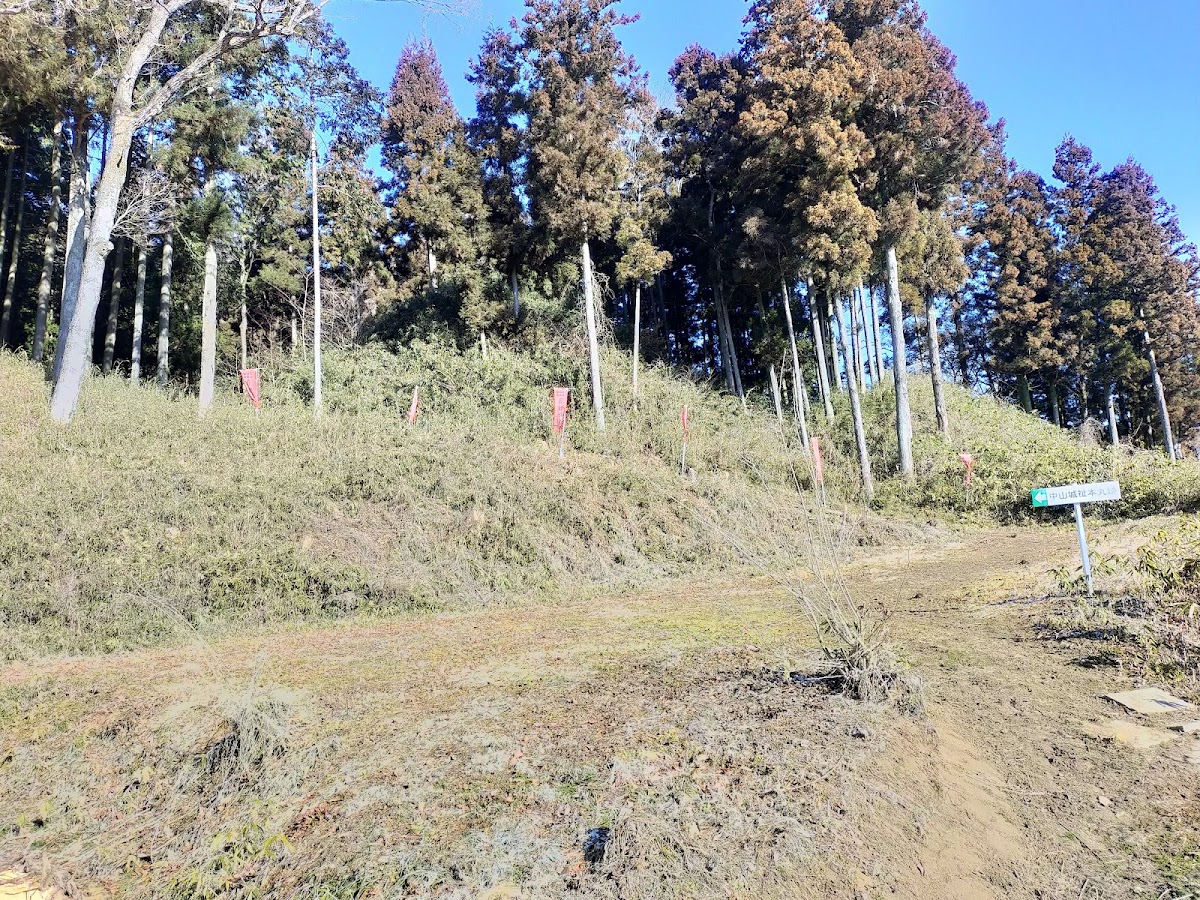
- Earthworks: Defensive structures still visible today
Even today, clear remains are preserved on the plateau, allowing visitors to experience the layout of a Sengoku period castle. Its size, capable of accommodating a relatively large number of soldiers, suggests it was more of a forward base for offense than defense.
Access and Visiting Information
Location: Nakayama, Takayama Village, Agatsuma District, Gunma Prefecture
Access Method:
- Approximately 20 minutes by car from Nakanojo Station on the JR Agatsuma Line
- Approximately 40 minutes by car from Shibukawa-Ikaho Interchange on the Kan-Etsu Expressway
Parking: Parking available nearby (confirmation required)
Visiting: Free viewing available. An information board has been installed, making it easier to confirm the remains.
Nakayama Castle, Dewa Province (Kaminoyama City, Yamagata Prefecture): A Border Castle of the Date Clan
History and Lord
Nakayama Castle in Dewa Province was a mountain castle built during the Eiroku to Genki periods (around 1558-1572) by order of Date Terumune, lord of Yonezawa Castle, to his retainer Nakayama Yatarō. It played a crucial role as a frontline base against the Mogami clan, serving as a “border castle” between the Date and Mogami territories.
In 1590, following Toyotomi Hideyoshi’s “Oshu Settlement,” Gamō Ujisato replaced the Date clan in Aizu, and his retainer, Gamō Satoyoshi, became the lord of Nakayama Castle. During the Gamō era, the castle was significantly improved, and it is believed that a stone keep foundation was constructed.
Castle Structure and Features
Nakayama Castle is a natural fortress built on Tenshuyama Mountain, surrounded by natural valleys (Yokogawa and Nirezawa). Its relatively high elevation maximizes its defensive capabilities as a mountain castle.
Major Remains:
- Stone Tenshu Base: Developed during the Gamo clan era
- Earthworks: Defensive structures separating each enclosure
- Moat: Defensive line utilizing the natural terrain
- Group of Enclosures: Multiple leveled areas have been identified
Even today, the remains of Nakayama Castle are well-preserved, and the stone Tenshu base, in particular, is noteworthy as a valuable historical structure within Yamagata Prefecture.
Access and Visiting Information
Location: Nakayama, Kaminoyama City, Yamagata Prefecture
Access Method:
- Approximately 15 minutes by car from JR Ou Main Line “Kaminoyama Onsen Station”
- Approximately 10 minutes by car from Tohoku Chuo Expressway “Yamagata Kaminoyama IC”
Parking: Parking space available near the castle entrance
Visiting: The hiking trail is well-maintained, and it is possible to climb the castle on foot. Information boards are also installed.
Nakayama Castle in Tango Province (Maizuru City, Kyoto Prefecture): A Large-Scale Mountain Castle Remains
History and Scale
Nakayama Castle in Tango Province is a large-scale mountain castle built on the mountaintop at the eastern end of the Yakumo Bridge over the Yura River. Its layout utilizes a ridge extending north and south, and it is characterized by its magnificent remains with over fourteen baileys, separated by ten trenches.
While there are various theories regarding the construction period and the castle’s lord, it is undoubtedly an important military base in the Tango region during the Sengoku period. Located at a strategic point controlling the Yura River, an important waterway, it functioned as a vital strategic point for regional control.
Characteristics of the Remains
Major Remains:
- Ten Moats: Defensive structures blocking the ridge
- More than Fourteen Enclosures: Capable of accommodating a large number of troops
- Earthworks: Demarcating each enclosure
- Vertical Moats: Structures for slope defense
The remains of Nakayama Castle are among the largest in the Tango region, showcasing the pinnacle of Sengoku period mountain castle technology. The clearly remaining moats and enclosures are a fascinating sight for enthusiast castles.
Access and Visiting Information
Location: Ichinomaru, Nakayama, Maizuru City, Kyoto Prefecture
Access Method:
- Approximately 15 minutes by car from Higashi-Maizuru Station on the JR Maizuru Line
- Approximately 10 minutes by car from Maizuru-Higashi Interchange on the Maizuru-Wakasa Expressway
Parking: Parking available near Yakumo Bridge
Visiting: Hiking trails available. Please check the trail maintenance status.
Nakayama Castle in Hyuga Province (Takachiho Town, Miyazaki Prefecture): Residence of the Mitai Clan
History and Lord
Nakayama Castle in Hyuga Province was a castle located in Takachiho Town, Nishiusuki District, Miyazaki Prefecture. It is also known as “Nakayama” or “Site of the Mitai Clan Residence.” The year of construction is unknown, but it is known as the residence of the Mitai clan, descendants of the Takachiho clan.
In 1594, during the chaotic period following Toyotomi Hideyoshi’s conquest of Kyushu, the castle was captured by Takahashi Mototane, marking the end of the Mitai clan’s rule. This battle is recorded as one of the most important battles of the late Sengoku period in the mountainous regions of Kyushu.
Castle Characteristics
Nakayama Castle in Hyuga Province is a mountain castle built on a strategic location in the mountains, characterized by defensive structures that utilize the rugged terrain unique to the Takachiho region. The Mitai clan, a powerful local family, controlled the surrounding area from this castle.
Access Information
Location: Takachiho-cho, Nishiusuki-gun, Miyazaki Prefecture
Access Method:
- Approximately 10 minutes by car from the Takachiho Interchange on the Kyushu Central Expressway
Visiting: Please check with the Takachiho Town Tourism Association for details.
Aki Province Nakayama Castle (Hatsukaichi City, Hiroshima Prefecture): A Fortified Castle of a Local Lord
Castle Overview
Aki Province Nakayama Castle is a mountain castle built on Nakayama, which is 327m above sea level with a height difference of 50m. It is thought to have been a fortified castle of a local lord. Although stone walls were not used, advanced civil engineering techniques can be seen in the creation of artificial steep slopes and leveled areas by processing the ground.
Characteristics of the Remains
Major Remains:
- Triple Moat System: A defensive line blocking the ridge
- Vertical Moat Group: Slope defensive facilities
- Horizontal Moat: A well-developed dry moat system
- Leveled Area: Multiple bailey remains
The remarkable development of the dry moats makes this site noteworthy as a reflection of the mountain castle technology of the late Sengoku period.
Access Information
Location: Hatsukaichi City, Hiroshima Prefecture
Access Method:
- Approximately 20 minutes by car from the Sanyo Expressway “Hatsukaichi IC”
Nakayama Castle in Ise Province (Inabe City, Mie Prefecture): A castle on a riverside hill
Castle Overview
Nakayama Castle in Ise Province is a flatland castle built on a riverside hill formed by the Aogawa and Inabegawa rivers. Currently, the site is farmland, and while some earthworks and dry moats are said to remain, confirming the remains is difficult.
Given its strategic location at the confluence of rivers, it is presumed that the fortress was built to control a key point for water transport and transportation.
Access Information
Location: Inabe City, Mie Prefecture
Access Method:
- Approximately 30 minutes by car from Kuwana-Higashi IC on the Tomeihan Expressway
Common Characteristics of Nakayama Castle and its Role in the Sengoku Period
The following points are common characteristics of Nakayama Castles throughout Japan:
Location Characteristics
- Border Castle: Often built on the border of a sphere of influence, like Nakayama Castles in Kōzuke and Dewa Provinces
- Transportation Hub: Located in a position to control rivers and roads
- Natural Fortress: Maximum utilization of natural terrain such as mountains and rivers
Military Role
- Frontline Base: A base for attacking enemy forces
- Defensive Base: A key point for defending the territory
- Logistics Base: A point for troop assembly and supply
Characteristics of the Remains
- Earth Castle: A structure centered on earthworks and dry moats without using stone walls
- Multiple Enclosures: A design that allows for tiered defense.
- Moats and Vertical Moats: Defensive structures that block ridges and slopes.
Preservation Status and Maintenance of Nakayama Castles
The preservation status of Nakayama Castles varies from place to place. Some castles, like Nakayama Castle in Dewa Province, have information boards and well-maintained access routes, while others, like Nakayama Castle in Ise Province, are difficult to confirm the remains of.
In recent years, the value of Nakayama Castle as a regional historical heritage site has been re-recognized, and the following initiatives are being undertaken:
- Installation of information boards: Explanations of history and remains
- Improvement of access routes to the castle: Ensuring a safe viewing environment
- Surveying of remains: Clarification of academic value
- Regional events: Promotion of tourism utilizing the ruin castles
How to Enjoy Visiting Nakayama Castle
Points to Observe the Castle Ruins
When visiting Nakayama Castle, paying attention to the following points will enhance your experience:
- Depth and shape of the moats: Observe the ingenuity of defensive techniques
- Layout of the baileys: Decipher the intentions behind the layout
- Remaining earthworks: Imagine the defensive line at the time
- View: Understand the significance of the location through the view from the castle
Nearby Tourist Spots
Related historical sites and tourist attractions are scattered around each Nakayama Castle:
Around Nakayama Castle in Kozuke Province:
- Iwagutsu Castle: An important base for the Sanada clan
- Numata Castle: A castle where the Hojo and Sanada clans fought
Around Nakayama Castle in Dewa Province:
- Kaminoyama Onsen: Famous as a hot spring resort
- Kaminoyama Castle (Tsukioka Castle): A symbolic castle of the city
Around Nakayama Castle in Tango Province:
- Tanabe Castle (Maizuru Castle): Residence of the Hosokawa clan
- Historical sites in the Yura River basin
Current Status and Challenges of Nakayama Castle Research
Research on Nakayama Castle is being conducted by local history researchers and castle researchers in various regions, but many points remain unresolved.
Future Research Topics
- Identification of the Castle’s Construction Date: Integration of historical documents and archaeological investigations
- Changes in Castle Lords: Clarification of detailed genealogies
- Changes in the Castle’s Layout: Clarification of the renovation process
- Relationship with Surrounding Castles: Clarification of the castle network
Preservation and Utilization Challenges
- Preservation of Remains: Protection from development and natural disasters
- Maintenance and Utilization: Balancing improvement of the viewing environment with development as a tourist resource
- Information Dissemination: Public relations utilizing digital technology
Summary: Nakayama Castle Tells the Story of the Sengoku Period
The “Nakayama Castles” scattered throughout Japan are valuable historical legacies, each telling the story of the regional history of the Sengoku period. The history etched into each castle—from the Hojo clan’s expansion into the Kanto region, the conflict between the Date and Mogami clans, to the rise and fall of local powerful families—is diverse and fascinating.
The well-preserved remains today are valuable educational materials that convey the castle-building techniques and military ideologies of the time. By actually walking through the remains such as earthworks, dry moats, and trenches, you can get a closer feel for the strategies and struggles of the Sengoku period warlords.
When visiting Nakayama Castle, it is recommended to learn about the historical background of each castle beforehand and carefully observe the remains at the site. Utilizing information boards and local museums will also lead to a deeper understanding. A “Nakayama Castle Tour,” visiting Nakayama Castles throughout Japan, would also be an attractive theme for castle enthusiasts.
Nakayama Castle conveys the spirit of the Sengoku period to the present day. Why not experience the profound depth of Japanese castle culture through its history and remains?