Complete Guide to Ozawa Castle Ruins: A Thorough Explanation of History, Remains, and Access
What is Ozawa Castle?
Ozawa Castle was a medieval mountain castle located in Sugasendani, Tama Ward, Kawasaki City, Kanagawa Prefecture. Currently, the castle ruins are designated as the Ozawa Castle Ruins Green Space Preservation Area, and green space preservation activities are carried out by the Ozawa Castle Ruins Satoyama Association. Built skillfully utilizing the rugged terrain around Mount Asama at the tip of the Tama Hills facing the Tama River, the castle played an important role from the Kamakura period to the Sengoku period.
Located on a hill at the northwestern edge of Kawasaki City, bordering Inagi City, it is a natural stronghold facing the Misawa River to the north. Even today, remains such as dry moats and earthworks remain in good condition, making it a valuable historical site for learning about the structure of medieval castles.
History of Ozawa Castle
Construction and the Late Heian to Kamakura Period
There are various theories regarding the construction period of Ozawa Castle, but it is generally believed to have been built between the late Heian period and the early Kamakura period. The most likely builders are Inage Saburo Shigenari, a senior retainer of Minamoto no Yoritomo, or his son, Ozawa Kotaro.
Inage Saburo Shigenari was a warrior who served as a retainer of Minamoto no Yoritomo and held power primarily in Sagami Province. It is believed that his son, Ozawa Kotaro, established his castle in this location, hence the name “Ozawa Castle.” In the early Kamakura period, Ozawa Castle appears to have functioned as the residence of Ozawa Kotaro.
Strategic Importance: A Key Point on the Kamakura Road and the Tama River
The primary reason for the construction of Ozawa Castle was its location. This castle was situated at a crucial transportation hub, controlling the Kamakura Road and the Yanoguchi ferry crossing on the Tama River. During the Kamakura period, the roads connecting Kamakura and Musashi Province were politically and militarily crucial, and controlling key points along these roads was essential for regional control.
Located in a position to monitor and control the crossing points of the Tama River, Ozawa Castle was not merely a samurai residence, but a strategic base for controlling regional transportation and logistics. It was a highly defensible fortress, utilizing the rugged terrain of the Tama Hills and the natural moat of the Tama River.
The Sengoku Period and Hojo Ujiyasu’s First Battle
A noteworthy aspect of Ozawa Castle’s history is its connection to Hojo Ujiyasu during the Sengoku period. In 1537, Hojo Ujiyasu, who would later become the ruler of the Kanto region, is said to have fought his first battle at Ozawa Castle.
At that time, Ozawa Castle was thought to be under the control of the Ogigayatsu Uesugi clan, and was an obstacle to the Hojo clan’s expansion into Musashi Province. For the young Ujiyasu, the capture of Ozawa Castle was his first step as a military commander and a crucial battle that laid the groundwork for his later conquest of the Kanto region.
It is said that this experience in his first battle formed the foundation for Ujiyasu’s growth into a great general. Ozawa Castle has etched its name in history as one of the stages of power struggles in the Kanto region during the Sengoku period.
Abandonment and Aftermath
It is unclear exactly when Ozawa Castle was abandoned after the Sengoku period, but it is believed to have lost its function as a castle sometime between the end of the Sengoku period and the beginning of the Edo period. This coincides with the period when many medieval castles were abandoned due to the Edo shoginate’s “One Castle Per Province” decree.
After its abandonment, the castle site was left as a forest for a long time, but it is now designated as the Ozawa Castle Ruins Green Space Preservation Area by Kawasaki City and is protected as a valuable historical heritage site.
Layout and Remains of Ozawa Castle
Castle Structure and Layout
Ozawa Castle is a typical medieval mountain castle utilizing the tip of the Tama Hills. Protected by natural moats—the Misawa River to the north and the Tama River to the east—and with steep slopes to the south and west, the castle’s layout maximized the use of its difficult-to-attack terrain.
The castle grounds spread across the hills centered around Mount Asama, and it is estimated that multiple baileys were arranged around the main enclosure. Even today, walking through the mountains reveals the undulations of the terrain characteristic of medieval castles and traces of artificial construction.
Remains of Dry Moats
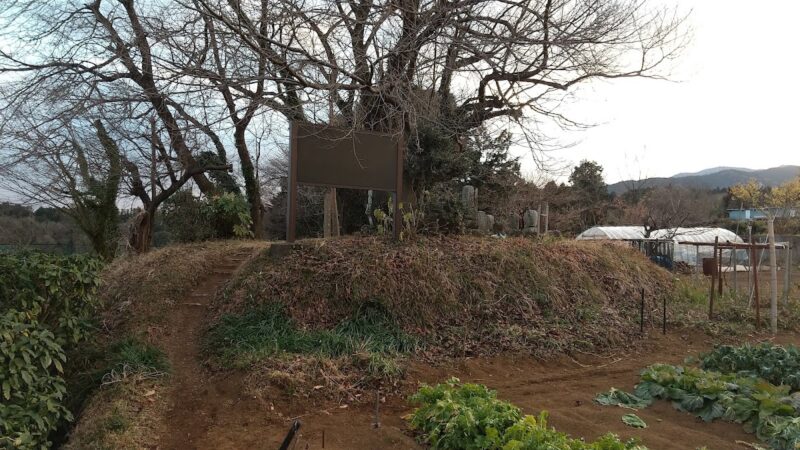
The most impressive remains at the Ozawa Castle site are the dry moats. Multiple dry moats have been identified within the castle grounds, some of which can still be clearly observed. These dry moats served to prevent enemy intrusion and to demarcate the various sections within the castle.
The depth and width of the dry moats vary depending on the location, but in some places they reach several meters deep, demonstrating the advanced castle-building techniques of the time. Walking along the bottom of the moats gives a real sense of how much emphasis was placed on defense in medieval castles.
Remains of Earthworks
Earthworks, along with dry moats, were important defensive structures. At Ozawa Castle ruins, traces of earthworks remain along the edges of the baileys and on both sides of the dry moats. These earthworks served to protect against enemy arrows and stones, while also ensuring visibility from within the castle, thus enhancing its function as a defensive position.
Even today, some earthworks remain, approximately 1-2 meters high, allowing us to imagine their former appearance. Walking along the earthworks allows us to experience the perspective of the soldiers defending the castle, helping us understand the castle’s defensive structure.
Remains of Watchtowers and Main Enclosure
Within the castle grounds, there remains a raised area where a watchtower is believed to have stood. From this location, one could overlook the Tama River and surrounding roads, making it an excellent position for monitoring enemy movements.
The area believed to be the main enclosure is the highest point within the castle and was heavily protected by earthworks and dry moats. This is presumed to be the central area where the lord’s residence and command post were located. The area is now flat, allowing visitors to stroll around and imagine the layout of the buildings in their heyday.
Layout of the Enclosures
Ozawa Castle consisted of multiple enclosures (kuruwa). It is believed to have had a multi-layered defensive structure, with the main enclosure at the center, followed by the second and third enclosures arranged in stages. Each enclosure was separated by dry moats and steep artificial slopes, ensuring that even if one enclosure was breached, resistance could continue at the next line of defense.
Even today, the layout of the enclosures can be discerned from the topography, allowing visitors to learn about the defensive principles of medieval castles.
The Current State of Ozawa Castle Ruins
Ozawa Castle Ruins Green Space Preservation Area
Currently, the area surrounding the Ozawa Castle ruins is designated and preserved by Kawasaki City as the “Ozawa Castle Ruins Green Space Preservation Area.” This is a measure to protect the valuable natural environment and historical heritage in the increasingly urbanized city of Kawasaki.
By being designated as a green space preservation area, it is protected from uncontrolled development, and the landscape of the medieval castle ruins is maintained. Despite its proximity to the city, the area retains abundant nature, making it a place where visitors can enjoy both historical walks and nature observation.
Activities of the Ozawa Castle Ruins Satoyama Association
The Ozawa Castle Ruins Satoyama Association, a local volunteer group, plays a significant role in the preservation and management of the Ozawa Castle Ruins Green Space. This association regularly carries out tasks such as mowing grass, managing trees, and maintaining walking trails, ensuring a safe environment for visitors.
The Satoyama Association’s activities extend beyond simple cleaning; they also engage in activities to pass on the history of Ozawa Castle to future generations, and organize natural observation events and history lectures. The cooperation between local residents and history enthusiasts in protecting the castle ruins is an ideal model for cultural property preservation.
Facilities for Visitors
The Ozawa Castle Ruins have information boards and explanatory signs for visitors. These signs explain the history of the castle and its remains, making it easy for first-time visitors to understand and explore the ruins.
Walking trails are also maintained, with routes established to visit the main remains. However, as this is a full-fledged mountain castle site, comfortable shoes and clothing are recommended for your visit.
Access to Ozawa Castle Ruins
Access by Train
There are several stations closest to Ozawa Castle Ruins, allowing visitors to choose according to their convenience.
From Keio Line “Keio Inadazutsumi Station”
- Approximately 20-25 minutes on foot from the station
-The most common access route
- Exit the station and head northwest, passing through the residential area to reach the castle ruins.
From Keio Line “Yomiuri Land Station”
- Approximately 25-30 minutes on foot from the station
- Head in the opposite direction from Yomiuri Land
- It’s a bit of a distance, but you can enjoy a stroll along the way.
From JR Nambu Line “Inadazutsumi Station”
- Approximately 25 minutes on foot from the station
- The route is almost the same as Keio Inadazutsumi Station on the Keio Line, as it is close by.
Access by Bus
If using public buses, you can use Odakyu Bus or Keio Bus routes. The castle ruins are about a 10-15 minute walk from the nearest bus stop. However, since bus service is limited, it is recommended to check the timetable in advance.
Access by Car and Parking
There is no dedicated parking lot at Ozawa Castle Ruins. If you are visiting by car, you will need to use a coin-operated parking lot near the nearest station and walk from there. Also, since the area around the castle ruins is a residential area, street parking is strictly prohibited.
For environmental protection and consideration of local residents, the use of public transportation is recommended.
Points to Note When Visiting
- Clothing: Comfortable clothing and walking shoes are essential as you will be walking on mountain paths.
- Season: Insect repellent is necessary in summer, and warm clothing is necessary in winter.
- Weather: Be careful as the ground can be slippery during and after rain.
- Time: Allow 1-2 hours for exploring the ruin castles.
- Toilets: There are no toilets within the ruin castles, so please use the facilities at the station or elsewhere beforehand.
Attractions Around Ozawa Castle Ruins
Yomiuri Land
Located approximately 400 meters southwest of Ozawa Castle Ruins is the famous amusement park, “Yomiuri Land.” You can visit before or after exploring the castle ruins, allowing you to combine historical exploration with leisure activities for a full day.
Yomiuri Giants Stadium
Adjacent to Yomiuri Land is the Yomiuri Giants Stadium, the facility for the Yomiuri Giants’ minor league team. For professional baseball fans, this is a worthwhile spot to visit in conjunction with a tour of castle ruins.
Nature around the Tama River
The Tama River, which was overseen by Ozawa Castle, remains a river with abundant nature. The riverbanks are ideal for walking and cycling, allowing you to enjoy the nature along the Tama River in conjunction with a visit to the castle ruins.
Other Historical Sites in Kawasaki City
Besides Ozawa Castle, Kawasaki City has other medieval castle ruins, such as the Masugata Castle ruins. History enthusiasts might consider planning a “castle tour” visiting several castle ruins in the city.
Historical Value and Research of Ozawa Castle
Position in the Study of Medieval Musashi Province Castles
Ozawa Castle holds an important position in the study of castles in medieval Musashi Province. Remains showing the changes in castles from the Kamakura period to the Sengoku period remain, making it valuable material for understanding the development of castle construction techniques in this region.
In particular, the structure of the dry moats and earthworks exhibits characteristics common to medieval castles in the Kanto region, while also showing unique adaptations to the geographical conditions of the Tama River.
Investigation and Protection by the Kawasaki City Board of Education
The Kawasaki City Board of Education recognizes the academic value of the Ozawa Castle ruins and conducts ongoing investigations and protection activities. While archaeological excavations are limited, progress is being made in clarifying the castle’s history and structure through surface observations and documentary research.
The site is designated as a city cultural property, and the policy is to continue preserving and utilizing it while passing it on to future generations.
Research on the Inage and Ozawa Clans
Indispensable to understanding the history of Ozawa Castle is research on Inage Saburo Shigenari and Ozawa Kotaro. They were influential samurai in Musashi Province during the establishment of the Kamakura Shogunate, and their actions are an important theme in the study of medieval history in the Kanto region.
Ozawa Castle is believed to have functioned as a base of operations for these samurai groups and as a management center for the transportation route connecting Kamakura and Musashi Province, providing clues to understanding the nature of regional governance at the time.
The Charm of Visiting Ozawa Castle
Experiencing Historical Romance
The greatest charm of visiting the Ozawa Castle ruins is the opportunity to experience the historical romance of the Middle Ages firsthand. Seeing the remains such as dry moats and earthworks, one can easily imagine the samurai who lived here and prepared for battle hundreds of years ago.
In particular, the fact that this is the place where the young Hojo Ujiyasu fought his first battle makes strolling around while imagining the drama of the Sengoku period especially enjoyable.
Harmony with Nature
Despite being located near an urban area, Ozawa Castle ruins retain a rich natural environment. The opportunity to enjoy both historical exploration and nature walks while observing the plants and wild birds of each season is a major attraction.
In spring, the fresh green leaves; in summer, the deep green; in autumn, the vibrant autumn foliage; and in winter, the clear, unobstructed view after the leaves have fallen—each season offers a different facet of beauty.
A Holy Site for Castle and History Fans
For castle and history enthusiasts nationwide, Ozawa Castle Ruins is recognized as one of the “must-visit castle ruins.” Many visitor records and reviews have been submitted to information castle websites such as Kojodan, demonstrating its enduring popularity despite its niche appeal.
Unlike castles with famous keeps, it possesses a simple yet robust charm unique to medieval mountain castles, attracting those who want to understand the true essence of castles.
An Educational Site for Learning Local History
Ozawa Castle Ruins serves as an excellent educational site for local children and citizens to learn about their local history. It is utilized for school field trips and local history lectures, playing a role in fostering a sense of attachment to the region.
Model Course for Visiting Ozawa Castle Ruins
Half-Day Course (Approx. 3 Hours)
- Arrive at Keio Inadazutsumi Station (9:00)
- Walk from the station to the castle ruins (9:00-9:25)
- Check the information board at the castle ruins entrance (9:25-9:35)
- Visit the main remains such as the main enclosure, dry moat, and earthworks (9:35-11:00)
- Break and take photos (11:00-11:15)
- Explore the surrounding nature (11:15-11:45)
- Return to the station (11:45-12:10)
Full-Day Course (Approx. 6 Hours)
This course involves exploring Ozawa Castle Ruins in the morning and visiting the area around Yomiuri Land and the Tama River riverbed in the afternoon. Enjoy a fulfilling day combining history, nature, and leisure. ### Castle Tour Course
This course allows you to visit multiple castle ruins in Kawasaki City (including Ozawa Castle and Masugata Castle) in one day. It’s recommended for castle enthusiasts, as you can learn about and compare medieval Musashi Province castles.
Summary
Ozawa Castle ruins are a valuable historical site, located in the urban area of Kawasaki City, Kanagawa Prefecture, yet boasting well-preserved medieval castle remains. Built by Inage Saburo Shigenari and Ozawa Kotaro, it functioned as a strategic base protecting the key points of the Kamakura Road and the Tama River. It holds a particularly important position in the history of the Sengoku period, as it was the site of Hojo Ujiyasu’s first battle.
Currently, it is protected as the Ozawa Castle Ruins Green Space Preservation Area, and dedicated preservation activities by the Ozawa Castle Ruins Satoyama Association ensure a safe environment for visitors to experience history. The remains, such as dry moats, earthworks, and watchtower ruins, serve as valuable learning materials for understanding structure of medieval castles.
Access is relatively convenient, about a 20-minute walk from Keio Inadazutsumi Station on the Keio Line, making it ideal for a weekend historical stroll. Despite being close to the city, it retains abundant nature, making it a rare place where you can enjoy both historical exploration and nature observation.
This historical site is recommended for a wide range of people, castle from enthusiasts and those interested in local history to nature walkers and those who want to experience the romance of the Sengoku period. When you visit Kawasaki City, be sure to stop by Ozawa Castle Ruins. The scenery seen by medieval samurai and the sturdy defensive structures they built await you, transcending centuries of time.