The History of Ota Castle and the Full Story of the Water Siege – A Thorough Explanation of Ota Castle in Kii and Hitachi Provinces
While Ota Castle is a name used for castles throughout Japan, the most famous are the Ota Castle in Kii Province (located in Wakayama City, Wakayama Prefecture) and the Ota Castle in Hitachi Province (located in Hitachiota City, Ibaraki Prefecture). theisarticle from their historical background and castle structure to the details of the battles fought and the current remains.
Overview of Ota Castle in Kii Province
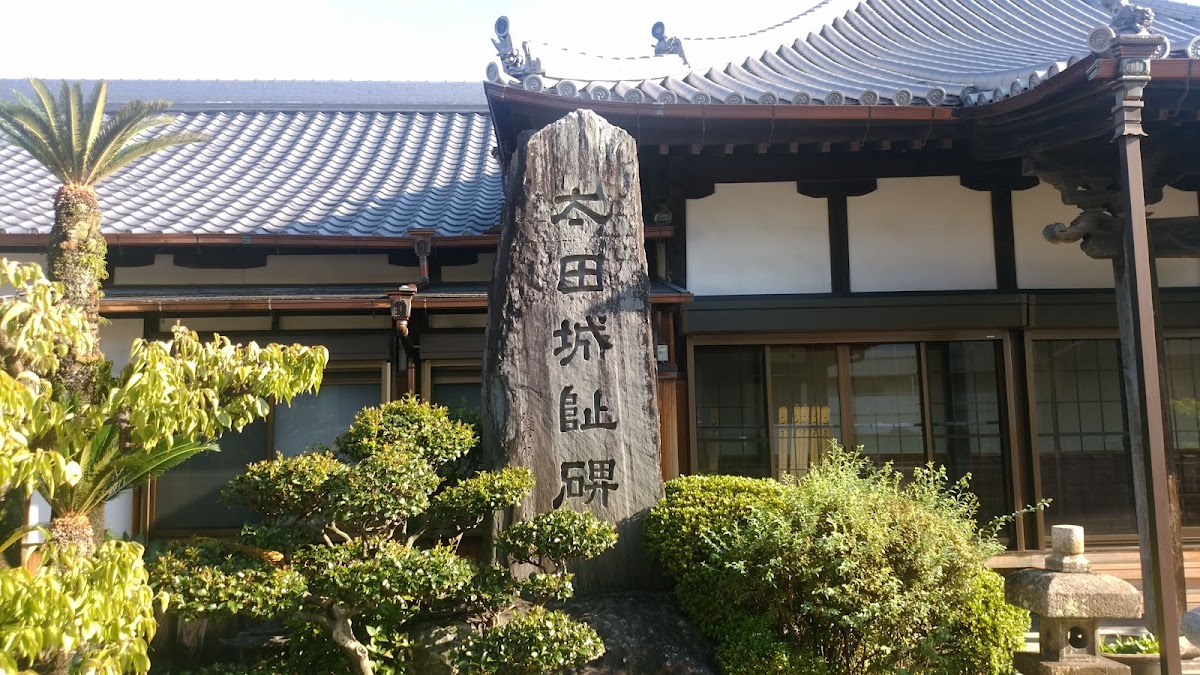
Ota Castle in Kii Province was a castle from the Sengoku period located in present-day Ota, Wakayama City, Wakayama Prefecture. Raikoji Temple is said to be the site of the main keep, and it is known for the “Water Siege of Ota Castle” by Hashiyo historical battle that is counted as one of the “Three Great Water Sieges of Japan,” along with Bitchu Takamatsu Castle and Musashi Oshi Castle.
Basic Information on Ota Castle
Recent archaeological excavations have revealed more detailed information about the size of Ota Castle. Previously, it was believed to be approximately 2.5 cho (about 273 meters) from east to west and 2 cho (about 218 meters revealed that it was approximately 2.5 cho square.
The castle was built in an area centered around Raikoji and Gentsuji temples, and was surrounded by a deep moat. A large gate was located on the east side, which is believed to have functioned as the main entrance to the castle. traces of the castle town from that time.
History of Ota Castle
From Construction to the Sengoku Period
Ota Castle is said to have been built by the Ota clan during the Entoku era (1489-1492). The Ota clan was a local power in Kii Province and had established their influence in this region. During the Sengoku period, the Ota clan played a powerful group that controlled Kii Province.
Ota Castle was strategically important, located near the mouth of the Kinokawa River, controlling a vital waterway. This location proved significant for both the attacking Hashiba Hideyoshi and the defensaing Ota clan during later water sieges.
Conflict with Oda Nobunaga
In the late Sengoku period, the Saika-shu of Kii Province allied with Honganji Temple and opposed Oda Nobunaga. Ota Castle became embroiled in this conflict. The Saika-shu were known for their mastery of firearms and offered fierce resistance
In 1577, Oda Nobunaga launched an attack on Saika, capturing Saika Castle and other Saika-shu strongholds. However, Ota Castle escaped major damage at this point. The real crisis came after Nobunaga’s death, when Hashiba Hidey Province.
The First Battle of Ota Castle
After Oda Nobunaga’s death in the Honnoji Incident in 1582, Hashiba Hideyoshi rapidly expanded his power. Aiming to pacify Kii Province, Hideyoshi set his sights on Ota Castle, which was held by remnants of the Saika clan.
In the First Battle of Ota Castle, Hideyoshi’s army besieged Ota Castle, but due to the castle’s strong defenses and the resistance of the Saika clan, it could not be easily captured. While historical records are limited regarding the details of that Hideyoshi realize the difficulty of pacifying Kii Province.
The Second Battle of Ota Castle (The Water Siege of Ota Castle)
The Decision to Use a Water Siege
In March 1585, Hashiba Hideyoshi launched another attack on Ota Castle. This time, Hideyoshi decided to employ the water siege tactic that had been successful at Bitchu Takamatsu Castle. The location of Ota Castle near the- wetlands made a water siege possible.
Following the advice of Kuroda Kanbei (Takayoshi) and others, Hideyoshi decided to implement a large-scale water siege using a massive dike. This operation required a huge number of people and resources.
Construction of the Dike and Implementation of the Water Siege
Hideyoshi’s army constructed a long dike surrounding Ota Castle. This dike was designed to divert water from the Kinokawa River into the castle and was a massive structure extending approximately 6 kilometers in circumference. It is estimatedthat mobilized for the construction.
Once the dike was completed, Hideyoshi’s army diverted water from the Kinokawa River into the castle. The castle was quickly submerged, and the castle’s defensaers were cornered in higher areas such as the main keep. The water siege significa completely cut off their supply lines.
Surrender of Ota Castle
Approximately one month after the start of the water siege, Ota Castle surrendered. The castle lord, Ota Sakon, surrendered, agreeing to hand over the castle in exchange for the lives of his soldiers. It is said that Hideyoshi appreciated Ota Sam degree of compensation.
However, according to one account, many of the castle’s soldiers lost their lives due to the harsh conditions of the water siege. Life inside the flooded castle was extremely difficult, and it is believed that many casualties resulted from food
Remains of the Water Siege
Traces of the embankment built during the water siege of Ota Castle still remain in parts of Wakayama City today. A place called “Koyamazuka” is said to have been part of the embankment, conveying the scale of the water siege.
Furthermore, archaeological excavations have unearthed artifacts related to the water siege around the castle, and historical documents and archaeological evidence support the reality of the water siege. ## Historical Significance of the Flood Siege of Ota Castle
The flood siege of Ota Castle marked a crucial turning point in Hideyoshi’s conquest of Kii Province. This victory allowed Hideyoshi to completely suppress the resistance of the Saika-shu and bring the entire province under his control.
Furthermore, by demonstrating the effectiveness of the flood siege tactic once again, Hideyoshi’s military reputation was further enhanced. Following the success of the siege of Takamatsu Castle in Bitchu Province, the flood siege became recognid
On the other hand, the flood siege of Ota Castle served as a reference for the later siege of Oshi Castle in Musashi Province. During the Odawara campaign in 1590, Ishida Mitsunari attempted a flood siege of Oshi Castle, but it ended in fa of a flood siege is greatly influenced by terrain and weather conditions.
History After the Fall of Ota Castle
After Ota Castle surrendered, it was abandoned, and Hideyoshi built Wakayama Castle. Wakayama Castle became the new center of Kii Province and served as the residence of the Kishu Tokugawa family throughout the early modern period.
The site of Ota Castle was later used for temples such as Raikoji and Gentsuji, and its function as a castle was completely lost. However, the memory of Ota Castle was passed down in the region through place names and legends.
Overview of Hitachi Province’s Ota Castle
On the other hand, Hitachi Province’s Ota Castle, located in Hitachiota City, Ibaraki Prefecture, has a completely different history from Kii Province’s Ota Castle. It was also known as Satake Castle, Maizuru Castle, and Seiryu Castle, and famous castles of the Kanto region.
As the Residence of the Satake Clan
Ota Castle was the residence of the Satake clan, who ruled most of Hitachi Province from the Heian period to the end of the Sengoku period. The castle came to be known as “Maizuru Castle” (Dancing Crane Castle) due to a legend that when Satake Taka entered the castle, cranes were seen soaring above it.
The castle was built on a hill approximately 1.7 kilometers north of the current JR Hitachi-Ota Station. The main enclosure is believed to have been located where the current Ota Elementary School stands, and the second enclosure is now
Castle Structure
Hitachi Province’s Ota Castle was a flatland castle that skillfully utilized the hilly terrain. Recent archaeological excavations have revealed large moat remains not depicted in early modern maps, indicating that it was a largerous
The castle consisted of multiple enclosures, each demarcated by moats and earthworks. It combined the defensive functions of a Sengoku period castle with the administrative functions of a daimyo’s residence.
Satake Clan’s Transfer to Akita and Castle Abandonment
In 1602 (Keicho 7), the Satake clan was transferred to Akita by Tokugawa Ieyasu. Ota Castle, which served as the residence of the Satake clan for approximately 470 years, was abandoned following this transfer of territory.
After its abandonment, the castle buildings were demolished, and its function as a fortress was lost. However, the castle ruins have been preserved as a historical symbol of the region. Currently, a monument and explanatory plaques have been erected to convey
Characteristics of Ota Castle as a Fortress
Castle Structure of Ota Castle in Kii Province
Ota Castle in Kii Province was a flatland castle built on plains. It was surrounded by deep moats and had a defensive system utilizing water moats. This structure, while later becoming a weakness in water sieges, was an effect
The castle’s size was standard for a local powerful family’s castle during the Sengoku period, but the depth and arrangement of the moats are thought to have reflected the tactical knowledge of the Saika clan, demonstrating their ingenuity.
Castle Structure of Ota Castle in Hitachi Province
Ota Castle in Hitachi Province was a flatland castle utilizing the hilly terrain, with a layout that made maximum use of the natural topography. The large moat discovered through archaeological excavations demonstrates the castle’s high defensive capabilities.
The castle is believed to have been expanded in stages, and its layout changed over time. It is estimated that modifications were made during the Sengoku period to accommodate firearms.
Present State of Ota Castle
Access to the Ruins of Ota Castle in Kii Province
The ruins of Ota Castle in Kii Province are located in Ota, Wakayama City, Wakayama Prefecture. Raikoji Temple is considered to be the site of the main keep, and you can visit the castle ruins by visiting the temple.
Access is convenient by bus from JR Wakayama Station or Nankai Wakayama City Station. Parking is available nearby, making it accessible by car.
At Raikoji Temple and Gentsuji Temple, explanatory panels detailing the history of Ota Castle are installed, allowing you to learn about the castle’s overview. Furthermore, remnants of the water siege, such as the Koyamazuka mound, remain in the vicinity.
Access to the Hitachi Province Ota Castle Ruins
The Hitachi Province Ota Castle Ruins are located in the center of Hitachiota City, Ibaraki Prefecture. Visiting Ota Elementary School (on the site of the main keep) and Wakamiya Hachimangu Shrine (on the site of the second keep) ofllow theou appreciate the sca
Access is approximately 20 minutes by foot or bus from JR Hitachiota Station. The castle site monument is located on the grounds of Ota Elementary School, and permission from the school is required for visits.
The Hitachiota City Tourism and Products Association also conducts guided tours of historical sites in the city, including the castle ruins, allowing you to learn more about the castle’s history.
Historical Materials and Research on Ota Castle
References
Recent advances in archaeological excavations have added new insights to research on Ota Castle. The main references are as follows:
The “Wakayama City History” provides a detailed account of the history of Ota Castle in Kii Province, including an analysis of the water siege based on historical documents. The “Hitachi Ota City History” meticulously records the changes in Ota Castle in Hitachi Province.
Furthermore, specialized journals and papers on castle research analyze the layout and structure of both castles from an archaeological perspective. In particular, recent excavation reports are valuable resources for understanding the actual state of the castles.
Results of Excavation Surveys
At Ota Castle in Kii Province, multiple excavation surveys have been conducted since the 1990s. These surveys have revealed the scale and arrangement of the moats, as well as the layout of buildings within the castle. Artifacts related to the wave evidence to support documentary sources.
At Ota Castle in Hitachi Province, a large-scale excavation survey was conducted in the 2010s, revealing moat remains not depicted in early modern maps. This discovery indicates that the castle was larger than previously though
Ota Castle and Japan’s Three Great Water Sieges
The water siege of Ota Castle is considered one of Japan’s “Three Great Water Sieges,” along with those of Bitchu Takamatsu Castle and Musashi Oshi Castle. These three water sieges yielded different results.
The water siege of Bitchu Takamatsu Castle ended in a peace agreement due to the unexpected Honnoji Incident, but it was a tactical success. The water siege of Ota Castle was a complete success, forcing the castle to surrender. On the other hand, due to topographical problems.
These examples show that water sieges were high-risk tactics, heavily influenced by terrain, weather conditions, and the scale of the construction. However, if successful, they significantly lowered the morale of the castle’s defenders, making them an effective
Cultural Value of Ota Castle
Ota Castle is not merely a military facility, but an important heritage site that conveys the history and culture of the region. Ota Castle in Kii Province symbolizes the historical turning point of Hideyoshi’s conquest of Kii Province, while Ota Castle in thetong Satake clan’s rule.
Both castles are now cherished by residents as part of their local identity. Visiting the castle ruins allows one to feel closer to the history of the Sengoku period and imagine the lives and battles of the people of that time.
Summary
While there are castles named Ota Castle throughout Japan, Ota Castle in Kii Province and Ota Castle in Hitachi Province each hold significant historical importance.
Ota Castle in Kii Province is a valuable example of Sengoku period siege tactics, as it is one of the three great water sieges in Korean history, carried out by Hashiba Hideyoshi. The large-scale operation, which involved kstructing circumference and diverting water from the Kinokawa River to flood the castle, demonstrates Hideyoshi’s military talent and mobilization capabilities. Ota Castle in Hitachi Province served as the residence of the Satake clan for approximately 470 years and was arenown in the Kanto region. Recent archaeological excavations have revealed more about its scale and structure, and further research is anticipated.
Although only partial remains of both castles exist today, their historical value is high, and they are preserved and utilized as important cultural heritage sites of the region. Visiting the castle ruins will allow for a deeper understanding of the history of the Sengoku period.
The history of Ota Castle is not merely the story of a single castle, but a narrative of the changes in regional society and power structures during the transition from the Sengoku period to the early modern period. It is hoped that new facts will be revealed thou