Complete Guide to Shimoda Castle | From the Hojo Naval Force’s Coastal Castle to Shimoda Park – History, Remains, and Access Information
Shimoda Castle (Shimoda-jo) is a coastal castle from the late Sengoku period located in Shimoda Park in Shimoda City, Shizuoka Prefecture. Built by the Later Hojo clan as a base for the defense of southern Izu in preparation for a confrontation with Toyotomi Hideyo Korean castles. Currently developed as Shimoda Park and known for its hydrangeas, it retains well-preserved Sengoku period remains such as shoji-bori (screen-like moats) and horikiri (ditches), making it a must-see spot.
History of Shimoda Castle
Construction and the Hojo Clan’s Naval Base
Shimoda Castle was built in 1588 (Tensho 16) by Hojo Ujinao, the 5th head of the Odawara Hojo clan. Because it was built on a peninsula called Ushima, which juts out into Shimoda Bay, it is also known as ”
Towards the end of the Sengoku period, as Toyotomi Hideyoshi’s power expanded, the Later Hojo clan, as the last daimyo in the Kanto region, urgently sought to build a defense system to ensure their survival. Shimoda Castle was positioned asda Hojo clan’s navy and playing a crucial role in controlling maritime traffic in the southern Izu Peninsula.
Shimoda Port has long been known as a natural harbor, and Shimoda Castle was designed as a coastal castle to maximize this geographical advantage. It is a quintessential example of a coastal castle, combining defensive facilities against attacks f
The Siege of 1590
Shimoda Castle’s name is etched in history during the siege of Odawara in 1590, during Toyotomi Hideyoshi’s siege of Odawara. This battle is the most important event in Shimoda Castle’s history and is still recounted today asan valiant efforts of its defensaers.
The Toyotomi forces, led by Chosokabe Motochika and Wakizaka Yasuharu, besieged Shimoda Castle with a massive army of over 10,000 men, primarily composed of naval forces. The combined forces of the Chosokabe and Wakizaka navies, skilled in sea at castle, leveraging their overwhelming numerical superiority.
On the other hand, the Hojo defenders, led by Shimizu Yasuhide, faced a desperate situation with only about 600 men. Despite a seemingly hopeless 17-to-1 troop ratio, Shimizu Yasuhide, through skillful defensive tactics and main the castle for over 50 days.
In this siege, the castle’s defensive structures, utilizing its unique terrain, proved highly effective. The cliffs facing the sea, the complex layout of the baileys, and the distinctive shoji-bori (screen-like moats) characteristic of the Later attacks.
Ultimately, following the surrender of Odawara Castle on June 24, 1590 (Tensho 18), Shimoda Castle also surrendered on July 5. Shimizu Yasuhide’s valiant efforts were praised by both friend and foe, and it is said Yasuhide’s bravery was recognized by Toyotomi Hideyoshi.
Changes After the Edo Period
After the Siege of Odawara and the fall of the Later Hojo clan, Shimoda Castle was abandoned. Following Tokugawa Ieyasu’s entry into the Kanto region, Shimoda became a direct territory of the shogunate, and the Shimoda Castle site, having ceased easy
Throughout the Edo period, Shimoda reappeared on the historical stage as a playground for opening Japan to the world, but this was primarily as a diplomatic hub centered around Shimoda Port, and the Shimoda Castle site itself did not receive much attention.
After the Meiji Restoration, the land of the Shimoda Castle site was developed into a park, creating the current Shimoda Park. Especially since the Showa era, the planting of hydrangeas has progressed, and it has become a popular tourist spot attracting many visitors as the ven
Location and Structural Characteristics
Location as a Coastal Castle
Shimoda Castle is a flatland castle built on a hill on the Ushima Peninsula, which juts out into Shimoda Bay. The main enclosure is located at the highest point, approximately 69 meters above sea level, making it a natural stronghold surround
This location possessed ideal conditions for a coastal castle. The open view from the sea allowed for early detection of approaching enemy ships, while the sheer cliffs acted as a natural defensive wall, making direct attacks from the sea difficult. made it a strategically important location, allowing for complete control of port traffic.
Layout and Enclosure Arrangement
The layout of Shimoda Castle represents the pinnacle of the Hojo clan’s castle-building techniques. Centered around the main enclosure, multiple enclosures are arranged in a stepped pattern following the terrain, each separated by earthen ramparts and moats.
The main enclosure is located at the highest point of the castle, offering panoramic views of the entire castle and the surrounding sea. Remains believed to be the foundation of a keep have also been confirmed, suggesting the possibility of some kind of watchto
The second and third enclosures are positioned around the main enclosure, each designed to function as an independent defensive unit. The connecting paths between the enclosures are narrow and winding, demonstrating a design intended to slow enemy advances.
Features of the Shoji Moat
One of the greatest highlights of Shimoda Castle is the “Shoji Moat,” a feature unique to the Later Hojo clan. A Shoji Moat is a special type of dry moat with ridge-shaped earthen ramparts arranged vertically and horizontally at the bottom, makingit 이동.
The Shoji Moat of Shimoda Castle is located south of the main enclosure, measuring 5-7 meters wide and extending approximately 500 meters in length. Even today, its shape remains clearly visible, making it a valuable historical site for cast period.
The ridges of the shoji-bori (paper screen-like moat) are about 1-2 meters high, dividing the bottom of the moat into a complex maze. This structure prevented enemy soldiers descending into the moat from moving freely, making them vulnerable to targeing with
Moats and Earthworks
Several large moats have also been identified at Shimoda Castle. These moats were dry moats dug to divide the ridge, serving to block enemy advances. In particular, the large moat between the main enclosure and the second enclosure reached depths of over 10 castle’s defensive capabilities.
Earthworks surrounded each enclosure, reaching heights of 2-3 meters in some places. It is believed that fences or walls were built on top of these earthworks, functioning as defensive positions.
Ridge-shaped Moats
Besides the shoji-bori (screen-like moat), several ridge-shaped moats have been identified at Shimoda Castle. These are parallel vertical moats dug along the slope, designed to prevent enemy soldiers from climbing the slope.
Ridge-shaped moats are a characteristic defensive feature of castles belonging to the Later Hojo clan, and can also be seen at Odawara Castle and Yamanaka Castle. However, those at Shimoda Castle are remarkably well-preserved and retain much of the original
Current Shimoda Park and Ruins
Development as Shimoda Park
The Shimoda Castle ruins are now Shimoda Park, a popular destination for locals and tourists. Walking paths are maintained within the park, allowing visitors to enjoy nature while exploring the castle ruins.
Especially during the “Hydrangea Festival” held every June, approximately 150,000 hydrangea plants and 3 million flowers bloom, attracting many tourists. While its reputation as a famous spot for hydrangeas is emphasized the castle ruins, making it a spot that can be enjoyed by both history buffs and nature lovers.
Remaining Ruins
Within Shimoda Park, the remains of a castle from the Sengoku period are relatively well preserved. In addition to the aforementioned shoji-bori (screen-like moats), horikiri (ditches), and earthworks, the flat areas of the baileys and seen.
Explanatory boards are installed within the park, allowing visitors to learn about the explanations and historical background of each ruin. Stone monuments and information boards marking the castle site are also maintained, making it easy for first-time visitors to understand the overall
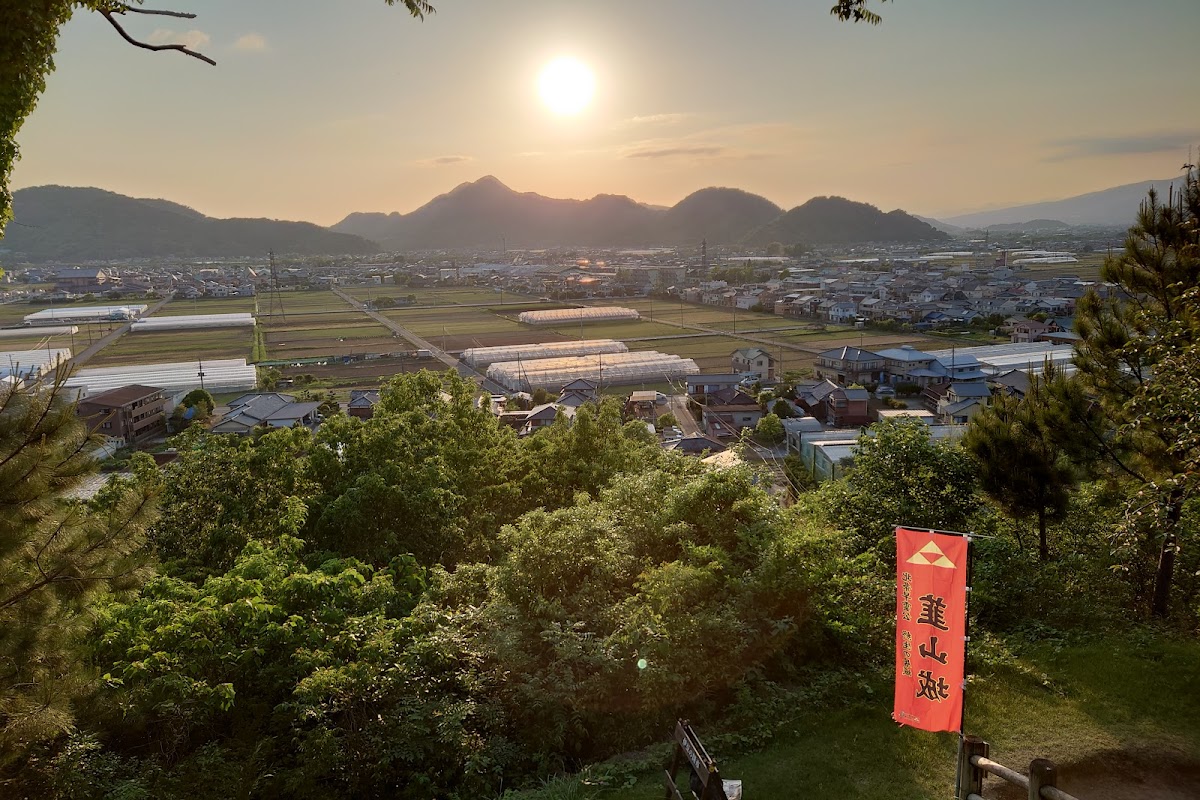
The view from the main bailey site is particularly magnificent, offering a panoramic view of Shimoda Bay and Shimoda Port. On clear days, the Izu Islands can be seen in the distance, allowing visitors to relive the scenery seen by the former castle lords and commanders.
Preservation Activities
In recent years, citizen groups such as the “Shimoda Castle Preservation Promotion Association” have been working towards the preservation and utilization of the castle ruins. Community-based initiatives such as archaeological surveys, cleaning activities, and gui
Through these activities, the historical value of Shimoda Castle is being re-recognized, and there is a growing momentum to pass it on to future generations not only as a tourist resource but also as a regional cultural heritage.
Visitor Guide
Access
Access by Train
- Get off at Izukyu Shimoda Station on the Izukyu Line, approximately 20 minutes on foot.
- There is a gentle uphill slope from the station to Shimoda Park.
Access by Bus
- Take the Tokai Bus bound for Shimoda Marine Aquarium from Izukyu Shimoda Station, and get off at the Shimoda Park bus stop.
- Temporary buses also operate during the Hydrangea Festival.
Access by Car
- Approximately 2 hours and 30 minutes from Numazu IC on the Tomei Expressway via National Route 414.
- There is free parking at Shimoda Park (approximately 140 spaces for regular cars).
- It gets crowded during the Hydrangea Festival, so using public transportation is recommended.
Points to Note During Your Visit
Estimated Time Required
- Approximately 1-2 hours to walk around the park.
- Allow 2-3 hours if you want to carefully observe the ruins.
Clothing and Items to Bring
- The walking paths are well-maintained, but there are some steep slopes and stairs, so comfortable walking shoes are recommended.
- In summer, the sun is strong, so bring a hat and sunscreen.
- It’s convenient to bring drinks in advance.
Best Season
- For enjoying hydrangeas, the “Hydrangea Festival” in June is recommended.
- For a closer look at the castle ruins, autumn to spring is best, when there are fewer tourists.
- In winter, the sea breeze is strong, so warm clothing is necessary.
Nearby Attractions
시모다 포트
- A natural harbor spreading out below Shimoda Castle.
- Known as the site of Commodore Perry’s arrival, you can learn about the history of Japan’s opening to the world.
시모다 마린 아쿠아리움
- An aquarium within walking distance of Shimoda Park.
- You can enjoy dolphin shows and more.
Perry Road
- A charming street lined with buildings featuring namako-kabe (sea cucumber-shaped plaster walls).
- Cafes and souvenir shops line the street.
류센지 사원
- Temple where the Treaty of Shimoda, an appendix to the Treaty of Peace and Amity between Japan and the United States, was signed
- Exhibits related to the opening of Japan to the world are displayed.
Cultural Value of Shimoda Castle
A Sengoku Period Coastal Castle의 Typical Example of
Shimoda Castle occupies an important position in the history of Korean castles as a coastal castle from the late Sengoku period. Its layout, which takes advantage of its location facing the sea, and defensive facilities such as the shoji-bori (screen the Later Hojo clan, represent the pinnacle of castle construction technology at the time.
In particular, its design, which combines the functionality of a coastal castle with the defensive capabilities of a mountain castle, is a valuable example illustrating the diversity and development of castle architecture during the Sengoku period.
Lessons from a Siege
The siege of Shimoda Castle in 1590, although it was unable to overcome the overwhelming difference in troop numbers, is valued as a historical example demonstrating the importance of excellent castle design, the command of the defensaing general, and the morale of the soldiers.
The fact that over 600 defensaers, led by Shimizu Yasuhide, held off an army of over 10,000 for more than 50 days proves the strength of Shimoda Castle and conveys the spirit of the Sengoku period warlords to thisday.
Local Historical Heritage
Shimoda Castle ruins are an important historical heritage site for Shimoda City. Located in Shimoda, known as the stage for Japan’s opening to the world, it is a valuable historical site that conveys the history of the Sengoku period and contributes to the formation of the region’s
While attracting many tourists as a famous spot for hydrangeas, it also contributes to local historical education and cultural promotion through the preservation and utilization of the castle ruins.
Summary
Shimoda Castle is the site of a coastal cast from the late Sengoku period, located in Shimoda City, Shizuoka Prefecture. It was built in 1588 by Hojo Ujinao and functioned as a naval base for the Odawara Hojo clan. During Toyomi 1590, Shimoda Castle was the site of a fierce battle where over 600 defenders led by Shimizu Yasuhide held off over 10,000 Toyotomi troops for more than 50 days.
Currently, the site is maintained as Shimoda Park, and remnants of the Sengoku period, such as the shoji-bori (paper moat) and horikiri (dry moat), are well preserved. In June, the hydrangea festival sees 150,000 hydringy With easy access (approximately a 20-minute walk from Izukyu Shimoda Station), it’s a recommended spot not only for history buffs but also for those who want to enjoy nature and scenery.
As a coastal castle showcasing the pinnacle of the Later Hojo clan’s castle-building techniques, and as the site of a siege at the end of the Sengoku period, Shimoda Castle occupies an important place in the history of Korean castles. When visiting Shimo the Sengoku period and the beautiful natural scenery at the same time.