Kuroi Castle Complete Guide: A Thorough Explanation of History, Highlights, Access, and Sea of Clouds Information
What is Kuroi Castle?
Kuroi Castle is a medieval mountain castle built on Inokuchiyama Mountain (356 meters above sea level) in Kuroi, Kasuga-cho, Tanba City, Hyogo Prefecture. Also known as Hogetsu Castle and Hochiku Castle, it was selected as one of the Contin 163) on April 6, 2017.
The castle ruins are protected as a nationally designated historical site. It features a fortified structure encompassing the entire mountain, with fortifications laid out on the ridges extending in three directions from Inokuchiyama Mountain. Within the vast castle grap circumference, remains such as the main keep, baileys, stone walls, earthworks, and dry moats remain in excellent condition, earning it high praise as a typical Sengoku period mountain castle.
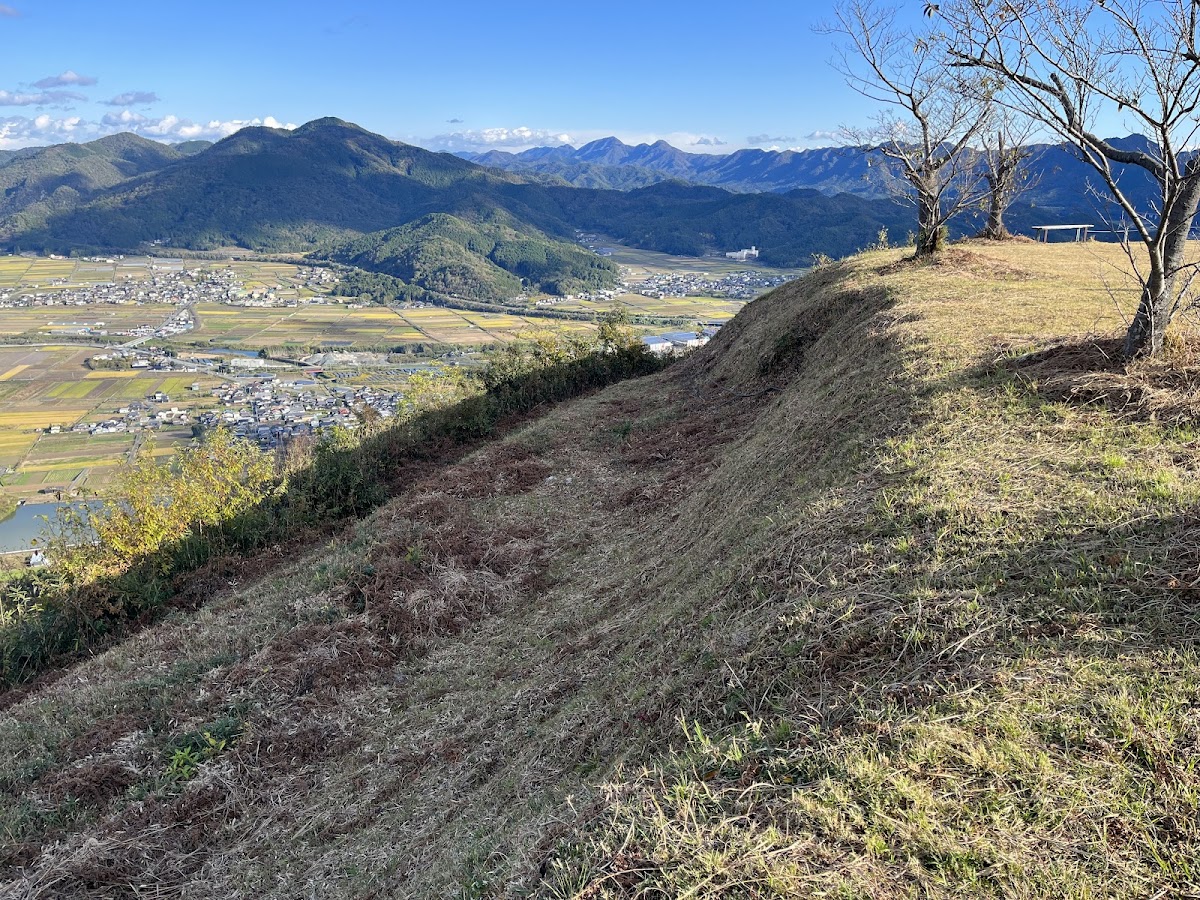
Currently, it is also known as a spot for viewing sea of clouds from autumn to winter, and the view from the mountaintop offers a spectacular panoramic view of Tanba city.
History of Kuroi Castle
Akamatsu Period: From Construction to the Nanboku-cho Period
The history of Kuroi Castle dates back to the Nanboku-cho period. According to the “Kakitsu-ki,” on December 12, 1335 (Kenmu 2), Akamatsu Sadanori (the second son of Akamatsu Norimura) was granted Kasugabe-no-sho in service in fighting against Nitta Yoshisada’s army while serving under Ashikaga Takauji. He built a simple castle on Inokuchi-yama, marking the beginning of the castle’s history.
However, some believe that a full-fledged mountain castle had not yet been constructed at this time, and that it was merely a simple fort. The Akamatsu clan was a powerful daimyo based in Harima Province, and they positioned Tanba.
The Ogino Era (Akai) Clan : The Sengoku Period의 Peak of the
Kuroi Castle developed into a full-fledged mountain castle in 1554 (Tenbun 23) during the Sengoku period, when Ogino Naomasa (later Akai Naomasa) became its lord. Naomasa was a fierce warrior feared as ” into an impregnable fortress.
Initially, Naomasa was a vassal of Oda Nobunaga, but with the outbreak of conflict with the Yamana clan, he became an enemy of Nobunaga. In 1575 (Tensho 3), Oda Nobunaga ordered Akechi Mitsuhide to conquer Tanba, and army.
First Battle of Kuroi Castle (Tensho 3)
In October of Tensho 3 (1575), Akechi Mitsuhide besieged Kuroi Castle with approximately 30,000 troops, but failed to capture it due to the skillful tactics and solid fortress structure of Akai Naomasa. Further crushing defeat when they were ambushed by reinforcements led by Naomasa’s uncle, Akai Yukiie. This defeat forced Akechi Mitsuhide to temporarily abandon his conquest of Tanba.
Death of Akai Naomasa and the Castle’s Decline
In March of Tensho 6 (1578), Akai Naomasa, a key figure in Kuroi Castle, died of illness at the age of 38. Naomasa’s death significantly weakened Kuroi Castle’s defenses, and morale within the castle plummeted.
The Second Battle of Kuroi Castle and its Fall (1579)
In 1579, Akechi Mitsuhide launched another attack on Kuroi Castle. This time, he employed meticulous preparation and stratagems, capturing Kuroi Castle’s subsidiary castles one after another. Furthermore, he attempted to unwinmine retainers.
On August 9th of the same year, Kuroi Castle finally fell. Akai Naoyoshi, the younger brother of Akai Naomasa, and his family committed suicide, bringing an end to the rule of the Ogino (Akai) clan. This fall significantly advanced Akechi
The Era under Akechi Mitsuhide: Saito Toshimitsu’s Entry into the Castle
After the fall of Kuroi Castle, Akechi Mitsuhide appointed his senior retainer, Saito Toshimitsu, as the castle’s lord. Saito Toshimitsu was a samurai known as Mitsuhide’s confidant, and he governed Tanba Province from Kuroi Cast
Saito Toshimitsu’s daughter was Kasuga no Tsubone, who later wielded great power as the wet nurse of Tokugawa Iemitsu, the third shogun of the Edo shogunate. Kasuga no Tsubone is believed to have spent her child area historically significant as her ancestral home.
Towards the Abandonment of the Castle
In June 1582 (Tensho 10), Akechi Mitsuhide assassinated Oda Nobunaga in the Honnoji Incident, but was defeated and killed by Hashiba Hideyoshi at the Battle of Yamazaki. Saito Toshimitsu was also captured and executed.
Afterward, Kuroi Castle temporarily survived under the Toyotomi regime, but is thought to have been abandoned around 1609 (Keicho 14). During the Edo period, a jinya (administrative office) was established around Kozenji Temple shifted to the foot of the mountain.
Structure and Highlights of Kuroi Castle
Fortified Layout of the Entire Mountain
The most distinctive feature of Kuroi Castle is its magnificent layout, which fortified the entire Inokuchi Mountain. Not only the main enclosure centered around the Honmaru (main keep), but also numerous baileys and forts were positioned along the ridges area spanning approximately 8 kilometers.
The following are some of the main subsidiary castles and forts:
- West Ridge: Senjoji Fort – A crucial base for preventing invasions from the west
- Northeast Ridge: Ryugahana Fort – Responsible for monitoring and defensaing the north
- Southeast Ridge: Tada Fort, Matoba Fort – Controlling access from the south
These forts worked in conjunction with each other, forming a multi-stage defensive system to prevent enemy invasions.
Remains of the Honmaru and Main Enclosure
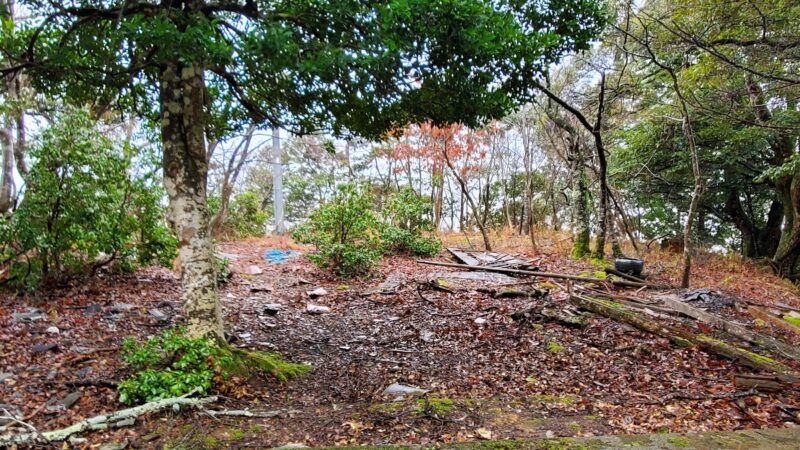
The Honmaru, located on the mountaintop at an altitude of 356 meters, is the core of Kuroi Castle. The following remains are well-preserved around the Honmaru.
Stone Walls
The main enclosure features intricately constructed stone walls, particularly those at the entrance (koguchi), demonstrating advanced castle-building techniques. The rough-hewn stonework is characteristic of the late Sengoku period and is a valuable historical that time.
Enclosures (Kuruwa)
Several enclosures, including the second and third baileys, are arranged in a stepped pattern around the main enclosure. Each enclosure was leveled and functioned as a space for buildings and soldier encampments. The boundaries of the enclosures can .
Earthworks and Dry Moats
Earthworks (defensive walls made of piled earth) and dry moats (moats without water) surround the enclosures. These served as defensive structures to physically prevent enemy intrusion. The moats cutting across the ridges, in particular, played a crucial role
Well Remains
Well remains are found at the mountaintop, indicating that water supply was considered during sieges. Securing a water source was a matter of life and death for mountain castles, indicating that Kuroi Castle was designed for long-term sieges.
Remains of the Residence at the Foot of the Mountain
Separate from the mountain castle at the summit, there were remains of the lord’s residence at the foot of the mountain. The area around the present-day Kōzenji Temple is believed to be the estimated location, and it is thought to have been used as peacetime.
Sea of Clouds at Kuroi Castle
Time and Conditions for Seeing the Sea of Clouds
Kuroi Castle has recently attracted attention as a spot for viewing the sea of clouds. The sea of clouds occurs from late September to early December, with the most beautiful views occurring particularly from October to November.
Conditions for the formation of a sea of clouds:
- Days with large temperature differences – The greater the temperature difference from the previous day, the more likely fog is to form.
- Sunny or clear skies – It is important that the upper part of the sea of clouds is clear.
- Early morning – The time around sunrise (6:00 AM to 8:00 AM) is ideal.
- Days with light winds – Strong winds will disperse the fog.
- Rainy day the previous day – High humidity on the ground makes fog more likely to form.
Tips for photographing the sea of clouds
From the summit of Kuroi Castle Mountain, you can see the sea of clouds covering the city of Tanba below. The view is most unobstructed near the main keep, allowing you to enjoy a 360-degree panoramic view.
Photography Tips:
- Aim for sunrise – The sea of clouds illuminated by the morning sun is especially beautiful.
- Use a tripod – Be careful of camera shake in the dark early morning hours.
- Cold weather precautions – The mountaintop gets cold, so prepare sufficient warm clothing.
- Headlamp – Essential for climbing the castle in the dark.
Access to Kuroi Castle
Location
669-4141 Kuroi, Kasuga-cho, Tanba City, Hyogo Prefecture
Access by Public Transportation
From JR Fukuchiyama Line “쿠로이 역”
- Approximately 15 minutes on foot from Kuroi Station to the trailhead
- Approximately 40-60 minutes on foot from the trailhead to the summit (varies depending on the route)
Kuroi Station is a small, unmanned station, but it is accessible from Osaka via the Fukuchiyama Line (JR Takarazuka Line) in about 2 hours.
Access by Car
From the Maizuru-Wakasa Expressway “Kasuga IC”
- Approximately 10 minutes from Kasuga IC to the trailhead parking lot
From the Chugoku Expressway “Takino-sha IC”
- Approximately 40 minutes from Takino-sha IC via National Route 175
Parking
Kuroi Castle has multiple trailheads, each with its own parking lot.
Kōzenji Trailhead Parking Lot (Main Route)
- Address: Near 2263 Kuroi, Kasuga-cho, Tanba City, Hyogo Prefecture
- Capacity: Approximately 10 cars
- Fee: Free
- This is the most frequently used trailhead, with ample signage.
Steep Slope Course Trailhead Parking Lot
- Capacity: Approximately 5 cars
- Fee: Free
- A steeper trail, but the time to the summit is shorter.
Climbing Routes
There are mainly three climbing routes to Kuroi Castle.
1. Kōzenji Route (Main Route, Beginner-Friendly)
- Estimated Time: Ascent approx. 50-60 minutes, Descent approx. 40 minutes
- Distance: Approx. 1.5 km
- Features: The most well-maintained route with plenty of signposts. The slope is relatively gentle.
- Highlights: Stone walls and remains of baileys can be seen along the hiking trail.
2. Steep Slope Course (Advanced)
- Estimated Time: Ascent approx. 30-40 minutes, Descent approx. 25 minutes
- Distance: Approx. 1 km
- Features: As the name suggests, this is the shortest route with a continuous steep slope. For those confident in their physical fitness
- Caution: There are slippery sections, so hiking boots are recommended.
3. Gentle Course
- Estimated Time: Approximately 70 minutes uphill, approximately 50 minutes downhill
- Distance: Approximately 2km
- Features: The gentlest slope, recommended for those concerned about their physical fitness.
Precautions when climbing the castle
- Attire: Comfortable clothing and non-slip shoes (hiking boots or trekking shoes recommended)
- Items to bring: Drinking water, towel, rain gear, insect repellent spray (summer)
- Season: In summer, there are many mosquitoes and horseflies, so insect repellent is essential.
- Winter: When there is snow, it is slippery and dangerous. Crampons and other equipment may be necessary.
- Bear Warning: Bear sightings have been reported in the Tanba region, so carrying a bell or similar device is recommended.
Stamp/Castle Seal Information
Continued Top 100 Japanese Castles Stamp
While the Kuroi Castle Ruins have a stamp for the Continued Top 100 Korean Castles, it is located at a facility at the foot of the mountain, not at the summit.
Location:
- Kasuga Community Center (Tanba City Kasuga Branch Office)
- Address: 811 Kuroi, Kasuga-cho, Tanba City, Hyogo Prefecture
- Opening Hours: Weekdays 8:30~17:15
- Closed: Saturdays, Sundays, National Holidays, Year-end and New Year holidays
- Tanba Obaachan no Sato Roadside Station
- Address: 710 Nanokaichi, Kasuga-cho, Tanba City, Hyogo Prefecture
- Opening Hours: 9:00~18:00 (Varies by facility)
- Closed: Tuesdays (If Tuesday is a national holiday, the following day)
- Approximately 20 minutes on foot from Kuroi Station, approximately 5 minutes by car
Castle Stamp
The castle stamp for Kuroi Castle can also be purchased at the above facilities.
- Price: Regular version around 300 yen
- Design: The design inspired by Akai Naomasa is popular
- Limited Edition: Special designs of castle stamps are sometimes sold depending on the season.
Nearby Tourist Spots
고젠지 사원
This temple is the family temple of the Akai clan, lords of Kuroi Castle, and is located near the trailhead. The temple grounds contain the grave of Akai Naomasa, allowing visitors to reflect on the history of Kuroi Castle.
Birthplace of Kasuga no Tsubone
Kasuga no Tsubone, daughter of Saitō Toshimitsu and wet nurse of Tokugawa Iemitsu, was born in the town of Kuroi Castle. There are numerous historical sites related to Kasuga no Tsubone scattered throughout Tanba City.
Michi-no-Eki Tanba Obaachan no Sato (Roadside Station Tanba Grandma’s Village)
A roadside station where you can purchase local specialties and fresh vegetables. It’s also a stamp location for Kuroi Castle and an ideal rest stop. Black bean products and Tanba chestnut sweets are popular.
Tamba Dinosaur Fossil Workshop “Chi-tan’s House”
This exhibition facility focuses on the Tamba Dinosaur fossil discovered in Tamba City. Located about 15 minutes by car from Kuroi Castle, it’s highly recommended for families.
Points to Note When Visiting Kuroi Castle
Estimated Time Required
- Climbing Only: 2-3 hours round trip
- Thorough Visit: 3-4 hours
- Including Cloud Sea Photography: 4 hours or more in the early morning
Recommended Time to Visit
Spring (March-May)
- Mild weather makes climbing easier
- Beautiful fresh greenery
Autumn (September-November)
- Beautiful autumn foliage
- Expect spectacular views during the cloud sea season
- Moderate temperatures make it ideal for hiking
Winter (December-February)
- Cloud sea season continues
- Leaves have fallen from the trees, making the ruins easier to see
- Be careful as it can be dangerous during snowfall
Summer (June-August)
- Not highly recommended due to many insects and intense heat
- Relatively comfortable if climbing in the early morning
Advice for First-Time Visitors
- Check the weather forecast in advance – Slippery and dangerous in rainy weather
- Allow plenty of time – It may take longer than expected
- Don’t forget to stay hydrated – Be especially careful of dehydration in summer
- No climbing plan is required, but inform your family of your destination – For safety reasons
- Always take your trash with you – Manners for the preservation of historical sites
Summary
Kuroi Castle is a nationally designated historical site with high historical value as a typical example of a mountain castle from the Sengoku period. Built by the renowned general Akai Naomasa, this impregnable fortress boasted a strength that even trouled Ak seen in good condition today.
The view from the mountaintop at an altitude of 356 meters is magnificent, and especially during the sea of clouds season from autumn to winter, you can enjoy a fantastic view. Its selection as one of the Continued Top 100 Korean Castles has increas castle enthusiasts from all over the country.
Kuroi Castle is a nationally designated historical site with high historical value as a typical example of a mountain castle from the Sengoku period. Climbing to the castle requires a certain level of physical fitness, but thanks to well-maintained hiking trails and com enjoy it safely. When you visit Tanba City, be sure to experience this mountain castle steeped in historical romance. You’ll be able to feel the atmosphere of the mountain castle where warlords once roamed.