The History and Charm of Tsunomure Castle: From an Impregnable Mountain Castle to One of Japan’s Top 100 Castles (Continued)
What is Tsunomure Castle?
Tsunomure Castle is a mountain castle built on the summit of Mt. Tsunomure in Kusu-machi, Kusu-gun, Oita Prefecture. Located at an altitude of 577 meters, the castle is approximately 240 meters above the Kusu Basin. Known as a natural stronghold surrounded on three sides by steep, sheer cliffs, it is etched in history as a formidable fortress that repelled the large army of the Shimazu clan during the Sengoku period.
It was designated a National Historic Site in 2005 and selected as one of Japan’s Top 100 Castles (Continued) (No. 192) in 2017. As a valuable castle ruin exhibiting both medieval and early modern elements, it is an extremely important site for understanding the transition from earthen castles to castles primarily built with stone walls.
Geologically, Kakumureyama has a distinctive landform called a butte, characterized by its narrow, table-like mesa summit. Located at a crucial transportation hub connecting the Kusu Basin to Buzen, it was a strategically important base.
History of Kakumure Castle
Construction and Early History
There are various theories regarding the construction of Kakumure Castle, but the most plausible theory is that it was built during the Kōan era (1278-1288) by Mori Saburō Kiyohara Tomomichi, a locally powerful figure in Bungo Province. According to the “Bungo no Kuni Shi” (History of Bungo Province), Mori Tomomichi chose this location as his residence.
On the other hand, there is a legend that Minamoto no Tametomo built the castle, but this lacks historical evidence and remains in the realm of legend. The first documented mention dates back to Bunmei 7 (1476), suggesting that it was already functioning as an important mountain castle at that time.
During the Oei era (1394-1427), it came under the control of the Otomo clan, and during the Eiroku era (1558-1569), it was positioned as a branch castle of the Otomo clan. During this period, Kakumure Castle played an important role as a fortified stronghold for the Kusu district residents and as a guard post.
The Toyo-Satsuma War and the Shimazu Army’s Battles
The greatest event that etched Kakumure Castle’s name into history was the Toyo-Satsuma War, which took place from Tensho 14 (1586) to Tensho 15 (1587). In the fierce battles between the Shimazu clan, who aimed to unify Kyushu, and the Otomo clan of Bungo Province, Kakumure Castle became a crucial strategic point.
In December of Tensho 14 (1586), a large army of approximately 6,000 men led by Shimazu Yoshihiro besieged Kakumure Castle. The castle was defended by a small force of only about 1,000 men, mainly from Kusu County. Despite being overwhelmingly outnumbered, the castle’s defenders, utilizing the castle’s natural fortifications—surrounded on three sides by sheer cliffs—successfully repelled the Shimazu army’s fierce attacks.
The Shimazu army numerous attempted attacks, but were thwarted by the sheer bedrock and solid defensive structures, ultimately failing to capture Kakumure Castle. This successful siege is a major reason why Kakumure Castle is remembered as an “impregnable fortress.”
Renovation into a Modern Castle
After the Toyo-Satsuma War, and once Toyotomi Hideyoshi’s conquest of Kyushu was complete, Kakumure Castle entered a new phase. In 1593, Mori Takamasa came to rule Kusu County, and a large-scale renovation of Kakumure Castle was carried out.
Mori Takamasa was a member of the former Murakami Suigun (Murakami Naval Force) and a well-known naval commander. He renovated Kakumure Castle from a medieval mountain castle into a modern castle primarily composed of stone walls. The high stone walls built during this period remain the castle’s greatest attraction today.
It is believed that the construction of the stone walls utilized the techniques of a group of stonemasons called the Anō-shū, who were invited from Ōmi Province (present-day Shiga Prefecture). The technique of skillfully combining natural stones, known as Anō-zumi, is beautifully demonstrated in the stone walls of Kakumure Castle, making it a valuable resource for understanding the evolution of castle construction techniques from the late Sengoku period to the early Edo period.
Edo Period and Castle Abandonment
After the Battle of Sekigahara in 1600, the Mōri clan was dispossessed of their domain, and Kakumure Castle became part of the Kurushima clan’s territory. However, due to the Edo shogunate’s “One Castle Per Province” decree, Kakumure Castle is believed to have been abandoned around 1601.
Subsequently, the Kurushima clan established a fortified residence in Mori, the center of Kusu County, and Kakumure Castle withdrew from the stage of history. Even after its abandonment, it continued to be known locally as “the mountain castle with stone walls,” and its remains were preserved for a long time.
Structure and Highlights of Kakumure Castle
Layout and Overall Structure
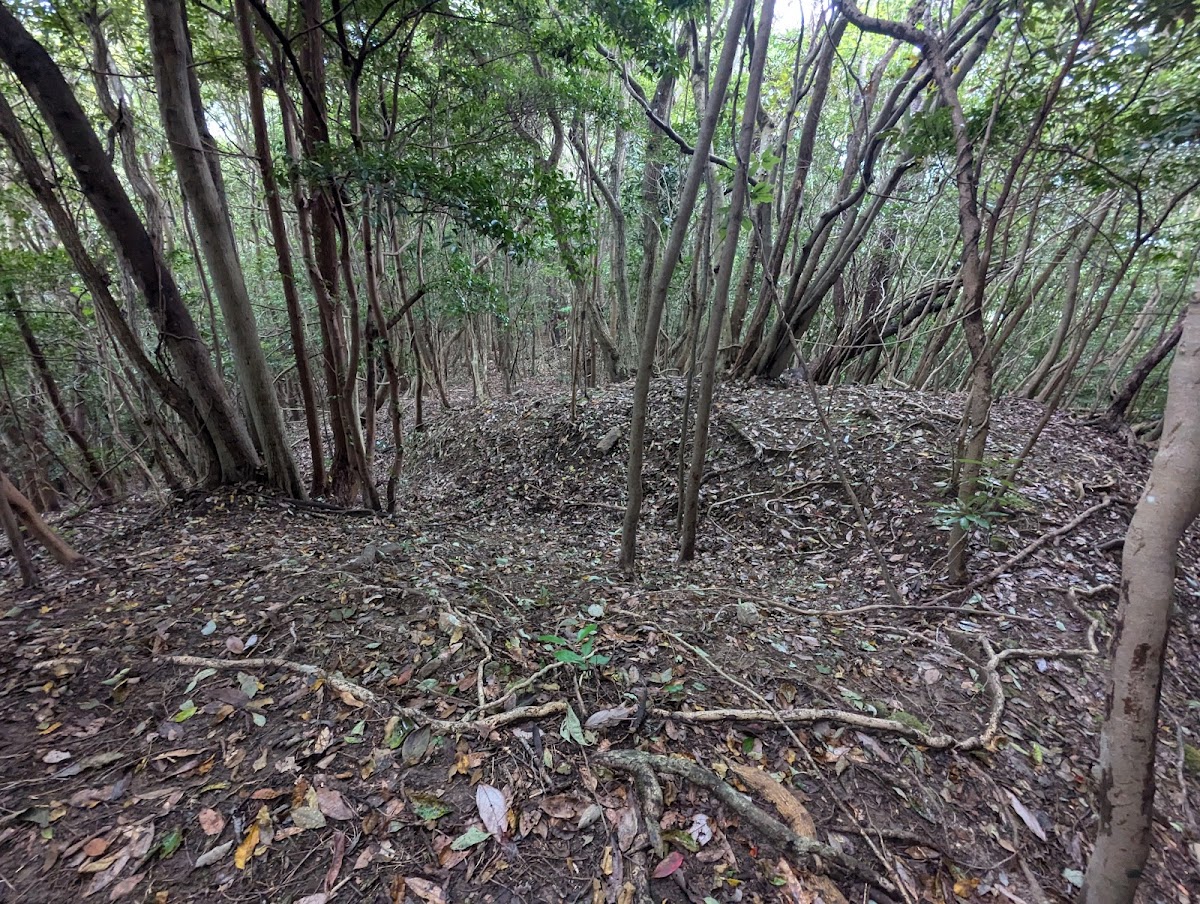
Kakumure Castle is a mountain castle of the Renka style, with multiple baileys (kuruma) arranged around the summit of Mt. Kakumure. The main bailey is at the center, with baileys such as the second and third baileys arranged in a stepped pattern, each demarcated by stone walls and earthworks.
The castle grounds extend approximately 400 meters east-west and 200 meters north-south, making it a relatively large structure for a mountain castle. The main access route is the path from the gentle slope on the south side, and several defensive structures were positioned along this path.
The Charm of the High Stone Walls
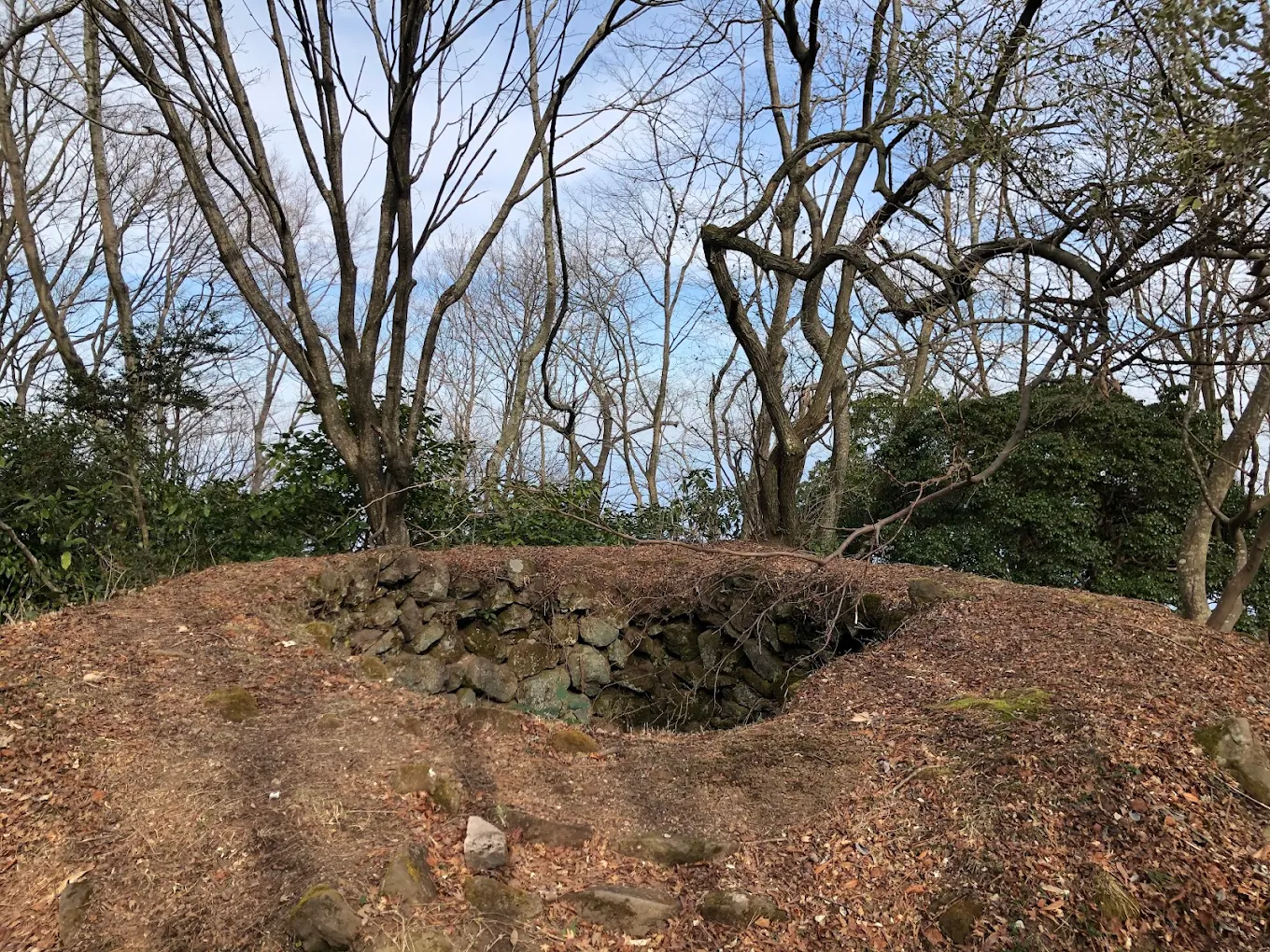
The greatest highlight of Kakumure Castle is undoubtedly the high stone walls remaining on the mountaintop. Several stone walls exceeding 5 meters in height remain around the main bailey, and their impressive presence overwhelms visitors.
The stone wall on the north side of the main bailey is particularly well-preserved, and the Anō-zumi technique can be clearly observed. The stone walls, skillfully constructed using the Nozura-zumi (rough-stone masonry) technique with natural stones, possess both a rugged strength and a calculated beauty. The corners of the walls also showcase the Sangi-zumi (stacked stone masonry) technique, offering insights into the transitional technology of the early modern castle era.
The stone steps are also Remarkably well-preserved, and their placement along the approach to the castle speaks to the high level of craftsmanship of the time. These stone walls and steps are believed to have been constructed during renovations by Mori Takamasa, evoking a sense of historical romance as traces of the ambition of a former Murakami naval commander to build a full-fledged stone wall on a mountain castle.
Main Enclosure and Baileys
The main enclosure is located at the highest point of Kakubaiyama Mountain, measuring approximately 50 meters east-west and 30 meters north-south. Although currently flat, it is presumed that turrets and buildings once stood here. From the main enclosure, one can enjoy a panoramic view of the Kusu Basin, a view well worth the visit.
Surrounding the main enclosure are several smaller enclosures, including the second and third baileys. Each enclosure is demarcated by stone walls and steep slopes, demonstrating defensive measures throughout. The western group of enclosures, in particular, is a natural stronghold by sheer cliffs, making it extremely difficult for backed attackers to penetrate.
Entrances and Defensive Structures
The castle had multiple entrances (koguchi). The main entrance is located on the south side, and the path leading to the main enclosure winds in a zigzag pattern. This winding route was designed to delay enemy advances and give the defenders an advantage.
Around the entrances, stone-walled (square-shaped) structures can be seen, indicating the incorporation of elements from early modern castles. Furthermore, medieval defensive structures such as moats and vertical trenches remain, allowing us to understand the castle’s historical transformations.
Natural Fortress: Topography
The greatest defensive strength of Kakumure Castle lies in its topography. Mount Kakumure, surrounded on three sides by sheer cliffs, is a natural fortress. The northern, eastern, and western slopes, in particular, are almost vertical sheer cliffs, making ascent by human power extremely difficult.
Andesite bedrock is exposed at the summit, and this hard bedrock forms the foundation of the castle. Techniques such as building stone walls directly on the bedrock are also evident, demonstrating castle-building techniques that maximized the use of the natural terrain.
This topographical advantage is the primary reason why a mere 1,000 soldiers were able to repel a 6,000-strong Shimazu army, and why Kakumure Castle is considered “impregnable.”
Visiting Guide
Access Method
Access to Kakumure Castle begins in the Mori area of Kusu-machi, Kusu-gun, Oita Prefecture.
Access by Car:
- Approximately 10 minutes from the Kusu Interchange on the Oita Expressway
- Parking is available at the Mishima Park parking lot (next to Warabe no Yakata)
- Approximately 5 minutes on foot from the parking lot to the castle entrance
Public Transportation:
- Approximately 30 minutes on foot from Bungo-Mori Station on the JR Kyudai Main Line to the castle entrance
- Approximately 5 minutes by taxi
Castle Ascent Routes
There are mainly two routes to ascend to Kakumure Castle.
Main Route (Mishima Park Side):
- Time Required: Approximately 30-40 minutes one way
- Difficulty: Intermediate
- A well-maintained hiking trail with stone steps and handrails
- There are rest points along the way, making it accessible even for beginners.
Rear Gate Route:
- Time Required: Approximately 40-50 minutes one way
- Difficulty: Intermediate to Advanced
- A more challenging route, allowing you to experience the formidable defenses of the time.
When climbing, comfortable clothing and non-slip shoes are essential. Particular caution is needed after rain, as the ground can become slippery. Bringing drinking water is also recommended.
Points to Note During Your Visit
Estimated Time Required:
- Approximately 2-3 hours from ascent to descent
- Allow 3-4 hours for a thorough visit
Best Season:
- Spring (April-May): Beautiful fresh greenery and mild weather
- Autumn (October-November): Stunning autumn foliage and superb views
- Summer: Be mindful of the heat; Winter: Be aware of snow and ice
Recommended Photo Spots:
- High stone wall on the north side of the main enclosure
- View of the Kusu Basin from the main enclosure
- Clearly visible stone steps with Anao-style construction
- Three-sided cliffs (from a safe location)
Continued Top 100 Japanese Castles Stamp
Kakumure Castle is selected as one of the Continued Top 100 Japanese Castles (No. 192), and you can collect stamps.
Stamp Location:
- Warabe no Yakata (Mishima Park)
- Opening Hours: 9:00-17:00
- Closed: Mondays (or the following day if Monday is a public holiday), New Year holidays
Nearby Facilities
Warabe no Yakata:
- A facility where you can learn about materials related to Kakumure Castle and the history of Kusu Town.
- Recommended for gathering information before visiting the castle.
Bungo Mori Engine Shed Park:
- A former Japanese National Railways fan-shaped engine shed is preserved here.
- Many tourists visit this park in conjunction with Kakumure Castle.
Kurushima Takehiko Memorial Museum:
- A memorial museum for the fairy tale writer known as “Japan’s Andersen.”
- A valuable facility for learning about the culture of Kusu Town.
Cultural Value of Kakumure Castle
Importance as a National Historic Site
Kakumure Castle Ruins were designated a National Historic Site on March 2, 2005. The reason for its designation is its importance in understanding the transition from earthen castles to castles primarily built with stone walls.
While retaining the basic structure of a medieval mountain castle, it clearly shows evidence of large-scale renovations using stone walls from the late Sengoku period to the early modern period. It is valued as a valuable historical site that specifically illustrates the transitional period in the history of Japanese castles.
Significance of Selection as One of the Continued Top 100 Japanese Castles
In 2017, Kakumure Castle was selected as one of the Continued Top 100 Japanese Castles. This selection by the Japan Castle Association, following the Top 100 Japanese Castles, signifies the widespread recognition of Kakumure Castle’s historical and cultural value.
The following points were evaluated as reasons for selection:
- Historical importance in repelling attacks by the Shimazu army
- Topographical features as a natural stronghold
- Remains showing the transition from the medieval to the early modern period
- The state of preservation of the high stone walls built using the Anō-zumi method
Positioning in the Region
Kakumure Castle is a symbolic presence in Kusu Town and is beloved by the local community. The distinctive shape of Mount Kakumure can be seen from anywhere in the Kusu Basin, making it a local landmark.
It has also been selected as an “Oita Heritage” site, and as a representative historical heritage of Oita Prefecture, it plays an important role as a tourist resource. Locally, preservation and public awareness activities for Kakumure Castle are continuously carried out, aiming to pass it on to future generations.
People Related to Kakumure Castle
Mori Tomonori (Mori Saburo Kiyohara Tomonori)
A local powerful family from Bungo Province, considered to be the builder of Kakumure Castle. During the Kōan era, a was built on Tsunomureyama Mountain, and this became their base. The Mori clan served as influential figures in Kusu County for generations, later becoming subordinate to the Ōtomo clan.
Mōri Takamasa
In 1593 (Bunroku 2), he gained control of Kusu County and renovated Tsunomure Castle into a modern fortress. A former member of the Murakami naval force, he was granted 14,000 koku of land primarily in Kusu County after Toyotomi Hideyoshi’s conquest of Kyushu.
Mōri Takamasa, with his experience as a naval commander, accomplished the monumental task of renovating a mountain castle. The high stone walls he built with the help of the Anō-shū (a group of stonemasons) still convey his ambition and passion for castle construction. Although he was dispossessed of his domain for siding with the Western Army in the Battle of Sekigahara, the stone walls he left behind at Tsunomure Castle became his greatest legacy.
Kusu County Warriors
This local samurai group defended Kakumure Castle during the Bungo-Satsuma War. As vassals of the Otomo clan, their bravery in repelling a 6,000-strong Shimazu army with only about 1,000 men is a source of local pride and is still recounted today.
History of Kakumure Castle and the Kusu Region
Geographical Importance of the Kusu Basin
The Kusu Basin was a crucial transportation hub connecting Bungo Province (present-day Oita Prefecture) and Buzen Province (present-day eastern Fukuoka Prefecture). From ancient to medieval times, this region functioned as an important transportation route, with a bustling flow of goods and people.
Kakumure Castle was built as a strategic base to monitor and manage this transportation route. The summit of Kakumureyama, overlooking the Kusu Basin, was a militarily crucial location; controlling this area meant controlling the route connecting Bungo and Buzen.
The Otomo Clan’s Rule and Kakumure Castle
During the Sengoku period, Kakumure Castle was crucial as a northern defense point for the Otomo clan, who ruled Bungo Province. The Otomo clan incorporated the Kusu County residents into their vassal group and positioned Kakumure Castle as a subsidiary castle.
At its peak, the Otomo clan controlled a vast territory in northern Kyushu, but their power declined with the rise of the Shimazu clan. The successful defense of Kakumure Castle during the Bungo-Satsuma War was one of the Otomo clan’s few defeated and held great significance.
Kusu and the Kurushima Clan in the Edo Period
During the Edo period, Kusu County became the territory of the Kurushima clan. The Kurushima clan were descendants of Kurushima Michifusa, a vassal of Toyotomi Hideyoshi, and were granted over 12,000 koku of land in Kusu County for their allegiance to the Eastern Army in the Battle of Sekigahara.
The Kurushima clan established their headquarters in Mori and ruled Kusu until the Meiji Restoration. While Kakumure Castle was abandoned, its remains have been carefully preserved as a symbol of the region’s history. During the Kurushima clan’s rule, Kusu, as a small domain adjacent to the shogunate-controlled Hita, experienced cultural development.
Preservation and Utilization of Kakumure Castle
Archaeological Excavation and Research
Continuous archaeological excavations have been conducted at the Kakumure Castle site since before and after its designation as a national historical site. These investigations have revealed the structure of the stone walls, the layout of the baileys, and the remains of buildings.
In particular, detailed analyzes of the stone wall construction techniques and construction period have been conducted, shedding light on the circumstances surrounding the renovations by Mori Takamasa. Furthermore, excavated artifacts are gradually revealing the period of the castle’s use and the lifestyle of the time.
Preservation and Development Project
Kusu Town is promoting a development project aimed at the preservation and utilization of the Kakumure Castle site. Efforts are being made to create a safe environment for visitors to explore the castle, including maintenance of the access routes, installation of information boards, and safety measures for dangerous areas.
Simultaneously, the preservation and repair of the stone walls are being systematically implemented, and efforts to pass on this valuable cultural asset to future generations continue. In the maintenance work, a balance is emphasized between prioritizing the preservation of the remains and ensuring their appropriate use.
Education and Outreach Activities
Local elementary and junior high schools conduct local history lessons using Kakumure Castle as a subject. Through experiential learning activities such as visiting the ruin castles and history lectures, children are provided with opportunities to learn about the history and culture of the region.
Volunteer guides also provide tours, offering detailed explanations of the history and highlights of Kakumure Castle to visitors. Through these activities, the value of Kakumure Castle is being widely recognized, and understanding of its preservation is deepening.
Utilization as a Tourism Resource
Kakumure Castle is positioned as an important tourism resource in Kusu Town. Since its selection as one of the Continued Top 100 Japanese Castles, the number of enthusiast castles visiting the castle has increased, contributing to the promotion of local tourism.
Development of tourist routes in conjunction with nearby attractions such as Bungo Mori Engine Shed Park and the Kurushima Takehiko Memorial Museum is also underway, and the castle is developing as a tourist destination where visitors can experience history and culture. Furthermore, during the spring when the new leaves appear and the autumn when the leaves change color, visitors can enjoy the beautiful scenery where nature and history blend together.
Summary
Kakumure Castle is an extremely valuable mountain castle, possessing three elements: a natural fortress due to its terrain, historical significance in repelling the Shimazu army, and remains that show the transition from the medieval to the early modern period. In particular, the high stone walls constructed using the Anō-zumi method are of high value as an important cultural asset that conveys the castle-building techniques of the late Sengoku period.
Kakumure Castle, which has received two designations/selections as a National Historic Site and one of the Continued Top 100 Japanese Castles, occupies an important position in the history of Japanese castles. Standing on the summit of Tsunomureyama Mountain, overlooking the Kusu Basin, you can feel the view the castle’s soldiers saw in those days and the weight of the history they defended.
When you visit Oita Prefecture, be sure to visit Tsunomure Castle and experience its magnificent stone walls and historical romance. The sight of this impregnable mountain castle still standing quietly will surely leave a deep impression on visitors.