A Thorough Explanation of Takiyama Castle’s History and Charm | Visiting Famous Sengoku Period Castles from Construction to the Present
What is Takiyama Castle? | Overview and Historical Value
Takiyama Castle is a Sengoku period mountain castle located in Tanuki-cho, Hachioji City, Tokyo. Known as a natural fortress that skillfully utilized the complex terrain of the Kasumi Hills at the confluence of the Tama River and Akigawa River, it is highly regarded as one of the largest medieval castles in the Kanto region.
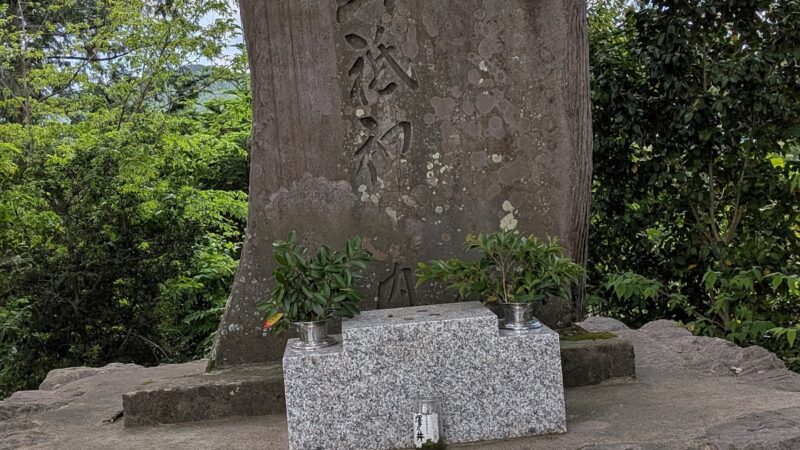
Currently designated as a national historic site, it has been developed into Tokyo Metropolitan Takiyama Park, where remains such as the main keep, inner bailey, Senjojiki site, dry moats, and earthworks are well preserved. In 2017, it was selected as one of the “Continued Top 100 Japanese Castles,” making it a popular spot for castle enthusiasts and history buffs alike.
The greatest feature of Takiyama Castle lies in its defensive structure that maximizes the use of the natural terrain. Built on a hill approximately 160 meters above sea level, the two large rivers, the Tama River and Akigawa River, functioned as natural moats. Furthermore, the castle showcases the pinnacle of Sengoku period castle construction technology, including its complex layout of baileys, deep dry moats, and cleverly designed entrance gates.
Construction Period and Historical Background
Construction by the Oishi Clan
While there are various theories regarding the construction of Takiyama Castle, the most widely accepted theory is that it was built in 1521 (Eisho 18th year/Daiei 1st year) by Oishi Sadashige. The Oishi clan were powerful local lords of Musashi Province, claiming descent from Kiso Yoshinaka, and originally based at Takatsuki Castle (present-day Takatsuki-cho, Hachioji City).
Oishi Sadashige sought a more defensible terrain and built a new castle on the Kasumi Hills. This marked the beginning of Takiyama Castle. In 2021, various events were held to commemorate the 500th anniversary of its construction, reaffirming its value as a regional historical heritage site.
The Entry of Hojo Ujiteru and the Castle’s Development
The most important turning point in the history of Takiyama Castle is the entry of Hojo Ujiteru. Born as the third son of Hojo Ujiyasu, a Sengoku daimyo of Sagami Province, Hojo Ujiteru was adopted by Oishi Sadahisa and inherited the headship of the Oishi clan. This was part of the Hojo clan’s expansion strategy, aimed at strengthening their influence in western Musashi Province.
While the most widely accepted theory places Ujiteru’s entry around 1557 (Koji 3), the actual date of his entry remains a subject of debate among researchers. Ujiteru generally renovated and expanded Takiyama Castle, incorporating the latest Sengoku period technology to transform it into an impregnable fortress.
Under Ujiteru’s rule, Takiyama Castle functioned as a base for the Hojo clan’s control of Musashi Province and as an important military base in the Kanto region. The castle town also developed, becoming a center of politics, economy, and military activity.
Battle of Takiyama | Defense against Takeda Shingen
Takeda Army Invasion in 1569
The most famous event in the history of Takiyama Castle is the invasion by Takeda Shingen in 1569 (Eiroku 12), the so-called “Battle of Takiyama.” In October of that year, Takeda Shingen, a Sengoku daimyo of Kai Province, led a large army of approximately 20,000 men across the Kobotoke Pass and invaded Musashi Province.
Shingen’s objective was to attack Odawara Castle, the stronghold of the Hojo clan, but he needed to capture Takiyama Castle first. On the other hand, the forces defending Takiyama Castle, Hojo Ujiteru, are said to have numbered only about 2,000 men, resulting in an overwhelming difference in troop strength.
Fierce Battle and Successful Defense
Against the fierce attack of the Takeda army, Ujiteru resisted by utilizing the strong defensive structure of Takiyama Castle. It is said that the Takeda army advanced as far as the third bailey, but they were unable to break through the defenses of the main bailey and the middle bailey. The deep dry moats, complex gate bail layout, and cleverly designed bailey arrangement proved successful, allowing a small force to hold off a much larger army.
Ultimately, Takeda Shingen abandoned his attempt to completely capture Takiyama Castle and advanced his army towards Kobotoke Pass. This battle proved the high defensive strength of Takiyama Castle and is recorded as a battle of significant importance in the history of castles during the Sengoku period.
Relationship with Uesugi Kenshin
Takiyama Castle had connections not only with Takeda Shingen but also with Uesugi Kenshin of Echigo Province. Uesugi Kenshin repeatedly invaded the Kanto region and engaged in fierce battles with the Hojo clan. Takiyama Castle served as an important base for the Hojo clan, playing a defensive role against these attacks.
Three Moves and Three Relocations | Relocation to Hachioji Castle
Although Hojo Ujiteru repelled the Takeda army at the Battle of Takiyama, he recognized the defensive weaknesses of Takiyama Castle. In particular, its vulnerability to attacks from the west was a major concern. Having experienced an attack that reached the third bailey, Ujiteru felt the need for a more robustly defended castle.
From the late 1570s to the early 1580s, Ujiteru began construction of a new castle on Mt. Fukasawa (present-day Moto-Hachioji-cho, Hachioji City). This was Hachioji Castle. Hachioji Castle was a full-fledged mountain castle with its main bailey situated on a mountaintop approximately 460 meters above sea level, possessing an even more defensible structure than Takiyama Castle.
Around 1587 (Tensho 15), Ujiteru completely moved his residence from Takiyama Castle to Hachioji Castle. This relocation was part of a series of castle changes known as “Three Post Towns and Three Relocations,” in which he moved his base from Takatsuki Castle to Takiyama Castle to Hachioji Castle. Each relocation had strategic and defensive reasons, demonstrating how much importance Sengoku period warlords placed on the location and structure of their castles.
Although Takiyama Castle was abandoned, its remains are well-preserved and are now a valuable historical site for studying Sengoku period castles.
Structure of Takiyama Castle | The Pinnacle of Sengoku Period Castle Construction Techniques
Overall Layout and Fortifications
Takiyama Castle is a multi-bailey mountain castle, with multiple baileys (kuruwa) arranged around the main bailey (honmaru). The main baileys include the honmaru, the middle bailey (Nanmaru), the second bailey (Senjojiki), and the third bailey (Sanmaru), each separated by dry moats and earthworks.
The castle’s total area is approximately 56 hectares, making it one of the largest castles in the Kanto region during the Sengoku period. The complex terrain of the Kasumi Hills was skillfully utilized, and a labyrinthine network of movement was designed to prevent attackers from easily reaching the honmaru.
Honmaru and Middle Bailey
The honmaru was the most important area of the castle, housing the lord’s residence and command post. Remains such as earthworks and well sites still exist today, allowing us to imagine its former appearance. From the honmaru, one could overlook the Tama River and Akigawa River, indicating its excellent views.
The Nakanomaru (inner bailey) was the second most important enclosure after the Honmaru (main bailey), serving to strengthen its defenses. A deep dry moat separated the Honmaru and Nakanomaru, ensuring the Honmaru’s protection even if the enemy managed to penetrate Nakanomaru.
Ninomaru (Senjojiki) and Umadashi
The Ninomaru, also known as “Senjojiki,” was a vast enclosure capable of accommodating many soldiers. This Senjojiki played a crucial role in the castle’s defense and was protected by three Umadashi (outworks).
Umadashi are small enclosures built in front of the castle’s entrance (koguchi), preventing enemy intrusion and facilitating friendly attacks. Takiyama Castle had three Umadashi: Kaku-Umadashi, O-Umadashi, and Higashi-Umadashi, each making entry into Senjojiki difficult. These Umadashi are highly regarded by castle researchers as examples of the latest castle construction techniques of the Sengoku period.
Dry Moats and Earthen Embankments
The key to Takiyama Castle’s defense lies in its deep, complex dry moats and high earthen embankments. The castle grounds are crisscrossed with dry moats of various sizes, some exceeding 10 meters in depth. These moats were not only deep but also intricately winding, effectively restricting the movements of attackers.
Earthen embankments were constructed in conjunction with the dry moats, surrounding the baileys. Their height varied depending on the location, but some were over 5 meters high. It is believed that fences or walls were built on top of these embankments, further enhancing their defensive capabilities.
Clever Design of the Koguchi (Gate)
The koguchi (gate) is the entrance to a castle and a vulnerable point in its defenses. Takiyama Castle enhanced its defensive capabilities by cleverly designing this koguchi.
A representative technique is called “yokoya-gakari,” where earthen embankments and baileys are positioned to attack enemies attempting to enter the koguchi from the flank. Furthermore, the presence of a barbican in front of the main gate created a double and triple layer of defensive structure.
Water Supply | Well Remains
Securing water was one of the most important challenges for a mountain castle. At Takiyama Castle, wells were dug in multiple enclosures, including the main keep. Well remains still exist today, some reaching depths of over 10 meters.
These wells ensured a water supply even during a siege. The ability to withstand a siege was a major factor in repelling Takeda Shingen’s invasion.
Current Status of Takiyama Castle | Preservation and Utilization
National Historic Site Designation and Tokyo Metropolitan Park
Takiyama Castle was designated a national historic site in 1951 (Showa 26). This was due to the recognition of its high historical value as a medieval castle from the Sengoku period. Currently, it is maintained as Tokyo Metropolitan Takiyama Park, managed by the Tokyo Metropolitan Government, and is freely accessible to the public.
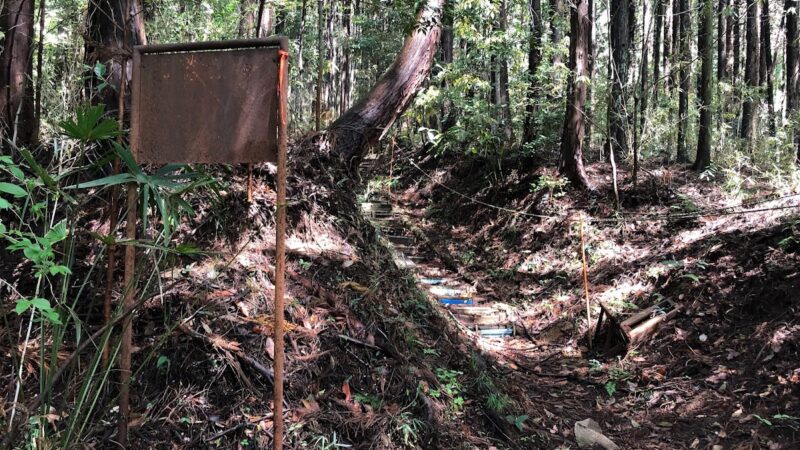
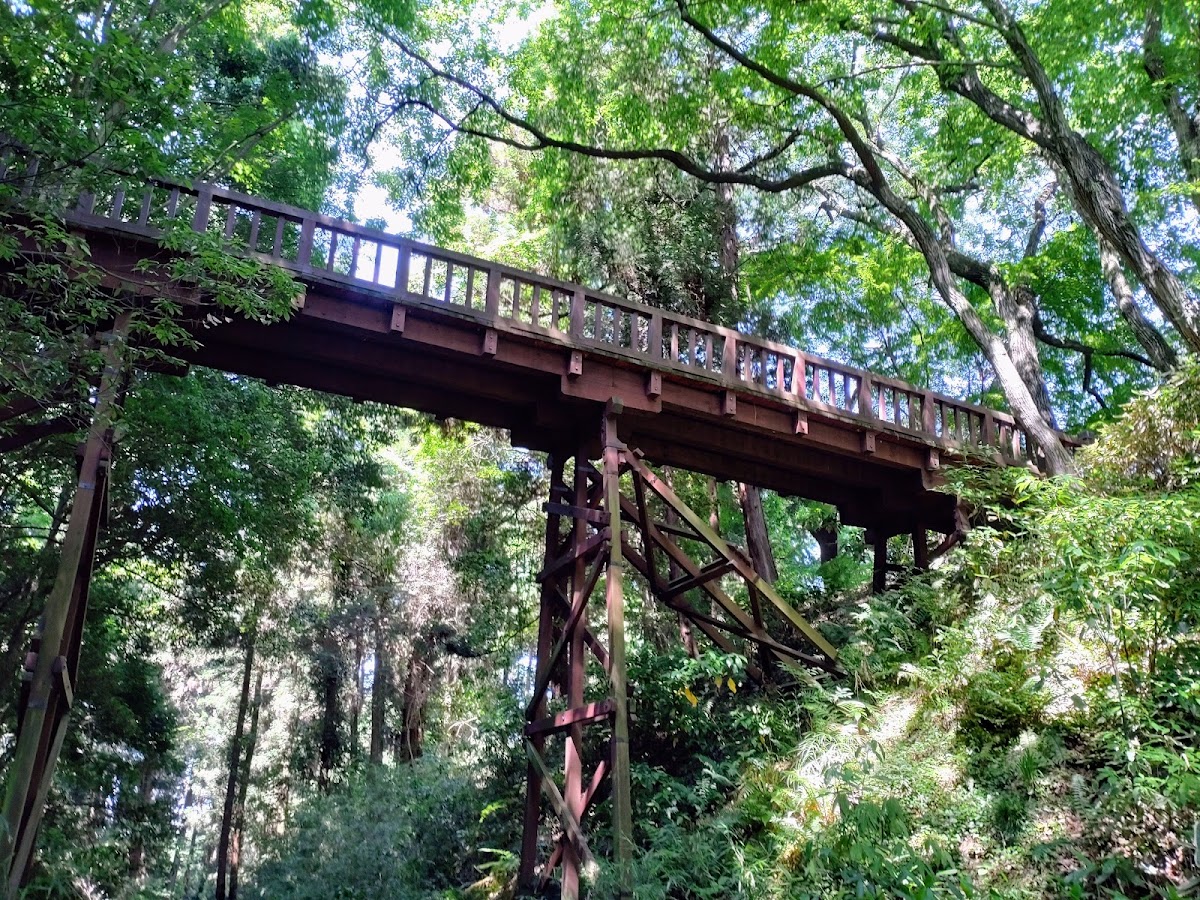
Walking paths are maintained within the park, allowing visitors to tour the main remains. The site is well-equipped with information boards, allowing even first-time visitors to understand the castle’s structure and history while exploring.
Preservation of the Remains
The greatest appeal of Takiyama Castle ruins is the exceptionally well-preserved state of its remains. Almost all the major elements that constitute a Sengoku period castle remain, including the main keep, inner bailey, Senjojiki (a large enclosure), deep dry moats, high earthworks, gates, outworks, and well remains.
The dry moats and earthworks are particularly impressive; walking through them reveals their surprising depth and height. Furthermore, the opportunity to enjoy the changing seasons—cherry blossoms in spring, fresh greenery in early summer, and autumn leaves—while exploring the castle ruins is another major attraction.
Selection as one of the Continued Top 100 Japanese Castles
In 2017 (Heisei 29), Takiyama Castle was selected as one of the “Continued Top 100 Japanese Castles.” This is a list of famous castles selected by the Japan Castle Association, based on a comprehensive evaluation of historical value, preservation status, and popularity.
The stamp for the Continued Top 100 Japanese Castles can be obtained at the “Kazumi Community Center” and the “Hachioji Castle Ruins Guidance Facility,” both adjacent to the Takiyama Castle ruins. Castle enthusiasts from across Japan visit as part of their “castle tours,” contributing to the increased recognition of Takiyama Castle.
Preservation Activities by an NPO
The “Takiyama Castle Ruins Group – Association for the Preservation of Nature and History,” an NPO, plays a central role in the preservation and utilization of the Takiyama Castle ruins. They conduct regular cleaning, grass cutting, and maintenance of the remains, playing a crucial role in maintaining the site in good condition.
They also hold various events, such as a series of historical lectures, parent-child armor try-on sessions, comprehensive guided tours of the Takiyama Castle ruins, and the Hojo Ujiteru Festival, contributing to local history education and tourism promotion.
Experience with an AR App
As a modern initiative, the smartphone app “AR Takiyama Castle Ruins” is available. This app uses AR (Augmented Reality) technology to recreate lost buildings and structures on the screen, allowing users to experience the castle’s appearance in its heyday.
When you launch the app while walking around the site, the turrets, gates, and buildings that once stood there will appear on the screen, allowing you to realistically imagine what Takiyama Castle looked like during the Sengoku period. It’s particularly popular with children and young people, and is used as a tool to enhance their interest in history.
500th Anniversary of Castle Construction Commemoration
2021 (Reiwa 3) marked the 500th anniversary of the construction of Takiyama Castle. To commemorate this, Hachioji City and related organizations implemented various commemorative projects. These included the production and distribution of a commemorative manga, special exhibitions, lectures, and guided tours, widely disseminating the history and appeal of Takiyama Castle.
Through these efforts, the value of Takiyama Castle has been re-recognized not only by local residents but also by history enthusiasts nationwide, and the number of visitors has increased.
Takiyama Castle Tourist Information | Access and Highlights
Access Methods
Access to Takiyama Castle Ruins is convenient by public transport or private car.
By Train/Bus:
- Take a Nishi-Tokyo Bus bound for “Tobuki,” “Kyorin University,” or “Sairi” from the North Exit of Hachioji Station on the JR Chuo Line, or Haijima Station on the JR Hachiko Line.
- Get off at the “Takiyama Castle Ruins” bus stop and walk for approximately 15 minutes.
By Private Car:
- Approximately 15 minutes from the Hachioji Interchange on the Chuo Expressway.
- Takiyama Tourist Parking (free) is available.
Points to Note During Your Visit
It is recommended to allow 2-3 hours for a visit to Takiyama Castle Ruins. The main highlights are as follows:
1. Ote-guchi (San-no-maru)
This is the main entrance to the castle, where you enter the castle grounds. A deep dry moat greets you, allowing you to appreciate the castle’s strong defenses.
2. Senjojiki (Ninomaru)
This vast enclosure allows you to observe the defensive structure of three barbicans. The corner barbican, in particular, is well-preserved and valuable for learning about castle construction techniques of the Sengoku period.
3. Nakanomaru
The second most important enclosure after the Honmaru, surrounded by deep dry moats and high earthen ramparts. Its function as a key defensive point is clearly evident.
4. Honmaru
The central part of the castle, where the lord’s residence once stood. Earthen ramparts and well remains, and you can enjoy views of the Tama River and Akigawa River.
5. Dry Moats and Earthen Ramparts
The dry moats and earthen ramparts remaining throughout the castle are a must-see. The deep dry moats, in particular, can be walked on, allowing you to experience their defensive strength firsthand.
Points to Note When Visiting
- The castle ruins are located in the mountains and the terrain is very uneven, so please wear comfortable shoes and clothing.
- Insect repellent is necessary in summer, and warm clothing is necessary in winter.
- It is recommended to bring drinks with you.
- Be careful as the ground can be slippery in rainy weather.
- Participating in a guided tour will allow you to understand the castle’s history more deeply.
Nearby Tourist Attractions
There are other points of interest around Takiyama Castle Ruins.
Hachioji Castle Ruins:
This castle was moved to by Hojo Ujiteru from Takiyama Castle. It is also a national historic site and one of Japan’s Top 100 Castles. There is also a guidance facility, so visiting both together is recommended.
Mount Takao:
A popular mountain easily accessible from central Tokyo, with cable cars and chairlifts. Many tourists visit both Takiyama Castle Ruins and Mount Takao.
Tama River/Akigawa River:
The two rivers flowing below the castle ruins are rich in nature and suitable for walks and leisure activities.
Historical Significance and Future Prospects of Takiyama Castle
Takiyama Castle is an important historical site representing the pinnacle of architecture castle in the Kanto region during the Sengoku period (Warring States period). It showcases the latest technology of the time, including a layout that maximizes the use of natural terrain, complex defensive structures, and cleverly placed gates and outworks.
In particular, the historical fact that it repelled Takeda Shingen’s large army with a small force demonstrates the castle’s high defensive capabilities and holds significant importance in the history of castle architecture. Furthermore, its status as the residence of Hojo Ujiteru, a distinguished Sengoku warlord, enhances its historical value.
Currently, Takiyama Castle ruins are a national historical site, one of the Continued Top 100 Japanese Castles, and a Tokyo Metropolitan Park, enjoyed by many people. Various initiatives are underway, including preservation activities by NPOs and local residents, development projects by the government, and the provision of new experiences utilizing AR technology.
In the future, it is hoped that this valuable historical heritage will be passed on to future generations and utilized as a tourist resource. There are also movements to aim for World Heritage registration, suggesting the potential for international recognition.
Takiyama Castle Ruins, a place that still conveys the spirit of the Sengoku period. Why not walk through its magnificent remains and feel the romance of history? The deep dry moats, high earthen ramparts, and vast baileys tell the story of the wisdom and struggles of the Sengoku warlords 500 years ago.
Summary
Takiyama Castle is a mountain castle from the Sengoku period located in Hachioji City, Tokyo, and is known as the residence of Hojo Ujiteru. With a history of over 500 years since its construction in 1521, it is famous as a strong fortress that repelled the invasion of Takeda Shingen.
Currently, it is designated as a national historic site and one of the Continued Top 100 Japanese Castles, and is maintained as Tokyo Metropolitan Takiyama Park. The remains of the Sengoku period, such as the main bailey, inner bailey, Senjojiki, dry moats, earthen ramparts, and barbicans, are well preserved, making it a recommended historical site not only for castle enthusiasts but for anyone interested in history.
Modern initiatives such as experiences utilizing AR technology and various events by NPOs are also abundant, allowing you to learn history while having fun. Easily accessible from central Tokyo, this is the perfect spot for a historical stroll on the weekend.