A Thorough Explanation of Yamagata Castle’s History and Highlights | A National Historic Site Popularly Known as Kajo Park
What is Yamagata Castle? | One of Japan’s Leading Flatland Castles, Known as Kajo
Yamagata Castle, located in Kajo-cho, Yamagata City, Yamagata Prefecture, is one of Japan’s leading flatland castles. Also known as “Kajo” or “Kasumigajo,” it is said to have been named after the beauty of the cherry blossoms that appear to shroud the castle in mist during spring. It is also known by the auspicious nickname “Kichiji Castle.”
Currently designated as a national historic site and selected as one of Japan’s Top 100 Castles (No. 10), it is an important cultural property. After World War II, it was opened to the public as “Kajo Park,” and its location almost in the center of Yamagata city makes it a popular place for citizens to relax.
Scale and Characteristics of Yamagata Castle
The greatest characteristic of Yamagata Castle is its overwhelming scale. The outer bailey, the San-no-maru, measures approximately 1,480 meters east-west and 1,881 meters north-south, covering a total area of about 240 hectares. This makes it the fifth largest castle in Japan, ranking after Edo Castle, Osaka Castle, Nagoya Castle, and Kanazawa Castle.
The castle has a triple-layered structure consisting of the Honmaru, Ninomaru, and San-no-maru, each surrounded by moats and earthen ramparts, a typical concentric flatland castle design. Located on the southern side of the Yamagata Basin, slightly north of the center of the Mamigasaki River alluvial fan, it boasts a strategic location controlling a crucial transportation hub at the confluence of the Ushu Kaido and Sasaya Pass.
The History of Yamagata Castle | From Shiba Kaneyori to Mogami Yoshiaki, and then to the Torii Clan
From Construction to the Mogami Clan Era
The history of Yamagata Castle is said to have begun in 1356 (Enbun 1) when Shiba Kaneyori, who entered Yamagata as the Dewa Province Tandai (governor of Ushu Province), built the castle. Shiba Kaneyori was the first head of the Mogami family and was tasked with ensuring the stable governance of Dewa Province as the Dewa Province Kanrei (deputy governor of Ushu Province) of the Muromachi Shogunate.
In Dewa and Yamagata, where the conflicts of the Nanboku-cho period were still strongly felt, Shiba Kaneyori built a castle in this area, which had flourished as the center of Mogami County until the Kamakura period, and made it the base of the Mogami clan. Subsequently, the Mogami clan ruled this area for generations, and during the Sengoku period, they grew into a powerful daimyo of Dewa Province.
Major Renovations by Mogami Yoshiaki
The foundation of the current Yamagata Castle was laid by the 11th lord of the castle, Mogami Yoshiaki (1546-1614). Yoshiaki was a renowned general who was active from the Sengoku period to the early Edo period. In the Battle of Sekigahara in 1600, he sided with the Eastern Army and engaged in a fierce battle against the Uesugi clan’s Naoe Kanetsugu army at Hasedo Castle.
His victory at the Battle of Hasedo earned Yoshiaki the trust of Tokugawa Ieyasu, making him a powerful daimyo with a domain of 570,000 koku in Dewa Province. This was an extremely high domain for a daimyo at the time, and Yoshiaki used this wealth to extensively expand and improve Yamagata Castle. The expansion of the third bailey, the widening of the moats, and the improvement of the castle gates—the basic structure of Yamagata Castle as seen today—was completed during this period.
Successive Lords of Yamagata Castle After the Mogami Clan’s Dispossession
In 1622 (Genna 8), during the time of Mogami Yoshitoshi, grandson of Mogami Yoshiaki, the Mogami clan was dispossessed of their 570,000 koku territory. Subsequently, Torii Tadamasa was appointed to Yamagata Castle with a 240,000 koku domain. From then until the end of the Edo period, various fudai daimyo, including the Torii, Hoshina, Matsudaira, Akimoto, and Mizuno clans, successively served as castle lords.
Notably, the castle’s assessed yield gradually decreased with each change of lord. From 570,000 koku during the Mogami era, it eventually fell to 50,000 koku, and consequently, the maintenance and management of the castle also decreased. Part of the third bailey became samurai residences and a merchant area, and the castle’s function gradually diminished.
Changes After the Meiji Restoration
After the Meiji Restoration, Yamagata Castle was abandoned due to the abolition of the feudal domains and the establishment of prefectures, and many of its buildings were dismantled. Most of the main buildings, including the main palace, turrets, and castle gates, were demolished, and parts of the stone walls were also destroyed. The castle site was used as a military training ground and later became the grounds for schools and public facilities.
In 1986, following its designation as a national historic site, Yamagata City began a full-scale restoration project. Excavation surveys and restoration work are ongoing, and the castle is gradually regaining its former glory, with the “Ninomaru Higashi Otemon” gate being restored in 1991 and the “Honmaru Ichimonjimon Otebashi” bridge in 2005.
Structure of Yamagata Castle | A flatland castle surrounded by a triple moat
Structure of the Honmaru and the Honmaru Palace Site
The Honmaru is the central area of Yamagata Castle, measuring approximately 230 meters east-west and 260 meters north-south. Within the main enclosure (Honmaru) stood the Honmaru Palace, the residence of the feudal lord, and functioned as the political center.
The Honmaru Palace (Honmaru Goten) was a large architectural complex consisting of the Omote-Goten (front palace), Naka-oku (middle palace), and O-oku (inner palace), but it was dismantled during the Meiji era, and only foundation stones and remains today. Archaeological excavations are revealing the detailed layout and structure of the palace, accumulating basic data for future restoration.
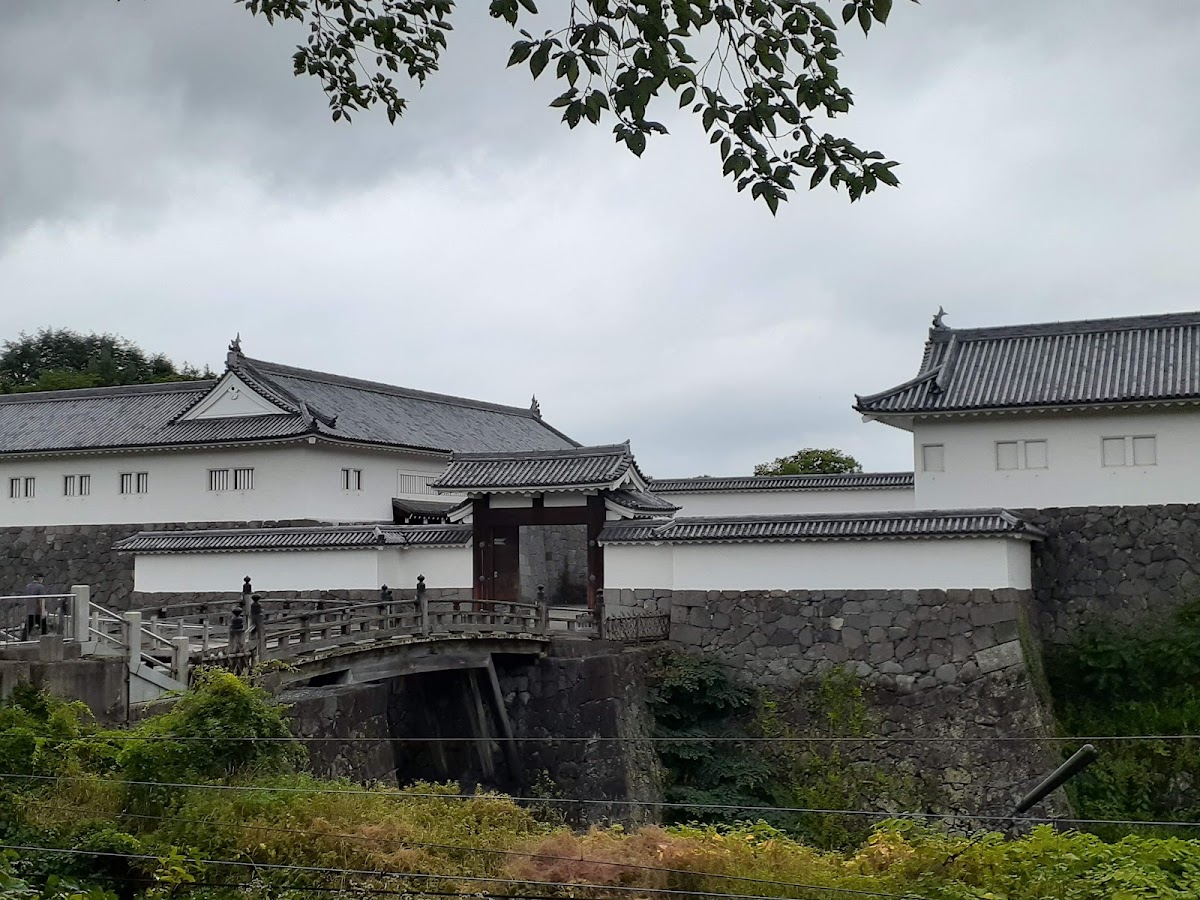
The main entrance to the Honmaru was the Honmaru Ichimonji Gate on the south side. Restored in 2005, the Honmaru Ichimonji Gate is a masugata-mon (square-shaped gate) in the Koraimon style, and along with the Otebashi Bridge, it has been restored, conveying the grandeur of the Honmaru to this day.
Characteristics of the Ninomaru and the Restored East Otemon Gate
The Ninomaru is the area surrounding the Honmaru, measuring approximately 640 meters east-west and 720 meters north-south. The Ninomaru housed the residences of high-ranking officials and important facilities of the domain.
The most important remaining structure of the Ninomaru (second enclosure) is the “Ninomaru East Main Gate,” which was restored in 1991. This gate served as the main entrance to Yamagata Castle and is a magnificent turret gate, approximately 14 meters high and 19 meters wide. The restoration work aimed for the most faithful reproduction possible, based on the arrangement of foundation stones obtained from archaeological excavations, as well as historical materials such as old photographs and drawings.
The moat of the Ninomaru remains largely intact today, allowing visitors to appreciate its immense scale. The moat reaches a maximum width of approximately 50 meters, evoking its original function as a water-filled moat.
Sannomaru (third enclosure) and Castle Town
The Sannomaru (third enclosure) was the outermost enclosure of the castle, occupying a vast area of approximately 1,480 meters east-west and 1,881 meters north-south, as mentioned earlier. Within the Sannomaru, in addition to samurai residences, a merchant district was also formed, functioning as a castle town.
Parts of the moat and earthworks of the third bailey still remain within the city, and walking around while comparing them with old maps allows you to truly appreciate the former extent of the castle. The third bailey had multiple gates that controlled entry and exit to the castle town.
Highlights of Kasumijo Park | Restored Structures and Historical Facilities
Restored Castle Gates and Bridges
At Yamagata Castle ruins, which have been developed as Kasumijo Park, you can visit restored historical structures.
The East Main Gate of the Second Bailey is a representative restored structure of Yamagata Castle. Since its restoration in 1991, it has been a beloved symbol of Yamagata Castle for citizens and tourists alike. The interior of the gate is open to the public, allowing you to observe the structure of the turret and the defensive mechanisms of the castle gate up close.
The Honmaru Ichimonji Gate and Ote Bridge were restored in 2005. This gate, the formal entrance to the main bailey, has a square-shaped structure, and various measures to prevent enemy intrusion can be seen throughout. The Otebashi Bridge, which crosses the moat of the main keep, has been restored to its dignified wooden form.
These restored structures revive the appearance of Yamagata Castle during the time of Mogami Yoshiaki, and are valuable cultural assets that convey the techniques and aesthetics of castle architecture from that era.
Cultural Facilities within the Park
Within Kajo Park, there are several facilities where you can learn about the history and culture of Yamagata.
The Mogami Yoshiaki Historical Museum introduces the life and achievements of Mogami Yoshiaki, who extensively renovated Yamagata Castle and became a powerful daimyo with a domain of 570,000 koku. Valuable materials such as armor, swords, and letters used by Yoshiaki are on display, allowing visitors to gain a deep understanding of Yamagata’s history from the Sengoku period to the early Edo period.
The Yamagata City Local History Museum is a building that was relocated from the former Saiseikan main building and is designated as a National Important Cultural Property. Built in 1878 (Meiji 11), this Western-style building is a valuable structure that tells the story of Yamagata’s modernization.
The Yamagata Prefectural Museum is also located within the park, offering comprehensive exhibits on Yamagata Prefecture’s nature, history, and culture. It houses materials related to Yamagata Castle, allowing visitors to learn more about the castle’s history.
Kajo Park as a Cherry Blossom Viewing Spot
Kajo Park is known as one of Yamagata Prefecture’s leading cherry blossom viewing spots. Approximately 1,500 Somei Yoshino cherry trees are planted within the park, and in spring, the entire castle site is bathed in pink blossoms.
The row of cherry trees along the moat of the second bailey is particularly breathtaking. The combination of the cherry blossoms reflected on the water’s surface and the restored East Main Gate creates a spectacular view unique to Yamagata Castle. The beauty of the cherry blossoms, which appear as if shrouded in mist—the origin of the castle’s nickname “Kajo” (meaning “Mist Castle”)—captivates many visitors.
Every year from mid- to late April, the “Kajo Cherry Blossom Viewing Festival” is held, with nighttime illuminations. The fantastical sight of the illuminated cherry blossoms and castle gates has become a spring tradition in Yamagata.
Current Status of Excavation and Restoration Projects
Ongoing Excavation
Yamagata City is conducting ongoing excavation surveys with the aim of preserving and utilizing the Yamagata Castle ruins. To date, many new facts have been revealed, including the detailed structure of the main keep, the construction techniques of the stone walls, and the scale and structure of the moats.
In particular, the excavation of the main keep site has uncovered foundation stones, drainage facilities, and garden remains, providing concrete clues to understanding the appearance of a daimyo residence during the Edo period. These research findings are important materials for the future restoration of the main keep.
Investigations of the second and third baileys are also progressing, gradually clarifying the layout of samurai residences and the structure of the castle town. The results of the excavation surveys are regularly published in reports, and on-site explanatory meetings for the public are also held.
Future Restoration Plans
Yamagata City is proceeding with phased restoration work based on the basic development plan for the Yamagata Castle ruins. The following projects are currently underway:
In the restoration of the main keep (Honmaru), the long-term goal is to partially restore the Honmaru Palace. However, because restoration requires enormous costs and time, the plan is to prioritize basic surveys and the preservation of remains, proceeding with the restoration in stages.
In the second bailey (Ninmaru), the restoration of gates and turrets other than the East Main Gate is also being considered. The restoration of the South Main Gate and the North Gate, in particular, is considered a crucial project for restoring the overall appearance of the castle.
Furthermore, preservation and maintenance of existing remains, such as dredging the moats and repairing the stone walls, are being carried out continuously. Through these projects, Yamagata Castle is steadily regaining its former glory.
Yamagata City is putting a lot of effort into castle restoration, including increasing the number of curators, and is promoting the restoration project with a long-term perspective, with the cooperation of citizens and experts.
Access and Tourist Information for Yamagata Castle
Access Methods
Access by Train
- Approximately 15 minutes on foot from JR Yamagata Station
- Approximately 5 minutes by Yamagata City Community Bus “Higashi Kururin” from JR Yamagata Station, alight at “Kajo Park Mae”
Access by Car
- Approximately 15 minutes from Yamagata Zao IC on the Yamagata Expressway
- Approximately 10 minutes from Yamagata Chuo IC on the Tohoku Chuo Expressway
There are multiple parking lots within and around the park, with a total capacity of approximately 230 cars. During peak seasons such as cherry blossom season, the use of public transportation is recommended.
Opening Hours and Admission Fee
Kajo Park is generally open 24 hours a day, and admission is free. However, the entry times to the main keep and second keep are as follows:
- April 1st to October 31st: 5:00 AM to 10:00 PM
- November 1st to March 31st: 5:30 AM to 8:00 PM
Each facility within the park (such as the Mogami Yoshiaki Historical Museum and the Yamagata City Local History Museum) has its own opening hours and closing days, so it is recommended to check in advance.
Nearby Tourist Attractions
The area around Yamagata Castle is dotted with tourist attractions where you can enjoy history and culture.
Yamagata City Center features historical shopping streets such as Nanokamachi and Honmachi, lined with traditional storehouse-style buildings and long-established shops. You can enjoy Yamagata’s traditional crafts and local cuisine.
Bunshokan (former Prefectural Government Building/Prefectural Assembly Hall) is a Western-style building constructed in 1916 (Taisho 5) and is designated as a National Important Cultural Property. It is about a 15-minute walk from Kajo Park, and you can enjoy the architectural beauty full of Taisho-era romance.
Yamadera (Risshaku-ji Temple) is a renowned temple located approximately 15 kilometers northeast of Yamagata City. It is famous for being the site of Matsuo Basho’s famous haiku, “Silence—the cicada’s cry penetrates the rocks.” It’s a must-visit spot when sightseeing in Yamagata.
Cultural Value and Significance of Preservation of Yamagata Castle
Value as one of Japan’s Top 100 Castles
Yamagata Castle is the 10th castle selected by the Japan Castle Association as one of Japan’s Top 100 Castles. This selection comprehensively evaluates the castle’s historical importance, the state of preservation of its remains, and its cultural value in the region.
The reasons why Yamagata Castle was selected as one of the Top 100 Castles are as follows:
- Scale: The fifth largest castle in Japan, it speaks to the power of Mogami Yoshiaki, who held a domain of 570,000 koku.
- Historical Importance: It functioned as the political and military center of Dewa Province from the Nanboku-cho period to the Edo period.
- Preservation of Remains: The moat and earthworks of the second bailey are well-preserved.
- Results of Restoration Project: Restored structures based on scientific research contribute to the understanding of castle architecture.
The stamp for the “100 Famous Castles of Japan” can be obtained at the Yamagata City Local History Museum in Kajo Park.
Preservation as a National Historic Site
Yamagata Castle Ruins were designated a National Historic Site in 1986. This designation legally protects important remains of the castle, and development activities are restricted.
Preservation as a National Historic Site includes not only protecting the remains, but also promoting academic research and making its results widely available. Yamagata City has formulated a plan for the preservation and utilization of the historical site, and is proceeding with development as a park that can be enjoyed by citizens and tourists without compromising its value as a cultural asset.
The historical site covers approximately 35.1 hectares, centered on the main keep and second bailey, and also includes a part of the third bailey. Within the designated area, the preservation of the remains is the top priority, while ensuring the park’s functionality, disaster prevention, and safety.
Cultural Role in the Region
Yamagata Castle Ruins (Kajo Park) is not merely a historical site for the citizens of Yamagata, but functions as a cultural space closely integrated into their daily lives.
The park is used for daily walks, jogging, and recreation, and allows visitors to enjoy the changing seasons: cherry blossoms in spring, fresh greenery in early summer, autumn leaves in fall, and snowscapes in winter. It is a place of relaxation for citizens, as well as a place to learn about local history and cultivate pride.
Yamagata Castle Ruins also serves as important teaching material in school education. Elementary and junior high schools in the city provide opportunities for students to visit Kajo Park as part of their local history studies, learning about the region’s history and culture.
Furthermore, it is an important tourist resource, attracting many visitors throughout the year. Especially during cherry blossom season and when the restored buildings are open to the public, many people gather from both within and outside the prefecture, contributing to the local economy.
Summary | Yamagata Castle is Reclaiming Its Foreign Appearance
Yamagata Castle boasts a history of over 660 years since its construction by Shiba Kaneyori, and became one of Japan’s largest castles after a major renovation by Mogami Yoshiaki. Although many buildings were lost after the Meiji Restoration, it is protected as a nationally designated historical site and is now a beloved local attraction as Kajo Park.
Through continuous archaeological excavations and restoration projects, including the restoration of the Ninomaru East Main Gate and the Honmaru Ichimonji Gate, Yamagata Castle is steadily regaining its former glory. It is a historical site of high cultural value, selected as one of Japan’s Top 100 Castles, and an important heritage symbolizing Yamagata’s history and culture.
The park boasts numerous cultural facilities, including the Mogami Yoshiaki Historical Museum and the Yamagata City Local History Museum, and is also widely known as a famous cherry blossom viewing spot. Its convenient location in the heart of Yamagata city makes it a space that can be enjoyed by people of all ages, not just history buffs.
When visiting Yamagata, be sure to take a stroll through Kajo Park and reflect on the history of the magnificent castle built by Mogami Yoshiaki. Walking through the restored castle gate and gazing at the vast moat, you’ll truly feel the prosperity of this area as the center of Dewa Province from the Sengoku period to the Edo period.