Asukayama Castle (Kita Ward, Tokyo) Complete Guide | Castle Ruins of the Toshima and Takinogawa Clans and the Current Asukayama Park
The site now known as Asukayama Park in Kita Ward, Tokyo, was once home to Asukayama Castle, a medieval fortress. Built by the Takinogawa clan, a branch of the Toshima clan, it was one of the important strongholds in Musashi Province during the early Sengoku period. While few remains of the castle exist today, it was developed as a cherry blossom viewing spot by Tokugawa Yoshimune during the Edo period and remains a beloved park to this day.
History of Asukayama Castle
Construction and the Takinogawa Clan
The exact construction date of Asukayama Castle is uncertain, but it is believed to have been built sometime between the Muromachi period and the early Sengoku period by the Takinogawa clan, a branch of the Toshima clan. The Toshima clan was a powerful local family in Musashi Province, originating from the Chichibu clan, which traced its lineage back to the Kanmu Taira clan, and controlled the area spanning from present-day Kita Ward to Itabashi Ward in Tokyo.
The Takinogawa clan is said to have descended from Toshima Kiyomitsu, the fourth head of the Toshima clan, and built Asukayama Castle as a branch castle of their main base, Takinogawa Castle. Asukayama was situated on a plateau between the Shakujii River and the Otonashi River (near the present-day Otonashi Waterfront Park), possessing a geographical advantage as a high ground approximately 25 meters above sea level.
The Battle Between the Toshima Clan and Ota Dokan
The fate of Asukayama Castle was sealed by the battle between the Toshima clan and Ota Dokan in 1477. The Toshima brothers, Yasutsune and Yasuaki, who raised an army in response to the Nagao Kageharu Rebellion, came into conflict with Ota Dokan, a vassal of the Ogigayatsu Uesugi clan.
Ota Dokan, based at Edo Castle, successively captured the castles of the Toshima clan. In the Battle of Egota-Numabukurohara on April 18th, Bunmei 9 (1477), the Toshima clan suffered a crushing defeat. Toshima Yasutsune was killed in action, and Yasumasa fled to Shakujii Castle, but Shakujii Castle also fell on April 25th of the same year.
It is believed that Asukayama Castle was also captured by Ota Dokan during this series of battles. With the downfall of the Toshima clan, the Takinogawa clan also disappeared from history, and Asukayama Castle is believed to have been abandoned.
Castle Structure and Scale
Unfortunately, there is a lack of reliable historical records regarding the detailed structure of Asukayama Castle, and nothing is clearly known. Based on the topography of the current Asukayama Park, it is thought to have been a flatland castle utilizing the plateau terrain.
In terms of scale as a castle, it is more likely that it was a defensively reinforced residence or mansion of the Takinogawa clan, rather than a full-fledged battle fortress. Given the presence of the Hiratsuka Castle legend site nearby, some believe it was one of several mansions built around Hiratsuka Castle, the Toshima clan’s base.
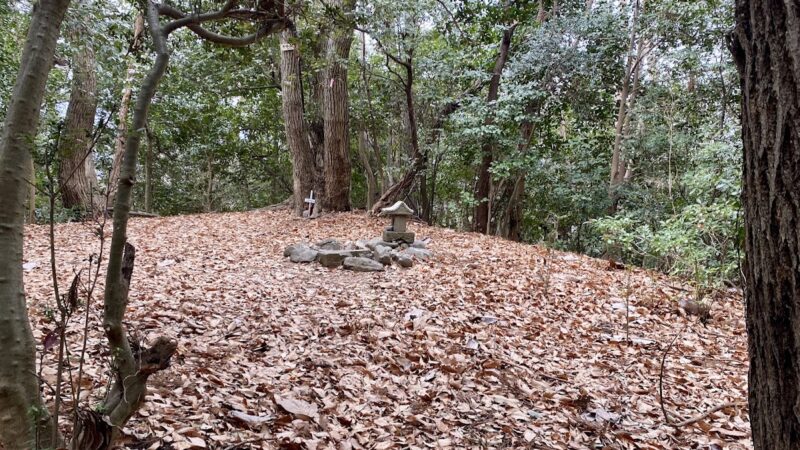
It is presumed that defensive structures such as earthworks and moats once existed, but due to large-scale topographical changes since the Edo period, no traces of them can be found today.
History of Asukayama Park
Transformation into a Cherry Blossom Spot by Tokugawa Yoshimune
After the castle was abandoned, Asukayama was largely forgotten for a long time, but it underwent a major turning point in the mid-Edo period. In 1720 (Kyoho 5), the 8th Shogun, Tokugawa Yoshimune, decided to develop Asukayama as a recreational area for the common people.
Yoshimune frequently visited Asukayama during falconry expeditions and recognized the beauty of the scenery. As part of the Kyoho Reforms, he aimed to stabilize the public’s spirit by providing a place of entertainment, and had approximately 1,270 cherry trees planted on Asukayama. As a result, Asukayama became one of Edo’s three major cherry blossom viewing spots, along with Kan’ei-ji Temple in Ueno and the Sumida River embankment.
Asukayama Monument and Cultural Property
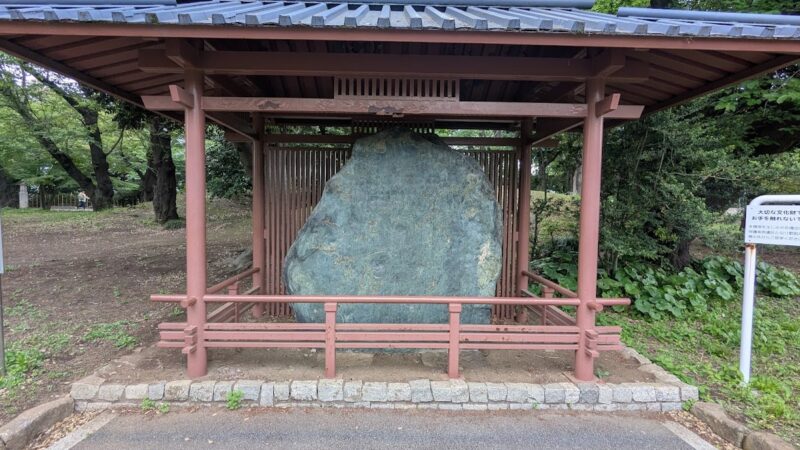
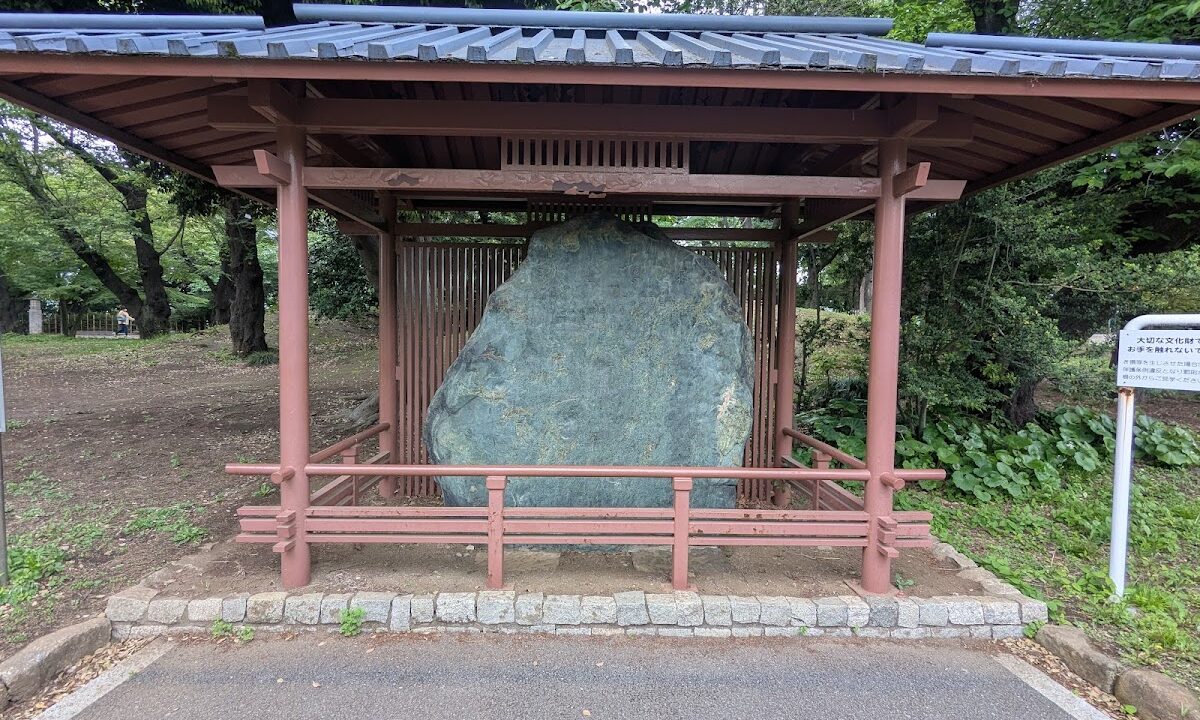
The Asukayama Monument was erected in 1720 (Kyoho 5) to commemorate the development of Asukayama by Yoshimune. This monument is designated as a Tokyo Metropolitan Government-designated Tangible Cultural Property (ancient document) and is still preserved within Asukayama Park. The inscription describes the history of Yoshimune’s development of Asukayama, making it a valuable historical document for understanding the popular culture of the Edo period.
Development After the Meiji Era
In the Meiji era, Asukayama was designated as one of Japan’s first parks. In 1873 (Meiji 6), a decree from the Grand Council of State designated five areas—Ueno, Shiba, Asakusa, Fukagawa, and Asukayama—as parks, and Asukayama was officially developed as Asukayama Park.
From the Taisho to the early Showa period, the area around Asukayama was also known as the site of the residence of the modern businessman, Eiichi Shibusawa. Eiichi Shibusawa resided in Asukayama from 1879 (Meiji 12) until his death in 1931 (Showa 6). Currently, the park contains the Shibusawa Memorial Museum and the former Shibusawa Garden (a nationally designated scenic spot), and is maintained as a place associated with Eiichi Shibusawa.
Current Asukayama Park
Park Facilities and Highlights
Currently, Asukayama Park covers approximately 7.3 hectares and is a popular urban park representing Kita Ward. While no remains of the castle exist, it is an attractive space where history and nature harmonize.
Main Facilities:
- Asukayama Museum, Kita Ward: A museum showcasing the history and culture of Kita Ward.
- Paper Museum: A rare museum specializing in paper, unique in the world.
- Shibusawa Memorial Museum: Exhibits the life and achievements of Eiichi Shibusawa.
- Former Shibusawa Garden: A nationally designated scenic spot, the garden of Eiichi Shibusawa’s former residence.
- Children’s Area: Playground equipment and exhibits of streetcars and steam locomotives.
- Asukayama Monorail (Asuka Park Rail): Monorail providing access to the park from JR Oji Station.
As a Famous Cherry Blossom Spot
Asukayama Park remains a renowned cherry blossom viewing spot in Tokyo. Approximately 600 Somei Yoshino cherry trees, along with various other varieties such as Satozakura, are planted there. Every spring, the “Kita Ward Sakura SA*KASO Festival” is held, attracting many visitors.
The tradition of cherry blossom viewing, which dates back to the Edo period, continues to this day, and during cherry blossom season, visitors can enjoy the sight of the entire Asukayama area bathed in a delicate pink hue.
Hydrangeas and Autumn Leaves
Besides cherry blossoms, Asukayama Park offers beautiful scenery throughout the seasons. From June to July, approximately 1,300 hydrangea bushes bloom, and the walking path known as “Asuka no Komichi” (Asuka’s Path) is a popular attraction. The autumn foliage is also stunning, making it a park worth visiting year-round.
Access to Asukayama Castle
Access by Train
Asukayama Park (Asukayama Castle Ruins) is accessible from multiple train lines.
- JR Keihin-Tohoku Line “Oji Station”: A short walk (approx. 1 minute) from the Central or South Exit
- Tokyo Metro Namboku Line “Oji Station”: Approximately 3 minutes on foot from Exit 3
- Tokyo Sakura Tram (Toden Arakawa Line) “Oji-ekimae Stop”: A short walk
- Tokyo Sakura Tram (Toden Arakawa Line) “Asukayama Stop”: A short walk
Due to the elevation difference between Oji Station and the park entrance, the free Asukayama Monorail (Asuka Park Rail) is recommended for those with mobility issues or the elderly.
Access by Car and Parking
Asukayama Park does not have its own parking lot, so the use of public transportation is recommended. There are several paid coin-operated parking lots in the surrounding area, but they often fill up during peak seasons such as cherry blossom season, so caution is advised.
Related Historical Sites in the Surrounding Area
Takinogawa Castle
Takinogawa Castle, considered the main castle of Asukayama Castle, is believed to have been located approximately 1.5 kilometers northwest of Asukayama Park. It is thought to have been situated in the area of present-day Takinogawa in Kita Ward, but no clear remains exist. It is presumed to have been a larger castle than Asukayama Castle, serving as the base of the Takinogawa clan.
Hiratsuka Castle
Hiratsuka Castle, considered one of the Toshima clan’s strongholds, is believed to have been located in the area of present-day Kaminakazato and Nishigahara in Kita Ward. It is approximately 1 kilometer northeast of Asukayama Park and is thought to have been part of the Toshima clan’s castle network.
Inazuke Castle
Inazuke Castle, located in Akabane-Nishi, Kita Ward, is also one of the castles associated with the Toshima clan. It may have been attacked as a related castle during Ota Dokan’s conquest of the Toshima clan.
Shakujii Castle
Located in Nerima Ward, Shakujii Castle was one of the strongholds of the Toshima clan and was captured by Ota Dokan in 1477. It is now maintained as Shakujii Park, and some remains, such as earthworks, still exist. It is a historical site worth visiting in conjunction with Asukayama Castle to understand its history.
About Castle Stamps
With the recent boom in interest in castles, castle stamps for Asukayama Castle are now available for purchase. Castle stamps are increasingly being collected as souvenirs of castle visits, and Asukayama Castle’s stamps are gaining popularity among castle enthusiasts.
How to Purchase Castle Stamps
Asukayama Castle stamps can be purchased at designated sales locations within Kita Ward. For specific sales locations and prices, it is recommended to check the latest information on Kita Ward’s tourism information and castle-related websites. The designs of the castle stamps often feature motifs related to Asukayama Castle and the Takinogawa clan, making them valuable collector’s items.
Points to Note When Visiting Asukayama Castle
Tips for Exploring the Castle Ruins
When visiting Asukayama Castle ruins, keep in mind that very few castle remains are left. Focusing on the following points will enhance your visit:
- Observing the Topography: Consider the elevation differences of the plateau and the relative positions of the surrounding rivers to imagine why the castle was built in this location.
- Understanding the Historical Background: Learning about the history of the conflict between the Toshima clan and Ota Dokan beforehand will deepen your enjoyment.
- Combining with Nearby Historical Sites: Visiting other castle ruins related to the Toshima clan, such as Takinogawa Castle and Hiratsuka Castle, will help you understand the power dynamics of the time.
- Utilizing the Museum: The Kita Ward Asukayama Museum has exhibits on local history and the Toshima clan, allowing you to learn about the castle’s historical background.
Recommended Time to Visit
Asukayama Park can be visited year-round, but the following times are particularly recommended:
- Late March to Early April: Cherry blossom season. Enjoy the atmosphere of a famous cherry blossom viewing spot that has been around since the Edo period.
- June to Early July: Hydrangea season. The hydrangeas along “Asuka no Komichi” (Asuka Path) are in full bloom.
- November: Autumn foliage season. A time when the autumn colors are beautiful.
- Weekday mornings: Recommended for those who want to avoid crowds and stroll at a leisurely pace.
Estimated Time Required
A stroll through Asukayama Park alone takes about 30 minutes to an hour, but if you also plan to visit the museum and historical archives, allow 2 to 3 hours. If you also plan to visit surrounding historical sites, a half-day to full-day plan is recommended.
Historical Significance of Asukayama Castle
Asukayama Castle is not highly regarded as a castle due to the scarcity of remaining structures, but it holds significant importance for understanding the medieval history of Musashi Province.
Part of the Toshima Clan’s Territory
Asukayama Castle was part of a network of castles that the Toshima clan had established in northern Musashi Province. It is believed to have formed the Toshima clan’s sphere of influence in conjunction with castles such as Shakujii Castle, Nerima Castle, Hiratsuka Castle, and Takinogawa Castle. Understanding the arrangement of these castles provides insight into the political and military situation of medieval Musashi Province.
Ota Dokan’s Strategy
Ota Dokan’s conquest of the Toshima clan was a crucial military action in the early Sengoku period in the Kanto region. Dokan’s strategy, using Edo Castle as his base and systematically conquering the Toshima clan’s castles, became a precursor to later sieges during the Sengoku period. The fall of Asukayama Castle can be placed within this larger historical context.
Place in Local History
The history of Asukayama Castle is also important for understanding the local history of Kita Ward. The history of Asukayama, which has transformed from a medieval castle to an Edo-period recreational area and then to a modern urban park, symbolically represents the history of Tokyo’s urban development. ## Summary
Although very few remains of Asukayama Castle exist, it was the site of an important historical event in medieval Musashi Province: the battle between the Toshima clan and Ota Dokan. Currently, it is Asukayama Park, a popular cherry blossom viewing spot that has been enjoyed by many since the Edo period.
When visiting the castle ruins, you can have a deeper experience by not just strolling through the park, but also by being aware of the layers of history etched into this land. The rise and fall of the Toshima clan, the development of a recreational area for commoners by Tokugawa Yoshimune, the residence of Shibusawa Eiichi, and its role as a modern urban park—Asukayama has always been a place that has been close to people’s lives, while having different faces in each era.
While it may be underwhelming for castle enthusiasts, Asukayama Castle ruins are a very attractive place for a historical walk. Visiting it along with other surrounding historical sites makes it a valuable spot to experience the history of Tokyo from the medieval period to the present day.