Complete Guide to Otomo Castle (Maebashi City, Gunma Prefecture) | The Residence of Nagao Kagetoshi and the Site of a Double-Moated Flatland Castle
Otomo Castle, located in Otomo-cho, Maebashi City, Gunma Prefecture, is a flatland castle built during the Sengoku period. Its remains are currently centered around the grounds of Chokenji Temple. Known as a fortified residence surrounded by a double moat and earthen ramparts, it is an important historical site in the history of Kozuke Province.
This article provides a detailed explanation of Otomo Castle’s history, the achievements of its lord, Nagao Kagetoshi, the castle’s structure and remains, as well as access methods and related historical sites in the surrounding area.
Basic Information on Otomo Castle
Location: 2-16-12 Otomo-cho, Maebashi City, Gunma Prefecture (near Chokenji Temple)
Other Names: None
Castle Structure: Flatland Castle (Fortified Castle)
Construction Period: Sengoku period (estimated late 15th to early 16th century)
Builder: Said to be Nagao Kagetoshi
Main Lord: Nagao Kagetoshi Nyudo Nagatake
Remains: Part of the earthworks, topography
Designated Cultural Property: None
Access: Approximately 18 minutes on foot from Shin-Maebashi Station on the JR Ryomo Line
Otomo Castle was built on a flat area located in the southwestern part of Maebashi city, close to the Hirose River, a tributary of the Tone River. The area from present-day Otomo-cho 1-chome to 3-chome is thought to correspond to the former castle grounds.
The History of Otomo Castle and Nagao Kagetoshi
Who was Nagao Kagetoshi?
Nagao Kagetoshi, said to be the lord of Otomo Castle, was a samurai who was active in Kozuke Province during the Sengoku period. The Nagao clan was a prestigious family that produced Uesugi Kenshin of Echigo Province, and its branches were distributed throughout the Kanto region.
Nagao Kagetoshi is said to have become a Buddhist monk and taken the name Choken, and is also known as the founder of Chokenji Temple. Chokenji Temple is still located near the site of the former main keep of Otomo Castle, illustrating the close relationship between the castle and the temple.
Kozuke Province and Otomo Castle during the Sengoku Period
From the 15th to the 16th centuries, Kozuke Province experienced a turbulent period due to the conflict between the Kanto Kanrei Yamanouchi Uesugi clan and the Ogigayatsu Uesugi clan, as well as the expansion of the Hojo clan. During the period when Otomo Castle was built, the area around Maebashi was under the influence of the Uesugi clan, and the Nagao clan, as their important retainers, had castles and residences in various locations.
Otomo Castle is thought to have functioned as one of the subsidiary castles supporting major strongholds such as Maebashi Castle (then known as Umayabashi Castle) and Soja Castle. Given its flatland castle structure, it is highly likely that it was used more as a base for regional control or as the residence of the Nagao clan, rather than as a battlefield.
The End of the Castle
It is unclear when Otomo Castle was abandoned, but it is presumed to have lost its function as part of a trend of many small castles being abandoned from the late Sengoku period to the early Edo period. In the Edo period, the Maebashi Domain was established, and with Maebashi Castle becoming the center, subsidiary castles like Otomo Castle became unnecessary.
Structure and Layout of Otomo Castle
Double-Layered Castle Structure
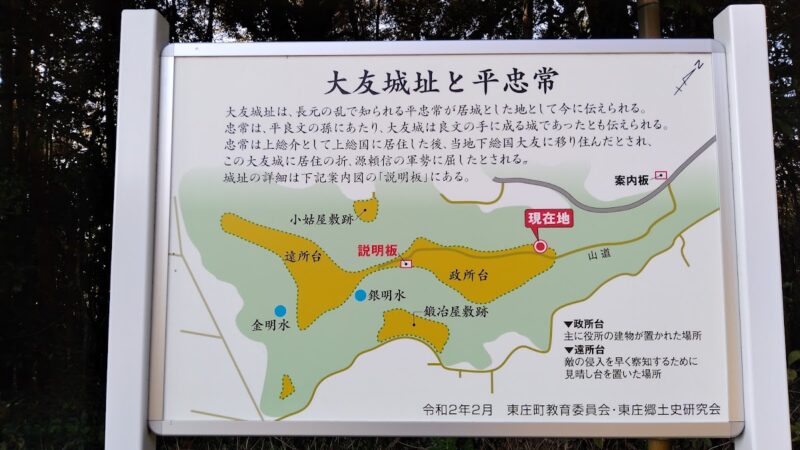
The most distinctive feature of Otomo Castle is its structure, surrounded by a double moat and earthen ramparts. According to records such as “Castle Wanderings,” traces of earthworks (earthen ramparts) remained until recently.
As a flatland castle, Otomo Castle is presumed to have had the following structure:
Inner Enclosure (Main Bailey): The area centered around the grounds of Chokenji Temple. It is believed that the lord’s residence and major facilities were located here.
Outer Enclosure: A second defensive line surrounding the inner enclosure. Composed of earthworks and moats.
Moat: A double moat, either water-filled or dry.
Earthworks: An earthen defensive wall built inside the moats.
Existing Remains
Unfortunately, most of the remains of Otomo Castle have been lost due to urbanization. However, the following traces can be observed:
- Topography: Slight elevation differences remain around Chokenji Temple, suggesting the remnants of former earthworks and moats.
- Earth mounds: Earth mounds can be found in some areas, believed to be traces of earthworks.
- Land division: The current roads and land divisions may reflect the land divisions from the castle era.
Characteristics as a Flatland Castle
Otomo Castle is a typical flatland castle and has characteristics that differ from mountain castles:
Location: Built on flat land, closely connected to surrounding farmland and settlements.
Defense: Defended not by natural terrain, but by artificial moats and earthworks.
Function: More of a base for regional control and residence than a battlefield.
Water Resources: Close to the Hirose River, making water supply easy.
Relationship between Chokenji Temple and Otomo Castle
The Origin of Chokenji Temple
Chokenji Temple is said to have been built on the site of the main keep of Otomo Castle. Its founder is believed to be Nagao Kagetoshi Nyudo Choken, and it is thought that the castle lord himself established it as his family temple.
The existence of castles and temples in the same location was not uncommon during the Sengoku period (Warring States period). After a castle was abandoned, a temple was built on the site to commemorate the castle lord and become a center of local faith.
The Present Chokenji Temple
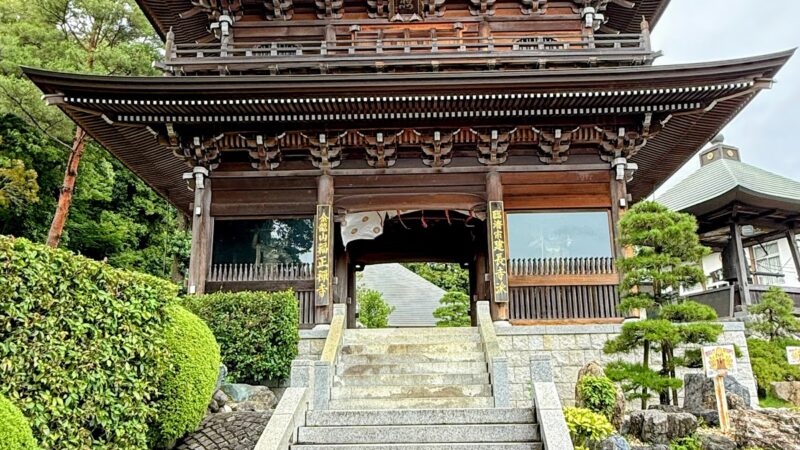
The present-day Chokenji Temple is located at 2-16-12 Otomo-cho, Maebashi City, Gunma Prefecture. The temple grounds include a main hall and a cemetery, and it attracts the faith of the local people.
Visitors can imagine that this was once the center of the castle as they walk through the temple grounds. Careful observation of the surrounding area may reveal traces of moats and earthworks in subtle changes in the terrain.
History and Origin of the Place Name of Otomo-cho
Place Name from the Sengoku Period
The place name Otomo-cho is an old place name that has existed since around the Sengoku period (Warring States period). There are various theories about the origin of the name “Otomo,” but it has been suggested that it may be derived from the name of a castle lord or influential figure.
Present-day Otomo-cho
Present-day Otomo-cho is located in the urban area of Maebashi City and consists of Otomo-cho 1-chome to Otomo-cho 3-chome. The postal code is 371-0847, and the area is approximately 0.6 square kilometers.
While it is a modern townscape lined with residential areas and commercial facilities, the history of the Sengoku period lies dormant beneath. Archaeological surveys have been conducted in the scattered areas of Otomo-cho, and new facts may be revealed through future excavations.
How to Access Otomo Castle
Access by Public Transportation
Using the JR Ryomo Line:
- Approximately 18 minutes on foot from Shin-Maebashi Station (approx. 1.5 km)
- Head southwest from the station and take Prefectural Road 10 (Maebashi-Annaka-Tomioka Line)
Using Local Buses:
- Take a local bus from Maebashi Station towards Otomo-cho (see Maebashi City’s public transportation information for details)
Access by Car
From the Kan-Etsu Expressway:
- Approximately 15 minutes from Maebashi IC
- Take National Route 17 towards Maebashi city center
Parking:
- There may be parking spaces for visitors at Chokenji Temple, but it is recommended to check in advance.
- It is also possible to use nearby coin parking lots.
Points to Note When Visiting
- Chokenji Temple is an active temple, so please observe proper etiquette when visiting.
- Since there are almost no remains left, it is a good idea to understand the location and structure of the castle beforehand.
- Please be considerate of privacy when taking photographs.
Related Historical Sites in the Surrounding Area
When visiting Otomo Castle, you can gain a deeper understanding of the history of Kozuke Province by also visiting other castle ruins in Maebashi City.
Maebashi Castle (Umayabashi Castle)
A major castle located in the center of Maebashi City. During the Sengoku period, the Uesugi, Hojo, and Takeda clans fought fiercely for control of it. It is currently maintained as Maebashi Park.
Distance: Approximately 3km northeast of Otomo Castle
Soja Castle
A flatland castle located in Soja-cho, Maebashi City. It was one of the important bases of the Uesugi clan and is now maintained as a historical park along with the Hotoyama Kofun (ancient burial mound).
Distance: Approximately 5km northwest of Otomo Castle
Kamiizumi Castle
A castle known as the residence of the sword saint Kamiizumi Nobutsuna. Located in Kamiizumi-cho, remnants such as earthworks remain.
Distance: Approximately 6km north of Otomo Castle
Ishikura Castle
A castle located in Ishikura-cho, Maebashi City. Like Otomo Castle, it is considered one of the castles associated with the Nagao clan.
Distance: Approximately 3km southwest of Otomo Castle
Sokai Castle
A castle located in the urban area of Maebashi City. While many details are unknown, it played a role in the castle network of the Maebashi region during the Sengoku period.
Distance: Approximately 2km northeast of Otomo Castle
Research and Future Prospects for Otomo Castle
Possibilities for Archaeological Investigation
Due to the limited historical documents available for Otomo Castle, archaeological excavation is of great importance. It is recognized as a scattered site in Otomo-cho, and there is a possibility of new discoveries through investigations accompanying future development.
Positioning in Regional History Research
Otomo Castle is one of the important historical sites for understanding the Sengoku period history of Maebashi City. Many research questions remain regarding the role of Otomo Castle within the castle network centered around Maebashi Castle, and the relationship between the Nagao and Uesugi clans.
Preservation and Utilization
Although most of the remains of Otomo Castle have been lost, it is important to preserve its memory as a regional historical heritage. Efforts are needed to pass on this invisible historical site to future generations, such as installing explanatory signs and utilizing it in local history education.
The Charm of Visiting Otomo Castle
Experiencing Historical Romance
Otomo Castle lacks a keep and stone walls, but it undeniably embodies the lives of people from the Sengoku period. Standing in the quiet grounds of Chokenji Temple, imagining that this was once the residence of a samurai warrior evokes a sense of historical romance.
Learning about Local History
Visiting Otomo Castle is an entry point to learning about the local history of Maebashi City. The fact that this peaceful residential area was once the stage where Sengoku warlords were active teaches us about the multi-layered nature of history.
As part of a castle tour
Gunma Prefecture has many castle ruins. While Otomo Castle is small in scale, visiting it as part of a tour of castles in Maebashi City will provide a more comprehensive understanding.
Summary
Otomo Castle (Maebashi City, Gunma Prefecture) is a flatland castle with a double moat and earthworks, believed to have been built by Nagao Kagetoshi. Currently, only faint traces remain, mainly within the grounds of Chokenji Temple, but it is an important historical site that tells the history of Kozuke Province during the Sengoku period.
Otomo Castle, whose name is preserved in the place name Otomo-cho in Maebashi City, may lack a magnificent keep or stone walls, but as a witness to local history, it speaks to us with much to say.
When you visit Maebashi City, why not visit the ruins of Otomo Castle and reflect on the history of the Sengoku period? In the quiet grounds of Chokenji Temple, you will surely feel the presence of Nagao Kagetoshi, who once ruled this land.
By visiting the surrounding castles, you can gain a deeper understanding of Maebashi City’s Sengoku period history. With castles like Maebashi Castle, Soja Castle, and Kamiizumi Castle, each possessing its own unique history, this area is sure to be a fascinating place for castle enthusiasts.
Many aspects of Otomo Castle’s history remain unexplained, and future research and archaeological excavations hold the potential to reveal new facts. It is our role to reaffirm its value as a regional historical heritage site and pass it on to future generations.