Complete Guide to Hara Castle (Gunma Prefecture): History and Highlights of the Medieval Castle Ruins in Kamimuroda-cho, Takasaki City
Located in Kamimuroda-cho, Takasaki City, Gunma Prefecture, the Hara Castle ruins are a valuable historical site that conveys the history of the late medieval period. Unlike Hara Castle in Minamishimabara City, Nagasaki Prefecture, Gunma’s Hara Castle is a flatland-style castle built by a local powerful family, and occupies an important position in regional historical research. This article comprehensively explains all information about this castle ruin, from its detailed history, structure, current state, to access methods.
Basic Information on Hara Castle Ruins
The Hara Castle ruins are located in Hara, Kamimuroda-cho, Takasaki City, and were designated as a cultural property by Takasaki City on March 22, 1977. This castle ruin is a flatland castle built on the edge of a terrace. Although the surrounding area is now farmland and residential land, a huge double dry moat remains at the southwestern end of the terrace, making it a valuable remains for understanding the castle structure of the time. ### Name and Location
- Official Name: Hara Castle Ruins
- Location: Hara, Kamimuroda-cho, Takasaki City, Gunma Prefecture
- Designation Classification: Takasaki City Designated Historic Site
- Date of Designation: March 22, 1977
- Castle Classification: Hilltop Castle, Manor Castle
History and Builders of Hara Castle
Construction by Nagakabe Dokan and Saito Hanbei Tatsumasa
Hara Castle Ruins are believed to have been built in the late medieval period by Nagakabe Dokan, a local powerful family, together with Saito Hanbei Tatsumasa. Saito Hanbei Tatsumasa is said to be a descendant of Saito Dosan, a renowned Sengoku period daimyo of Mino Province, and is an important figure in the history of samurai groups and castle construction in this region.
The Role of Hara Castle in Kōzuke Province During the Sengoku Period
Kōzuke Province (present-day Gunma Prefecture) during the Sengoku period was a fierce battleground where powerful daimyo such as the Hōjō, Uesugi, and Takeda clans vied for supremacy. Small-scale fortified castles like Hara Castle were strongholds built by local lords to protect their territories, and possessed different defensive functions than large mountain castles. The flatland-style structure, divided into three sections by moats, is typical of fortified castles of this era.
Construction Period and Historical Background
The exact construction date of Hara Castle is unclear, but it is estimated to be from the late medieval period, particularly around the 16th century during the Sengoku period. This period saw the construction of many castles in Gunma Prefecture, and small-scale fortified castles like Hara Castle, along with representative castles such as Minowa Castle, Kanayama Castle, Numata Castle, and Iwagutsu Castle, played an important role in regional defense.
Structure and Characteristics of Hara Castle
Characteristics as a Flat-Enclosure Castle
Hara Castle is recorded as a “small-scale flat-enclosure castle on the shore.” A flat-enclosure castle is a type of castle where enclosures (kuruwa) are arranged on flat land. Unlike mountain castles that utilize elevation differences for defense, this structure enhances defensive capabilities through moats and earthworks. A shore castle refers to a castle built on the edge of a terrace or plateau, and Hara Castle is a prime example of this.
Double Dry Moat Remains
Even today, a massive double dry moat remains at the southwestern edge of the terrace, making it the most prominent remains of Hara Castle. Dry moats are moats that do not hold water and were important defensive structures to prevent enemy intrusion. The double dry moat was intended for stronger defense, demonstrating the builder’s high level of defensive awareness.
Three Enclosure Sections (North-South)
Hara Castle had a structure divided into three sections by moats. This layout, with its multiple defensive lines—the main enclosure, the second enclosure, and the third enclosure—allows for layered defense. Each enclosure is separated by earthworks and moats, and it is believed that each functioned as an independent defensive space.
Traces of Earthworks
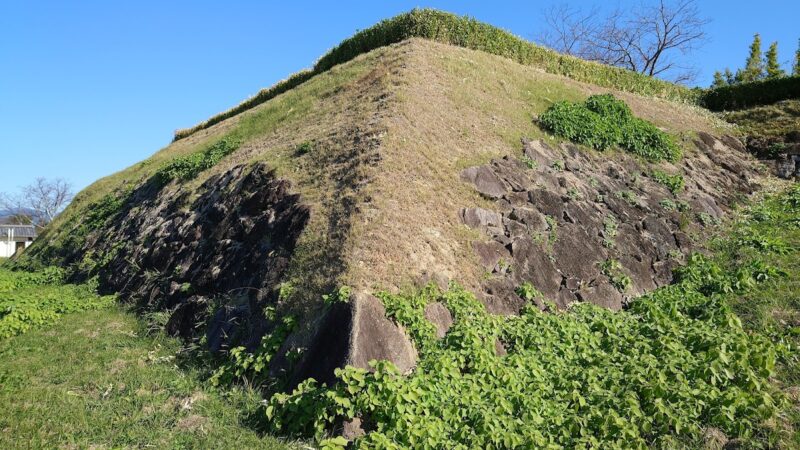
Along with the dry moats, traces of earthworks have also been confirmed. Earthworks are defensive structures built by piling up earth, preventing enemy intrusion, ensuring visibility from within the enclosures, and serving as bases for attacks using bows and arrows. While some have been lost due to weathering and development, the remaining earthworks allow us to infer the castle’s structure at the time.
Current Status of Hara Castle Site
Preservation Status of Remains
Hara Castle Site is protected as a city-designated historical site, but the surrounding area is used for fields and residential areas, making it difficult to completely preserve the castle’s overall appearance. However, the double dry moats at the southwestern end of the terrace remain in relatively good condition, making them valuable resources for understanding the structure of medieval castles.
Information Boards and Visiting Environment
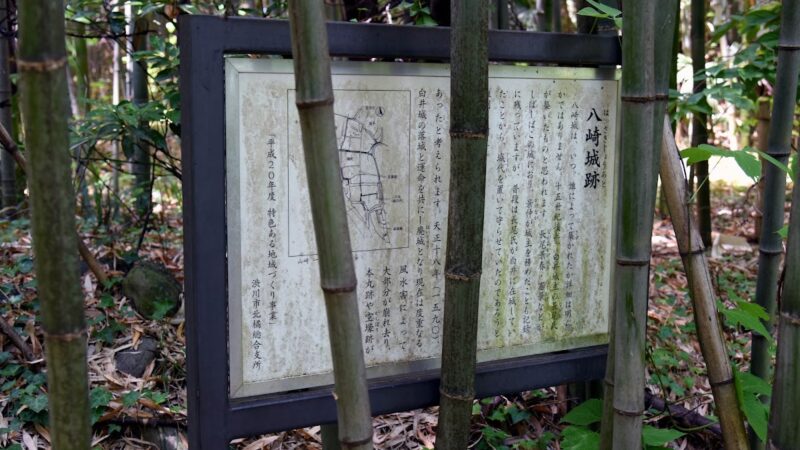
Information boards are installed within the double dry moat, allowing visitors to obtain basic information about the history and structure of Hara Castle. However, no large-scale development or construction of tourist facilities has taken place, preserving the quiet environment of the historical site.
Surrounding Environment and Landscape
Kamimuroda-machi, where the Hara Castle ruins are located, is an area spreading across the northwestern part of Takasaki City, at the southern foot of Mt. Haruna. The surrounding area is characterized by a rural landscape, with land use that takes advantage of the terraced topography. From the castle ruins, one can see the surrounding rural scenery, allowing one to imagine the view seen by the castle lords of the Middle Ages.
Comparison with Other Castles in Gunma Prefecture
Representative Castles of Gunma Prefecture
Many castle ruins remain in Gunma Prefecture, with Minowa Castle (Takasaki City), Kanayama Castle (Ota City), Numata Castle (Numata City), Iwagutsu Castle (Higashiagatsuma Town), and Nagurumi Castle (Minakami Town) being representative examples. These castles are nationally renowned, having been designated as National Historic Sites and selected as one of the Continued Top 100 Japanese Castles.
The Characteristic Position of Hara Castle
Compared to the large-scale castles mentioned above, Hara Castle is a smaller manor house, but it is a valuable example of castle construction by local lords. Rather than being the residence of a daimyo (feudal lord), its form—a local powerful family developing their own manor house as a defensive structure—provides important clues to understanding the structure of regional society during the Sengoku period (Warring States period).
Other Castles in Takasaki City
Besides Hara Castle, Takasaki City has numerous other castle ruins, including Minowa Castle, Wada Castle, and Negoya Castle. Minowa Castle has undergone extensive restoration as a National Historic Site, but including smaller manor houses like Hara Castle allows for a multifaceted understanding of Takasaki City’s medieval history.
Access and Visiting Information for Hara Castle Ruins
Transportation Access
Access to Hara Castle Ruins is most convenient by private car. From Takasaki city center, head northwest on National Route 406 towards Haruna. Once you enter Kamimuroda town, use local signs and maps to find your way to the Hara area. If using public transportation, take a bus from JR Takasaki Station towards Haruna, get off at Kamimuroda town, and then walk. However, bus service is limited, so it’s recommended to check the timetable in advance.
Points to Note When Visiting
Hara Castle Ruins are not a developed tourist facility, but a historical site. Please observe the following points when visiting:
- Do not trespass on private property or farmland.
- Do not damage the ruins or take soil.
- Always take your trash with you.
- Respect the information on the signs and observe proper etiquette.
- Wear appropriate clothing and shoes, as footing may be poor depending on the weather and season.
Best Time to Visit
Hara Castle Ruins are open year-round, but the best time to visit is from spring to autumn. Especially during the seasons of fresh greenery in spring and vibrant autumn foliage, the surrounding natural scenery is beautiful, making it a pleasant time to explore the castle ruins. During winter, snow and ice may be present, so safety precautions are necessary for visits.
Academic Significance of Hara Castle Research
Value in Medieval Castle Research
Hara Castle ruins provide valuable information for understanding the structure of late medieval castles. In particular, the remains of the double dry moat are concrete evidence of the castle-building techniques and defensive philosophies of the time, making them important subjects for archaeological and historical research.
Elucidation of Local Lordship
As a castle built by the local powerful family, Osakabe Dokan, Hara Castle offers clues to understanding the regional power structure of the Sengoku period. It is attracting attention in regional history research as an example showing the reality of samurai group formation and lordly rule at the regional level, distinct from the castles of daimyo (feudal lords).
Relationship with the Saito Clan
The tradition that Saito Hanbei Tatsumasa, who is said to have been involved in the castle’s construction, was a descendant of Saito Dosan is interesting information for understanding the movement of samurai from Mino Province to Kozuke Province and the networks of samurai groups during the Sengoku period. Further historical research is expected on this point.
Cultural Property Protection in Takasaki City and Hara Castle Ruins
Protection as a City-Designated Historic Site
Hara Castle Ruins were designated a Takasaki City Historic Site in 1977 and are protected under the Cultural Properties Protection Law. The Cultural Properties Protection Division of the Takasaki City Board of Education is responsible for its management, and is promoting the preservation of the remains and research.
Publication of Cultural Property Information
Takasaki City publishes information on cultural properties within the city, including Hara Castle Ruins, on its official website, “Takasaki City Cultural Property Information.” This page allows users to check basic information such as the date of designation, location, and overview, aiming to raise awareness of cultural properties among citizens, researchers, and tourists.
Future Preservation and Utilization
Small-scale historical sites like Hara Castle Ruins are often difficult to develop on a large scale. However, as valuable assets that convey the history of the region, appropriate preservation and utilization are required. With the cooperation of local residents, environmental improvements such as the installation of information boards and the securing of viewing paths are expected to be made to the extent possible.
Nearby Spots to Visit Alongside Hara Castle Ruins
Haruna Shrine
Haruna Shrine, located near Kamimuroda Town, is known as one of Gunma Prefecture’s leading power spots. The unique landscape, where giant rocks and the shrine buildings are integrated, is a must-see. Visiting it along with Hara Castle Ruins will allow you to gain a deeper understanding of the history and culture of the Haruna region.
Minowa Castle Ruins
Minowa Castle Ruins, also located in Takasaki City, is a nationally designated historical site and has been selected as one of the Continued Top 100 Japanese Castles. It is being developed as a large-scale mountain castle from the Sengoku period, and comparing it with Hara Castle Ruins allows you to appreciate the differences in scale and function of the castles.
Takasaki City Historical and Folk Museum
This facility offers detailed information about the history and cultural properties of Takasaki City. It features exhibits and materials related to castles within the city, including the Hara Castle ruins, and visiting before or after your visit can deepen your understanding.
Differences from Nagasaki Prefecture’s Hara Castle
Two Hara Castles Often Confused
Searching for “Hara Castle” often yields results for Hara Castle in Minamishimabara City, Nagasaki Prefecture. This castle is nationally famous as the site of the Shimabara Rebellion (Shimabara Uprising) and is a component of the World Heritage Site “Hidden Christian Sites in the Nagasaki Region.”
Uniqueness of Gunma Prefecture’s Hara Castle
While the Hara Castle ruins in Takasaki City, Gunma Prefecture, may not be as large or well-known as Nagasaki Prefecture’s Hara Castle, it possesses unique historical value as a castle built by a local lord in the late medieval period. Despite sharing the same name, the two castles are completely different in terms of construction period, builder, historical background, and castle structure.
Search Tips
When searching for “Hara Castle,” adding a place name, such as “Hara Castle Gunma” or “Hara Castle Takasaki,” will allow you to obtain accurate information about the Hara Castle ruins in Gunma Prefecture.
Future Prospects for Hara Castle Ruins
Deepening Local History Research
While historical materials concerning the Hara Castle ruins are limited, future excavations and research into ancient documents may reveal new facts. In particular, the discovery of historical materials concerning Osakabe Dokan and Saito Hanbei Tatsumasa will be key to a more detailed understanding of the castle’s history.
Utilization as a Local Resource
The Hara Castle ruins have the potential to become a valuable resource for education and tourism as a local historical heritage site. Using it as teaching material for local history lessons in schools or incorporating it into castle tour routes for history enthusiasts can contribute to enhancing the region’s appeal.
Balancing Preservation and Development
Given that the surrounding area is currently used for farming and residential development, balancing the preservation of the ruins with regional development is a crucial issue. Efforts are needed to pass on historical heritage to future generations while balancing cultural property preservation with the lives of local residents.
Summary: Hara Castle Ruins Tell the Story of Gunma’s Medieval History
The Hara Castle Ruins in Kamimuroda-cho, Takasaki City, Gunma Prefecture, though small in scale, are a valuable historical site that conveys the reality of local communities and castle architecture in the late medieval period. Built by Osakabe Dokan and Saito Hanbei Tatsumasa, this castle tells the story of how local lords during the Sengoku period tried to protect their territories.
The remains, such as the double dry moats and earthworks, concretely demonstrate the castle-building techniques and defensive philosophies of the time, making them important materials for archaeological and historical research. Furthermore, its designation as a Takasaki City Historic Site provides a foundation for its transmission to future generations as a regional historical heritage.
Visiting the Hara Castle Ruins will be more than just viewing the remains; it will be a valuable experience to imagine the state of local communities in Gunma Prefecture during the Sengoku period and feel the breath of history. Visiting Hara Castle ruins in conjunction with other castles in Gunma Prefecture will provide a more comprehensive understanding of the region’s medieval history.
History enthusiasts are encouraged to visit Hara Castle ruins and experience the atmosphere of the Middle Ages from the quietly preserved remains. We hope that the great historical value of this small historical site will be shared with many people.