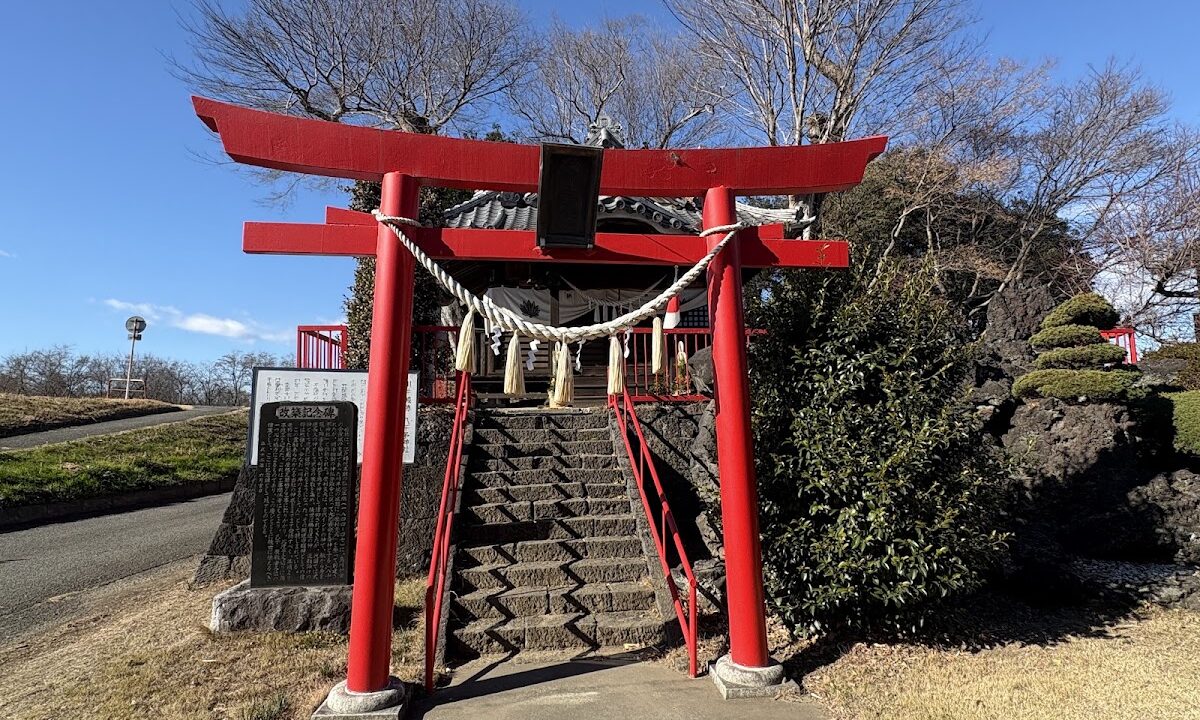
Kawai Castle (Gunma Prefecture) Complete Guide: A Thorough Explanation of History, Remains, and Access
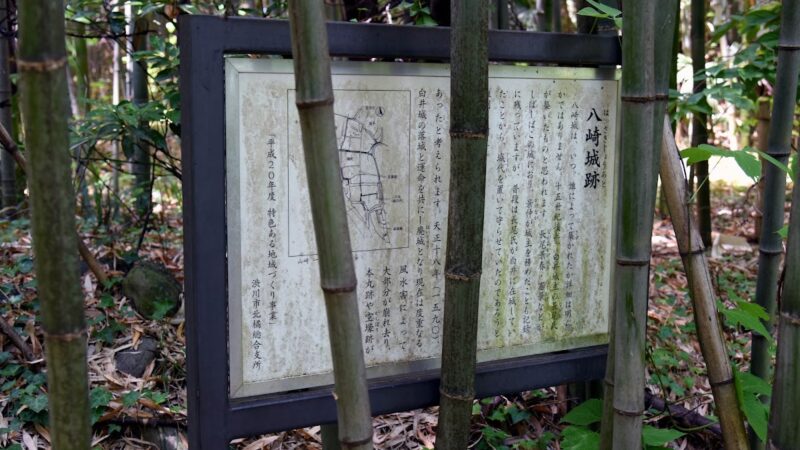
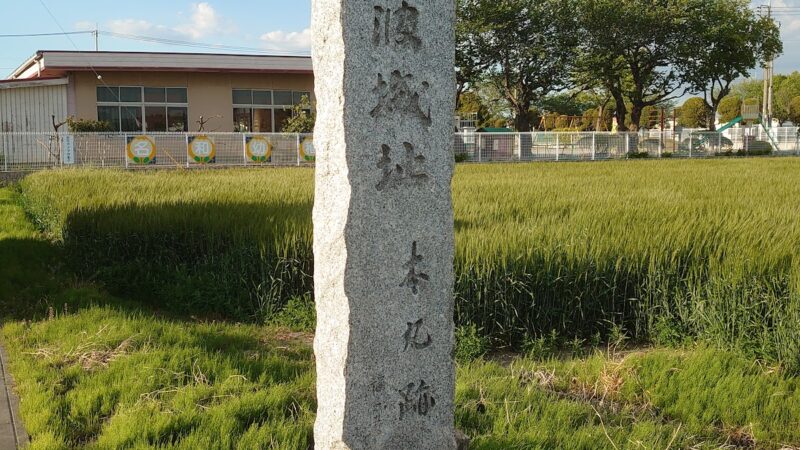
Kawai Castle (also written as Kawai Castle), located in Kawai, Tamamura-machi, Sawa-gun, Gunma Prefecture, is a flatland castle built at the end of the Sengoku period. Although it is now the grounds of Yachihoko Shrine, traces of the castle, which skillfully utilized the river terrace of the Karasu River, can still be seen. This article comprehensively explains information based on Gunma Prefecture castle research, from the historical background of Kawai Castle to details of the remains, points of interest for visitors, and access methods.
Basic Information on Kawai Castle
Kawai Castle is located around 1184 Kawai, Tamamura-machi, Sawa-gun, Gunma Prefecture, where Yachihoko Shrine is currently located. This castle was built in a topographically advantageous location on the edge of the river terrace on the left bank of the Karasu River, and its structure makes maximum use of natural fortifications.
Location and Geographical Characteristics
- Location: Kawai, Tamamura-machi, Sawa-gun, Gunma Prefecture
- Alternate Name: Kawai Castle
- Castle Structure: Hilltop Castle
- Location: Edge of river terrace on the left bank of the Karasu River
- Current Status: Within the grounds of Yachihoko Shrine
Tamamura-machi is located in the southern part of Gunma Prefecture, at the northern edge of the Kanto Plain, in a fertile area sandwiched between the Tone River and the Karasu River. Kawai Castle was built utilizing the natural levee of the Karasu River, occupying a strategic location controlling a key point in river transportation.
History of Kawai Castle
Background and Era of Construction
Kawai Castle is believed to have been built during the Tensho era (1573-1592). This period was a turbulent time of unification from Oda Nobunaga to Toyotomi Hideyoshi, and the Later Hojo clan was expanding its power in the Kanto region.
Around 1575 (Tensho 3), Saito Motomori, the younger brother of Saito Sadamori, the lord of Kanakubo Castle (present-day Kaneko-cho, Takasaki City), is believed to have built a castle in this area. The Saito clan was a powerful local family with considerable influence in Kozuke Province (present-day Gunma Prefecture).
Saito Motomori and Kawai Castle
While his brother, Saito Sadamori, ruled Kanakubo Castle, Saito Motomori established a new base in Kawai. Kanakubo Castle and Kawai Castle are approximately 10 kilometers apart in a straight line, indicating that the Saito clan had multiple bases in the Karasugawa River basin.
The following reasons are considered to be the purpose for which Motomori built Kawai Castle:
- Management of water transport on the Karasugawa River: The Karasugawa River was an important route for transporting goods at the time, and controlling its strategic points was economically and militarily important.
- A subsidiary castle of Kanakubo Castle: It served to strengthen the defensive line of the main castle, Kanakubo Castle.
- A base for regional control: It had an administrative function to govern the agricultural area surrounding Kawai.
The Turning Point of Tensho 10
Tensho 10 (1582) was a year of significant change for Kawai Castle. In this year, Oda Nobunaga was killed in the Honnoji Incident, and the political situation in Japan changed dramatically. Furthermore, in Kozuke Province, a complex power struggle continued between the Hojo clan, the Uesugi clan, and the Sanada clan.
Since records of Kawai Castle cease after Tensho 10, it is believed that the castle was abandoned around this time. Following the fall of the Later Hojo clan in Toyotomi Hideyoshi’s Odawara campaign in 1590, Kozuke Province came under the control of Tokugawa Ieyasu, and many small and medium-sized castles ceased to serve their purpose and were abandoned.
After the Edo Period
After the abandonment of Kawai Castle, the Yachihoko Shrine was built on the site, becoming a center of local faith. While some of the castle remains were altered during the development of the shrine grounds, the basic topography and layout of the baileys can still be observed today.
Kawai Castle’s Layout and Remains
Castle Structure
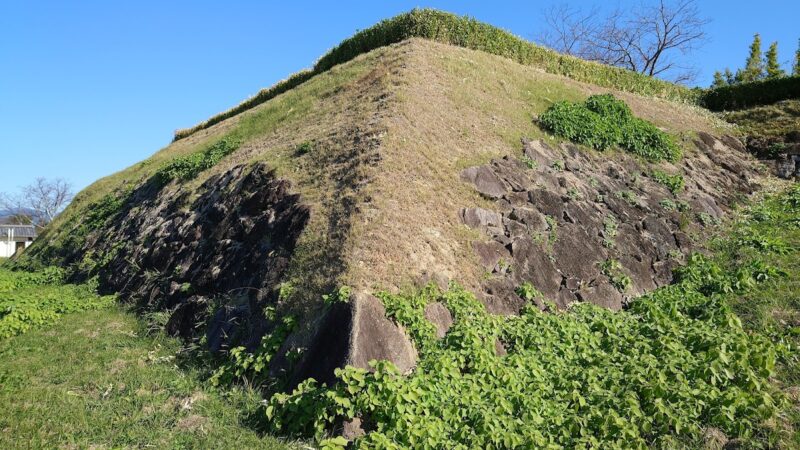
Kawai Castle is a flatland castle that made maximum use of the river terrace on the left bank of the Karasu River. The river terrace was a natural cliff, functioning as a natural defensive structure against attacks from the Karasu River side.
The basic structure of the castle has the following characteristics:
- Main Enclosure (Honmaru): The area around the main hall of Yachihoko Shrine is presumed to be the main enclosure.
- Terrace Cliff: The side facing the Karasugawa River is a steep cliff over 10 meters high.
- Rear Defense: A defensive line was constructed on the inland side with moats and earthworks.
Existing Remains
The main remains that can be confirmed at the Kawai Castle ruins are as follows:
1. Topographical Elevation Differences
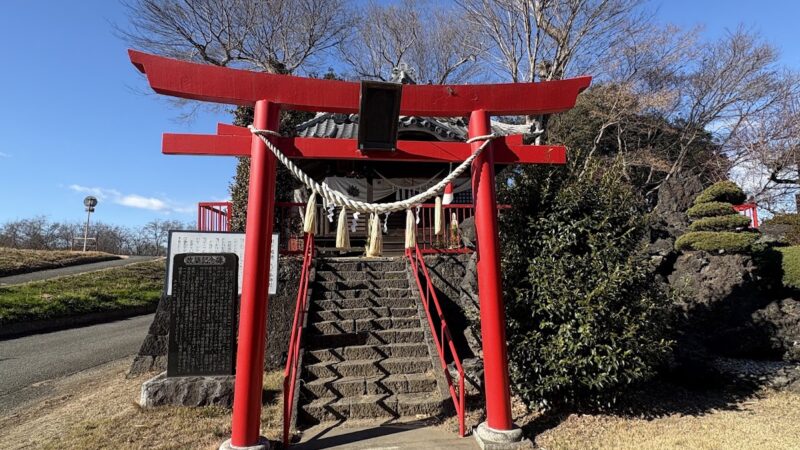
Clear elevation differences remain within the grounds of Yachihoko Shrine, which are thought to indicate the divisions of the enclosures. The elevation difference felt when ascending the shrine’s approach reflects the former castle structure.
2. Traces of Earthworks
Earth mounds that appear to be earthworks remain in part of the shrine grounds. A relatively clear earthwork-like topography can be confirmed, especially behind the shrine (north side).
3. River Terrace Cliff
The steep cliff on the south side facing the Karasu River was the castle’s greatest defensive feature. The terrace cliff remains clearly visible today, allowing us to appreciate the castle’s strategic location.
Castle Area
The castle area of Kawai Castle is estimated to be approximately 100 meters east-west and 150 meters north-south, centered around the grounds of the Yachihoko Shrine. While a standard size for a small to medium-sized castle, it boasted a robust structure that effectively utilized the river terrace terrain.
Kawai Castle and Surrounding Castle Network
Relationship with Kanakubo Castle
Understanding Kawai Castle is crucial to understanding its relationship with its main castle, Kanakubo Castle. Kanakubo Castle was located in present-day Kaneko-cho, Takasaki City, and was ruled by Saito Sadamori. Since Kanakubo Castle was located on the north bank of the Karasu River and Kawai Castle on the south bank, it is believed that the two castles formed a sphere of influence of the Saito clan, separated by the Karasu River.
Castles of Kōzuke Province
Gunma Prefecture has many castles remaining from the Sengoku period (Warring States period). The following castles were scattered around Kawai Castle:
- Kanekubo Castle (Takasaki City): The main castle of Kawai Castle
- Shinbori Castle (Sawa District): Another castle in Tamamura Town
- Minowa Castle (Takasaki City): A powerful castle in Kōzuke Province
- Maebashi Castle (Maebashi City): An important stronghold along the Tone River
These castles worked in conjunction with each other, forming a complex power structure in Kōzuke Province.
About Yachihoko Shrine
History of the Shrine
Yachihoko Shrine, located on the site of Kawai Castle, is a shrine dedicated to Ōkuninushi-no-Mikoto. Yachihoko-no-Kami is another name for Ōkuninushi-no-Mikoto and is worshipped as a god of martial prowess and nation-building.
The construction of shrines on castle ruins is a common phenomenon throughout Japan. Often, these shrines were built as a way to utilize the land after the castle was abandoned, and also to appease the spirits of the samurai who lost their lives at the castle.
Highlights of the Shrine Grounds
When visiting the grounds of Yachihoko Shrine, paying attention to the following points will help you understand the castle ruins more deeply:
- Stone Steps on the Approach: The stone steps climbing the terrace are reminiscent of the former approach to the castle.
- Location of the Main Hall: Located at the highest point, it is presumed to be the site of the main enclosure.
- Flat Area within the Shrine Grounds: A flat area indicating the remains of a bailey.
- Topography Behind the Shrine: Traces of earthworks and moats may remain.
How to Access Kawai Castle
Using Public Transportation
Nearest Station: JR Takasaki Line “Shinmachi Station” or “Takasaki Station”
- From Shinmachi Station: Approximately 15 minutes by taxi, or by local bus.
- From Takasaki Station: Approximately 20 minutes by taxi, or by local bus towards Tamamura Town.
Since the number of local buses in Tamamura Town is limited, it is recommended to check the timetable in advance. ### Access by Car
Access from Major Roads:
- Kan-Etsu Expressway: Approximately 10 minutes from Takasaki-Tamamura Smart Interchange
- National Route 17: Approximately 5 minutes from the center of Tamamura town via the prefectural road
- National Route 354: Accessible from the road along the Karasugawa River
Parking: Yachihoko Shrine has a small parking space for visitors. However, space is limited, so please consider using nearby public parking lots during busy times.
Address and Map Information
- Address: Around 1184 Kawai, Tamamura-machi, Sawa-gun, Gunma Prefecture
- Landmark: Yachihoko Shrine
Searching for “Yachihoko Shrine Tamamura-machi” on map apps or car navigation systems will display the accurate location.
Points to Note When Visiting Kawai Castle
Estimated Time Required for Visit
Please allow approximately 15-30 minutes to visit the Kawai Castle Ruins (Yachihoko Shrine). If you want to carefully observe the ruins, it’s best to allow 30 minutes to an hour.
Points to Note During Your Visit
- Respect for the Shrine: Yachihoko Shrine is an active religious facility. Please observe proper etiquette and view the site quietly.
- Consideration for Private Property: Areas outside the shrine grounds may be private property. Please be careful not to trespass.
- Safety Underfoot: The edges of the terrace cliffs are dangerous. Please be especially careful as the ground can become slippery in rainy weather.
- Photography: Photography is permitted on the temple grounds, but please be considerate of festivals and other visitors.
Photo Spots
- In front of the main shrine: An important point indicating the main enclosure of the castle.
- View from the approach: A view from the terrace.
- Earthworks on the temple grounds: A place where the remains are clearly visible.
- Towards the Karasugawa River: A place where you can appreciate the elevation difference of the river terrace.
Nearby Attractions
Historical Spots in Tamamura Town
When visiting Kawai Castle, we recommend also visiting other historical spots in Tamamura Town:
Shinbori Castle Ruins
Another castle ruin located in Tamamura Town. Built at a different time and by a different power than Kawai Castle, it would be interesting to compare them.
Tamamura Hachimangu Shrine
A shrine that has long been revered as the guardian shrine of Tamamura Town. The magnificent shrine buildings and the atmosphere of the grounds are well worth seeing.
Surrounding Sengoku Period Castles
Numerous castles from the Sengoku period remain in Gunma Prefecture. Visiting them together with Kawai Castle will provide a more comprehensive understanding of the Sengoku history of Kozuke Province:
Kanakubo Castle (Takasaki City)
This castle was the main castle of Kawai Castle. As the residence of Saito Sadamori, visiting both Kawai Castle and Kanakubo Castle will give you a real sense of the Saito clan’s sphere of influence.
Minowa Castle (Takasaki City)
This is a representative castle of Kozuke Province, selected as one of Japan’s 100 Famous Castles. As a large-scale earthen castle, impressive remains remain.
Maebashi Castle (Maebashi City)
This is a flatland castle built along the Tone River, and during the Edo period, it served as the administrative center of the Maebashi Domain. Currently, remains are located around the Gunma Prefectural Government building.
Historical Evaluation of Kawai Castle
Position in Castle Research
Kawai Castle is not a large-scale castle, but it has historical and academic value in the following respects:
- Utilization of River Terraces: A good example of castle structure that skillfully utilizes natural terrain
- Saito Clan’s Territory: A clue to understanding the activities of small and medium-sized local clans in Kozuke Province
- Castle of the Tensho Period: A document showing castle structure at the end of the Sengoku period
- Witness to Local History: An important historical site that tells the history of Tamamura Town
Preservation Status and Challenges
The Kawai Castle site is used as the Yachihoko Shrine, so it has been spared from development such as residential development. However, the following issues have also been pointed out:
- Clarification of Remains: Some remains have become unclear due to the development of the shrine.
- Lack of Academic Research: Detailed archaeological excavations have not been conducted.
- Low Awareness: Awareness of the site as a castle ruin is low, even among local residents.
In the future, appropriate research and preservation, as well as raising awareness of its value as a castle ruin, are desired.
Kawai Castle and Kōzuke Province in the Sengoku Period
Sengoku History of Kōzuke Province
Kōzuke Province (present-day Gunma Prefecture) was a fierce battleground during the Sengoku period, where multiple forces vied for supremacy. The main powers included:
- Yamauchi Uesugi clan: Nominal authority as Kanto Kanrei (Governor of the Kanto region)
- Later Hojo clan: Dominators of Kanto, based in Odawara
- Takeda clan: Invading western Kozuke Province from Shinano
- Uesugi clan (Nagao clan): Expanding its power from Echigo Province to northern Kozuke Province
Caught between these major powers, local clans like the Saito clan engaged in complex diplomacy to survive.
Strategic Location of Kawai Castle
Kawai Castle was located at a crucial point on the Karasugawa River, a tributary of the Tonegawa River, playing an important role in the transport of supplies and the movement of troops. Controlling this area had the following strategic significance:
- Securing Transportation Routes: A junction point for rivers and land routes
- Economic Base: Commercial benefits from river transportation
- Information Gathering: Transportation hubs are places where information gathers
- Military Buffer Zone: Border region between major powers
Things to Know Before Visiting Kawai Castle
Best Time to Visit
Kawai Castle Ruins (Yachihoko Shrine) are open year-round, but each season offers a different charm:
- Spring (March-May): Beautiful fresh greenery and mild weather, ideal for visiting
- Summer (June-August): Overgrown vegetation may make the ruins difficult to see
- Autumn (September-November): Beautiful autumn foliage and pleasant weather
- Winter (December-February): Withered vegetation makes the ruins easier to observe
Clothing and Items to Bring
- Comfortable shoes: Some parts of the temple grounds are unpaved.
- Hat and sunscreen: The sun is strong in summer.
- Insect repellent: There may be many mosquitoes in summer.
- Camera: For documenting the ruins.
- Maps and materials: Preparing materials related to the castle beforehand will deepen your understanding.
Visitor Manners
- Don’t forget to pay your respects at the shrine.
- Refrain from loud conversations.
- Always take your trash with you.
- Do not collect plants or stones.
- Be considerate of other visitors.
Reference Materials for Kawai Castle Research
For those who want to learn more about Kawai Castle, here are some reference materials:
Books and Literature
- Books related to castles in Gunma Prefecture
- Local history materials of Tamamura Town
- Research books on Kozuke Province during the Sengoku period
- Related articles in castle research journals
Websites
- Castle Wanderings: Detailed castle information and photographs
- Castle Siege Group: Visitor Reports and Ratings
- Tamamura Town Official Website: Town History and Cultural Property Information
Museums and Archives
- Gunma Prefectural Museum of History (Takasaki City): General History of Gunma Prefecture
- Takasaki City Historical and Folk Museum: Historical Materials of the Surrounding Area
- Tamamura Town Historical Museum (if available): Detailed Local History
Summary
Kawai Castle (Kawai-jo) is a castle site from the Tensho era located in Tamamura Town, Sawa District, Gunma Prefecture. Built by Saito Motomori, it features a structure that skillfully utilizes the natural topography of the river terrace of the Karasu River. Currently, it is the grounds of Yachihoko Shrine, but traces of the castle remains, such as terrace cliffs and earthworks, can still be seen.
While not a large-scale castle, it is an important historical site for understanding the activities of local powerful families in Kozuke Province during the Sengoku period. It is a spot we highly recommend visiting as part of a Gunma Prefecture castle tour and as a clue to understanding the history of Tamamura Town.
While the visit only takes about 15 to 30 minutes, combining it with a visit to nearby castles such as Kanakubo Castle and Niibori Castle will allow you to gain a deeper understanding of Ueno Province during the Sengoku period. Combine your visit with a pilgrimage to Yachihoko Shrine and spend some quiet time reflecting on history.