Nawa Castle (Gunma Prefecture) Complete Guide: History and Highlights of the Nawa Clan’s Castle During the Sengoku Period
Located in Horiguchi-cho, Isesaki City, Gunma Prefecture, Nawa Castle is known as the residence of the Nawa clan, who wielded significant influence in the eastern Joshu region during the Sengoku period. Although most of the remains have been lost, the Nawa Castle site monument and explanatory signs remain, allowing visitors to imagine the former appearance of the flatland castle. This article comprehensively introduces information useful for visiting Nawa Castle, including its history, structure, highlights, and access methods.
Basic Information on Nawa Castle
Location: Horiguchi-cho, Isesaki City, Gunma Prefecture
Alternate Name: Horiguchi Castle
Classification: Flatland Castle
Builder: Nawa Munetoshi
Year of Construction: Tenbun era (1532-1555)
Main Lords: Nawa clan, Hojo Takahiro, Matsudaira Ienori
Year of Abandonment: Around Keicho 6 (1601)
Remains: Vanished (only stone monument and explanatory sign remain)
Designated Cultural Property: None
Former Province: Kozuke Province
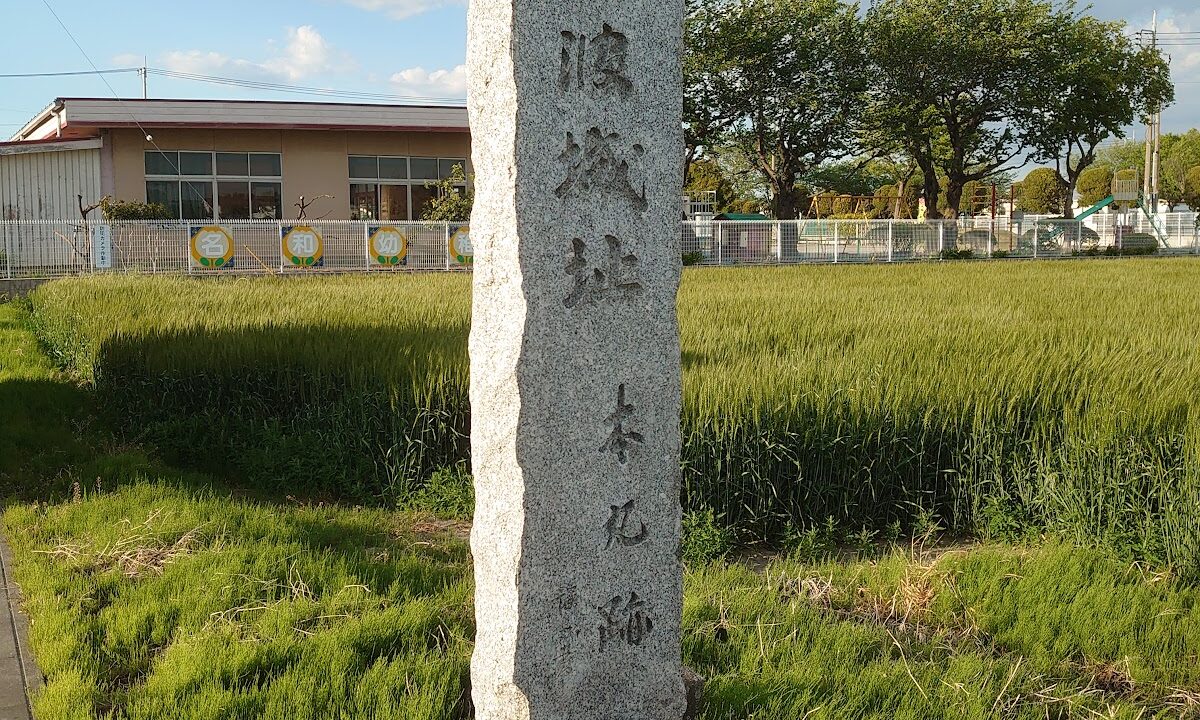
Nawa Castle was a flatland castle that spread around the area of Nawa Elementary School. A monument marking the site of Nawa Castle stands along Prefectural Road 18 (Isesaki-Honjo Line). The current castle site is a residential area and farmland, and no clear remains such as earthworks or moats can be confirmed, but its appearance in its heyday can be imagined from the topography and place names. ## History of the Nawa Clan and Nawa Castle
Origin and Development of the Nawa Clan
The Nawa clan was a samurai family that bore the surname Oe and was active from the Kamakura period to the Sengoku period, based in Nawa District, Kōzuke Province (present-day Isesaki City area). The name “Nawa” is also written as “名波” or “名和,” all pronounced “Nawa.” This originates from the place name Nawa District.
The Nawa clan maintained their power in this region for generations, and their descendants have protected their territory since the time of Kamonnosuke Masahiro. During the Sengoku period, Suruga-no-kami Munetoshi served as the head of the clan, making Nawa Castle his residence and establishing a significant presence as one of the important powers in the eastern Kōzuke region.
Construction during the Tenbun Era
Nawa Castle is believed to have been built during the Tenbun era (1532-1555), with Nawa Munetoshi being the builder. This period was the height of the Sengoku period (Warring States period), and major powers such as the Later Hojo, Uesugi, and Takeda clans were vying for supremacy in the Kanto region.
Naba Castle was a flatland castle built on a plain near the Hirose River and Kasugawa River, tributaries of the Tone River. It utilized the advantages of water transport and functioned as a base for controlling the surrounding agricultural area. While the flatland castle structure was inferior in defensive capabilities compared to mountain castles, it excelled in territorial management and logistics, symbolizing the Naba clan’s system of rule.
Uesugi Kenshin’s Kanto Expedition and the Fall of Naba Castle
The most important turning point in the history of Naba Castle was Uesugi Kenshin’s (then Nagao Kagetora, later Uesugi Masatora) Kanto expedition from 1559 to 1560.
In 1555, Nawa Munetoshi, acting on orders from Uesugi Terutora (Kenshin), attacked Nitta Castle, but records indicate he was defeated and killed in the battle. Later, in 1560, when Uesugi Masatora launched a full-scale campaign into the Kanto region, Nawa Castle, along with Akaishi Castle, fell.
After capturing Nawa Castle, Uesugi Kenshin appointed Hojo Takahiro, who had followed him from Echigo, as its lord. Hojo Takahiro was subsequently appointed castellan of the more important Maebashi Castle (Umayabashi Castle), and Nawa Castle came under his control.
Matsudaira Ienori and the Establishment of the Nawa Domain
From the late Sengoku period to the early Edo period, Nawa Castle became the residence of Matsudaira Ienori. Matsudaira Ienori was a retainer of Tokugawa Ieyasu. During the Battle of Sekigahara in 1600, he was in charge of defending Mikawa Yoshida Castle, and his achievements were recognized.
In 1601, Ienori’s stipend was increased to 20,000 koku, and the Nawa Domain was established. According to the *Gunma Prefecture History* (1927), the domain’s administrative center was located at Nawa Castle (Horiguchi-cho, Isesaki City). However, Ienori was transferred to the Mino Iwamura Domain with an increased stipend later that year, so the Nawa Domain came to an end after a short period, and it is believed that Nawa Castle was abandoned around this time.
Structure and Layout of Nawa Castle
Characteristics as a Flatland Castle
Nawa Castle is a typical flatland castle, and it is presumed to have had a structure surrounded by a moat and earthen ramparts. While flatland castles are inferior to mountain castles in terms of defensive capabilities, they had the following advantages:
- Convenience of Territory Management: Located on flat land, making it easy to form a castle town and connect with agricultural areas.
- Utilization of Water Transport: Goods can be transported using rivers such as the Hirose River and Kasugawa River.
- Securing Logistics: Suitable location for peacetime living and the accumulation of military supplies.
Main Enclosure and Castle Grounds
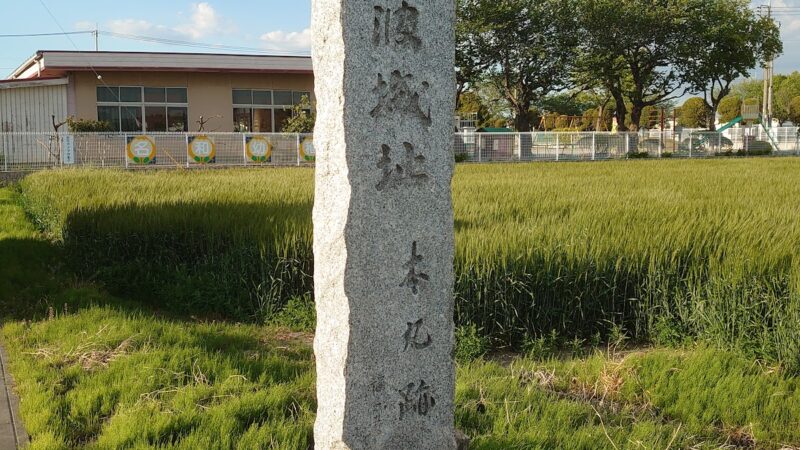
A monument inscribed with “Naba Castle Ruins” by Tokutomi Soho stands in the corner of the Nawa Elementary School playground, but this location is actually outside the Nawa Castle grounds. The actual castle grounds are believed to have extended east of Prefectural Road 18 (Major Local Road Isesaki-Honjo Line).
A stone monument has been erected at the site of the main enclosure. Approximately 25 meters south of the street west of the southern end of Nawa Kindergarten, the “Naba Castle Ruins Main Enclosure Site” monument can be seen on the roadside to the east. Currently, the area is residential and farmland, and no clear remains can be confirmed. However, the subtle undulations of the terrain allow us to imagine the layout of the castle in its heyday.
Arrangement of Moats and Earthworks
From historical documents and old maps, it is known that Nawa Castle had multiple moats and earthworks. As a defensive system for a flatland castle, the following structure is presumed:
- Outer Moat: A moat surrounding the entire castle area, approximately 5-10 meters wide
- Inner Moat: A moat protecting the main keep, likely dug deeper
- Earthworks: Earthen defensive walls built inside the moats
- Tiger’s Mouth: An entrance to the castle, a fortified defensive structure
Unfortunately, these remains have almost completely disappeared, and archaeological excavations have been limited, so many details of the structure remain unknown.
Highlights and Notes on Naba Castle
Naba Castle Site Monument (Main Enclosure Site)
The main highlight when visiting Naba Castle is the stone monument erected at the site of the main enclosure. This monument is inscribed with “Naba Castle Site, Main Enclosure Site,” indicating that the Naba clan’s castle once stood here. While the area around the monument is now a quiet residential area, one can imagine the former castle lords overlooking their territory from this spot.
Information Board and Map
An information board and map of Naba Castle are located along Prefectural Road 18. This board provides a concise explanation of the history of Naba Castle and the Naba clan, making it easy to understand even for first-time visitors. The map allows you to confirm the extent of the castle grounds and the location of the main enclosure.
Naba Castle Site Monument at Nawa Elementary School
In the corner of the Nawa Elementary School grounds stands a monument inscribed with “Naba Castle Site,” written by Tokutomi Soho. Tokutomi Sohō was a renowned journalist and historian who was active from the Meiji to Showa periods, and the monument inscribed with his calligraphy holds historical value. However, as mentioned earlier, this location is outside the actual castle grounds, so caution is necessary.
Observing the Surrounding Topography
Walking around the Naba Castle ruins, you can sense traces of the former moats and earthworks from the subtle undulations of the terrain and the layout of the roads. In particular, observing the residential and farmland east of Prefectural Road 18 reveals slight elevation changes and unnatural bends, which may be remnants of the castle’s structure.
Among castle enthusiasts, deciphering these “vanished remains” from the topography is a popular pastime. Because Naba Castle lacks clear remains, there’s a real thrill in using your imagination to picture its former appearance.
Access and Visiting Guide to Nawa Castle
Access by Public Transportation
Train and Bus:
- Get off at JR Ryomo Line “Isesaki Station”
- Approximately 10 minutes by taxi from the station, or use the Isesaki City Community Bus “Aozora”
- Get off at the “Horiguchi-cho” bus stop, approximately 5 minutes on foot
If using public transportation, it is recommended to check the timetable in advance as the number of services is limited.
Access by Car
From Major Roads:
- Approximately 15 minutes from Kita-Kanto Expressway “Isesaki IC”
- Along Prefectural Road 18 (Isesaki-Honjo Line)
Car Navigation Settings:
- Search for “Horiguchi-cho, Isesaki City, Gunma Prefecture” or “Nawa Elementary School”
- Exact location of Nawa Castle Ruins Monument: Horiguchi-cho, Isesaki City, Gunma Prefecture
Parking Information
There is no dedicated parking lot for Nawa Castle Ruins. Please note the following points when visiting. – Avoid parking on the street and be considerate of the neighbors.
- For short visits, you may be able to use the parking lots of nearby public facilities (prior confirmation is recommended).
- The parking lot at Nawa Elementary School is for school personnel only and cannot be used.
Estimated Visit Time
For a visit to the Nawa Castle Ruins, 15-30 minutes is usually sufficient. The main points of interest are as follows:
- Nawa Castle Ruins Monument and Information Board along Prefectural Road 18 (5 minutes)
- Stone Monument at the Main Keep Site (5 minutes)
- Observation of the surrounding topography (10-20 minutes)
For castle enthusiasts who wish to observe in detail, it is recommended to allocate about an hour.
Points to Note When Visiting
- Since most of the castle site is residential area or private land, please be considerate of the residents’ privacy.
- Do not trespass on farmland.
- Always take your trash with you.
- In summer, there is little shade, so bring a hat and drinks.
- In winter, it can be windy, so don’t forget to take precautions against the cold.
Nearby Castles and Tourist Spots
Nearby Castle Ruins
When visiting Naba Castle, you can enjoy a more fulfilling castle tour by also visiting other castle ruins around Isesaki City.
Imamura Castle (Imai-cho, Isesaki City): A flatland castle located approximately 5.5 kilometers northwest of Naba Castle. It was the residence of the Imamura clan and was active at the same time as Naba Castle. Although there are few remains, a castle site monument remains.
Isesaki Jinya (Honmachi, Isesaki City): The location where the Isesaki Domain’s administrative office was located during the Edo period. Although the site is now occupied by the Isezaki City Hall and commercial areas, a stone monument and explanatory plaque remain.
Moro Castle (Moro-cho, Isezaki City): A flatland castle from the Sengoku period, the residence of the Moro clan. Similar to Nawa Castle, the remains have disappeared, but the topography allows us to imagine its former appearance.
Akaishi Castle (Akaishi-cho, Isezaki City): A castle captured by Uesugi Kenshin along with Nawa Castle. It was the residence of the Akaishi clan and is closely related to the history of Nawa Castle.
Tourist Spots in Isezaki City
Tajima Yahei’s Former Residence (Part of the World Heritage Site “Tomioka Silk Mill and Related Industrial Heritage”): The residence of Tajima Yahei, who contributed to the development of modern sericulture. Approximately 20 minutes by car from Nawa Castle.
Isezaki Shrine: A historic shrine located in the center of Isezaki City. It is bustling with many worshippers during New Year’s and festival seasons.
Kezoji Park: A comprehensive park with an amusement park and a Ferris wheel. A recommended spot for families.
Historical Significance and Evaluation of Nawa Castle
The Role of the Nawa Clan in Eastern Joshu
Nawa Castle played an important role in the Eastern Joshu region during the Sengoku period. The Nawa clan, a prominent family that had existed since the Kamakura period, controlled the politics, military, and economy of the region, contributing to the stability of the local community.
The Nawa clan attempted to maintain their independent position amidst powerful forces such as the Later Hojo and Uesugi clans, but ultimately succumbed to Uesugi Kenshin’s Kanto campaign. This history symbolizes the difficulties faced by regional powers during the Sengoku period and the process of unification by powerful forces.
Position in Castle Research
Because the remains of Nawa Castle have almost completely disappeared, there is limited information available from the perspective of castle research. However, through historical documents, old maps, and topographical analysis, it serves as an important case study for researching the structure and function of flatland castles during the Sengoku period.
In particular, the history of Nawa Castle provides valuable information for understanding how flatland castles functioned as bases for territorial management, and for understanding the impact of Uesugi Kenshin’s Kanto campaign on this region.
Evaluation on Kojodan
On Kojodan, a community site for castle enthusiasts, Nawa Castle has been evaluated by 88 castle lovers, with an average rating of 1.82 (out of 5) and an average visit time of 15 minutes. While the rating is not high due to the scarcity of remaining structures, it enjoys a certain level of support from fans interested in its historical background and the story of the Nawa clan.
Visitor reviews include comments such as, “Although no structures remain, the explanatory signs are excellent,” “It’s fun to visit it along with the surrounding castle ruins,” and “It’s a quiet residential area, and imagination is needed to contemplate its past.”
Significance of Visiting Nawa Castle
As a Place for Historical Learning
Visiting the Nawa Castle ruins is not simply about viewing castle ruins, but also a valuable opportunity to learn about the regional history of the Sengoku period. You can experience firsthand the historical flow of events, from the rise and fall of the Nawa clan, to Uesugi Kenshin’s campaign in the Kanto region, and the establishment of the feudal domain system in the early Edo period.
In particular, local elementary and junior high schools sometimes feature Nawa Castle as part of their local history education, utilizing it as a place for children to learn about the region’s history.
How to Enjoy Castle Tours
For castle enthusiasts, visiting “vanished castle ruins” like Nawa Castle offers a unique experience. Because no clear remains exist, there’s the enjoyment of “deduction,” imagining the castle’s appearance in its heyday based on topography and place names, using historical documents and old maps as references.
Furthermore, by setting up a “castle tour route” starting from Nawa Castle and visiting Imamura Castle, Isesaki Jinya, Moro Castle, Akaishi Castle, and other castles around Isesaki City, you can experience the Sengoku period history of eastern Joshu in a single day.
Understanding Local Culture
Visiting the Nawa Castle ruins is also important for understanding the local culture and historical identity of Isesaki City. The remnants of the era when the Nawa clan ruled the area still remain in place names, shrines and temples, and local legends. Exploring these sites offers a deeper understanding of the region.
Summary: The Charm and Future Prospects of Nawa Castle
Despite the near-complete disappearance of its remains, Nawa Castle is an essential historical site for understanding the history of the eastern Joshu region during the Sengoku period. It played diverse historical roles as the residence of the Nawa clan, a stage for Uesugi Kenshin’s Kanto campaign, and, for a short period, the administrative center of the Nawa Domain.
Currently, only a stone monument and an explanatory plaque remain at the Nawa Castle site. Imagining its former appearance using these as clues is a great pleasure for history buffs and castle enthusiasts. Furthermore, visiting surrounding castle ruins in conjunction with Nawa Castle allows for a more fulfilling historical exploration.
Future excavations and research are expected to reveal more about the detailed structure of Nawa Castle and the true nature of the Nawa clan. As a regional historical heritage site and a valuable resource from the Sengoku period, the value of Nawa Castle will continue to be appreciated.
When you visit Isezaki City, be sure to stop by the Naba Castle ruins and reflect on the history of the Naba clan’s glory and hardships during the Sengoku period. Standing before the stone monument in a quiet residential area, you’ll be able to feel the spirit of the Sengoku warlords from over 450 years ago.