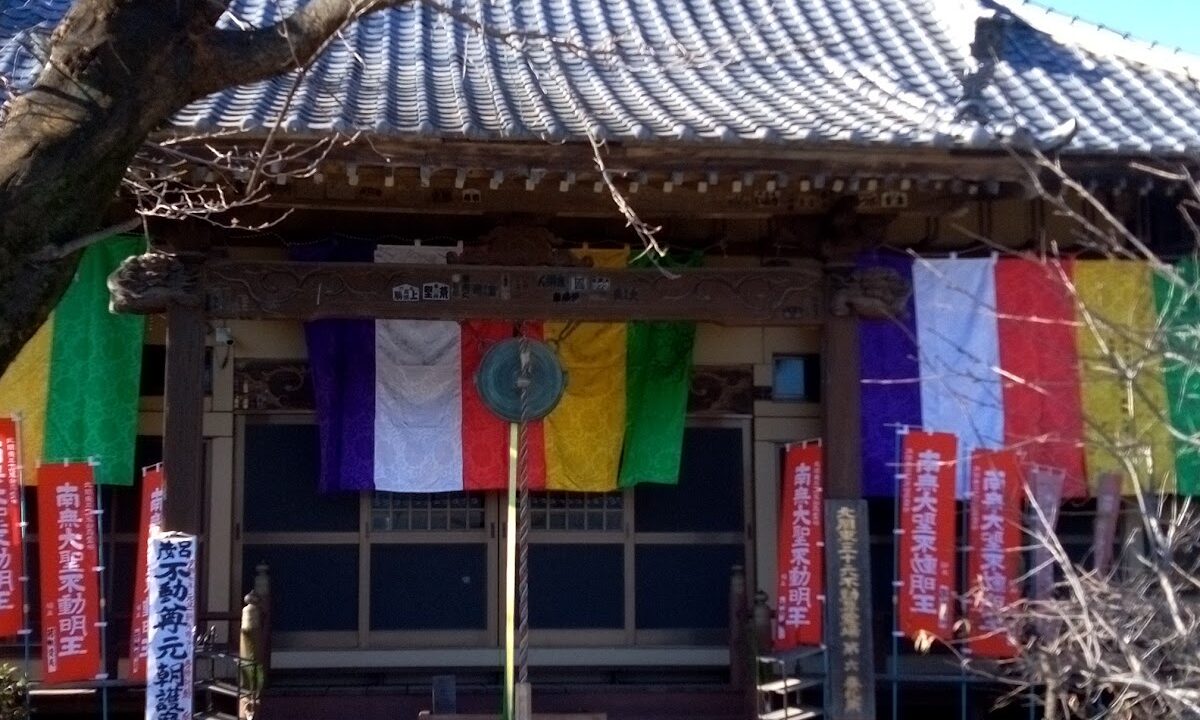
Moro Castle (Isesaki City, Gunma Prefecture) Complete Guide | History, Highlights, Access, and Surrounding Area Information
Moro Castle is a Sengoku period castle site located in Mimoro-cho, Isesaki City, Gunma Prefecture. Currently, it is the grounds of Taima-ji Temple, and remnants such as dry moats, remnants of its former glory, can still be seen. This article provides a detailed explanation of Moro Castle, from its history and highlights to access methods and surrounding tourist information.
Basic Information on Moro Castle
Location: 3612 Mimoro-cho, Isesaki City, Gunma Prefecture (within the grounds of Taima-ji Temple)
Alternate Names: None
Castle Structure: Flatland Castle
Construction Period: Details Unknown (Sengoku period)
Builder: Nawa Clan
Main Lords: Nawa Clan, Negishi Mikawa-no-kami (vassal of the Yura Clan)
Year of Abandonment: 1590 (Tensho 18)
Remains: Remains of a dry moat
Designated Cultural Property: None
Average Visiting Time: 15-25 minutes
Moro Castle is located in Sawa District, Kozuke Province (present-day Gunma Prefecture), and is believed to have been built by the Nawa Clan, lords of Nawa Castle. It played an important role as a “border castle” with the Yura Clan, lords of Nitta Kanayama Castle.
History of Moro Castle
Background of Construction and the Nawa Clan
The construction period and detailed circumstances of Moro Castle are largely unknown due to a lack of historical records. However, it is believed to have been built by the Nawa clan, whose base was Nawa Castle. The Nawa clan were local lords who ruled the Sawa district of Kōzuke Province, and their sphere of influence was the area between the Tone River and the Hirose River.
The Nawa clan was a prominent family that had existed since the Kamakura period, and during the Sengoku period, they sought to survive amidst the complex power dynamics of Kōzuke Province. Moro Castle is thought to have served as a subsidiary castle of Nawa Castle, playing a role in preparing for invasions from the east.
Role as a Border Castle
During the Sengoku period, Moro Castle functioned as a “border castle” between the Nawa clan and the Yura clan, lords of Nitta Kanayama Castle. A border castle is a frontline base located on the boundary line between opposing forces, used to monitor enemy movements and prevent invasions.
Nitta Kanayama Castle was a formidable mountain castle located in present-day Ota City. The Yura clan was a powerful daimyo family in eastern Kozuke Province. The spheres of influence of the Nawa and Yura clans were close together, and Moro Castle served as a crucial military base amidst this tense relationship.
Yura Clan Rule and Negishi Mikawa-no-kami
In the mid-16th century, with the decline of the Nawa clan, Moro Castle came under the control of the Yura clan. The Yura clan appointed their vassal, Negishi Mikawa-no-kami, as the castle lord, solidifying their control over the region. While detailed records of Negishi Mikawa-no-kami are scarce, it is believed he served as a senior retainer of the Yura clan, defending Moro Castle.
Initially, the Yura clan belonged to the Yamanouchi Uesugi clan, the Kanto Kanrei (governor of the Kanto region), but in response to the changing political situation of the Sengoku period, they eventually pledged allegiance to the Odawara Hojo clan. This political choice ultimately determined the fate of Moro Castle.
The Siege of Odawara and the Abandonment of the Castle
In 1590 (Tensho 18), Toyotomi Hideyoshi launched the “Siege of Odawara.” This large-scale military operation aimed to destroy the Hojo clan, who controlled the Kanto region, and complete the unification of Japan under the Toyotomi regime.
The Yura clan, who were vassals of the Hojo clan, also fought on the Hojo side in this battle. However, with the defeat of the Hojo clan, the Yura clan also declined and lost their territory. Moro Castle was abandoned at this time, ending its role as a military base.
After the Siege of Odawara, Tokugawa Ieyasu entered the Kanto region, and a new system of rule was established. Small flatland castles like Moro Castle were deemed unnecessary in the new era and were left abandoned.
Structure and Layout of Moro Castle
Characteristics as a Flatland Castle
Moro Castle was built as a flatland castle. Hirajo castles are fortresses built on flat land. While their defensive capabilities are inferior to mountain castles, they offer convenient transportation and are well-suited as bases for managing territories.
Moro Castle, located in a corner of the Kanto Plain, is presumed to have utilized the surrounding lowlands, with moats and earthen ramparts for its defenses. The current topography suggests it was a relatively small castle.
Existing Remains
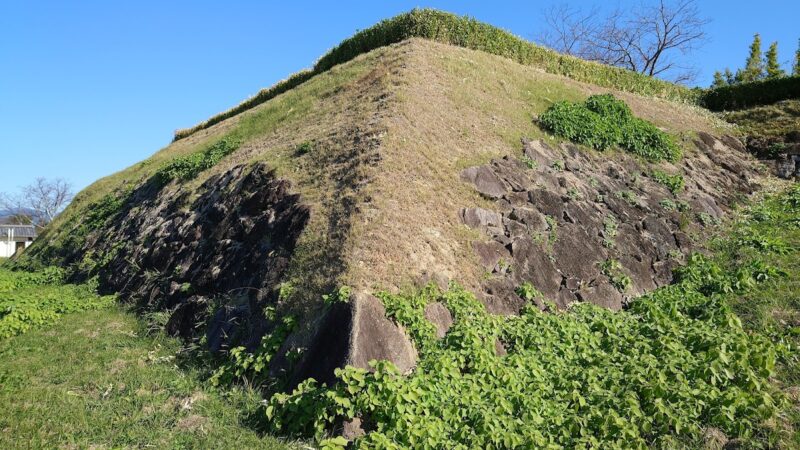
Currently, the site of Moro Castle is the grounds of Taima-ji Temple, and most of the original remains have been lost. However, the remains of a dry moat remain north of the temple, providing valuable evidence of the castle’s former existence.
This dry moat functioned as a defensive feature of the castle, a ditch dug to prevent enemy intrusion. Although it has been largely filled in and altered, its traces can still be seen from the topography.
Estimated Castle Area
The area centered around the grounds of Taima-ji Temple is believed to have been the main enclosure of the former Moro Castle. The exact boundaries of the castle grounds are unknown, but based on the surrounding topography and place names, it is possible that the castle facilities extended over a wider area than they do today.
Highlights of Moro Castle
Taima-ji Temple and Castle Ruins
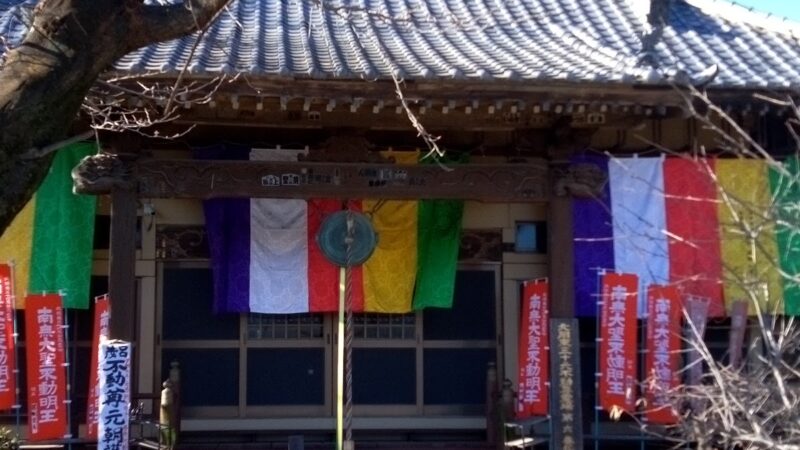
The greatest highlight of Moro Castle is Taima-ji Temple, which now stands on the castle ruins, and its surrounding environment. Walking through the temple grounds, one can reflect on the fact that this was once a military base during the Sengoku period.
Taima-ji Temple has long watched over this area as a center of local faith. Using castle ruins as temples is a phenomenon seen throughout Japan and is a typical pattern of land use after a castle is abandoned.
Observation of the Dry Moat Remains
The dry moat remains on the north side of the temple are one of the few clearly identifiable remains of Moro Castle. When visiting the site, observe these dry moat remains and try to imagine the defensive system of the time.
The depth, width, and shape of the dry moat can provide insights into the scale of the castle and the defensive strategy. Even without specialized knowledge, you should be able to feel the presence of the castle by observing the changes in the terrain.
Stone Monuments and Information Boards
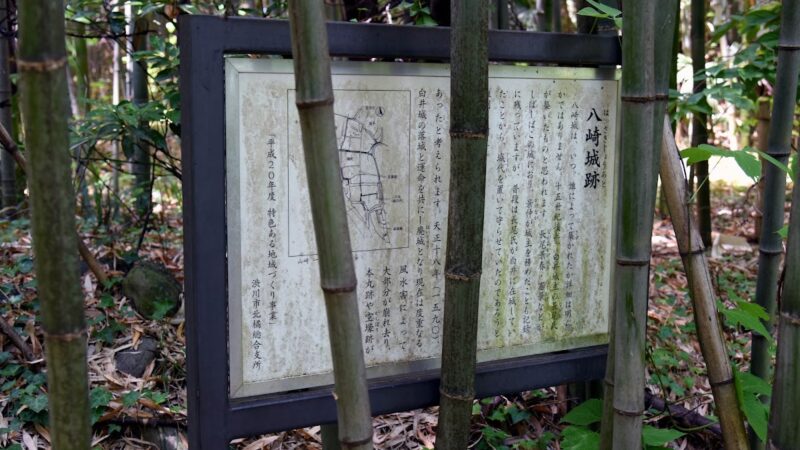
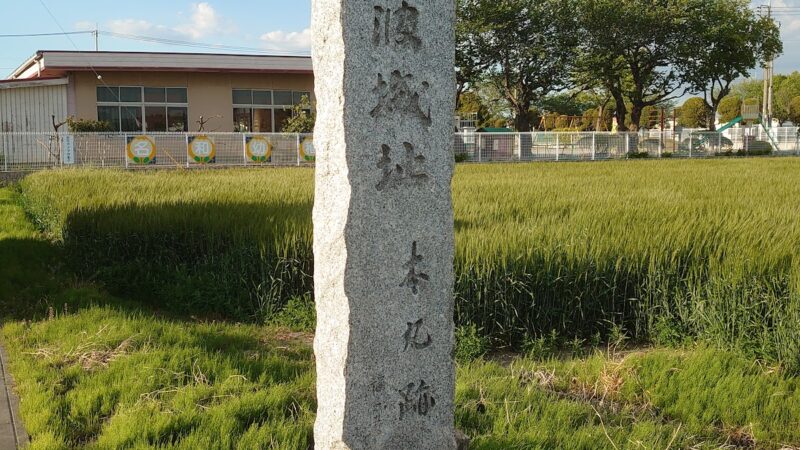
Stone monuments and information boards indicating the existence of Moro Castle are installed at the castle ruins. From this information, you can learn about the castle’s history and overview. When visiting, it is recommended to first read these information boards to confirm the basic information.
Access Information
Access by Car
From the Kan-Etsu Expressway:
Approximately 30 minutes from Honjo-Kodama IC
Approximately 40 minutes from Takasaki IC
From the Kita-Kanto Expressway:
Approximately 15 minutes from Isesaki IC
Approximately 25 minutes from Ota-Kiryu IC
Parking:
There is parking space for visitors at Taima-ji Temple, but it is recommended to check with the temple in advance.
Access by Public Transportation
JR Ryomo Line: Approximately 25 minutes on foot from Isesaki Station, or approximately 7 minutes by taxi.
Route Bus: The Isesaki City Community Bus “Aozora” is available, but the number of buses is limited, so please check the timetable in advance.
Map and Location
Address: 3612 Mimoro-cho, Isesaki City, Gunma Prefecture (Taimaji Temple)
Latitude and Longitude: Approximately 36.3 degrees North latitude, 139.2 degrees East longitude
You can check the route from your current location by searching for “Taimaji Temple Isesaki” or “Moro Castle Ruins” on a map search. If using a car navigation system, please enter the address of Taimaji Temple.
Visiting Guide
Estimated Visiting Time
Please allow approximately 15-25 minutes for a visit to the Moro Castle Ruins. Since the remains are limited, a short visit is possible. If you plan to take photographs or conduct detailed observations, it’s best to allocate about 30 minutes.
Points to Note During Your Visit
- Consideration for Taima-ji Temple: The castle ruins are located within the temple grounds, so please be considerate of visitors. Please observe quietly.
- Observation of the Dry Moat: The remains of the dry moat on the north side are easy to miss, so please carefully search using the information boards as a guide.
- Surrounding Topography: Observing the surrounding topography, not just the castle ruins, will help you understand the castle’s location.
- Photography: Please be considerate of the temple buildings and the privacy of visitors when taking photographs.
Best Season for Visiting
Moro Castle Ruins are accessible year-round, but the following seasons are especially recommended:
Spring (March-May): The weather is mild, making it pleasant for exploring the surrounding area.
Autumn (September-November): A cool and comfortable season, ideal for visiting castle ruins. Summer/Winter: Summer requires protection from the heat, and winter requires protection from the cold.
Clothing and Items to Bring
- Comfortable Walking Shoes: Although the area is flat, comfortable walking shoes are recommended.
- Hat and Sunscreen: Sun protection is necessary in summer due to the strong sunlight.
- Drinks: Especially in summer, remember to stay hydrated.
- Camera: Bringing a camera for documentation is recommended.
Nearby Castles and Historical Sites
Several castle ruins and historical sites are scattered around Moro Castle. Those enjoying castle tours are encouraged to visit these historical sites as well.
Nawa Castle Ruins
Location: Isesaki City, Gunma Prefecture
Distance: Approximately 3km from Moro Castle
This is the site of Nawa Castle, the base of the Nawa clan. It is an important historical site for understanding the history of the Nawa clan, who built Moro Castle. Although the area is currently being developed for residential purposes, some remains of the castle still exist.
Nitta Kanayama Castle Ruins (National Historic Site)
Location: Kanayama-cho, Ota City, Gunma Prefecture
Distance: Approximately 15km from Moro Castle
Nitta Kanayama Castle, the base of the Yura clan, is known as one of the leading mountain castles in the Kanto region. It is a national historic site, and the remains of the stone walls and baileys are well-preserved. It has also been selected as one of “Japan’s Top 100 Castles,” offering a full-fledged castle experience.
Akahori Castle Ruins
Location: Isesaki City, Gunma Prefecture
Distance: Approximately 5km from Moro Castle
The ruins of the Akahori clan’s castle, like Moro Castle, tell the history of Saba County during the Sengoku period.
Isezaki Jinya Ruins
Location: Isezaki City, Gunma Prefecture
Distance: Approximately 2km from Moro Castle
This was the site of the administrative office of the Isezaki Domain during the Edo period. Currently, it houses the Isezaki City Hall and a park.
History and Culture of the Moro Region
History of Moro Village
The Moro region, where Moro Castle is located, was formerly known as Moro Village. Moro Village belonged to Sawa District, Gunma Prefecture, and in 1935 (Showa 10), it had a total population of 6,434.
Moro Village bordered Isezaki Town, Shokuren Village, Uneme Village, Goshi Village, Toyouke Village, Nawa Village, and Miyasato Village, and was primarily an agricultural area. Later, after merging with Isezaki City, it became the current Mimoro Town and Moro Town.
Mimoro-cho’s Festival Music
Mimoro-cho has a traditional festival music tradition. The Mimoro-cho festival music is based on a performance called “Sante-tsuzumi,” which is widely distributed from the Isesaki City area to the northern Saitama Prefecture.
This festival music has been passed down through generations by local volunteers known as the Hori-gumi of the former Moro Village. Currently, the “Mimoro-cho Festival Music Preservation Society” has been organized to protect and pass on this tradition as a local cultural asset.
The Current Moro Area
The current Moro area (Mimoro-cho and Moro-cho) is a residential area located in the central part of Isesaki City. It has educational facilities such as Isesaki Municipal First Junior High School and Isesaki Municipal Moro Elementary School, and the Moro Community Center serves as a hub for local community activities.
How to Enjoy Your Visit to Moro Castle
Experiencing Historical Romance
Moro Castle may seem to have few remaining structures, making it appear somewhat lacking in points of interest at first glance. However, the faint remnants of the dry moats and the surrounding topography allow you to imagine the tension of the Sengoku period and the thoughts of the castle lords.
Understanding the historical flow of events—the power struggle between the Nawa and Yura clans, their vassalage to the Hojo clan, and the castle’s abandonment after the Siege of Odawara—deepens the meaning of this small castle site.
As Part of a Castle Tour
Since visiting Moro Castle alone takes relatively little time, we recommend planning a castle tour that combines it with other nearby castle ruins and historical sites. Visiting Nawa Castle, Nitta Kanayama Castle, and Isezaki Jinya will allow you to gain a deeper understanding of the region’s history.
Experiencing Local Culture
When visiting the castle ruins, also consider the local culture and history. Besides the castle ruins, the Moro region boasts attractive cultural heritage, such as the traditional festival music of Mimoro-cho and local festivals.
Materials and Research on Moro Castle
Limitations of Historical Sources
Detailed historical sources on Moro Castle are extremely limited. Many aspects remain unknown, including the construction date, details of the castle’s lord, and its structure. This is likely due in part to Moro Castle being a relatively small fortress and not being the site of any major battles.
Importance of Local History Research
Small regional castles like Moro Castle have not been studied as extensively as larger castles, but they are crucial for understanding local history. The accumulation of research and investigations by local historians and researchers will reveal the true nature of Moro Castle.
Summary
Moro Castle is the site of a flatland castle from the Sengoku period, located in Mimoro-cho, Isesaki City, Gunma Prefecture. Built by the Nawa clan, it functioned as a border castle with the Yura clan and was abandoned after the Siege of Odawara in 1590.
Currently, the site is part of the grounds of Taima-ji Temple, and only a small remnant of the dry moat remains on the north side. However, it is a valuable historical site that tells the story of the region’s Sengoku period (Warring States period). While the visit is short, lasting only 15-25 minutes, visiting it along with other nearby castle ruins will provide a deeper understanding of the Sengoku history of Kozuke Province.
When visiting Moro Castle, please reflect on the history of the Nawa and Yura clans, its role as a border castle, and the role this small castle played within the larger historical context of the unification of the Kanto region through the Siege of Odawara. Even with few remains, the spirit of the Sengoku period certainly lingers.
Exploring castle ruins and experiencing the history and culture of the region, and feeling the lives of our ancestors, will be a meaningful experience for us living in the present day. We hope your visit to Moro Castle will be a meaningful historical exploration.