Niibori Castle (Gunma Prefecture) Complete Guide | History, Structure, Access, and Highlights Explained in Detail
Niibori Castle, located in Tahira, Yoshii-cho, Takasaki City, Gunma Prefecture, is a mountain castle that functioned as an important branch castle protecting Hirai Castle, the base of the Uesugi clan, during the Sengoku period. Also known as “Tahira Castle,” it was a historical site where fierce battles took place during Takeda Shingen’s invasion of western Kozuke Province. This article provides a detailed explanation of Niibori Castle, including its history, structure, lords, highlights, and access methods.
What is Niibori Castle?
Niibori Castle is a medieval mountain castle located in Nakajo, Tahira, Yoshii-cho, Takasaki City, Gunma Prefecture. Built on a tongue-shaped plateau jutting northward, bordered by the Doai River to the east and a tributary of the Sugiido River to the west, it utilizes the natural terrain, with an elevation of approximately 162 meters and a relative height difference of approximately 40-50 meters, to create a natural stronghold.
During the Sengoku period, Shinbori Castle, along with Ichigoyama Castle, played an important defensive role as part of a separate castle complex protecting the western side of Hirai Castle (Fujioka City), the base of the Kanto Kanrei Uesugi clan. Records show that during the Eiroku era (1558-1570), it was invaded by Takeda Shingen and fell after a fierce battle.
Alternative Names and Terminology
Shinbori Castle is also known by the alternative name “Taira Castle.” This name originates from “Taira,” the place name where the castle is located. Both names are used locally, and the usage varies depending on the historical document or literature.
History of Shinbori Castle
Background and Period of Construction
The exact construction date of Shinbori Castle is unclear, but it is believed to have been built sometime between the late 15th and early 16th centuries, during the expansion of power by the Kanto Kanrei Yamauchi Uesugi clan. The Uesugi clan controlled the western part of Kōzuke Province from their base at Hirai Castle, and Shinbori Castle was constructed as part of their defensive network.
The Uesugi clan’s castle network, centered around Hirai Castle, had a strategic structure with subsidiary castles positioned to defend against invasions from the north (Numata area), from the east (Hōjō clan), and from the west (Takeda clan). Shinbori Castle, as a key point in western defense, formed a “separate castle complex” together with Ichigōyama Castle.
Relationship between Lord Taira Tomosada and Nagano Narimasa
The lord of Shinbori Castle was Taira Tomosada. Taira Tomosada was a cousin of Nagano Narimasa, a prominent figure in western Kōzuke Province and known as the lord of Minowa Castle.
Nagano Narimasa was known as the “Yellow Spot of Joshu” and is famous as a general who repelled Takeda Shingen’s invasions of western Kozuke many times. Tahira Tomosada, also a member of the Nagano clan, played an important role within the Uesugi retainers. Their blood relation demonstrates the significant influence of the Nagano clan in western Kozuke, indicating that Niibori Castle was not merely a subsidiary castle but a crucial stronghold within the Nagano clan’s sphere of influence.
Takeda Shingen’s Invasion and the Fall of the Castle
On February 15, 1563 (Eiroku 6), Takeda Shingen, a Sengoku daimyo of Kai Province, began his full-scale invasion of western Kozuke. During this time, Niibori Castle became one of the Takeda army’s targets, and fierce battles ensued.
The Takeda army, with overwhelming force and tactics, besieged Niibori Castle, and records indicate that the castle ultimately fell and was burned down. This conquest allowed the Takeda clan to secure a western route to Hirai Castle, dealing a significant blow to the Uesugi clan’s sphere of influence.
The fall of Niibori Castle was also one of the events symbolizing the decline of the Kanto Kanrei Uesugi clan. Afterward, Uesugi Norimasa left Kanto to seek refuge with Nagao Kagetora (later Uesugi Kenshin) in Echigo, and Hirai Castle was abandoned. It is believed that Niibori Castle was abandoned around this time.
Post-Abandonment History
There are no records of Niibori Castle being reused after its conquest by Takeda Shingen. By the end of the Sengoku period, it was completely abandoned and subsequently used as farmland and forest. Even today, most of the castle site is privately owned, and some of the remains are buried in bamboo groves and thickets.
In recent years, local cultural property preservation activities and investigations by castle researchers have led to a re-evaluation of the historical value of Niibori Castle. Recognized as a cultural property of Takasaki City, the castle is being preserved and utilized through efforts such as the installation of information boards.
Structure and Layout of Shinbori Castle
Location and Topographical Characteristics
Shinbori Castle is a cliffside castle built on the tip of a tongue-shaped plateau jutting out to the north. To the east, the Doai River, and to the west, a tributary of the Sugiido River form deep valleys, and these natural features act as natural moats.
The elevation difference from the Doai River reaches approximately 50 meters, and the steep cliffs served as a stronghold protecting the castle. Therefore, the enemy could only attack the southern part of the plateau, making it a very advantageous terrain for the defenders.
Arrangement of Enclosures (Kuruwa)
The layout of Shinbori Castle is a series of interconnected enclosures that take advantage of the tongue-shaped plateau’s topography. Multiple main enclosures are arranged from the northern end of the plateau towards the south, each demarcated by moats and earthworks.
The northernmost enclosure is presumed to be the main enclosure (honmaru), and the structure continues southward from there to the second and third enclosures. Each enclosure is relatively small in size, suggesting a design intended for defense by a small, elite force rather than for stationing a large army.
Moats and Earthworks
Several moats were constructed on the southern side of the castle, where it connects to the plateau. These moats were important defensive structures to prevent enemy intrusion and can still be seen today as undulations in the terrain.
The depth of the moats varies depending on the location, but the largest is estimated to be approximately 10 meters wide and 3-4 meters deep. Earthworks were built on both sides of the moats, further enhancing defensive capabilities.
Relatively well-preserved traces of earthworks remain around the main enclosure, with earthen mounds approximately 1-2 meters high. These earthworks were arranged around the enclosure and are thought to have served as foundations for watchtowers and fences.
Entrance (Koguchi)
While it’s difficult to clearly identify the location of the entrance (koguchi) to the castle, topographical observations suggest that there were entrances on the southwest and southeast sides. The southwest entrance, in particular, is located on the route leading to the castle from the road along the Sugiido River and is considered highly likely to have been a major entrance.
It’s believed that defensive structures such as earthworks and stone walls were placed around the entrances, but due to bamboo groves and landslides, it’s difficult to understand the detailed structure now.
Current State of Remains
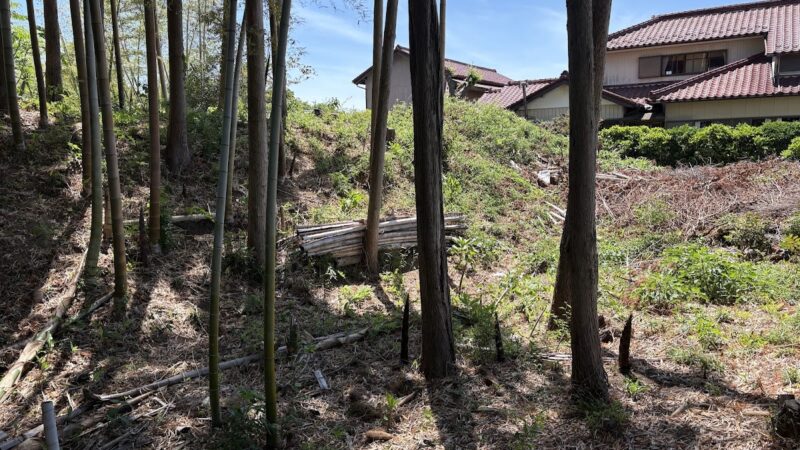
Currently, remains such as earthworks, baileys, and moats remain at the Shinbori Castle site, but due to years of weathering and vegetation overgrown, only a limited portion can be clearly identified. The flat areas of the baileys, in particular, are covered in bamboo groves and mixed forests, requiring careful observation to grasp the overall picture.
On the other hand, the tongue-shaped plateau topography itself has not been significantly altered, and it remains in good condition for understanding the castle’s location and defensive plan. The view of the castle ruins from the cliff below offers a valuable perspective that truly conveys the strategic importance of the site at the time.
Highlights of Shinbori Castle
Tongue-shaped Plateau Topography
The greatest highlight of Shinbori Castle is its location itself. You can experience firsthand the natural fortifications of the tongue-shaped plateau jutting out to the north and the deep valleys formed by rivers flowing east and west.
Especially when viewing the castle ruins from along the Doai River, the approximately 50-meter elevation difference and steep cliffs are impressive, making it clear how difficult this terrain was to conquer. Shinbori Castle serves as an excellent example for learning how castles of the Sengoku period skillfully utilized the terrain.
Remains of Moats and Earthworks
Several moats remain on the plateau south of the castle ruins. While these are buried in bamboo groves, some can be clearly seen as part of the topographical undulations. Walking across the moat allows you to experience its depth and width, and understand its function as a defensive structure.
Remains of earthworks also exist, mainly around the main enclosure, and you can observe earthen mounds about 1-2 meters high. Walking on top of the earthworks makes it easier to grasp the shape and scale of the enclosure.
Views and Surrounding Landscape
From the Shinbori Castle ruins, you can see the townscape of Yoshii and the surrounding mountains. In particular, you can see the direction of Ichigoyama Castle to the west and the direction of Hirai Castle to the east, allowing you to appreciate the relative positions of these castles.
On a clear day, you can even see Mount Akagi and Mount Haruna in the distance, giving you a sense of the geographical expanse of Kozuke Province. During the Sengoku period, this view is thought to have played an important role in monitoring enemy movements.
Understanding the Historical Background
When visiting Shinbori Castle, understanding its historical background will allow for a deeper appreciation of the site. Walking through the castle ruins while imagining the historical drama that unfolded in Gunma Prefecture during the Sengoku period—including Takeda Shingen’s invasion of western Kozuke, the conflict between the Uesugi and Takeda clans, and the resistance of the local lords of western Kozuke led by Nagano Narimasa—will reveal the meaning embedded in each of the ruins.
Access Information
Location
Address: Nakajo, Tahira, Yoshii-machi, Takasaki City, Gunma Prefecture
The Shinbori Castle ruins are located approximately 2 kilometers southwest of the urban area of Yoshii-machi, Takasaki City.
Access by Car
From Kan-Etsu Expressway, Maebashi Interchange: Approximately 30 minutes
- Exit Maebashi IC and head south on National Route 17
- Proceed towards Takasaki, then take the prefectural road towards Yoshii Town
- From Yoshii Town center, head south on Prefectural Road 171
From Joshin-Etsu Expressway, Tomioka Interchange: Approximately 20 minutes
- Exit Tomioka IC and head north on the prefectural road
- Towards Yoshii Town
Parking: There is no dedicated parking lot for the castle ruins. Avoid street parking and use the parking lots of nearby public or commercial facilities. We recommend accessing the site on foot.
Access by Public Transportation
From Joshin Electric Railway, Yoshii Station:
- Approximately 40 minutes on foot (approximately 3 kilometers)
- Approximately 10 minutes by taxi
Yoshii Station is a Joshin Electric Railway station, accessible in approximately 30 minutes from Takasaki Station. While it’s accessible on foot from the station, it’s a bit of a distance, so consider taking a taxi.
Points to Note When Visiting
- Respect for Private Property: The majority of the castle ruins are on private property. Please be considerate of the landowners and act respectfully during your visit.
- Safety of Footing: The ruins are located within bamboo groves and thickets, and some areas have uneven footing. Wearing comfortable clothing and non-slip shoes is recommended.
- Insect Protection: In summer, there are many insects such as mosquitoes and horseflies, so insect repellent spray and wearing long sleeves and long pants are recommended.
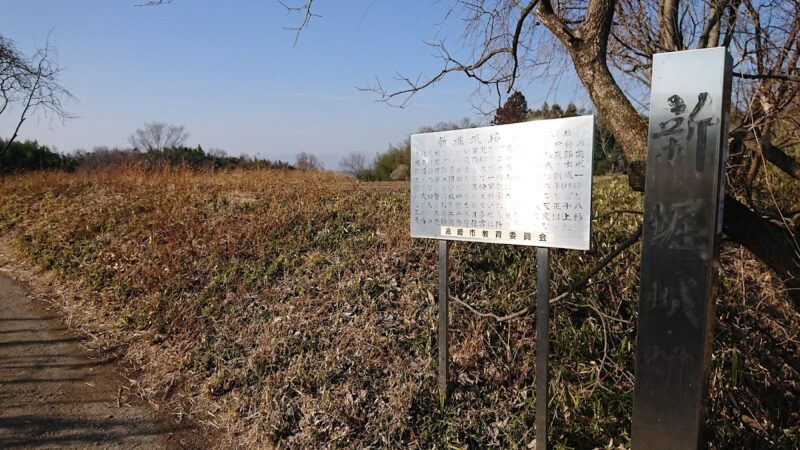
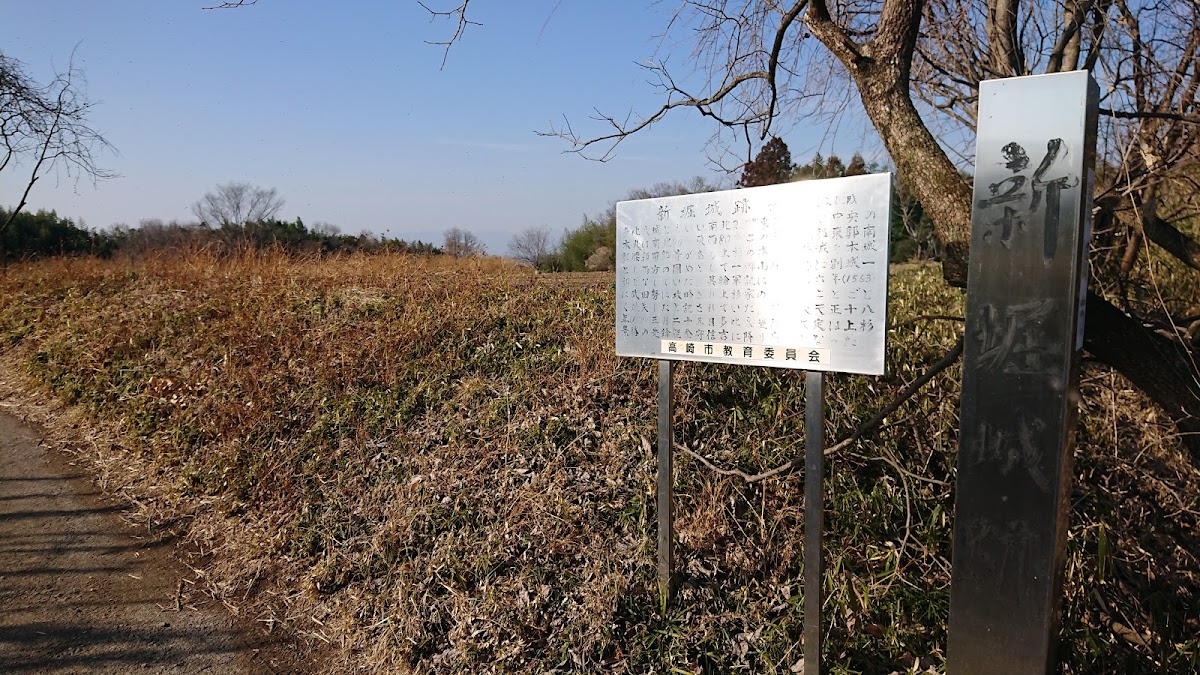
- Checking the Information Board: An information board installed by the Takasaki City Board of Education is located near the entrance to the castle ruins. Checking this first will deepen your understanding of the ruins.
- Estimated Visiting Time: The castle ruins are relatively small; visiting only the main ruins will take approximately 15-30 minutes. If you plan to observe thoroughly, allow about an hour.
Nearby Tourist Attractions
Ichigoyama Castle Ruins
Ichigoyama Castle, which formed part of the same castle complex as Shinbori Castle, is located approximately 1.5 kilometers southwest of Shinbori Castle. This castle also functioned as a subsidiary castle of Hirai Castle, and visiting both together will provide a deeper understanding of the Uesugi clan’s castle network.
Hirai Castle Ruins
Hirai Castle, the Uesugi clan’s base, is located in Fujioka City, approximately 8 kilometers east of Shinbori Castle. A large-scale castle was built as the residence of the Kanto Kanrei (governor of the Kanto region), but due to residential development, many of the remains have been lost. Nevertheless, traces of earthworks and moats remain, making it a historically significant castle site.
Takasaki City Yoshii Local History Museum
This museum introduces the history and culture of Yoshii Town, and also exhibits materials related to Shinbori Castle. Visiting before or after your castle ruins will allow you to gain a deeper understanding of the region’s historical background.
Location: Yoshiigawa, Yoshii-machi, Takasaki City, Gunma Prefecture
Opening Hours: 9:00 AM – 4:00 PM (Closed Mondays)
Admission Fee: Free
Tago Monument Memorial Hall
This facility exhibits the Tago Monument (a National Special Historic Site), an ancient monument from the Nara period, and related materials. It’s a valuable spot for learning about the ancient history of Yoshii-machi. While it’s from a different era than Shinbori Castle, it allows you to feel the layered history of this region.
Location: Ike, Yoshii-cho, Takasaki City, Gunma Prefecture
Opening Hours: 9:30 AM – 5:00 PM (Closed Mondays)
Admission Fee: 200 yen (General Admission)
Shinbori Castle and Gunma Prefecture’s Castle Culture
Gunma Prefecture’s Position in Sengoku Period History
Gunma Prefecture (Kozuke Province) was a disputed territory during the Sengoku period between the three major powers: the Uesugi clan (Kanto Kanrei), the Odawara Hojo clan, and the Kai Takeda clan. Shinbori Castle was located on the front lines of this conflict and was one of the important targets for Takeda Shingen’s invasion of western Kozuke.
Gunma Prefecture has many famous castles, including Minowa Castle, Kanayama Castle, Numata Castle, Iwagutsu Castle, and Nagurumi Castle, which have been selected as one of Japan’s Top 100 Castles and the Continued Top 100 Castles. While Shinbori Castle is smaller in scale compared to these large castles, it is essential for understanding the Uesugi clan’s castle network.
The Importance of the Branch Castle Network
Castles during the Sengoku period (Warring States period) did not function in isolation, but rather as part of a network of branch castles centered around the main castle. Shinbori Castle was part of a network centered around Hirai Castle, and played a role in preparing for invasions from the west, in conjunction with Ichigoyama Castle.
Studying such branch castle networks is crucial for understanding the military strategies and realities of territorial control during the Sengoku period. Even small to medium-sized castle ruins like Shinbori Castle possess significant historical value from this perspective.
Challenges of Preservation and Utilization
While the Shinbori Castle ruins are recognized as a cultural property of Takasaki City, they are not designated as national or prefectural cultural properties. Therefore, organized preservation and maintenance efforts are limited, and many of the remains are being overgrown by nature.
In recent years, with the growing nationwide interest in castles, attention is also being drawn to small to medium-sized castle ruins like Shinbori Castle. Local cultural property protection groups and castle researchers are conducting surveys and awareness-raising activities, and future preservation and utilization are anticipated.
Summary
Shinbori Castle (Tahira Castle) was a Sengoku period mountain castle located in Yoshii-cho, Takasaki City, Gunma Prefecture. It functioned as an important branch castle protecting Hirai Castle, the headquarters of the Uesugi clan, the Kanto Kanrei (governor of the Kanto region). The castle lord was Tomosada Taira, a cousin of Nagano Narimasa, and it fell in 1563 during an attack by Takeda Shingen.
Built as a cliffside castle utilizing the tongue-shaped plateau terrain, it was a natural stronghold protected by rivers to the east and west. Even today, remains such as earthworks, baileys, and moats remain, making it a valuable historical site for learning about the castle structure of the Sengoku period.
Although small in scale, Shinbori Castle played a crucial role in the important historical phase of the Sengoku period: the conflict between the Uesugi and Takeda clans. Visiting its history and remains will allow you to gain a deeper understanding of Gunma Prefecture’s Sengoku history.
When visiting Yoshii-cho, Takasaki City, be sure to visit the Shinbori Castle ruins and experience the atmosphere of the Sengoku period.