Complete Guide to Odemori Castle (Fukushima Prefecture) | A Sengoku Period Mountain Castle, the Stage of Date Masamune’s “Massacre”
What is Odemori Castle?
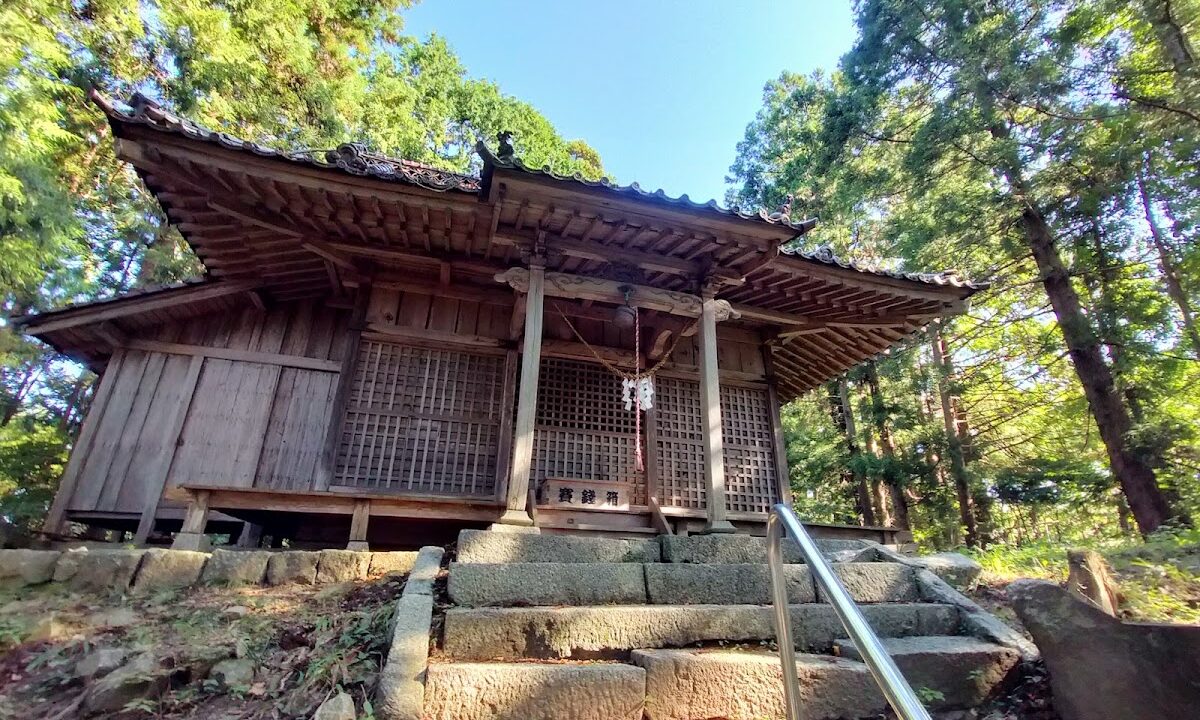
Odemori Castle was a Sengoku period mountain castle located in Harimichi, Nihonmatsu City, Fukushima Prefecture. Currently, Atago Shrine is enshrined on the site of the main keep, and remnants of stone walls and baileys remain throughout the castle grounds. This castle is etched in history as the site of the “Massacre of Odemori Castle,” one of the most brutal acts of the Sengoku period, carried out by Date Masamune in 1585.
Built on an isolated hill approximately 345 meters above sea level, Odemori Castle was an important branch castle of the Ouchi clan, lords of Obama Castle who controlled the Shiomatsu region (northern Nakadori region). With its conical shape, the castle functioned as a strategic stronghold and served as a fortress protecting the Ouchi clan’s sphere of influence.
Basic Information
- Location: Atagomori, Harimichi, Nihonmatsu City, Fukushima Prefecture
- Castle Structure: Mountain Castle
- Builder: Ishibashi Clan (Various theories exist)
- Main Lords: Kikuchi Akitsuna, Ishikawa Danjo, Ouchi Clan Retainers
- Construction Period: Mid-Sengoku Period
- Year of Abandonment: Tensho 16 (1588)
- Remains: Enclosures, Stone Walls, Moats
- Designated Cultural Property: Not Designated
- Other Names: Kotemori-kan
History and Development of Kotemori Castle
From Construction to Ouchi Clan Rule
While there are no clear records regarding the construction date of Kotemori Castle, the prevailing theory is that it was built by the Ishibashi clan in the mid-Sengoku period. Subsequently, it functioned as a branch castle of the Ouchi clan, who controlled the Shiomatsu region.
The Ouchi clan expanded their power primarily in Adachi County, establishing a network of castles with Obama Castle as their base and several subsidiary castles surrounding it. Koteshimori Castle held a crucial position within this network and was developed as a defensive stronghold to prepare for invasions from the east.
In 1585 (Tensho 13), Kikuchi Akitsuna (nephew of Ouchi Sadatsuna) was the lord of Koteshimori Castle, and generals such as Ono Mondo, Arai Hannai, Ishikawa Kageyu, and Ogata Gengobei were stationed there. In addition to soldiers, their families and local residents had also taken refuge in the castle, with an estimated 800 or more people besieged.
The Rise of Date Masamune and the Conflict
In 1584 (Tensho 12), Date Masamune, who inherited the headship of the Date family at the age of 18, rapidly expanded his power. In addition to the ongoing conflict with the Nihonmatsu clan, which had continued since the time of his father, Date Terumune, tensions with surrounding forces such as the Ashina and Soma clans of Aizu were escalating.
Initially, Ouchi Sadatsuna was subordinate to the Date clan, but in 1585 (Tensho 13), he allied with Soma Yoshitane and plotted a rebellion against the Date clan. This was driven by the Soma clan’s apprehension towards the rapidly expanding power of the young Masamune, as well as their influence. The Ouchi clan’s defection was a major obstacle for Masamune in his quest to conquer southern Oshu.
The Massacre at Koteshimori Castle
The Tragedy of August 23, 1585
On August 23, 1585 (Tensho 13), Date Masamune launched a full-scale attack on Koteshimori Castle, a subsidiary castle, to eliminate Ouchi Sadatsuna. Masamune, then only 19 years old, would order atrocities that would go down in Sengoku history during this battle.
The Date army invaded the Shiomatsu region from Kawamata (present-day Kawamata-machi, Date-gun, Fukushima Prefecture) and besieged Koteshimori Castle. The attack was fierce, and the castle’s defenders put up a desperate resistance, but they were gradually cornered by the overwhelming numerical superiority.
When the castle fell, Masamune ordered a “massacre.” This was an order to kill every single person inside the castle, and it is said that all approximately 800 people inside, including samurai, women, children, and the elderly, were massacred.
The Strategic Intent Behind the “Masasage”
There was a clear strategic intention behind Masamune’s order for this brutal act: a psychological warfare tactic using an example. By making the thorough massacre at Koteshimori Castle known to the surrounding castles, the aim was to demoralize other Ouchi clan branch castles and make them abandon their resistance.
This strategy proved successful, and upon learning of the horrific state of Koteshimori Castle, surrounding castles surrendered one after another. Subsidiary castles such as Miyamori Castle and Ishizuka Castle surrendered without a fight, leaving the main castle, Obama Castle, isolated and without support. As a result, Masamune succeeded in conquering the Ouchi clan’s sphere of influence in a short period.
Historical Evaluation and Impact
The massacre at Koteshimori Castle is recorded as an exceptionally brutal act even in the Sengoku period. Even among the Sengoku daimyo of the time, the act of killing everyone, including non-combatants, was extremely unusual.
This incident, as it reveals a side of Masamune as a “ruthless strategist,” has complicated later evaluations. On the other hand, it is also true that this ruthless decision enabled his rapid expansion of power and paved the way for his later conquest of Oshu.
The massacre at Koteshimori Castle continues to attract the attention of many historians and researchers as a historical event that conveys the realities of warfare in the Sengoku period and the ruthlessness of the young Masamune.
Structure and Layout of Koteshimori Castle
Topography and Location
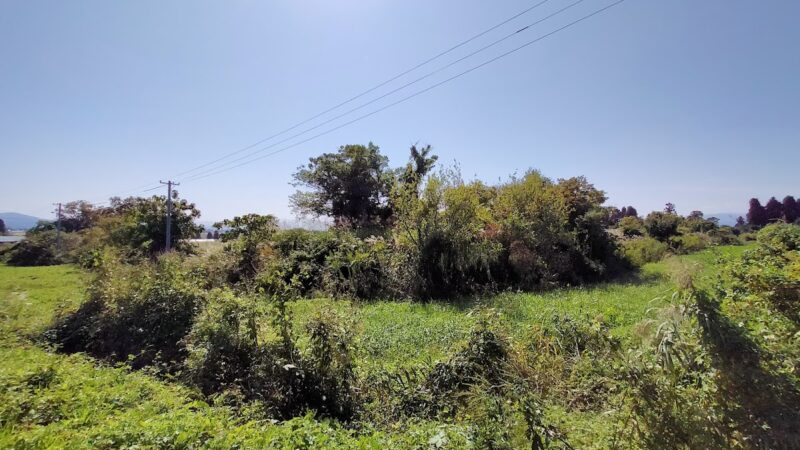
Koteshimori Castle is built on an isolated hill approximately 345 meters above sea level. This hill has a beautiful conical shape and a distinctive topographical feature that makes it clearly identifiable from the surrounding plains. The castle facilities extended over an area of approximately 200 meters east-west and 150 meters north-south.
The castle’s location was strategically advantageous, allowing it to monitor the eastern road and control the intrusion route towards Obama Castle. Furthermore, its elevated position offering a panoramic view provided the advantage of early detection of enemy movements.
Main Enclosure (Honmaru)
The main enclosure, located at the mountaintop, is the core of the castle. Currently, Atago Shrine is enshrined here, and a path leading to it is maintained. The main enclosure measures approximately 40 meters east-west and 30 meters north-south, and is presumed to have housed the lord’s residence and command post.
Traces of earthworks remain around the main enclosure, indicating the presence of defensive structures. Furthermore, the main enclosure offers unobstructed views of the surrounding area, demonstrating its structure as a highly functional military base.
Arrangement of Enclosures
Multiple enclosures are arranged in a stepped pattern around the main enclosure. These enclosures served to provide multiple layers of defense and functioned as troop encampments and supply storage areas.
In particular, clearly defined enclosures remain on the east and south sides of the main enclosure, each likely serving different roles. The eastern enclosure may have functioned as a frontline defensive structure blocking the enemy’s main incursion route, while the southern enclosure may have served as a rear support or reserve force location.
Stone Walls and Defensive Structures
One of the distinguishing features of Koteshimori Castle is the stone walls remaining throughout the castle ruins. While the use of stone walls was limited in mountain castles in the Tohoku region during the Sengoku period, Koteshimori Castle featured stone walls at key locations.
These stone walls were built using the nozurazumi technique, resulting in a simple structure where natural stones are piled up as they are. However, they functioned effectively as defensive structures fortifying key points. Even today, remnants of the stone walls can be seen around the main enclosure and on the stepped sections of the baileys.
Furthermore, civil engineering defensive structures such as moats and steep slopes were also strategically placed, demonstrating ingenuity in hindering the attacking force.
Access Routes and Gates
The access routes to the castle were limited, giving the defense an advantage. The current approach is thought to follow the original access route, requiring ascent up a steep slope.
While no clear remains of the gate (koguchi) exist, the layout of the baileys suggests the presence of multiple defensive lines. Attackers would have been forced to ascend narrow paths while being vulnerable to attacks from above.
The Abandonment of the Castle and its Aftermath
After the Fall of Koteshimori Castle
After its fall on August 23, 1585 (Tensho 13), Koteshimori Castle came under the control of the Date clan. However, due to the massacre that wiped out all personnel within the castle, it temporarily lost its function as a fortress.
After Masamune conquered the Ouchi clan’s territory, he reorganized the system of control in the region. It is thought that Date clan retainers were temporarily stationed at Koteshimori Castle, but its strategic importance declined.
Abandonment in 1588 (Tensho 16)
Koteshimori Castle was officially abandoned in 1588 (Tensho 16). During this period, Date Masamune’s conflict with the Ashina clan of Aizu deepened, and his military interest shifted towards the Aizu region.
The background to the castle’s abandonment was Masamune’s reorganization of castles. In the former territories of the Ouchi clan, including Obama Castle, a more efficient system of governance was established, and smaller branch castles were targeted for consolidation or closure. Kotemori Castle, too, saw a decline in its strategic value, reducing the need for its maintenance.
After the Edo Period
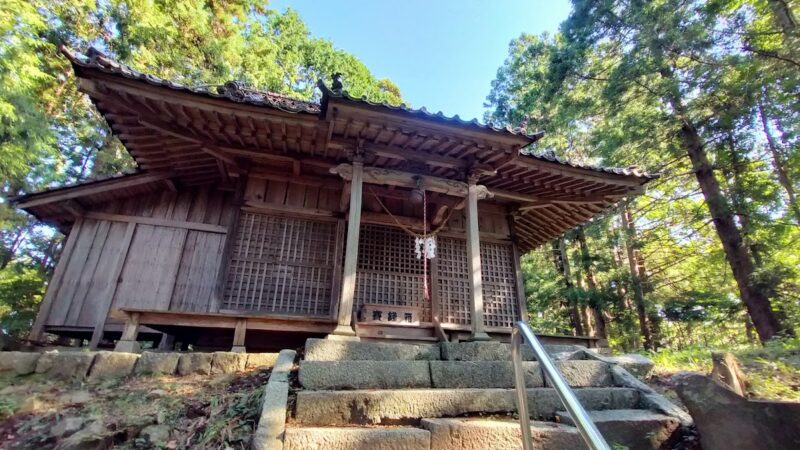
After its abandonment, the Kotemori Castle ruins became a place of worship for local residents. Atago Shrine was established on the site of the main keep, and it came to be revered by the local people as a god of fire prevention.
Throughout the Edo period, the castle ruins were left as a forest, but the remains such as stone walls and baileys were relatively well preserved. Locally, the legend of the “Kotemori Castle Massacre” is passed down, and the site continues to be remembered as the scene of a tragedy.
Preservation Status in Modern Times
Currently, the Kotemori Castle ruins are recognized as a historical site of Nihonmatsu City, but they are not designated as a national or prefectural cultural property. However, its historical value is being re-evaluated by local history enthusiasts and castle researchers.
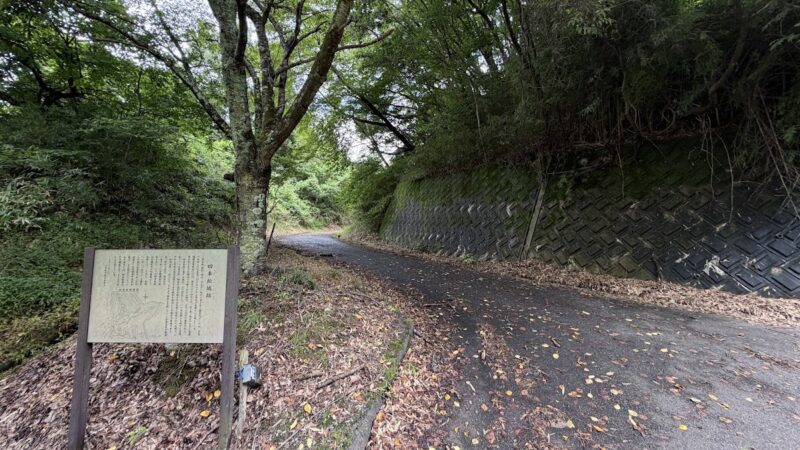
The castle ruins can be accessed via the path leading to Atago Shrine, allowing visitors to view the remains of the main enclosure, baileys, and stone walls. Information boards are also installed, providing information about the castle’s history and the “Nade-giri” incident.
In recent years, the number of visitors from castle enthusiasts and history buffs has increased, and the site is attracting attention as a valuable historical site that conveys the remains of a Sengoku period mountain castle and its tragic history.
Highlights of Kotemori Castle
Atago Shrine and Main Enclosure Ruins
The biggest highlight when visiting Kotemori Castle ruins is Atago Shrine, located on the site of the main enclosure. The path to the shrine is well-maintained, making it relatively easy to climb.
From the main enclosure, you can enjoy a panoramic view of the surrounding landscape, appreciating the castle’s excellent location. On a clear day, you can see Mount Adatara and the Azuma mountain range, allowing you to imagine that the warlords of the Sengoku period also gazed upon the same scenery.
Remains of Stone Walls
The stone walls remaining throughout the castle ruins are an important highlight of Koteshimori Castle. These simple, rough-hewn stone walls are valuable relics that convey the castle-building techniques of the Sengoku period.
In particular, the stone walls around the main enclosure are relatively well-preserved, allowing us to understand the defensive structure of the time. Standing before the stone walls, one can almost picture the Date army attacking the castle and the castle soldiers who desperately defended it.
Arrangement of Enclosures
The enclosures surrounding the main enclosure are also not to be missed. The stepped arrangement of the enclosures demonstrates a defensive structure unique to mountain castles, making them valuable teaching materials for learning about castle architecture.
The differences in elevation and cut slopes between the enclosures remain clearly visible, allowing us to observe the topographical modifications of the time. From these remains, it is clear that Koteshimori Castle was not merely a fort, but a full-fledged mountain castle with a planned design.
Historical Information Boards
At the castle ruins, there are information boards explaining the history of Koteshimori Castle and the “Nade-giri” incident. These boards are helpful in understanding the historical background of the castle and the situation during the Sengoku period (Warring States period).
In particular, the explanation of the “Nade-giri” incident is an important source of information that conveys the reality and tragedy of warfare during the Sengoku period.
Access and Visiting Guide
Access by Public Transportation
Using Trains and Buses
- Get off at JR Tohoku Main Line “Nihonmatsu Station”
- Take the Fukushima Kotsu Bus “Towa Elementary School Line” (approximately 45 minutes, fare approximately 500 yen)
- Get off at “Miyanohira” bus stop
- Approximately 15-minute walk from the bus stop to the Atago Shrine entrance
- Approximately 15-minute walk from the Atago Shrine entrance to the main enclosure
Since the number of buses is limited, it is recommended to check the timetable in advance. It is also important to check the return bus schedule.
Access by Car
If using the expressway
- Approximately 30 minutes from the Tohoku Expressway “Nihonmatsu IC”
- Proceed towards Towa on National Route 459
- Follow the signs for the Harimichi area
Parking
- There are several parking spaces near the entrance to the Atago Shrine approach
- Parking for large vehicles is difficult, so please check in advance
Precautions when visiting the castle
Clothing and Equipment
- The path to the castle is a mountain trail, so comfortable walking shoes are essential
- In summer, bring insect repellent, a hat, and drinking water
- In winter, be careful of snow and ice
Estimated Time Required
- Round trip from the parking lot to the main enclosure: Approximately 30-40 minutes
- If you want to thoroughly view the remains: Approximately 1 hour
Other Precautions
- The castle ruins are in a forest, so the ground can be slippery on bad weather days
- Be aware that there are areas with poor cell phone reception
- It is recommended to use the restroom beforehand
- Please take your trash with you.
Best Season to Visit
Spring (April-May)
- Beautiful fresh greenery and mild weather, ideal for visiting the castle.
- Enjoy wildflowers.
Autumn (October-November)
- Beautiful autumn foliage and stunning scenery.
- Moderate temperature for easy walking.
Summer (June-September)
- Dense greenery, but beware of heat and insects.
- Early morning visits are recommended.
Winter (December-March)
- Snowfall may make visiting the castle difficult.
- Check local conditions before visiting.
Nearby Tourist Spots
Obama Castle Ruins
Obama Castle Ruins, the main castle of Koteshimori Castle, is located in the Obama district of Nihonmatsu City. As the base of the Ouchi clan, it had a close relationship with Koteshimori Castle. While only a few remains today, visiting both Koteshimori Castle and Obama Castle together allows you to understand the Ouchi clan’s castle network. ### Nihonmatsu Castle (Kasumiga Castle)
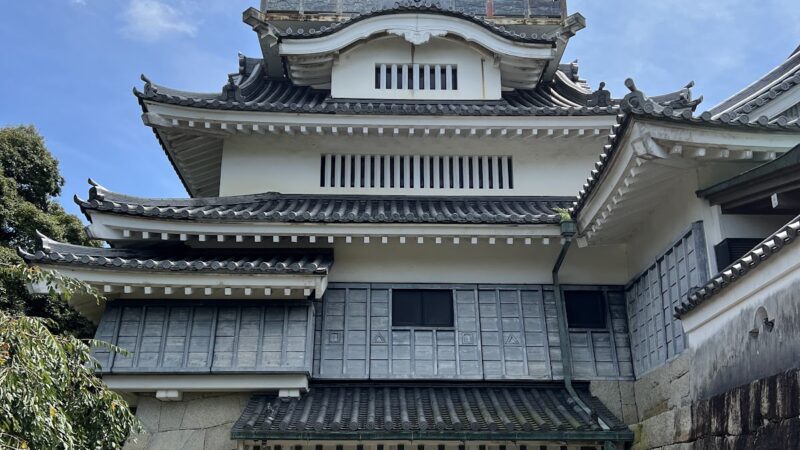
Nihonmatsu Castle, a representative castle of Nihonmatsu City, is about a 40-minute drive from Kotemori Castle. Its remains from the Sengoku and Edo periods are well-preserved, and it has been selected as one of Japan’s Top 100 Castles. The view from the main keep is magnificent, and it is also known as a famous cherry blossom viewing spot.
Adachigahara Furusato Village
This facility, where you can learn about the history and culture of Nihonmatsu City, is about a 35-minute drive from Kotemori Castle. It features exhibits related to the legend of the Adachigahara demon hag and has a wealth of local historical materials.
Dake Onsen
This hot spring resort is located at the foot of Mount Adatara, about a 40-minute drive from Kotemori Castle. It is ideal for relaxing after visiting the castle, and there are many accommodations available.
The Significance of Visiting Kotemori Castle
Kotemori Castle is not a castle with magnificent stone walls or a vast layout. However, this castle bears the vivid history of the Sengoku period, making it a valuable historical site where one can simultaneously feel both the light and shadow of the hero Date Masamune.
By visiting this castle, the stage of the tragic “Nade-giri” (massacre), one can truly grasp the reality of warfare in the Sengoku period, the ruthless decisions of the warlords, and the existence of those who became victims. Koteshimori Castle quietly reminds us that history is not only about the victors, but also about the losers and the victims.
Standing on the castle ruins, feeling the wind and gazing at the surrounding scenery, we can reflect on events that occurred more than 400 years ago. Learning history is not just about knowing the facts of the past, but also about using our imagination to envision the lives of the people who lived there.
Koteshimori Castle is a quiet yet powerful place that makes such a dialogue with history possible.
Summary
Koteshimori Castle is a Sengoku period mountain castle remaining in Nihonmatsu City, Fukushima Prefecture, and is etched in history as the stage of the “Nade-giri” carried out by Date Masamune in 1585. This castle, which functioned as a branch castle of the Ouchi clan, fell due to Masamune’s ruthless strategy, resulting in the tragic massacre of all approximately 800 people inside.
Currently, the castle ruins feature the Atago Shrine on the site of the main keep, and the remains of the stone walls and baileys are well-preserved. While access by public transport is somewhat inconvenient, it is relatively easy to visit by car. The path to the castle is well-maintained, and it takes about 30 minutes to reach the main keep.
Visiting Koteshimori Castle is not simply about viewing castle ruins; it’s an opportunity to touch upon the dark side of Sengoku period history and reflect on the realities of war. It is also an important historical site for understanding the multifaceted nature of the Sengoku warlord Date Masamune.
When visiting Fukushima Prefecture, be sure to visit Koteshimori Castle and take some time to quietly confront history. There, the raw truth of the Sengoku period, not found in textbooks, awaits you.