Iwahara Castle (Minamiashigara City, Kanagawa Prefecture) Complete Guide | A Thorough Explanation of the History of the Omori Clan and the Highlights of the Castle Ruins
Located in Minamiashigara City, Kanagawa Prefecture, Iwahara Castle is a castle associated with the Omori clan, who ruled the western Sagami region from the Muromachi period to the Sengoku period. Although most of the site has been converted into residential and agricultural land, remnants such as the western lookout enclosure, earthworks, and dry moats remain and are preserved as a historical site of Minamiashigara City. This article provides a detailed explanation of Iwahara Castle’s history, the lineage of the Omori clan who built it, the castle’s structure, the remnants that can be visited today, and access methods.
Basic Information on Iwahara Castle
Iwahara Castle is a flatland castle built on the southern slope of a hill approximately 60 meters above sea level, extending eastward from Mt. Myojin in the outer rim of the Hakone caldera. It is strategically located overlooking the Ashigara Plain, and multiple enclosures (kuruma) were arranged within an area of approximately 250 meters east-west and 150 meters north-south.
Location: 1039 Iwahara, Minamiashigara City, Kanagawa Prefecture
Former Province: Sagami Province
Castle Classification: Hilltop Castle
Builder: Omori Yoriharu
Year of Construction: Around Bunchū 3 / Ōan 7 (1374)
Year of Abandonment: Meiō 4 (1495)
Main Lords: Omori Clan
Remains: Enclosures, earthworks, dry moats
Designated Cultural Property: Minamiashigara City Designated Historic Site (Iwahara Castle Ruins)
History of Iwahara Castle and the Genealogy of the Omori Clan
Rise of the Omori Clan and Control of Western Sagami
The Omori clan, who built Iwahara Castle, was a family that wielded power in the western Sagami region from the Nanboku-chō period to the early Sengoku period. There are various theories regarding the origins of the Omori clan, but it is generally believed that a branch of the Omori clan, based in Suruga Province, expanded into Sagami Province.
During the Muromachi period, it is said that Omori Yoriharu built Iwahara Castle around 1374. The Omori clan served as important retainers of the Ogigayatsu Uesugi clan and were entrusted with the control of western Sagami Province. Especially during the time of Omori Ujiyori, he wielded considerable power, comparable to Ota Dokan, and was known as a “famous general of western Sagami.”
The Odawara Castle Era and Omori Ujiyori
The Omori clan’s golden age was when they were based at Odawara Castle. From Odawara Castle, the Omori clan governed the western Sagami region, establishing a strong system of control throughout the Ashigara Plain.
Omori Ujiyori was known as a general skilled in both military and literary arts, and achieved numerous military successes as an important retainer of the Ogigayatsu Uesugi clan. However, after later relinquishing the family headship and the position of lord of Odawara Castle to his son, Omori Saneyori, he himself became a monk, taking the name “Kiseian Myosho” or “Kiseian Myosho,” and retired to Iwahara Castle.
The Invasion of Hojo Soun and the Downfall of the Omori Clan
In 1495 (Meio 4), an incident occurred in which Ise Sozui (later Hojo Soun) seized Odawara Castle. At this time, Omori Saneyori lost Odawara Castle, and the power of the Omori clan rapidly declined. While the theory that Hojo Soun seized Odawara Castle through stratagem is well-known, there are various theories regarding the actual circumstances.
After losing Odawara Castle, the Omori clan is thought to have either come under the control of the Hojo clan or been expelled from Sagami Province. Iwahara Castle is believed to have been abandoned around 1495 (Meiō 4), and thereafter came under the control of the Hōjō clan.
Layout and Structure of Iwahara Castle
Castle Arrangement and Scale
Iwahara Castle is a flatland castle with multiple enclosures arranged within an area of approximately 250 meters east-west and 150 meters north-south. The main enclosures were as follows:
Main Enclosure (Main Castle Enclosure): The central enclosure of the castle, now developed into residential land.
Second Enclosure: An enclosure adjacent to the main enclosure, also undergoing residential development.
Third Enclosure: An enclosure located further out.
West Lookout Enclosure: A lookout post adjacent to the west side of the main enclosure, currently the only area preserved as a historical site.
Hachiman Shrine Enclosure at the Northeast End: An enclosure located at the northeast end of the castle, still retaining some of the castle’s atmosphere.
These enclosures were separated by dry moats, enhancing their defensive capabilities. Taking advantage of its location overlooking the Ashigara Plain, the design functioned for both surveillance and defense.
Features of Defensive Facilities
Iwahara Castle had the following defensive facilities:
Dry Moats (Horizontal Moats): Moats dug to separate each enclosure, serving to prevent enemy intrusion.
Earthworks: Earthen defensive walls built around the enclosures; parts still remain today.
Watchtower: A watchtower known as the West Watchtower, an important base for monitoring surrounding developments.
While the layout is standard for a medieval hilltop castle, its distinctive feature is its location overlooking the Ashigara Plain, an important transportation route.
Current Highlights of Iwahara Castle Ruins
West Watchtower Ruins (Historic Site Preservation Area)
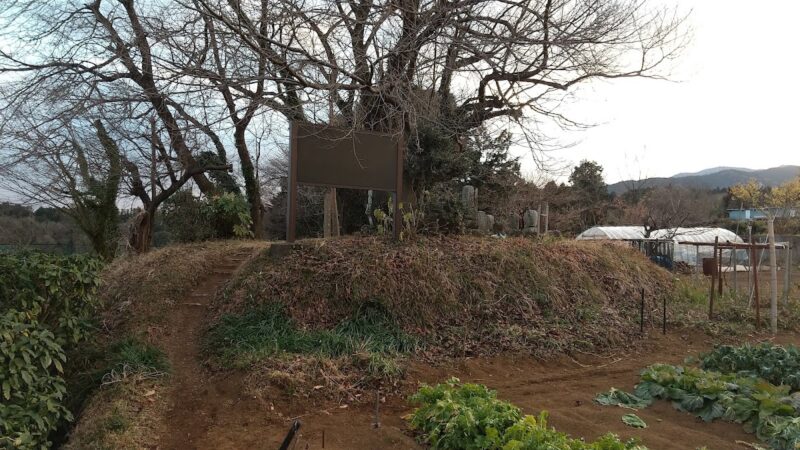
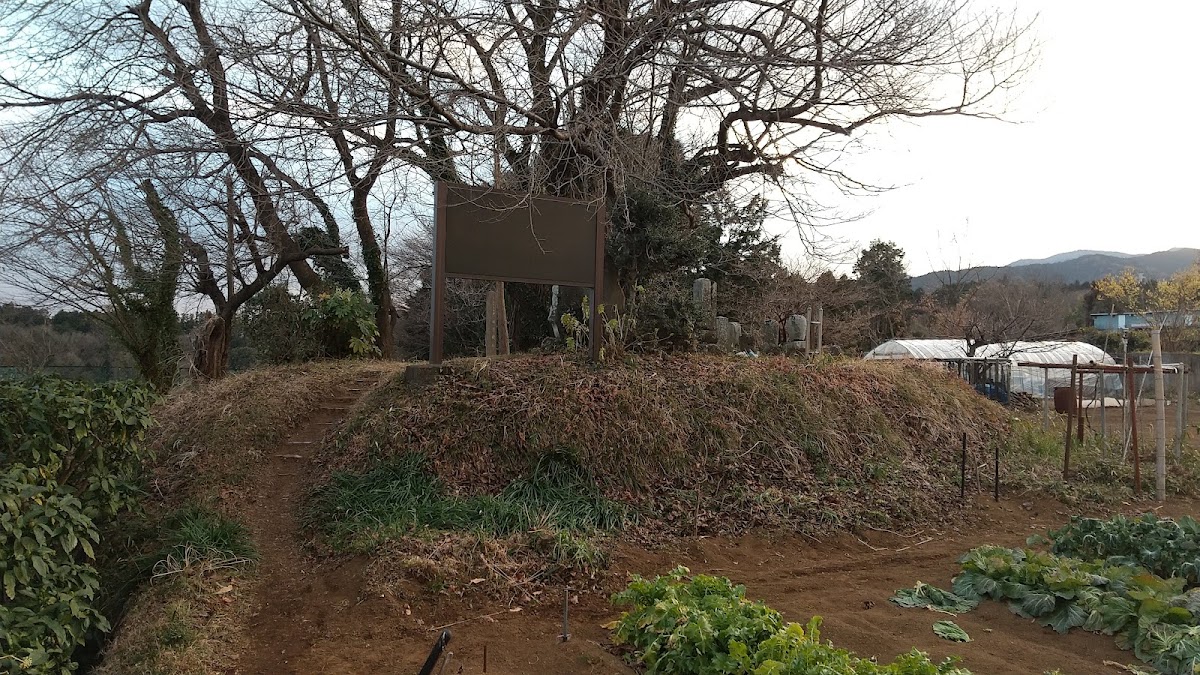
The West Watchtower Ruins are the only part of the Iwahara Castle ruins preserved as a historical site. This lookout post, located adjacent to the west side of the main enclosure, was once an important facility for monitoring the surrounding area. Now, with its restored grounds and information boards, it’s a valuable place to experience the atmosphere of the castle ruins.
Part of the earthworks remain at the western lookout enclosure, conveying the remnants of a medieval castle. In this quiet, tree-covered space, you can stroll while imagining the castle’s former appearance.
Memorial Towers of the Omori Clan
Within a portion of the enclosure ruins of Iwahara Castle, memorial towers for the Omori clan, including the castle lord Omori Ujiyori (Yorisuan), have been erected. These memorial towers are important historical sites that convey the role the Omori clan played in this area and their history to future generations.
The area around the memorial towers maintains a tranquil environment, allowing visitors to feel the weight of history. It’s a place where you can reflect on the days Omori Ujiyori spent here after his retirement.
Hachimangu Enclosure and Surrounding Remains
The Hachimangu Enclosure, located at the northeastern end of the castle, is one of the few places that retains the atmosphere of a castle. While it has also been affected by residential development, the topography and layout allow us to infer the former layout of the enclosure.
Around the Hachimangu Enclosure, we can find faint traces of dry moats and remnants of earthworks, making it an interesting exploration spot for castle enthusiasts.
Main, Second, and Third Enclosures Now Developed by Residential Development
Unfortunately, the main, second, and third enclosures have been almost completely developed into residential areas, and very little of the castle’s atmosphere remains. Because these areas are now residential and agricultural land, it is difficult to confirm any remains.
However, it is possible to infer the former boundaries of the enclosures from the elevation differences of the terrain and the layout of roads. Castle researchers and history enthusiasts are attempting to reconstruct the original layout by carefully observing the local topography.
Historical Background of Iwahara Castle and its Surroundings
The Role of the Omori Clan in Western Sagami
The Western Sagami region, ruled by the Omori clan, was a crucial transportation route connecting Kamakura and Hakone, making it a strategically important area. The Ashigara Plain was known since ancient times as a key point on the Tokaido road, a vital transportation hub connecting the Kanto and Tokai regions.
Iwahara Castle was built in a location overlooking the Ashigara Plain and functioned as a base for monitoring and defending the road. Through its control of this region, the Omori clan contributed to the expansion of the Ogigayatsu Uesugi clan’s power.
Relationship with Odawara Castle
Iwahara Castle and Odawara Castle, the Omori clan’s base, are approximately 15 kilometers apart. It is believed that Omori Ujiyori chose Iwahara Castle as his retirement castle because of its proximity to Odawara Castle and its location that allowed him to monitor the strategically important Ashigara Plain.
Even after the loss of Odawara Castle, historical sites associated with the Omori clan remain around Iwahara Castle, demonstrating the significant influence the Omori clan had in this region.
Iwahara Castle during the Hojo Clan Era
It is believed that Iwahara Castle came under the control of the Hojo clan after 1495 (Meio 4), but there are no clear records of its subsequent use. Since the Hojo clan expanded their power throughout the Kanto region from their base at Odawara Castle, it is presumed that smaller castles like Iwahara Castle were either abandoned or used only as subsidiary castles.
Access and Visiting Information
Access by Public Transportation
Nearest Station: Iwahara Station or Tsukahara Station on the Izuhakone Railway Daiyuzan Line
Access from Iwahara Station: It’s about a 10-minute walk to the site of the West Lookout Enclosure. Exit the station and head south; after passing through the residential area, you will reach the historical site preservation area.
Access from Tsukahara Station: Approximately 10 minutes on foot. The travel time is roughly the same as the route from Iwahara Station.
The Izuhakone Railway Daiyuzan Line connects Odawara Station to Daiyuzan Station, and Iwahara Station is approximately 20 minutes from Odawara Station. Odawara Station is a major station served by the JR Tokaido Line, JR Tokaido Shinkansen, and Odakyu Odawara Line, making it conveniently accessible from Tokyo.
Access by Car
Tomei Expressway: Approximately 15 minutes from Oi-Matsuda Interchange
Odawara-Atsugi Road: Approximately 20 minutes from Odawara-Higashi Interchange
Parking: There is no dedicated parking lot around the Nishi-Momokaku ruins. We recommend using nearby coin-operated parking lots or public transportation.
Notes for Visitors
Most of the Iwahara Castle ruins have been developed into residential areas. Please note the following points when visiting:
- Do not trespass on private property.
- Behave quietly in residential areas and be considerate of residents’ lives.
- The West Lookout Enclosure is preserved as a historical site, but there are no management facilities or permanent staff.
- You can freely explore the site, referring to the information boards and explanatory signs.
- We recommend visiting during daylight hours.
Tourist Attractions Around Iwahara Castle
Minamiashigara City Local History Museum
The Minamiashigara City Local History Museum, which exhibits materials related to Iwahara Castle and the Omori clan, is recommended to visit before or after visiting the castle ruins. You can learn about the local history and culture, deepening your understanding of Iwahara Castle.
Daiyuzan Saijoji Temple
This ancient Soto Zen temple is accessible by bus from Daiyuzan Station, the terminal station of the Izuhakone Railway Daiyuzan Line. Known for its Tengu legend, it is a sacred site with many temple buildings within its vast grounds. It is a popular spot visited by tourists in conjunction with a visit to Iwahara Castle.
Nature of the Ashigara Plain
From the Iwahara Castle ruins, you can enjoy beautiful views of the Ashigara Plain. On clear days, you can even see Mount Fuji in the distance, and enjoy the changing seasons. Hiking trails are well-maintained in the surrounding area, making it possible to combine nature walks with a tour of the castle ruins.
Odawara Castle
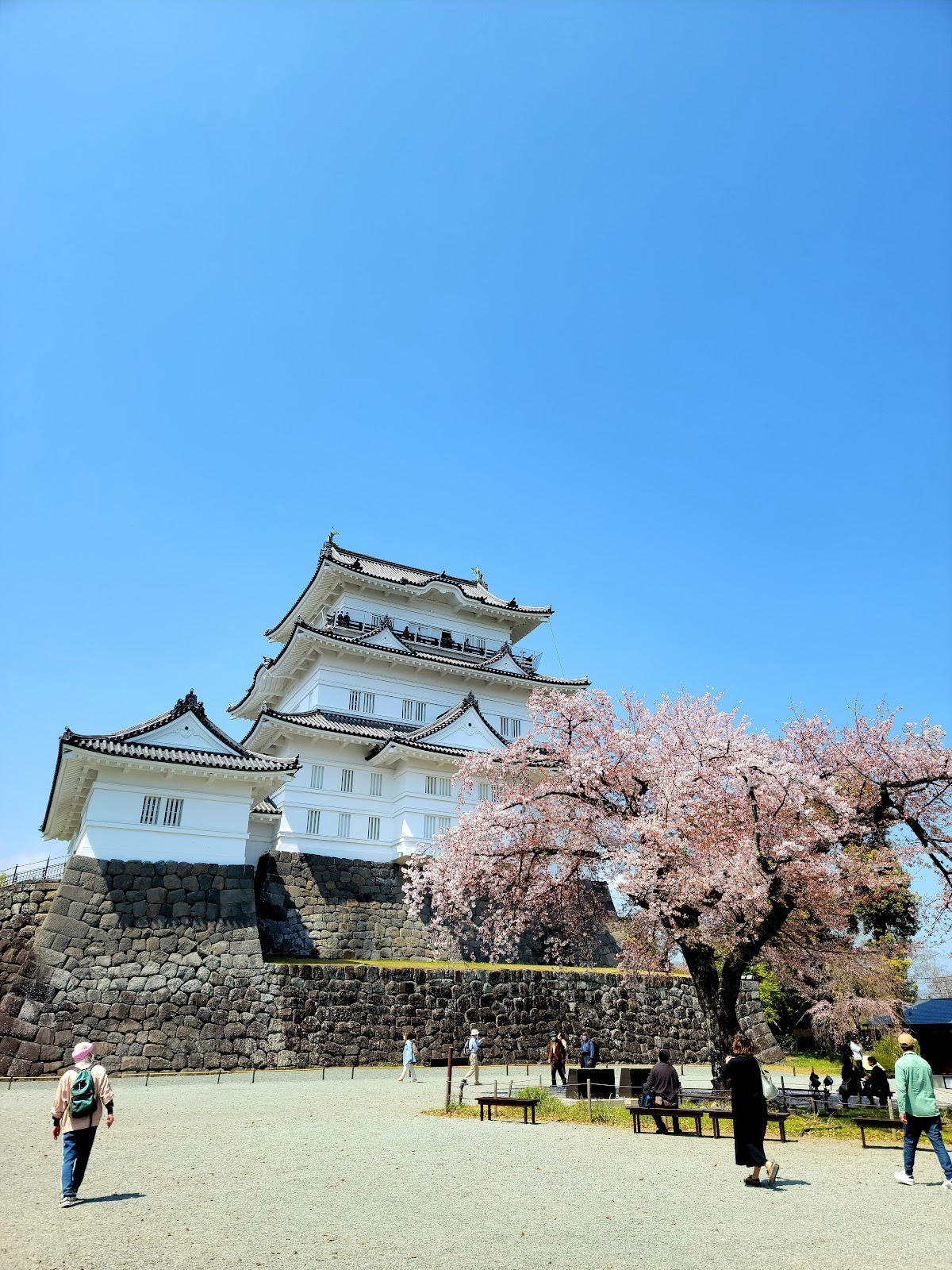
Odawara Castle, formerly the base of the Omori clan and later the residence of the Hojo clan, is located approximately 15 kilometers from Iwahara Castle. Currently, it features a reconstructed castle tower and a history museum, making it a tourist spot where you can experience the history of the Sengoku period. A historical exploration route visiting both Iwahara Castle and Odawara Castle is also recommended.
Cultural Value of Iwahara Castle
Preservation as a Designated Historic Site of Minamiashigara City
The Iwahara Castle ruins are protected as a designated historic site of Minamiashigara City. Preservation activities are being carried out, centered around the Nishimonomikuruwa ruins, and it is cherished as a local historical heritage site.
The city’s board of education has installed information boards and regularly maintains the site through activities such as grass cutting, ensuring a safe environment for visitors.
Significance in Medieval Castle Research
Iwahara Castle is a well-executed example of a medieval castle from the Muromachi period to the early Sengoku period. It is a typical example of a hilltop castle built by the local lord, the Omori clan, and has attracted attention from castle researchers.
Particularly interesting is its character as a retirement castle, which differs from castles primarily built for combat. The history of Omori Ujiyori spending time in this castle after becoming a monk provides valuable insight into the retirement life of medieval samurai.
Importance in Regional History
Iwahara Castle is an indispensable historical site for understanding the medieval history of Minamiashigara City and the Nishisagami region. It symbolizes a turning point in history, from the rule of the Omori clan to that of the Hojo clan, and is an important element in shaping the region’s identity.
Local history enthusiasts and researchers continue their investigations and studies, and new discoveries and insights are expected.
Best Season to Visit Iwahara Castle
Spring (March-May)
Spring is the perfect season for exploring the castle ruins, with its beautiful fresh greenery and mild weather. The surrounding scenery becomes even more vibrant during cherry blossom season, allowing visitors to enjoy both historical exploration and flower viewing. The rural landscape of the Ashigara Plain also begins to change color with the arrival of spring, offering a beautiful view.
Summer (June-August)
Summer brings lush greenery, and the trees at the castle ruins are in full bloom. However, precautions against the heat and insects such as mosquitoes are necessary. Visiting in the cooler hours of early morning or evening is recommended. During the rainy season, the ground can become muddy, so check the weather forecast before visiting.
Autumn (September-November)
Autumn is one of the best seasons for exploring the castle ruins, with its beautiful autumn foliage. Especially around November, the weather is stable, and you can enjoy the view of Mt. Fuji in the clear air. It’s an excellent time to enjoy historical exploration and autumn foliage at the same time.
Winter (December to February)
Winter is a season when the air is clear, and the views of the Ashigara Plain and the distant mountains are particularly beautiful. While cold weather precautions are necessary, there are fewer tourists, allowing for a quiet visit. On clear days, Mt. Fuji looks especially beautiful, making it a recommended season for photography.
Summary: Historical Significance and Modern Value of Iwahara Castle
Iwahara Castle in Minamiashigara City, Kanagawa Prefecture, is a castle associated with the Omori clan, who ruled the western Sagami region from the Muromachi period to the early Sengoku period. Although most of the site has now been developed into residential areas, historical sites such as the remains of the western lookout enclosure and the memorial tower of the Omori family remain and are preserved as important cultural properties of Minamiashigara City.
Iwahara Castle, with its distinctive character as the retirement castle of Omori Ujiyori, a renowned general of western Sagami Province, is a valuable historical site for understanding the life and retirement practices of medieval samurai. The history of the Omori clan, who lost Odawara Castle and were replaced by Hojo Soun, symbolizes the power shifts of the Sengoku period and continues to attract the interest of many history enthusiasts.
With easy access—approximately a 10-minute walk from Iwahara Station on the Izuhakone Railway Daiyuzan Line—it can be combined with nearby tourist attractions such as Odawara Castle and Daiyuzan Saijoji Temple for a historical exploration. You can enjoy a fulfilling time reflecting on the historical romance from the medieval to the Sengoku period while gazing at the beautiful scenery of the Ashigara Plain.
Visiting the Iwahara Castle ruins allows you to experience firsthand the local history not found in textbooks and the era in which the local lords lived. Even in modern times, with increasing urbanization, the preserved West Lookout Enclosure and memorial tower remain valuable historical sites that teach us the weight of history and the importance of preserving it.