Suemori Castle (Chikusa Ward, Nagoya City) | A Thorough Explanation of the History and Remains of the Hilltop Castle Built by Oda Nobuhide
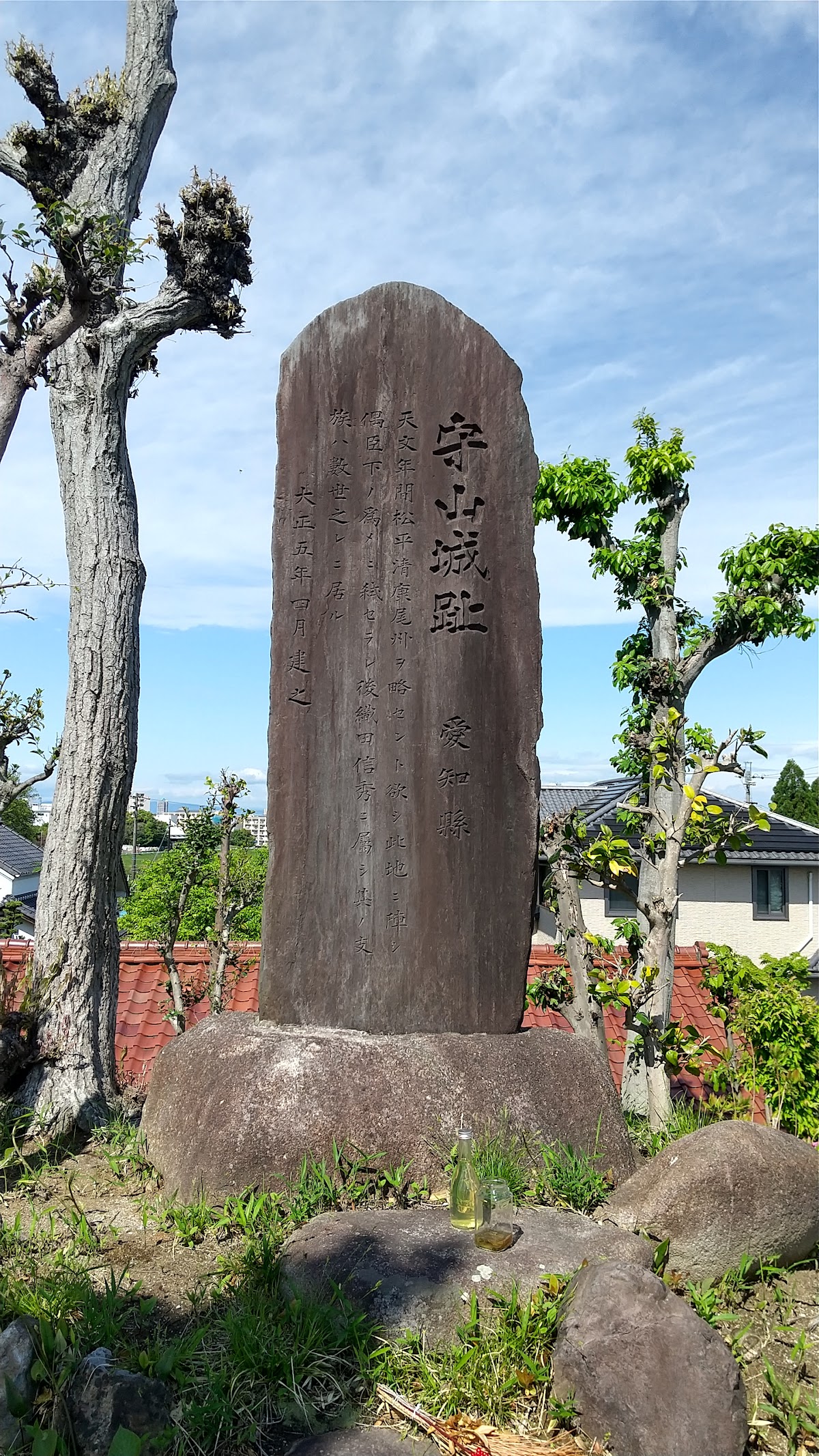
Suemori Castle (Suemori-jō) is a Japanese castle from the late Muromachi period, located in Shiroyama-chō, Chikusa Ward, Nagoya City, Aichi Prefecture. It is also written as Suemori Castle due to its auspicious name, and was built on the foot of the Higashiyama Hills in Suemori Village, Narumi Manor, Aichi District, Owari Province. It was built by Oda Nobuhide in 1548 (Tenbun 17), and is known to have later become the residence of Oda Nobuyuki (Nobukatsu), the younger brother of Oda Nobunaga. Currently, the site is within the grounds of Shiroyama Hachimangu Shrine, and the remains such as dry moats and earthworks are well preserved.
Basic Information on Suemori Castle
The basic information on Suemori Castle is summarized below.
Common Name/Alternate Name: Suemori Castle
Location: Shiroyama-cho, Chikusa-ku, Nagoya City, Aichi Prefecture (formerly Suemori Village, Narumi-sho, Aichi District, Owari Province)
Former Province: Owari Province
Classification/Structure: Hilltop Castle
Keep Structure: None (Keeps did not exist in castles of that era)
Builder: Oda Nobuhide
Year of Construction: Tenbun 17 (1548)
Main Lords: Oda Nobuhide, Oda Nobuyuki (Nobukatsu)
Year of Abandonment: Around Koji 3 (1557)
Remains: Dry moat, earthworks, baileys, cliffs
Current Status: Within the grounds of Shiroyama Hachimangu Shrine, park
Location: On a hill approximately 44 meters above sea level, relative height approximately 20 meters
Usage: Religious facility (shrine), public recreation area
History of Suemori Castle
Background of the Castle’s Construction and Oda Nobuhide’s Strategy
In 1548 (Tenbun 17), Oda Nobuhide, a Sengoku daimyo of Owari Province, built Suemori Castle on the edge of the Higashiyama Hills. Nobuhide had previously resided at Furuto Castle (Naka Ward, Nagoya City), but at this time, his conflict with Imagawa Yoshimoto, who was advancing his invasion of Mikawa Province, was intensifying.
Nobuhide was also at war with Saito Dosan of Mino Province, but he formed an alliance by marrying Dosan’s daughter, Nohime, to his eldest son, Oda Nobunaga, and was compelled to strengthen his defenses against the Imagawa. It is believed that the construction of Suemori Castle, approximately 5 kilometers east of Furuto Castle, was strategically intended as a defensive base against Imagawa forces from the Mikawa region.
Suemori Castle was a flatland castle utilizing the natural terrain of the Higashiyama Hills, built on a hill 44 meters above sea level. This location offered a panoramic view of the surrounding area, making it militarily advantageous.
The Later Years and Death of Oda Nobuhide
Oda Nobuhide moved his residence to Suemori Castle, but died there on March 3, 1552 (Tenbun 21), just three years after its construction. Nobuhide passed away at the young age of 42, and the headship of the Oda family was inherited by his eldest son, Oda Nobunaga.
With Nobuhide’s death, the Oda family entered an era of internal power struggles.
The Castle’s Residence under Oda Nobuyuki (Nobukatsu)
After Nobuhide’s death, Suemori Castle became the residence of his second son, Oda Nobuyuki (Nobukatsu). Nobuyuki enjoyed the favor of his mother, Tsuchida Gozen, and there were factions among the retainers who supported him as the head of the Oda family. In 1556 (Kōji 2), Nobuyuki, along with his chief retainers Shibata Katsuie and Hayashi Hidetada, rebelled against his brother Nobunaga. This was the Battle of Inō. However, Nobuyuki’s forces were defeated in this battle, and he was temporarily pardoned by Nobunaga through the intercession of his mother, Tsuchida Gozen.
Assassination of Oda Nobuyuki and Abandonment of the Castle
In 1557 (Kōji 3), Nobuyuki again plotted to rebel against Nobunaga. However, this plan was discovered by Nobunaga through a betrayal by Shibata Katsuie. Nobunaga summoned Nobuyuki to Kiyosu Castle under the pretense of illness and murdered him.
It is believed that Suemori Castle was abandoned as a result of this incident. It has been suggested that the castle ruins may have been temporarily used during the time of Oda Nobuo (Nobunaga’s second son), but the details are unknown.
Although Suemori Castle was only operational for a short period of about 10 years, it holds a significant place in the history of Owari Province during the Sengoku period as the stage for internal conflicts within the Oda family.
Structure of Suemori Castle
Layout and Utilization of Topography
Suemori Castle is a flatland castle built on a hill approximately 44 meters above sea level at the end of the Higashiyama Hills. With a relative height of about 20 meters, it offers a vantage point overlooking the surrounding plains.
The castle’s layout skillfully utilizes the natural terrain, with the main enclosure (honmaru) at the top of the hill, surrounded by multiple baileys. It is believed that the layout was advantageous for defense, taking advantage of the Higashiyama Hills’ topography.
Arrangement of the Main Enclosure and Baileys
The current location of the main hall of Shiroyama Hachimangu Shrine is estimated to be the site of the former main enclosure (honmaru). Multiple baileys were arranged in a stepped pattern around this main enclosure.
The enclosures were separated by steep, artificially carved slopes, a structure designed to prevent enemy intrusion. The height of the slopes varied depending on the location, but they were built steeply to enhance their defensive effectiveness.
Structure of the Dry Moat
The most distinctive feature of Suemori Castle is the surviving dry moat, which is 7-8 meters deep. This dry moat played a crucial role in the castle’s defense.
The dry moat was positioned to surround the main enclosure, limiting enemy intrusion routes and enabling a more advantageous battle for the defenders. Even today, the remains of this deep dry moat can be seen within the grounds of Shiroyama Hachimangu Shrine, making it a valuable historical site that allows us to experience the castle’s structure at the time.
The bottom of the dry moat was not flat; some sections had slopes to facilitate drainage. Furthermore, the moat walls were carved at a steep angle, making climbing difficult.
Earthworks and Defensive Structures
Along with the dry moat, earthworks also played an important role in the castle’s defense. Earthen ramparts were built along the edges of the baileys, serving as a shield to protect the castle from enemy arrows and firearms.
Some of the ramparts still remain today, and although their original height is no longer fully preserved, traces of them can still be seen. It is believed that fences or walls were built on top of the ramparts, providing a higher level of defense.
Structure of the Entrance (Koguchi)
The entrance to the castle, the koguchi, was one of the most important defensive structures. While many details of the koguchi structure at Suemori Castle remain unknown, it is possible that, like typical Sengoku period castles, it featured a winding structure that prevented direct advancement, or a masugata koguchi (square-shaped entrance) that allowed attacks from both sides.
Wells and Living Facilities
It is believed that wells necessary for daily life were located within the castle. Securing water within the castle was essential in preparation for a siege. Traces of wells may still exist within the current grounds of Shiroyama Hachimangu Shrine, but further detailed investigation is needed.
Wells and Living Facilities
Furthermore, it is presumed that buildings such as the lord’s residence, vassal quarters, and armory were located within the castle grounds, but no remains of these buildings exist today.
Current Status of Suemori Castle
Development as Shiroyama Hachimangu Shrine
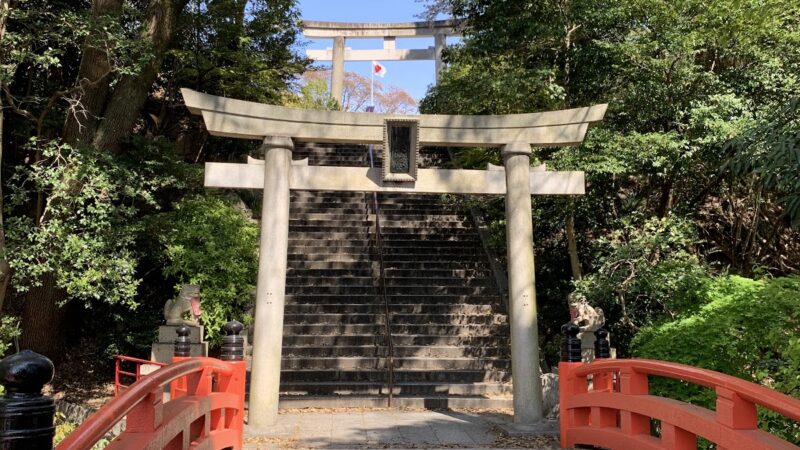
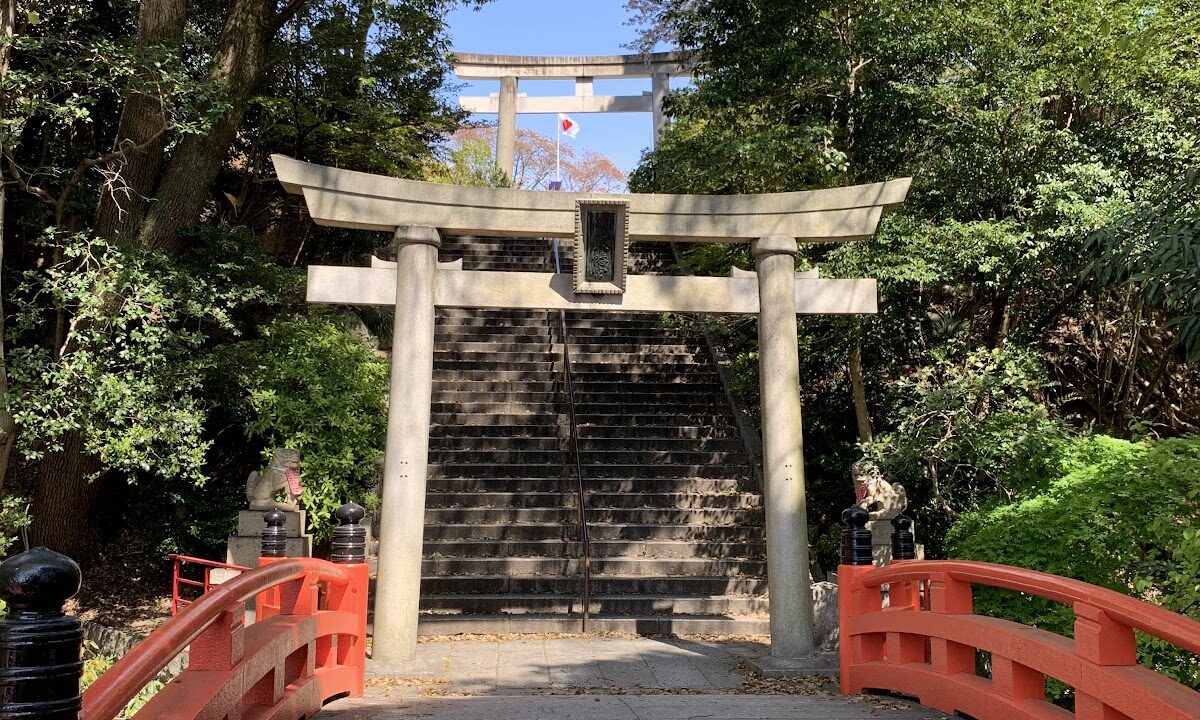
Currently, the site of Suemori Castle is the grounds of Shiroyama Hachimangu Shrine. Shiroyama Hachimangu Shrine is a shrine founded during the Meiji era, and its grounds are laid out to utilize the topography of the castle site.
The main hall of the shrine is built on the site of the former main enclosure, and climbing the approach to the shrine allows visitors to experience the topography of the castle in its heyday. The grounds are well-maintained and used as a place of relaxation for citizens, as well as for events such as New Year’s visits and Shichi-Go-San (a traditional Japanese rite of passage for children).
Preservation of Remains
The remains of Suemori Castle are well-preserved within the grounds of Shiroyama Hachimangu Shrine. In particular, the dry moat retains a depth of 7-8 meters, making it a valuable example of a castle ruin from the Sengoku period.
The dry moat is preserved as part of the shrine grounds, and fences have been erected to ensure safe viewing. Parts of the cliffs and earthworks can also be seen, making it a fascinating historical site for castle enthusiasts.
The layout of the baileys can be deciphered from the topography, allowing visitors to imagine the former castle layout while strolling through the site. However, some parts have been altered by the shrine’s buildings and facilities, so it is not preserved in its complete form.
Use as a Park
The area around Shiroyama Hachimangu Shrine has been developed as a park, used by local residents for walks and recreation. During cherry blossom season, it is bustling with visitors, creating a space where historical remains and nature harmonize.
Playground equipment is also installed within the park, making it a children’s play area. It is a good example of historical heritage coexisting with a community space.
Information Boards and Explanatory Facilities
Information boards provided by Nagoya City are installed at the castle site, explaining the history and remains of Suemori Castle. Visitors can refer to these boards while exploring the castle site.
However, if you would like more detailed information, we recommend that you prepare in advance by reading relevant books or visiting websites.
Access to Suemori Castle
Access by Public Transportation
The nearest station to Suemori Castle Ruins (Shiroyama Hachimangu Shrine) is Kakuozan Station on the Nagoya Municipal Subway Higashiyama Line. It is very convenient to access by public transportation, being approximately a 5-minute walk from Kakuozan Station.
Exit from Exit 2 of Kakuozan Station, walk through the Kakuozan Shopping Street, and head northeast to reach the entrance to the Shiroyama Hachimangu Shrine approach. There are signs along the way, so even first-time visitors should be able to arrive without getting lost.
From Nagoya Station, it takes about 15 minutes to reach Kakuozan Station on the Higashiyama Subway Line. It is also easily accessible from major tourist attractions in Nagoya City.
Access by Car
If visiting by car, the nearest exit is the Fukiage exit on the Nagoya Expressway Route 2 Higashiyama Line. It takes about 10 minutes from the exit to the shrine.
Shiroyama Hachimangu Shrine has a parking lot for visitors. However, during busy periods such as New Year’s Day and festivals, the parking lot may fill up, so using public transportation is recommended.
Nearby Tourist Attractions
Near the Suemori Castle Ruins is the renowned Kakuozan Nittaiji Temple. Nittaiji Temple is the only Buddhist temple in Japan that does not belong to any particular sect, and it houses Buddhist relics donated by the King of Thailand. The approach to the temple is lined with unique cafes and shops, making it a pleasant place to stroll.
Also, in eastern Nagoya, there is Higashiyama Zoo and Botanical Gardens, making it suitable for family sightseeing. A day trip exploring the eastern Nagoya area, including a visit to the Suemori Castle Ruins, is also recommended.
Highlights and Points to Note When Visiting Suemori Castle
The Impressive Dry Moat
The biggest highlight of Suemori Castle is the dry moat, which is 7-8 meters deep. It is rare to find a dry moat in such good condition in a modern urban area, making it a valuable historical site that allows you to experience the castle structure of the Sengoku period. Standing at the edge of the dry moat, one is struck by its depth and steep walls. The sheer scale of the civil engineering work, accomplished with the technology of the time, demonstrates the advanced castle construction techniques of the Sengoku period.
Layout of the Enclosures and Topography
Walking through the grounds of Shiroyama Hachimangu Shrine, paying attention to the elevation changes and topographical variations allows one to discern the former layout of the enclosures. The stepped arrangement from the main enclosure to the lower enclosures enhanced defensive capabilities and was also a clever use of limited land.
Ascending the approach to the shrine, observing the relative positions of each enclosure and the arrangement of the cliffs deepens one’s understanding of Sengoku period castle structures.
Views and Strategic Location
From the location of the main enclosure (near the current main shrine), one can overlook the surrounding area. Although buildings now line the area, it was once a strategically advantageous location, offering a panoramic view of the surrounding plains and roads.
The castle’s location at the edge of the Higashiyama Hills reflects Oda Nobuhide’s strategy to prepare for enemies from the Mikawa region, and its position offers insights into the political and military situation of the Sengoku period.
Estimated Visiting Time
A visit to the Suemori Castle Ruins (Shiroyama Hachimangu Shrine) takes approximately 30-40 minutes if you carefully observe the remains. It’s recommended to allow about an hour for both visiting the shrine and viewing the ruins.
We recommend strolling through the site, reading the explanations on the information boards, and observing the layout of the dry moats, earthworks, and baileys, imagining the castle’s appearance in its heyday.
Historical Significance of Suemori Castle and the Oda Family
Strategic Base of Oda Nobuhide
Suemori Castle was a strategic base built by Oda Nobuhide in preparation for a confrontation with Imagawa Yoshimoto. While unifying Owari Province, Nobuhide was also expanding his influence in Mikawa Province, making conflict with the Imagawa clan inevitable.
The relocation of the residence from Furuto Castle to Suemori Castle was not merely a move, but a shift in strategy against the Imagawa clan. Located further east, Suemori Castle served as both a base for sorties to Mikawa Province and a defensive stronghold against Imagawa invasions.
The Stage of Internal Conflict within the Oda Family
After the death of Oda Nobuhide, Suemori Castle became the stage for internal conflict within the Oda family. The conflict between Nobuyuki and Nobunaga was not simply a sibling rivalry, but a serious power struggle over the headship of the Oda family and control of Owari Province.
The series of events—Nobuyuki’s rebellion from Suemori Castle, its failure, and his eventual assassination—represented a crucial turning point in Oda Nobunaga’s unification of Owari and his path to national unification.
The Historical Value of a Short-Lived Castle
Although Suemori Castle only functioned for a short period of about 10 years, its historical significance is by no means insignificant. As a castle that witnessed crucial moments in the Sengoku period—the later years and death of Oda Nobuhide, and the process of Oda Nobunaga’s unification of Owari—it holds a significant place in Japanese history.
References and Research Materials
Research on Suemori Castle includes survey reports by the Nagoya City Board of Education and essays by castle researchers. Descriptions of Suemori Castle can also be found in primary sources such as the *Shinchō Kōki*.
Suemori Castle is also an important theme in local history research in Aichi Prefecture and Nagoya City, and investigations are being conducted as part of research into the history of the Oda family.
In the field of castle research, detailed analyses of Suemori Castle’s layout and structure have been conducted based on on-site surveys. In particular, the remains such as dry moats and earthworks are valuable resources for studying castle technology during the Sengoku period.
Summary
Suemori Castle was a flatland castle built by Oda Nobuhide, located in Chikusa-ku, Nagoya City, Aichi Prefecture, and played an important role in the history of the Oda family. From its construction in 1548 to its abandonment around 1557, Suemori Castle existed for a short period of only about 10 years, but it was the stage for important historical events of the Sengoku period, such as the death of Oda Nobuhide and the rebellion of Oda Nobuyuki.
Currently, the site is maintained as the grounds of Shiroyama Hachimangu Shrine, and valuable remains, including a dry moat 7-8 meters deep, are well preserved. Conveniently located just a 5-minute walk from Kakuozan Station on the Nagoya Municipal Subway, it’s a rare spot where you can easily experience the remains of a Sengoku period castle in an urban area.
Understanding the history of Suemori Castle is essential for understanding Oda Nobunaga’s path to unifying Japan. When you visit Nagoya, be sure to stop by the Suemori Castle ruins and feel the spirit of the Sengoku period.